Aragvadha
आरग्वध
Cassia fistula L.
Fabaceae · Cassia
Benefits & side effects
TRADITIONAL VIEW, WITH SAFETY LIMITS
Hindi name: Amaltas
What the texts say Aragvadha does
- Mridu virechana — mild purgative
- Jwaraghna — used in fever
- Kushthaghna — used in skin disease
- Vishaghna — antidote (against poison)
- Shothahara — reduces swelling
What the evidence says. Traditional use is extensive and long recorded. Modern clinical evidence is limited.
Side effects and limits
- Abdominal cramping
- Loose stool
- Wind
Avoid or ask first: Intestinal obstruction, appendicitis or undiagnosed abdominal pain.; Inflammatory bowel disease.
A traditional classification, not a recommendation. The full safety record is below.
Stands in 4 groups
- Kandughna — Relieving itching (named there as Kritamala)
- Aragvadhadi — Kapha, poisoning, and wound cleansing
- Shyamadi — Purgation, poison, and retained Vata (named there as Rajavriksha)
- Lakshadi — Worms, itching, and the skin
A Samhita can only be read forwards, from the group to its members. This is the same list read backwards.
Photographs
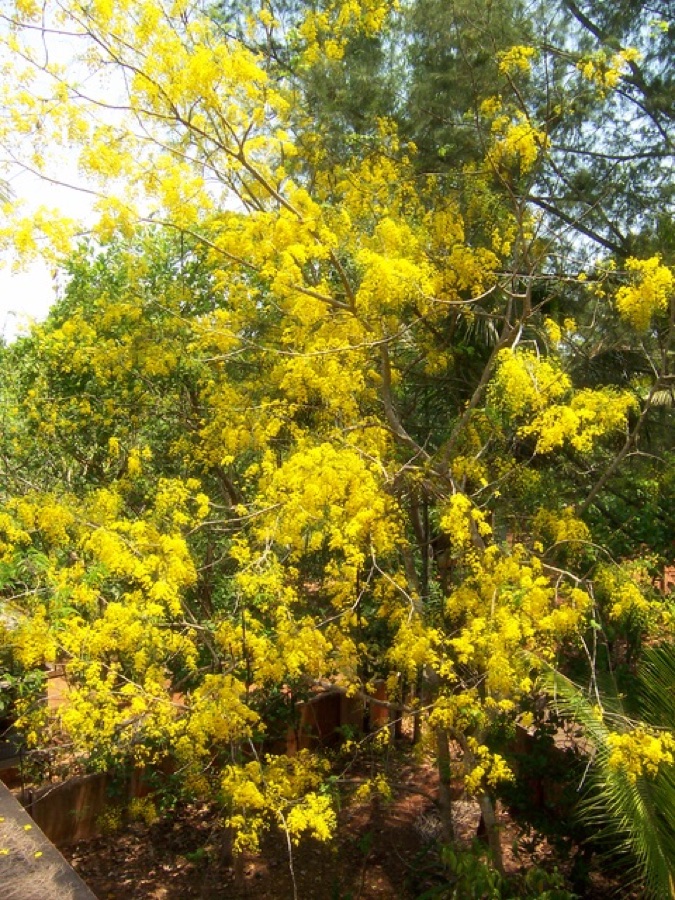
Photo: Original uploader was Suniltg at en.wikipedia · CC BY-SA 3.0 · Wikimedia Commons

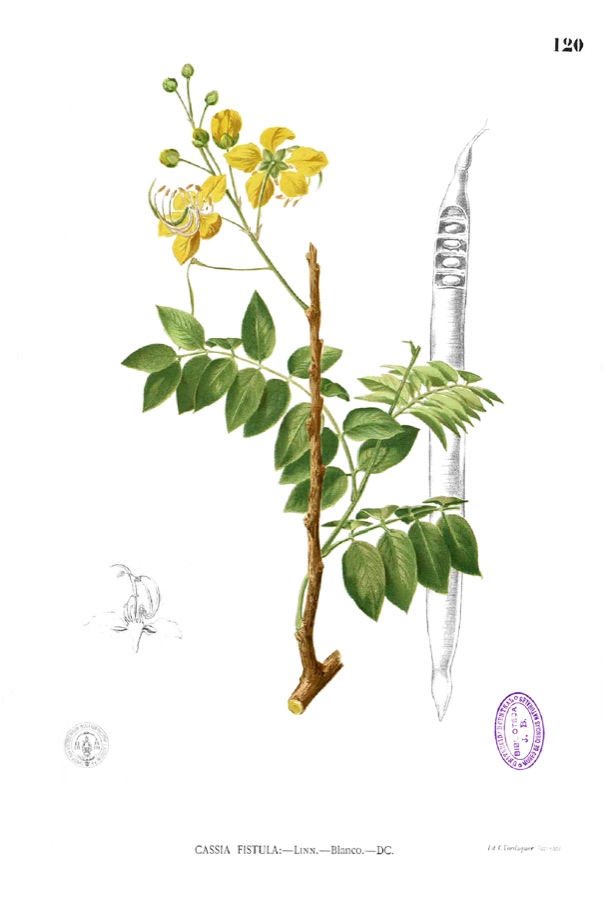
Photo: Francisco Manuel Blanco (O.S.A.) · Public domain · Wikimedia Commons

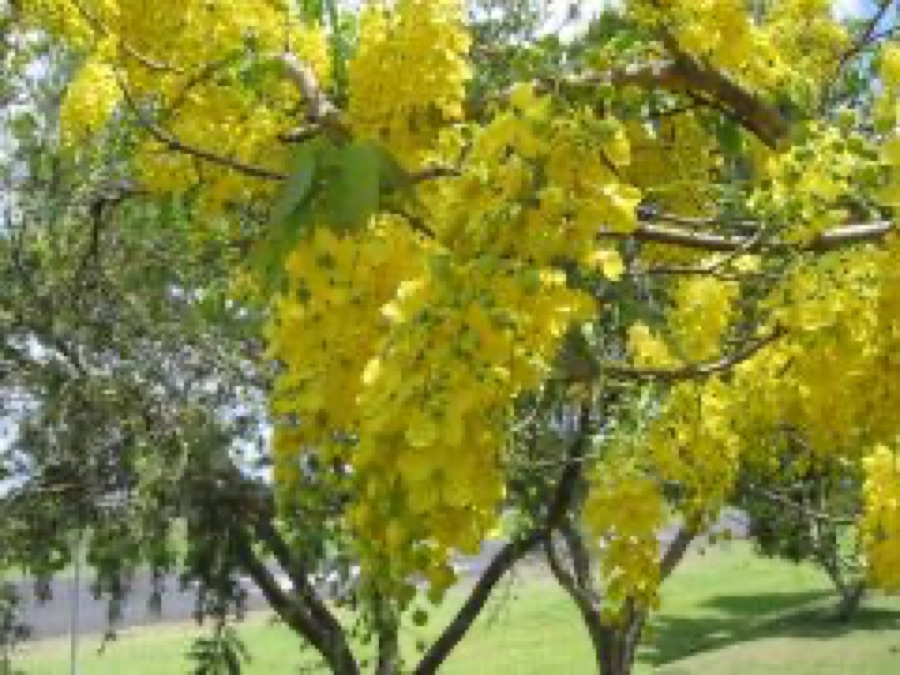
Photo: Peter Greenwell at English Wikipedia · CC BY 2.5 · Wikimedia Commons

Matra and anupana
AS THE CLASSICAL TEXTS AND THE API PRESCRIBE
| Phala majja | 5–10 g |
| Kwatha | 50–100 ml |
| Anupana | Ushnodaka · Draksha kwatha |
| Kala | Ratri |
The mildest of the classical virechaka, which is why it is the one used in children and the elderly.
Reported from Sharangadhara Samhita and the Ayurvedic Pharmacopoeia of India. Laisha states what the texts prescribe; it does not recommend. No quantity here is adjusted for a particular person — not for agni, koshtha, bala, age, pregnancy, kidney or liver function, or anything already being taken.
Rasapanchaka
| Rasa | Madhura |
| Guna | GuruMriduSnigdha |
| Virya | Sheeta |
| Vipaka | Madhura |
| Prabhava | The texts treat aragvadha as mrudu virechana, the mildest purgative, and specifically name it as suitable for children, the old and the weak — the group every other purgative in this library excludes. |
| Doshakarma | Kaphapittahara. |
A single rasa, madhura, with sheeta virya and madhura vipaka — remarkable for a purgative, and the reason it is the gentlest one the texts describe.
Karma and part used
These are the actions the classical texts record. They are statements about what the tradition holds, and this library does not restate them as findings about a human body.
| Upayukta anga | Phala majja (the fruit pulp) Mula (the root) Patra (the leaf) |
| Why it matters | The dark pulp between the partitions of the long cylindrical pod is the dravya. It is sweet, and that is why this is the purgative given to children and in pregnancy where a purgative is needed at all. |
Paryaya
Chaturangula, four fingers, describes the spacing of the partitions inside the pod. Suvarnaka, golden, names the flowers. Rajavriksha, king of trees, records how it was regarded.
Names, by language
| English | Golden shower tree |
| Sinhala | Ehela |
| Nepali | Rajbriksha |
| Hindi | Amaltas |
| Kannada | Kakke |
| Tamil | Konrai |
| Telugu | Rela |
| Malayalam | Kanikkonna |
| Marathi | Bahava |
| Gujarati | Garmalo |
| Bengali | Sondal |
| Punjabi | Amaltas |
| Odia | Sunari |
| Urdu | Amaltas |
Classical references
Rasa, guna, virya, vipaka and karma are recorded as the classical texts give them, with the text and section named so a student can open the book and check. Where an exact chapter and verse could not be confirmed, this library names the section rather than inventing a number.
Formulations it appears in
| Aragvadhadi Kwatha | Named for the dravya. |
| Aragvadha Leha | Named for the dravya. |
| Kaishora Guggulu | Among the dravya of the formulation. |
Adulterants and substitutes
Pods of other Cassia species, and pulp from old pods whose sugars have fermented, are sold as aragvadha. The pulp is also bulked with dates and with jaggery, which is hard to see because the genuine article is itself dark and sweet.
Identity
Matched live against the GBIF backbone on 28 September 2026 at 99 per cent confidence. The tree everyone in India knows by its hanging yellow flowers in summer, and the state flower of Kerala.
A WAY TO REMEMBER IT
Cassia from Hebrew qetsi'ah, a peeled bark. Fistula is Latin for pipe or tube — the long cylindrical pod. Aragvadha means disease-killer.
What the tradition holds
Aragvadha is named in the Kushthaghna dashemani of the Charaka Samhita, heads the Aragvadhadi gana in the Sushruta Samhita, and is described in the Bhavaprakasha Nighantu as the mildest purgative. That is what the tradition holds and where it is written down, not a finding about what the pulp does in a body.
Constituents. The pulp carries anthraquinone glycosides, the same class that makes senna and rhubarb purgative, at a lower concentration.
What the evidence says
| Status | Traditional use is extensive and long recorded. Modern clinical evidence is limited. |
| Suggested | Health Canada publishes monographs covering Ayurvedic ingredients and permits specific traditional-use claims, which reflects a regulator accepting a documented tradition rather than a body of clinical trial evidence. |
| Not established | There is not enough good clinical evidence to establish an effect on any named health condition. Long traditional use is not a substitute for that evidence, and this library does not present it as one. |
| The honest gap | Published work is limited and rarely uses the pulp as the tradition prepares it. |
Safety
The gentlest purgative in this library, and the one the texts allow for children and the frail. It is still a purgative: prolonged use can cause fluid and salt loss and the bowel can come to rely on it, which is documented for all anthraquinone laxatives. It is not for undiagnosed abdominal pain. Anyone on medication, pregnant, or managing a diagnosed condition should speak to a doctor or a qualified practitioner first.
| Side effects | Abdominal cramping Loose stool Wind |
| Contraindications | Intestinal obstruction, appendicitis or undiagnosed abdominal pain. Inflammatory bowel disease. |
| Interactions | Medicines for the heart, particularly digoxin — potassium loss from repeated purgation raises the risk. Diuretic medicines — salt loss adds together. Any medicine taken by mouth — absorption is reduced. |
| Pregnancy and breastfeeding | Traditionally considered the purgative that may be used in pregnancy where one is needed, but that is a decision for a qualified practitioner and not one to take alone. |
Growing it
| Climate | Tropical and subtropical; drought-hardy once established. |
| Soil | Wide range, well-drained. |
| Planting | A tree, raised from seed. Widely planted as an ornamental. |
| Harvest | Pods are collected when they turn dark and the pulp inside has set, then the pulp is scraped out. |
| What is not stated | This library has not verified region-specific spacing, variety and yield figures against a named agricultural authority for every growing country, and does not state them rather than guessing. |
Check this page
Print it and the code still works. It goes to this page and nowhere else.
What this is not
- This is a study and clinical reference for practitioners and students. The matra and anupana it records are what the classical texts and the Ayurvedic Pharmacopoeia of India PRESCRIBE — Laisha reports them, it does not recommend them. They are not a prescription for any particular person, and they are not adjusted for your age, agni, koshtha, bala, pregnancy, kidney or liver function, or anything else you are already taking. Only a qualified practitioner who has examined you can do that.
- Traditional classification is recorded as what the classical texts say, with the text and the place in it named so it can be checked. It is not restated as a finding about a human body.
- Nothing here replaces a qualified Ayurvedic practitioner or a doctor.
Sources
https://api.gbif.org/v1/species/match?name=Cassia%20fistula
https://pcimh.gov.in/
https://www.canada.ca/en/health-canada/services/drugs-health-products/natural-non-prescription/applications-submissions/product-licensing/compendium-monographs.html
https://niimh.nic.in/ebooks/esharangadhara/