Ashoka
अशोक
Saraca asoca (Roxb.) W.J.de Wilde
Fabaceae · Saraca
Benefits & side effects
TRADITIONAL VIEW, WITH SAFETY LIMITS
What the texts say Ashoka does
- Garbhashaya shodhana — cleanses the uterus
- Raktastambhana — checks bleeding (haemostatic)
- Vedanasthapana — relieves pain
- Varnya — improves complexion
- Grahi — digestive that absorbs excess fluid and binds the stool
What the evidence says. Traditional use is extensive and long recorded. Modern clinical evidence is limited.
Side effects and limits
- Digestive upset
- Constipation from the tannins
Avoid or ask first: Pregnancy.
A traditional classification, not a recommendation. The full safety record is below.
Stands in 3 groups
- Vedanasthapana — Arresting pain (named there as Vanjula)
- Rodhradi — Kapha, fat, and the complexion
- Nyagrodhadi — Wounds, burns, Pitta, and Prameha (named there as Vanjula)
A Samhita can only be read forwards, from the group to its members. This is the same list read backwards.
Photographs
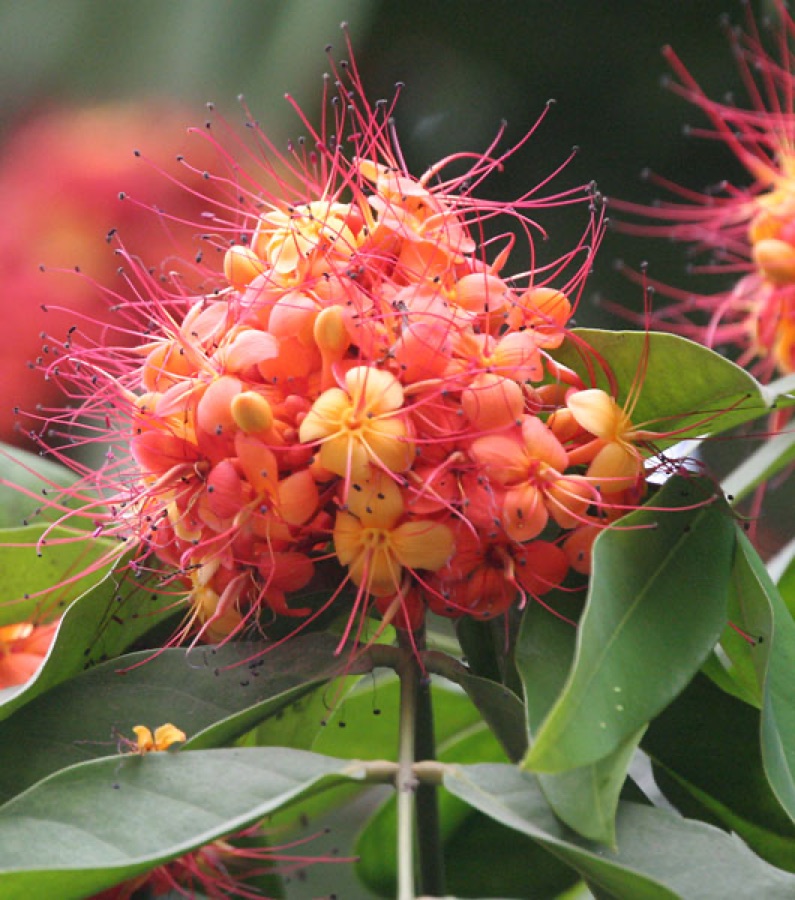
Photo: J.M.Garg · CC BY-SA 3.0 · Wikimedia Commons

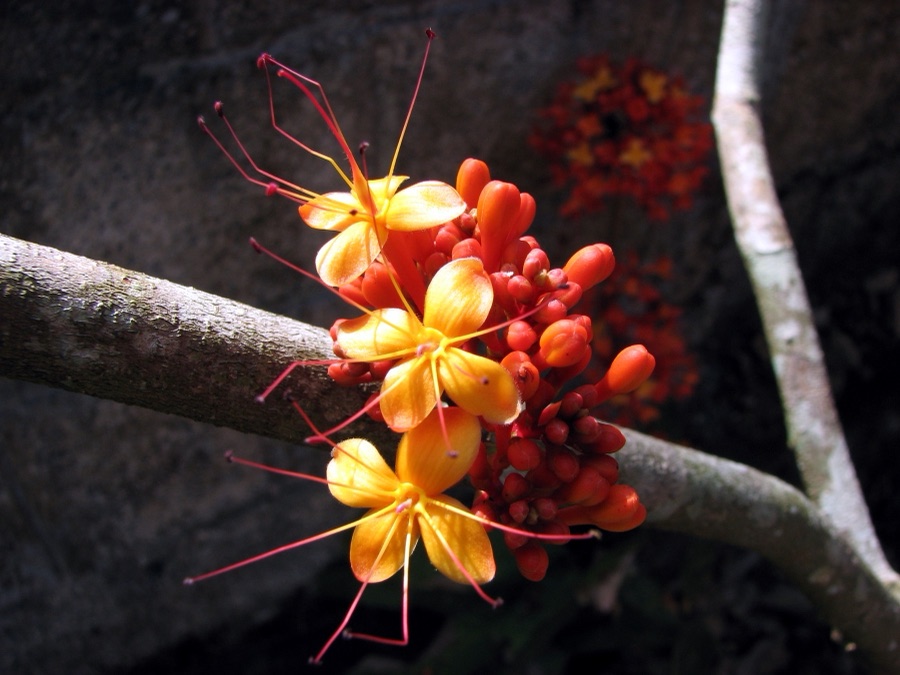
Photo: Deepugn at Malayalam Wikipedia · Public domain · Wikimedia Commons

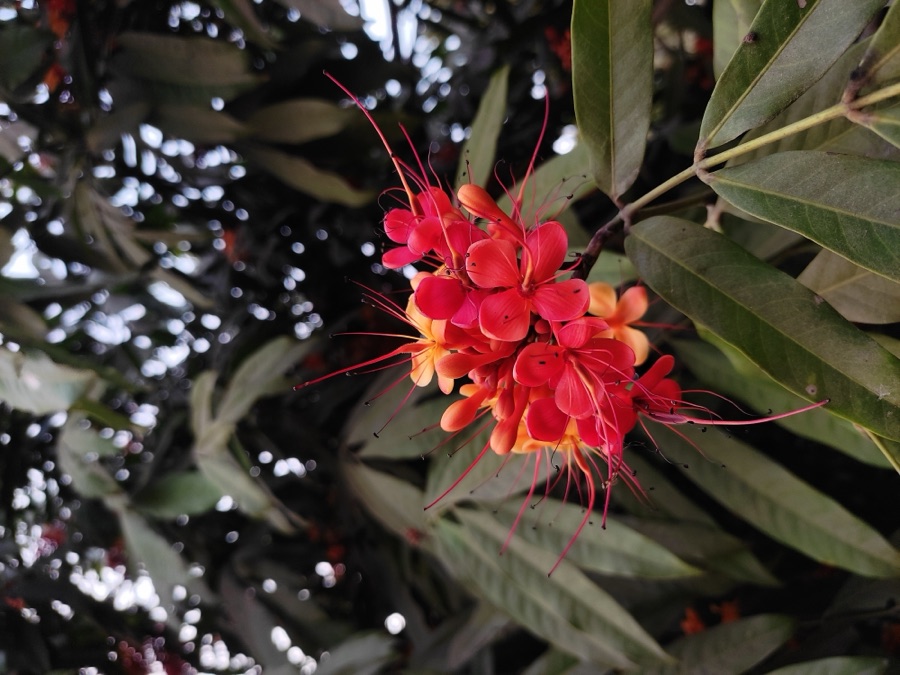
Photo: Tanvir Rahat · CC BY-SA 4.0 · Wikimedia Commons

Matra and anupana
AS THE CLASSICAL TEXTS AND THE API PRESCRIBE
| Twak churna | 3–6 g |
| Kwatha | 50–100 ml |
| Anupana | Dugdha · Ushnodaka |
| Kala | Adhobhakta |
Ashokarishta is the usual form. Confirm the bark — Polyalthia longifolia is widely substituted.
Reported from Sharangadhara Samhita and the Ayurvedic Pharmacopoeia of India. Laisha states what the texts prescribe; it does not recommend. No quantity here is adjusted for a particular person — not for agni, koshtha, bala, age, pregnancy, kidney or liver function, or anything already being taken.
Pharmacopoeial standard
Ayurvedic Pharmacopoeia of India, Part I
| Marker | Tannins and the bark's own histology |
| Assay | |
| Total ash | |
| Acid-insoluble ash | |
| Alcohol-soluble extractive | |
| Water-soluble extractive | |
| Foreign matter |
Saraca asoca bark is widely adulterated with Polyalthia longifolia and Bauhinia species. Transverse-section microscopy of the bark is the practical identity test; the market substitutes are not close on section.
These are the marker and the identity test for this dravya, and they are not a test Laisha has run on anything. Laisha does not state the numeric limits here: the assay, ash and extractive figures must be read from the current edition of the Ayurvedic Pharmacopoeia of India, because a wrong limit printed here is a number a laboratory would act on. The entries in this library that DO carry figures carry them because each one was checked.
Rasapanchaka
| Rasa | KashayaTikta |
| Guna | LaghuRuksha |
| Virya | Sheeta |
| Vipaka | Katu |
| Prabhava | The texts treat ashoka as acting on the garbhashaya and name it above all other dravya for that. The name itself — without sorrow — is bound to that use in the tradition. |
| Doshakarma | Kaphapittahara. Being ruksha and sheeta it can increase vata. |
Kashaya and tikta with sheeta virya and katu vipaka.
Karma and part used
These are the actions the classical texts record. They are statements about what the tradition holds, and this library does not restate them as findings about a human body.
| Upayukta anga | Twak (the stem bark) Pushpa (the flower) |
| Why it matters | The bark is the dravya. The flower is used separately. |
Paryaya
Tamrapallava, copper-leaved, names the young foliage, which hangs in limp coppery bunches and is the surest way to know the tree. Hemapushpa and Madhupushpa both describe the dense orange flower heads.
Names, by language
| English | Asoka tree |
| Sinhala | Diyaratmal |
| Nepali | Ashok |
| Hindi | Ashok |
| Kannada | Achenge |
| Tamil | Asogam |
| Telugu | Ashokamu |
| Malayalam | Asokam |
| Marathi | Ashok |
| Gujarati | Ashopalav |
| Bengali | Ashok |
| Punjabi | Asok |
| Odia | Ashoka |
| Urdu | Ashok |
Classical references
Rasa, guna, virya, vipaka and karma are recorded as the classical texts give them, with the text and section named so a student can open the book and check. Where an exact chapter and verse could not be confirmed, this library names the section rather than inventing a number.
Formulations it appears in
| Ashokarishta | A fermented preparation named for the dravya and among the most widely used in Ayurveda. |
| Ashoka Ghrita | Named for the dravya. |
| Pushyanuga Churna | Among the dravya of the formulation. |
Adulterants and substitutes
This is the most consequential tree-identity error in India. The tree planted along roads and in gardens and universally called ashoka is Polyalthia longifolia, a tall narrow conifer-shaped tree of the Annonaceae — an entirely different family with no medicinal relation. Real Saraca asoca is a spreading understorey tree with coppery drooping young leaves and dense orange flower heads. Because Ashokarishta is made in enormous quantity and wild Saraca is vulnerable, bark of other trees including Polyalthia and Shorea robusta is substituted. A student should be able to tell the two trees apart at a glance, and most people cannot.
Identity
Matched live against the GBIF backbone on 28 September 2026 at 99 per cent confidence. Saraca indica is a name widely but incorrectly applied to this tree in Indian literature; it belongs to a different species. The tree planted in gardens and called ashoka is very often Polyalthia longifolia, the false ashoka, an unrelated family, and that confusion is discussed below. Assessed as vulnerable in the wild.
A WAY TO REMEMBER IT
Saraca honours the Sanskrit name; asoca is a-shoka, without-sorrow. The whole binomial is the Sanskrit name twice over.
What the tradition holds
Ashoka is described in the Bhavaprakasha Nighantu and is recorded in the classical literature as acting on the garbhashaya. That is what the tradition holds and where it is written down, not a finding about what the bark does in a body.
Constituents. The bark carries tannins, catechol and flavonoids including glycosides of quercetin.
What the evidence says
| Status | Traditional use is extensive and long recorded. Modern clinical evidence is limited. |
| Suggested | Health Canada publishes monographs covering Ayurvedic ingredients and permits specific traditional-use claims, which reflects a regulator accepting a documented tradition rather than a body of clinical trial evidence. |
| Not established | There is not enough good clinical evidence to establish an effect on any named health condition. Long traditional use is not a substitute for that evidence, and this library does not present it as one. |
| The honest gap | Published work frequently uses material identified only by the vernacular name, which given the Polyalthia confusion is a serious limit on reading it. |
Safety
Used for a very long time and no serious harm is documented at traditional use. Two things matter. It is used for bleeding in women, and abnormal bleeding needs a diagnosis — using a herb instead of finding out why someone is bleeding is the real hazard, because the causes range from the trivial to the grave. And the material bought may not be this tree at all, given the substitution above. Anyone on medication, pregnant, or managing a diagnosed condition should speak to a doctor or a qualified practitioner first.
| Side effects | Digestive upset Constipation from the tannins |
| Contraindications | Pregnancy. |
| Interactions | Oestrogen-sensitive conditions and hormone therapy — the classical use in raktapradara and reported oestrogenic activity make this the question to ask. Confirm the bark: Polyalthia longifolia is widely substituted and is a different plant. |
| Pregnancy and breastfeeding | Not to be used in pregnancy. There is not enough evidence to establish safety in breastfeeding. |
Growing it
| Climate | Wet tropical, in the understorey of evergreen forest. |
| Soil | Moist, well-drained forest ground with shade. |
| Planting | A tree, raised from seed. Slow, and it wants shade when young. |
| Harvest | Bark is taken in strips from part of the trunk so the tree survives. |
| What is not stated | Saraca asoca is assessed as vulnerable in the wild, under pressure from bark collection for Ashokarishta. Cultivated or plantation bark should be preferred where it can be had. |
Check this page
Print it and the code still works. It goes to this page and nowhere else.
What this is not
- This is a study and clinical reference for practitioners and students. The matra and anupana it records are what the classical texts and the Ayurvedic Pharmacopoeia of India PRESCRIBE — Laisha reports them, it does not recommend them. They are not a prescription for any particular person, and they are not adjusted for your age, agni, koshtha, bala, pregnancy, kidney or liver function, or anything else you are already taking. Only a qualified practitioner who has examined you can do that.
- Traditional classification is recorded as what the classical texts say, with the text and the place in it named so it can be checked. It is not restated as a finding about a human body.
- Nothing here replaces a qualified Ayurvedic practitioner or a doctor.
Sources
https://api.gbif.org/v1/species/match?name=Saraca%20asoca
https://pcimh.gov.in/
https://www.canada.ca/en/health-canada/services/drugs-health-products/natural-non-prescription/applications-submissions/product-licensing/compendium-monographs.html
https://niimh.nic.in/ebooks/esharangadhara/
https://pcimh.gov.in/