Ativisha
अतिविषा
Aconitum heterophyllum Wall. ex Royle
Ranunculaceae · Aconitum
Benefits & side effects
TRADITIONAL VIEW, WITH SAFETY LIMITS
Hindi name: Atis
What the texts say Ativisha does
- Deepana — kindles digestion (appetiser)
- Pachana — digests ama (digestive)
- Grahi — digestive that absorbs excess fluid and binds the stool
- Jwaraghna — used in fever
- Amapachana — digests ama
- Balarogahara — used in children's diseases (balaroga)
What the evidence says. Traditional use is extensive and long recorded. Modern clinical evidence is limited.
Side effects and limits
- Digestive upset
- Bitterness
Avoid or ask first: Unverified material, particularly for a child.
A traditional classification, not a recommendation. The full safety record is below.
Stands in 5 groups
- Lekhaniya — Scraping and reducing
- Kasahara — Relieving cough (named there as Shringi)
- Pippalyadi — Agni, Kapha, and the digestive disorders
- Vachadi — Ama, and the cleansing of breast milk
- Mustadi — Cleansing breast milk, Kapha, and the vagina
A Samhita can only be read forwards, from the group to its members. This is the same list read backwards.
Photographs
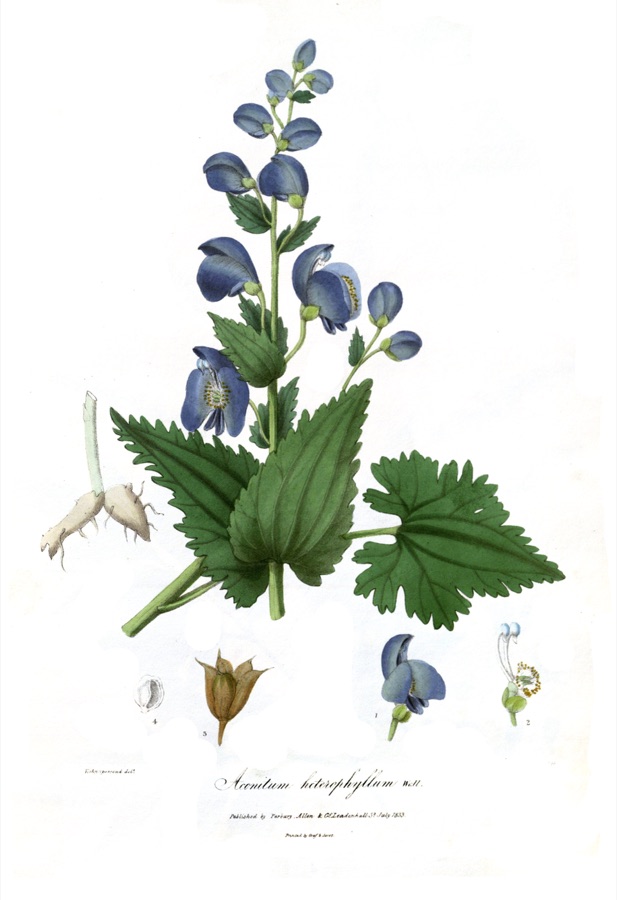
Photo: Artist: Vishnupersaud (=Vishnu Prasad); Text by John Forbes Royle · Public domain · Wikimedia Commons

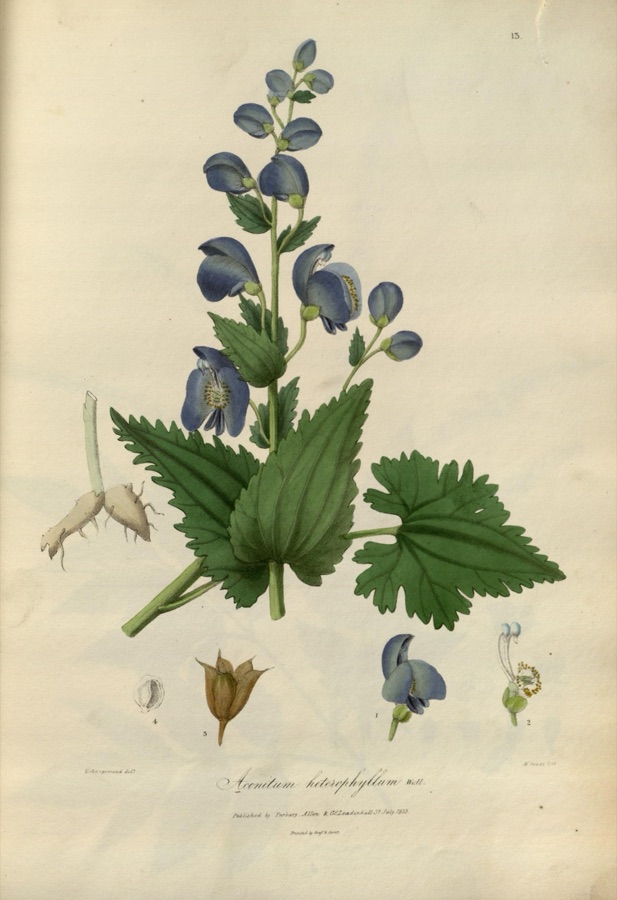
Photo: Royle, J. Forbes · Public domain · Wikimedia Commons

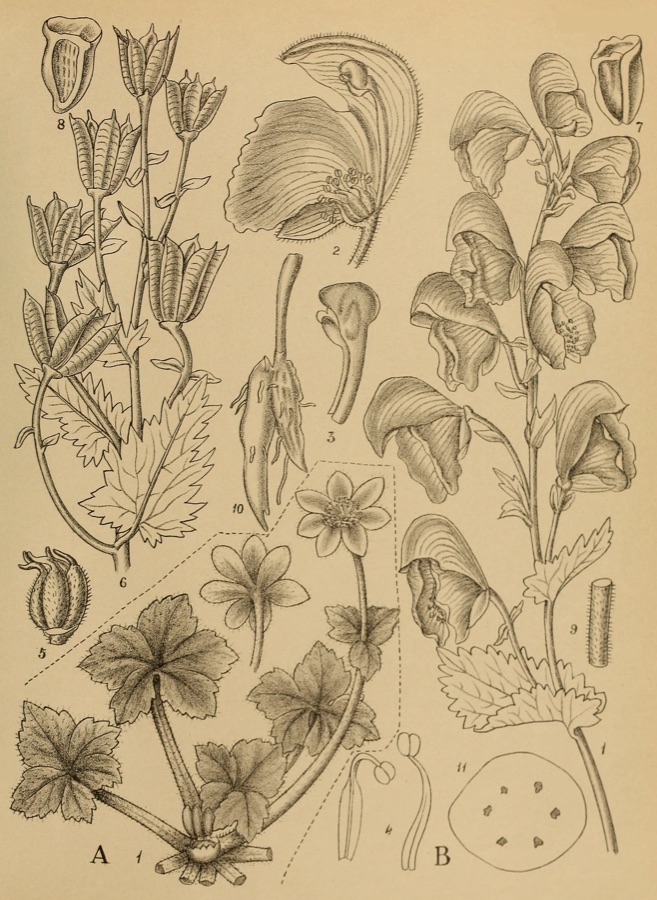
Photo: Kanhoba Ranchoddas Kirtikar and Baman Das Basu · Public domain · Wikimedia Commons

Matra and anupana
AS THE CLASSICAL TEXTS AND THE API PRESCRIBE
| Churna | 0.5–2 g |
| Anupana | Madhu · Ushnodaka |
| Kala | Adhobhakta |
An Aconitum that is NOT a poison and needs no shodhana — the classical exception, and the reason the identity must be certain. A staple of Balachaturbhadra for children.
Reported from Sharangadhara Samhita and the Ayurvedic Pharmacopoeia of India. Laisha states what the texts prescribe; it does not recommend. No quantity here is adjusted for a particular person — not for agni, koshtha, bala, age, pregnancy, kidney or liver function, or anything already being taken.
Pharmacopoeial standard
Ayurvedic Pharmacopoeia of India, Part I
| Marker | Atisine, and the ABSENCE of aconitine |
| Assay | |
| Total ash | |
| Acid-insoluble ash | |
| Alcohol-soluble extractive | |
| Water-soluble extractive | |
| Foreign matter |
Aconitum heterophyllum is non-toxic; substitution with toxic Aconitum species is the danger, and the test is for the aconitine that must NOT be there.
These are the marker and the identity test for this dravya, and they are not a test Laisha has run on anything. Laisha does not state the numeric limits here: the assay, ash and extractive figures must be read from the current edition of the Ayurvedic Pharmacopoeia of India, because a wrong limit printed here is a number a laboratory would act on. The entries in this library that DO carry figures carry them because each one was checked.
Rasapanchaka
| Rasa | TiktaKatu |
| Guna | LaghuRuksha |
| Virya | Ushna |
| Vipaka | Katu |
| Prabhava | The texts treat ativisha as deepana and pachana while also being grahi, and it is one of the very few dravya considered safe enough to give freely to infants. |
| Doshakarma | Tridoshahara. |
Tikta and katu with ushna virya and katu vipaka.
Karma and part used
These are the actions the classical texts record. They are statements about what the tradition holds, and this library does not restate them as findings about a human body.
| Upayukta anga | Mula kanda (the tuber) |
| Why it matters | The paired tuber is the dravya, used directly with no purification. |
Paryaya
Avisha means not-poison, and it exists precisely to say that this Aconitum is not vatsanabha. A student asked to distinguish the two should reach for this paryaya first.
Names, by language
| English | Indian atees |
| Sinhala | Ativisha |
| Nepali | Atis |
| Hindi | Atis |
| Kannada | Ativisha |
| Tamil | Atividayam |
| Telugu | Ativasa |
| Malayalam | Ativisham |
| Marathi | Ativisha |
| Gujarati | Ativakhani |
| Bengali | Ataich |
| Punjabi | Atis |
| Odia | Ativisha |
| Urdu | Atees |
Classical references
Rasa, guna, virya, vipaka and karma are recorded as the classical texts give them, with the text and section named so a student can open the book and check. Where an exact chapter and verse could not be confirmed, this library names the section rather than inventing a number.
Formulations it appears in
| Balachaturbhadra Churna | Ativisha is among the four dravya, given to children. |
| Ativishadi Churna | Named for the dravya. |
Adulterants and substitutes
Because ativisha is scarce, expensive and endangered, other Aconitum species are substituted — and some of those are poisonous, which makes this among the most dangerous substitutions in the whole materia medica. A child given a poisonous Aconitum in place of ativisha, in a formulation specifically chosen because ativisha is safe for children, is the exact scenario this note exists to prevent. Cyperus rotundus and other bitter roots are also sold as ativisha.
Identity
Matched live against the GBIF backbone on 28 September 2026 at 99 per cent confidence. The most important fact about this plant is what it is not: although it is an Aconitum, the genus of vatsanabha, ativisha is NOT a poison and needs no shodhana. The texts are explicit that it is avisha, not poisonous, despite the name. Assessed as endangered and heavily over-collected.
A WAY TO REMEMBER IT
Aconitum is the classical name for monkshood. Heterophyllum is hetero (different) + phyllon (leaf) — the leaves differ in shape up the same stem. Ati-visha means intense poison, though this is the one Aconitum used after shodhana.
What the tradition holds
Ativisha is described in the Bhavaprakasha Nighantu, which states plainly that it is not poisonous, and it is named in the Charaka Samhita among the digestive dravya. That is what the tradition holds and where it is written down, not a finding about what the root does in a body.
Constituents. The tuber carries atisine and related diterpenoid alkaloids, which are chemically distinct from the aconitine group in vatsanabha and are not cardiotoxic in the same way.
What the evidence says
| Status | Traditional use is extensive and long recorded. Modern clinical evidence is limited. |
| Suggested | Health Canada publishes monographs covering Ayurvedic ingredients and permits specific traditional-use claims, which reflects a regulator accepting a documented tradition rather than a body of clinical trial evidence. |
| Not established | There is not enough good clinical evidence to establish an effect on any named health condition. Long traditional use is not a substitute for that evidence, and this library does not present it as one. |
| The honest gap | Published work is limited and rarely confirms the species, which for this plant is the whole question. |
Safety
Ativisha itself is among the gentler dravya and the texts give it to infants. The danger is not the plant but what may be sold as it: the genus contains vatsanabha and other deadly species, ativisha is endangered and expensive, and substitution is common. Material that cannot be traced should not be given to a child. It is also assessed as endangered and heavily over-collected in the Himalaya, so source matters twice over. Anyone on medication, pregnant, or managing a diagnosed condition should speak to a doctor or a qualified practitioner first.
| Side effects | Digestive upset Bitterness |
| Contraindications | Unverified material, particularly for a child. |
| Interactions | No specific interaction is documented here. Anyone on regular medication should still tell their doctor what they are taking. |
| Pregnancy and breastfeeding | There is not enough evidence to establish safety in pregnancy or breastfeeding, and a qualified practitioner should be asked first. |
Growing it
| Climate | Alpine Himalaya, roughly 2500 to 4000 metres. |
| Soil | Moist, humus-rich alpine ground. |
| Planting | Grown from seed or tuber; slow, and difficult outside its altitude. |
| Harvest | Tubers lifted after two to three years and dried. |
| What is not stated | Assessed as endangered and heavily over-collected. Cultivated material should be preferred where it can be had. |
Check this page
Print it and the code still works. It goes to this page and nowhere else.
What this is not
- This is a study and clinical reference for practitioners and students. The matra and anupana it records are what the classical texts and the Ayurvedic Pharmacopoeia of India PRESCRIBE — Laisha reports them, it does not recommend them. They are not a prescription for any particular person, and they are not adjusted for your age, agni, koshtha, bala, pregnancy, kidney or liver function, or anything else you are already taking. Only a qualified practitioner who has examined you can do that.
- Traditional classification is recorded as what the classical texts say, with the text and the place in it named so it can be checked. It is not restated as a finding about a human body.
- Nothing here replaces a qualified Ayurvedic practitioner or a doctor.
Sources
https://api.gbif.org/v1/species/match?name=Aconitum%20heterophyllum%20Wall.%20ex%20Royle
https://pcimh.gov.in/
https://www.canada.ca/en/health-canada/services/drugs-health-products/natural-non-prescription/applications-submissions/product-licensing/compendium-monographs.html
https://niimh.nic.in/ebooks/esharangadhara/
https://pcimh.gov.in/