Bhringaraja
भृङ्गराज
Eclipta prostrata (L.) L.
Asteraceae · Eclipta
One name, more than one plant
Matched live against the GBIF backbone on 28 September 2026 at 99 per cent confidence. Eclipta alba is a synonym of the same species and both names appear in the Ayurvedic literature; they are not two plants.
Benefits & side effects
TRADITIONAL VIEW, WITH SAFETY LIMITS
Hindi name: Bhangra
What the texts say Bhringaraja does
- Keshya — good for the hair
- Rasayana — rejuvenative
- Deepana — kindles digestion (appetiser)
- Twachya — good for the skin
- Vrishya — aphrodisiac, supports reproductive vigour
What the evidence says. Traditional use is extensive and long recorded. Modern clinical evidence is limited.
Side effects and limits
- Digestive upset
- Skin irritation on external use in some people
Avoid or ask first: No absolute contraindication is documented here. This is written deliberately rather than left blank.
A traditional classification, not a recommendation. The full safety record is below.
Photographs
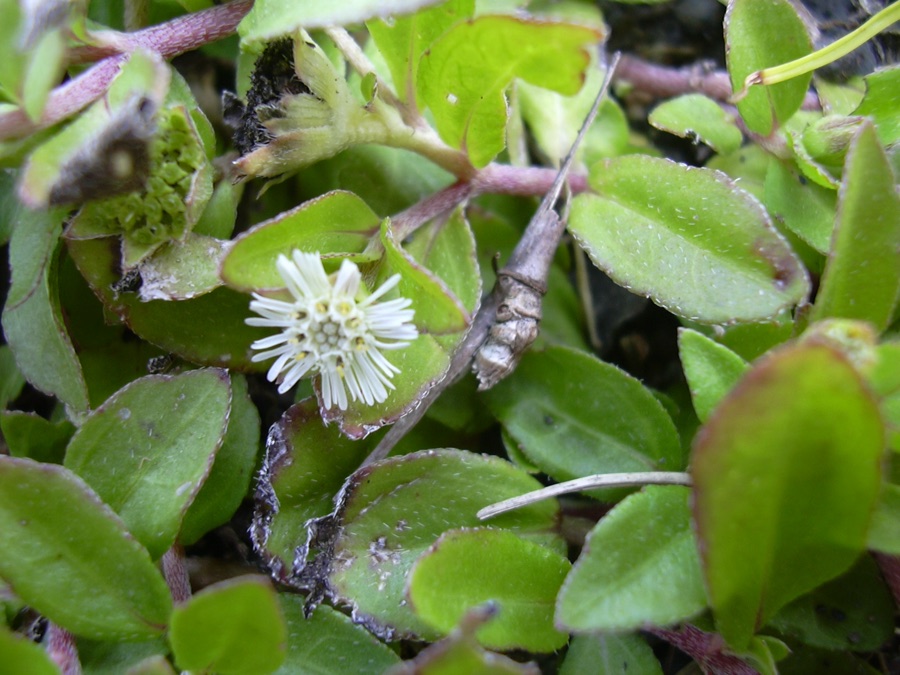
Photo: Forest & Kim Starr · CC BY 3.0 · Wikimedia Commons

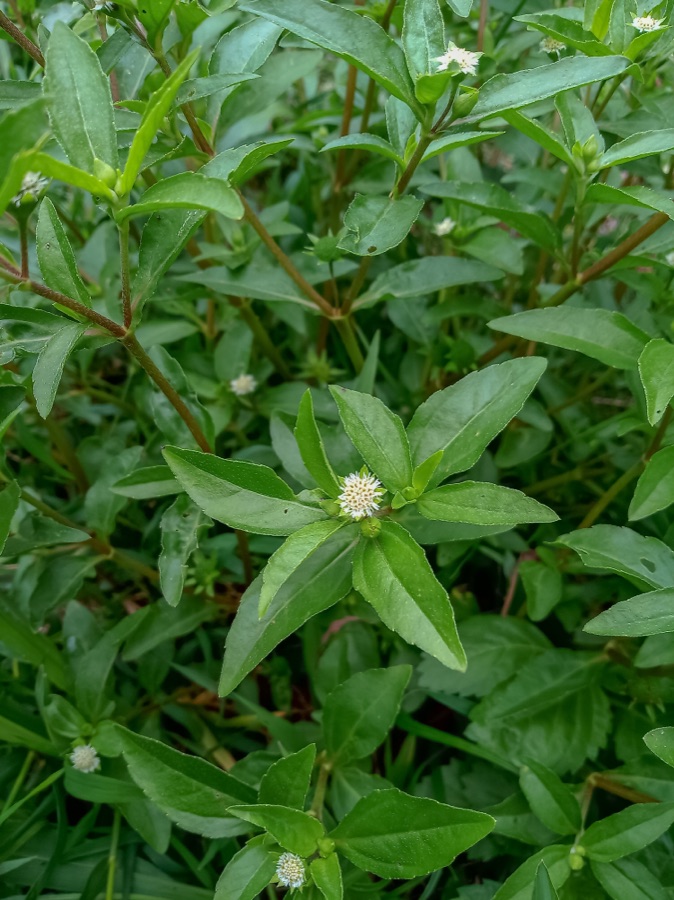
Photo: Filo gèn' · CC BY-SA 4.0 · Wikimedia Commons

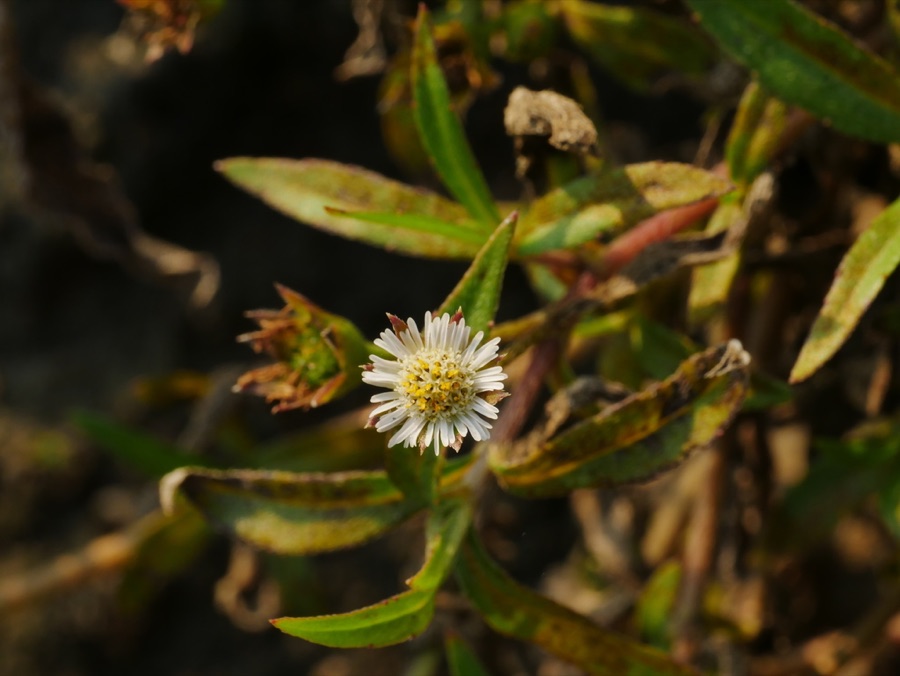
Photo: Jacy Chen https://www.inaturalist.org/people/chenjacy · CC BY 4.0 · Wikimedia Commons

Matra and anupana
AS THE CLASSICAL TEXTS AND THE API PRESCRIBE
| Swarasa | 10–20 ml |
| Churna | 3–6 g |
| Anupana | Madhu · Ushnodaka |
| Kala | Adhobhakta |
The keshya use is largely external; the internal matra above is the yakrit-uttejaka one.
Reported from Sharangadhara Samhita and the Ayurvedic Pharmacopoeia of India. Laisha states what the texts prescribe; it does not recommend. No quantity here is adjusted for a particular person — not for agni, koshtha, bala, age, pregnancy, kidney or liver function, or anything already being taken.
Pharmacopoeial standard
Ayurvedic Pharmacopoeia of India, Part I
| Marker | Wedelolactone |
| Assay | |
| Total ash | |
| Acid-insoluble ash | |
| Alcohol-soluble extractive | |
| Water-soluble extractive | |
| Foreign matter |
Wedelolactone is the accepted marker for Eclipta alba. Its absence in a sample sold as bhringaraja is the clearest single indicator of a substitute.
These are the marker and the identity test for this dravya, and they are not a test Laisha has run on anything. Laisha does not state the numeric limits here: the assay, ash and extractive figures must be read from the current edition of the Ayurvedic Pharmacopoeia of India, because a wrong limit printed here is a number a laboratory would act on. The entries in this library that DO carry figures carry them because each one was checked.
Rasapanchaka
| Rasa | KatuTikta |
| Guna | LaghuRuksha |
| Virya | Ushna |
| Vipaka | Katu |
| Prabhava | The texts single out its action on hair and treat that as prabhava. Kesharaja is the name that records it. |
| Doshakarma | Kaphavatahara. Being ushna it can increase pitta. |
Katu and tikta with ushna virya and katu vipaka.
Karma and part used
These are the actions the classical texts record. They are statements about what the tradition holds, and this library does not restate them as findings about a human body.
| Upayukta anga | Panchanga (the whole plant) Patra (the leaf), for external use |
| Why it matters | The whole herb is the article. It grows in wet ground, ditches and paddy margins, so where it grew is part of what it is. |
Paryaya
Kesharaja means king of hair and Kesharanjana means hair-colouring. Both paryaya record the single use the tradition is most insistent about, and a student is expected to connect the name to that use.
Names, by language
| English | False daisy |
| Sinhala | Kikirindiya |
| Nepali | Bhringaraj |
| Hindi | Bhangra |
| Kannada | Garuga |
| Tamil | Karisalankanni |
| Telugu | Guntagalagara |
| Malayalam | Kayyonni |
| Marathi | Maka |
| Gujarati | Bhangro |
| Bengali | Kesuti |
| Punjabi | Bhangra |
| Odia | Kesharda |
| Urdu | Bhangra |
Classical references
Rasa, guna, virya, vipaka and karma are recorded as the classical texts give them, with the text and section named so a student can open the book and check. Where an exact chapter and verse could not be confirmed, this library names the section rather than inventing a number.
Formulations it appears in
| Bhringaraja Taila | An oil named for the dravya, used externally. |
| Neelibhringadi Taila | Bhringaraja is among the principal dravya. |
| Bhringarajasava | A fermented preparation named for it. |
Adulterants and substitutes
Wedelia chinensis, also a yellow-flowered Asteraceae of wet ground, is collected and sold as bhringaraja and is sometimes called Peeta Bhringaraja, yellow bhringaraja. Sellers who use that name are being accurate about the trade and inaccurate about the botany. There is also a blue-flowered plant sold as Neeli Bhringaraja which is usually Indigofera tinctoria, an entirely different family.
Identity
Matched live against the GBIF backbone on 28 September 2026 at 99 per cent confidence. Eclipta alba is a synonym of the same species and both names appear in the Ayurvedic literature; they are not two plants.
A WAY TO REMEMBER IT
Eclipta is ekleipo, to be deficient — the ray florets are missing a pappus. Prostrata, lying flat on the ground, which is how it grows. Bhringa-raja means king of bees.
What the tradition holds
Bhringaraja is described in the Bhavaprakasha Nighantu and is recorded as keshya, acting on the hair. That is what the tradition holds and where it is written down, not a finding about what the herb does in a body.
Constituents. The herb carries coumestans including wedelolactone, along with flavonoids. Content varies with population and growing conditions.
What the evidence says
| Status | Traditional use is extensive and long recorded. Modern clinical evidence is limited. |
| Suggested | Health Canada publishes monographs covering Ayurvedic ingredients and permits specific traditional-use claims, which reflects a regulator accepting a documented tradition rather than a body of clinical trial evidence. |
| Not established | There is not enough good clinical evidence to establish an effect on any named health condition. Long traditional use is not a substitute for that evidence, and this library does not present it as one. |
| The honest gap | Most published work uses extracts applied to skin in animals. A herb dried and taken by mouth is a different material and the two should not be read as one. |
Safety
Widely eaten as a pot herb in parts of India, which is a long record of ordinary use rather than a proof of safety in concentrated form. Because it grows in ditches and paddy margins, where it grew matters — the water it stood in is part of what is collected. Anyone on medication, pregnant, or managing a diagnosed condition should speak to a doctor or a qualified practitioner first.
| Side effects | Digestive upset Skin irritation on external use in some people |
| Contraindications | No absolute contraindication is documented here. This is written deliberately rather than left blank. |
| Interactions | No specific drug interaction is documented for this dravya. That is the honest state of the evidence, not a statement that none exists — most Ayurvedic dravya have never been studied for interaction. Tell the prescribing doctor it is being taken. Antidiabetic medicines — mild lowering reported for Eclipta. Hepatoprotective claims are studied; no drug interaction is established. |
| Pregnancy and breastfeeding | There is not enough evidence to establish safety in pregnancy or breastfeeding, and a qualified practitioner should be asked first. |
Growing it
| Climate | Tropical and subtropical, on wet ground. |
| Soil | Moist to waterlogged, and clean. |
| Planting | Self-sows freely; grown from seed or from cuttings. |
| Harvest | The whole herb is cut before or at flowering, washed and dried in shade. |
| What is not stated | Most supply is collected from field margins rather than cultivated, so this library does not state yields. |
Check this page
Print it and the code still works. It goes to this page and nowhere else.
What this is not
- This is a study and clinical reference for practitioners and students. The matra and anupana it records are what the classical texts and the Ayurvedic Pharmacopoeia of India PRESCRIBE — Laisha reports them, it does not recommend them. They are not a prescription for any particular person, and they are not adjusted for your age, agni, koshtha, bala, pregnancy, kidney or liver function, or anything else you are already taking. Only a qualified practitioner who has examined you can do that.
- Traditional classification is recorded as what the classical texts say, with the text and the place in it named so it can be checked. It is not restated as a finding about a human body.
- Nothing here replaces a qualified Ayurvedic practitioner or a doctor.
Sources
https://api.gbif.org/v1/species/match?name=Eclipta%20prostrata
https://pcimh.gov.in/
https://www.canada.ca/en/health-canada/services/drugs-health-products/natural-non-prescription/applications-submissions/product-licensing/compendium-monographs.html
https://niimh.nic.in/ebooks/esharangadhara/
https://pcimh.gov.in/