Bibhitaki
बिभीतकी
Terminalia bellirica (Gaertn.) Roxb.
Combretaceae · Terminalia
Benefits & side effects
TRADITIONAL VIEW, WITH SAFETY LIMITS
Hindi name: Baheda
What the texts say Bibhitaki does
- Chakshushya — good for the eyes
- Keshya — good for the hair
- Bhedana — breaks up hard, bound stool and expels it (purgative)
- Kasahara — relieves cough
- Kaphahara — pacifies kapha
What the evidence says. Traditional use is extensive and long recorded. Modern clinical evidence is limited.
Side effects and limits
- Loose stools
- Stomach discomfort
- Dry mouth from the tannins
Avoid or ask first: No absolute contraindication is documented here for the deseeded pericarp. This is written deliberately rather than left blank.; The kernel is not used at all, which is a rule about the material rather than a contraindication.
A traditional classification, not a recommendation. The full safety record is below.
Stands in 5 groups
- Virechanopaga — Adjuvant to purgation (named there as Bibhitaka)
- Mushkakadi — Prameha, piles, gravel and jaundice (named there as Bibhitaka)
- Parushakadi — Vata, thirst, and the urinary passage (named there as Bibhitaka)
- Mustadi — Cleansing breast milk, Kapha, and the vagina (named there as Bibhitaka)
- Triphala — The three fruits (named there as Bibhitaka)
A Samhita can only be read forwards, from the group to its members. This is the same list read backwards.
Photographs
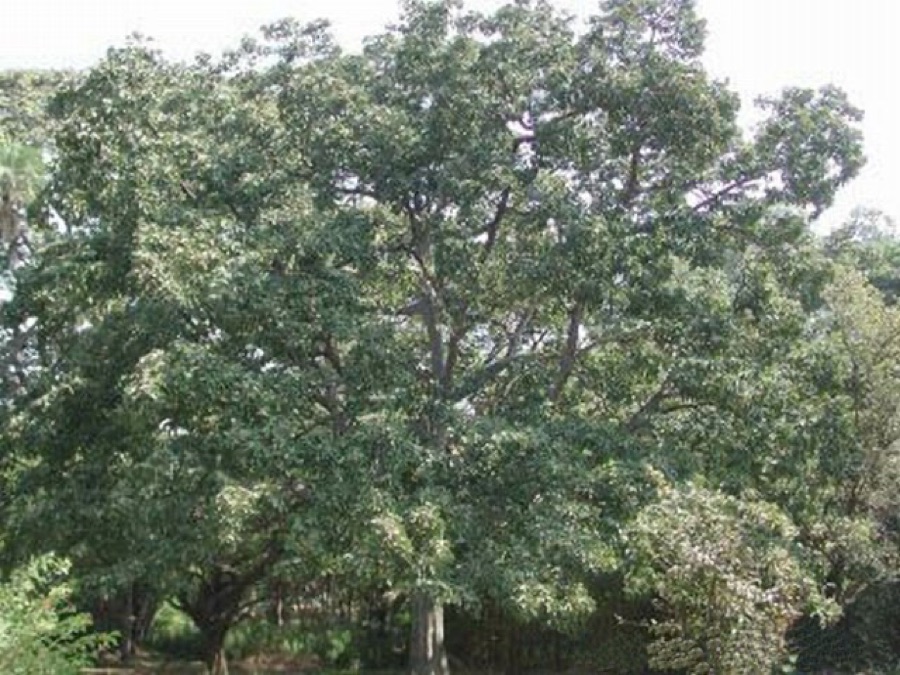
Photo: Jan Ainali · CC BY-SA 3.0 · Wikimedia Commons

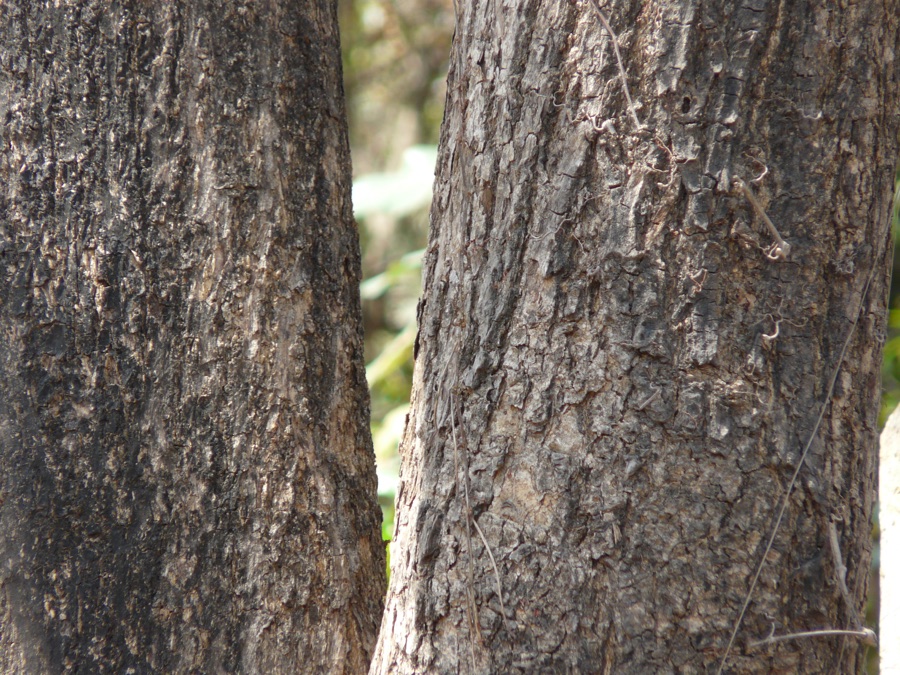
Photo: Dinesh Valke from Thane, India · CC BY-SA 2.0 · Wikimedia Commons

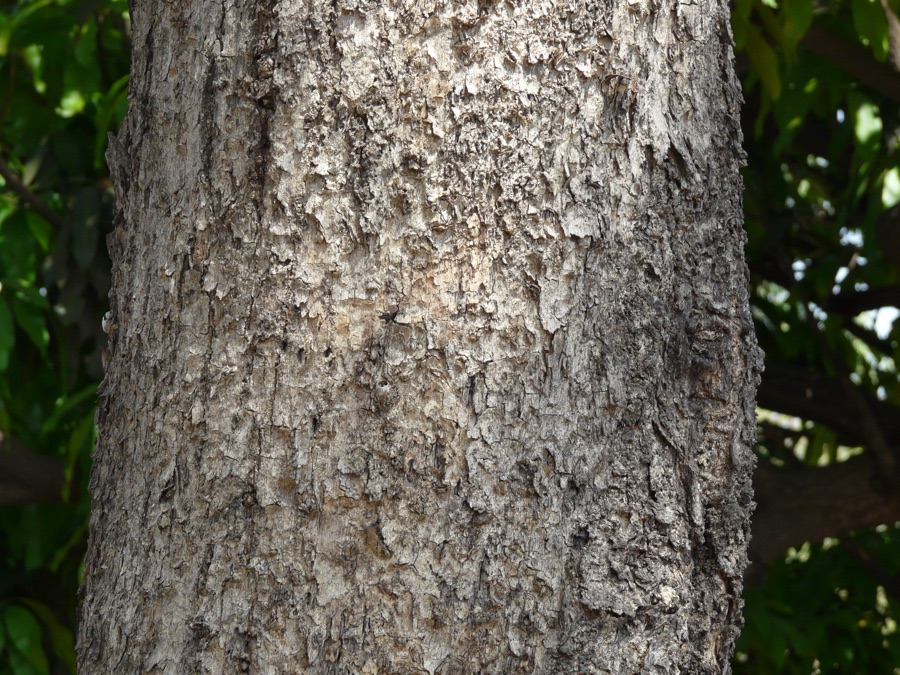
Photo: Dinesh Valke from Thane, India · CC BY-SA 2.0 · Wikimedia Commons

Matra and anupana
AS THE CLASSICAL TEXTS AND THE API PRESCRIBE
| Churna | 3–6 g |
| Kwatha | 50–100 ml |
| Anupana | Ushnodaka · Madhu |
| Kala | Adhobhakta |
One of the three of Triphala; the fruit pulp only, seed discarded.
Reported from Sharangadhara Samhita and the Ayurvedic Pharmacopoeia of India. Laisha states what the texts prescribe; it does not recommend. No quantity here is adjusted for a particular person — not for agni, koshtha, bala, age, pregnancy, kidney or liver function, or anything already being taken.
Pharmacopoeial standard
Ayurvedic Pharmacopoeia of India, Part I
| Marker | Tannins |
| Assay | Not less than 20 per cent |
| Total ash | Total ash not more than 7 per cent |
| Acid-insoluble ash | Not more than 1 per cent |
| Alcohol-soluble extractive | Alcohol-soluble extractive not less than 10 per cent |
| Water-soluble extractive | Water-soluble extractive not less than 30 per cent |
| Foreign matter | Foreign matter not more than 2 per cent |
Pericarp only. The seed is discarded and its presence is detectable in the ash.
These are the pharmacopoeial limits for the article, not a test Laisha has run on anything. They are here so a practitioner can ask a supplier for a certificate of analysis and know what the numbers on it should say.
Rasapanchaka
| Rasa | Kashaya |
| Guna | LaghuRuksha |
| Virya | Ushna |
| Vipaka | Madhura |
| Prabhava | The texts single it out as chakshushya and keshya. Within Triphala it is the dravya the texts associate most with kapha. |
| Doshakarma | Kaphapittahara principally. Within the Triphala combination the three together are described as tridoshahara, which is the reason the combination exists rather than the three being used singly. |
A single rasa, kashaya, and that singleness is the usual exam contrast with amalaki and haritaki, which each carry five.
Karma and part used
These are the actions the classical texts record. They are statements about what the tradition holds, and this library does not restate them as findings about a human body.
| Upayukta anga | Phala twak (the fruit pericarp, seed removed and discarded) |
| Why it matters | The dravya is the pericarp of the mature fruit with the seed removed. This matters more here than for its companions: the kernel inside is reported in the traditional literature as intoxicant and is not the dravya. A powder milled whole is not bibhitaki. |
Paryaya
Aksha is also the name of the die used in dice, and the fruit was used as one — the association survives in the Mahabharata and in the dravya's reputation.
Names, by language
| English | Belleric myrobalan |
| Sinhala | Bulu |
| Nepali | Barro |
| Arabic | Balilaj |
| Chinese | Mao he zi |
| Hindi | Baheda |
| Kannada | Tare kai |
| Tamil | Thanrikkai |
| Telugu | Tandra |
| Malayalam | Thannikka |
| Marathi | Behada |
| Gujarati | Baheda |
| Bengali | Bahera |
| Punjabi | Bahera |
| Odia | Bahada |
| Urdu | Balela |
Classical references
Rasa, guna, virya, vipaka and karma are recorded as the classical texts give them, with the text and section named. Where an exact verse could not be confirmed the section is named instead of a number being invented.
Formulations it appears in
| Triphala | One of the three fruits, with haritaki and amalaki. |
| Triphala Churna and its derivatives | Present in every preparation built on Triphala. |
Adulterants and substitutes
Confused in the market with haritaki, which grows in the same forests, is the same genus and dries to a similar dark fruit. The more serious problem is the kernel: bibhitaki powder milled from the whole fruit includes a seed the traditional literature reports as intoxicant, and no buyer can see that in a powder. Buy the deseeded pericarp whole.
Identity
Matched live against the GBIF backbone on 28 September 2026 at 99 per cent confidence as Terminalia bellirica (Gaertn.) Roxb. in Combretaceae. Same genus as haritaki and often growing beside it, which is exactly why the dried fruits are confused in the market.
A WAY TO REMEMBER IT
Terminalia, leaves at the end of the shoot. Bellirica is from the Persian balilaj, the same word behind the Hindi bahera. Bibhitaki means the one that removes fear of disease.
What the tradition holds
Bibhitaki is one of the three fruits of Triphala and is described in the Bhavaprakasha Nighantu alongside haritaki and amalaki. Ayurveda records it as chakshushya and keshya and as acting principally on kapha. That is what the tradition holds and where it is written down, not a finding about what the fruit does in a body.
Constituents. The pericarp carries hydrolysable tannins including chebulagic acid and gallic acid derivatives, together with lignans. The kernel has a quite different composition from the pericarp, which is the compositional reason the two are not interchangeable.
What the evidence says
| Status | Traditional use is extensive and long recorded. Modern clinical evidence is limited. |
| Suggested | Health Canada publishes monographs covering Ayurvedic ingredients and permits specific traditional-use claims, which reflects a regulator accepting a documented tradition rather than clinical trial evidence. |
| Not established | There is not enough good clinical evidence to establish an effect on any named health condition. Traditional use is not a substitute for that evidence. |
| The honest gap | Most published work on Triphala studies the combination, not bibhitaki alone, so a finding about Triphala says little about this dravya on its own. |
Safety
The pericarp is the dravya and the kernel is not; the traditional literature reports the kernel as intoxicant, and that is the single most important safety point about this plant. High tannin content means loose stools or stomach discomfort at higher intakes. Anyone pregnant, on medication, or managing a diagnosed condition should speak to a doctor or a qualified practitioner before using it as a medicine.
| Side effects | Loose stools Stomach discomfort Dry mouth from the tannins |
| Contraindications | No absolute contraindication is documented here for the deseeded pericarp. This is written deliberately rather than left blank. The kernel is not used at all, which is a rule about the material rather than a contraindication. |
| Interactions | No specific drug interaction is documented for this dravya. That is the honest state of the evidence, not a statement that none exists — most Ayurvedic dravya have never been studied for interaction. Tell the prescribing doctor it is being taken. Antidiabetic medicines — a hypoglycaemic effect is reported for Terminalia bellirica and for Triphala. Any oral drug taken at the same time — the high tannin content binds in the gut and reduces absorption. Separate by two hours. |
| Pregnancy and breastfeeding | There is not enough evidence to establish safety in pregnancy or breastfeeding, and a qualified practitioner should be asked first. |
Growing it
| Climate | Tropical and subtropical deciduous forest across the Indian subcontinent and Southeast Asia. |
| Soil | Wide range, drained; common on hill and forest ground. |
| Planting | A large forest tree. Most market supply is collected from wild and semi-wild stands rather than planted. |
| Harvest | Mature fruit collected after it falls or when fully coloured, then dried, and the seed removed before storage or milling. |
| What is not stated | Because supply is largely wild-collected, planted-crop spacing and yield figures are not stated here; this library has not verified them against a named agricultural authority. |
Check this page
Print it and the code still works. It goes to this page and nowhere else.
What this is not
- This is a study and clinical reference for practitioners and students. The matra and anupana it records are what the classical texts and the Ayurvedic Pharmacopoeia of India PRESCRIBE — Laisha reports them, it does not recommend them. They are not a prescription for any particular person, and they are not adjusted for your age, agni, koshtha, bala, pregnancy, kidney or liver function, or anything else you are already taking. Only a qualified practitioner who has examined you can do that.
- Traditional classification is recorded as what the classical texts say, with the text and the place in it named so it can be checked. It is not restated as a finding about a human body.
- Nothing here replaces a qualified Ayurvedic practitioner or a doctor.
Sources
https://api.gbif.org/v1/species/match?name=Terminalia%20bellirica
https://pcimh.gov.in/
https://www.canada.ca/en/health-canada/services/drugs-health-products/natural-non-prescription/applications-submissions/product-licensing/compendium-monographs.html
https://niimh.nic.in/ebooks/esharangadhara/