Brahmi
ब्राह्मी
Bacopa monnieri (L.) Pennell
Plantaginaceae · Bacopa
One name, more than one plant
Matched live against the GBIF backbone on 28 September 2026 at 97 per cent confidence. This is the single most consequential identity problem in the Indian materia medica: the name Brahmi is used for TWO unrelated plants. Bacopa monnieri is Brahmi in most of India and in the pharmacopoeia. Centella asiatica — Mandukaparni — is called Brahmi in much of the south and in Sri Lanka. They are different families, different appearance and different chemistry, and a product labelled Brahmi may be either.
Benefits & side effects
TRADITIONAL VIEW, WITH SAFETY LIMITS
What the texts say Brahmi does
- Medhya — supports intellect and memory
- Rasayana — rejuvenative
- Ayushya — promotes longevity
- Swarya — good for the voice
- Hridya — good for the heart
What the evidence says. Traditional use is extensive and long recorded. Modern clinical evidence is limited.
Side effects and limits
- Nausea
- Stomach cramps
- Dry mouth
- Fatigue
Avoid or ask first: No absolute contraindication is documented here. This is written deliberately rather than left blank.
A traditional classification, not a recommendation. The full safety record is below.
Stands in 2 groups
- Balya — Strength-giving (named there as Aindri)
- Prajasthapana — Sustaining progeny (named there as Aindri)
A Samhita can only be read forwards, from the group to its members. This is the same list read backwards.
Photographs
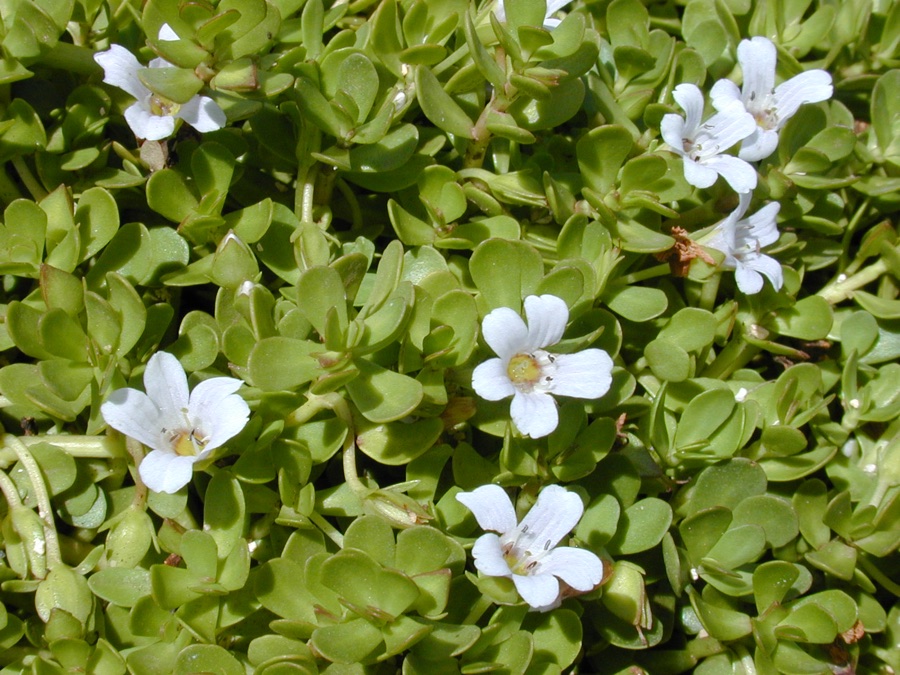
Photo: Forest & Kim Starr · CC BY 3.0 · Wikimedia Commons

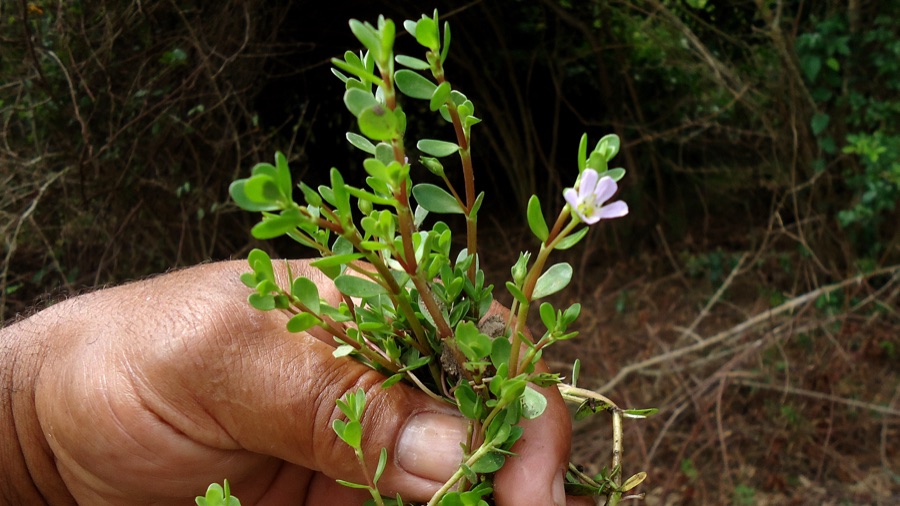
Photo: Alex Popovkin, Bahia, Brazil · CC BY 2.0 · Wikimedia Commons

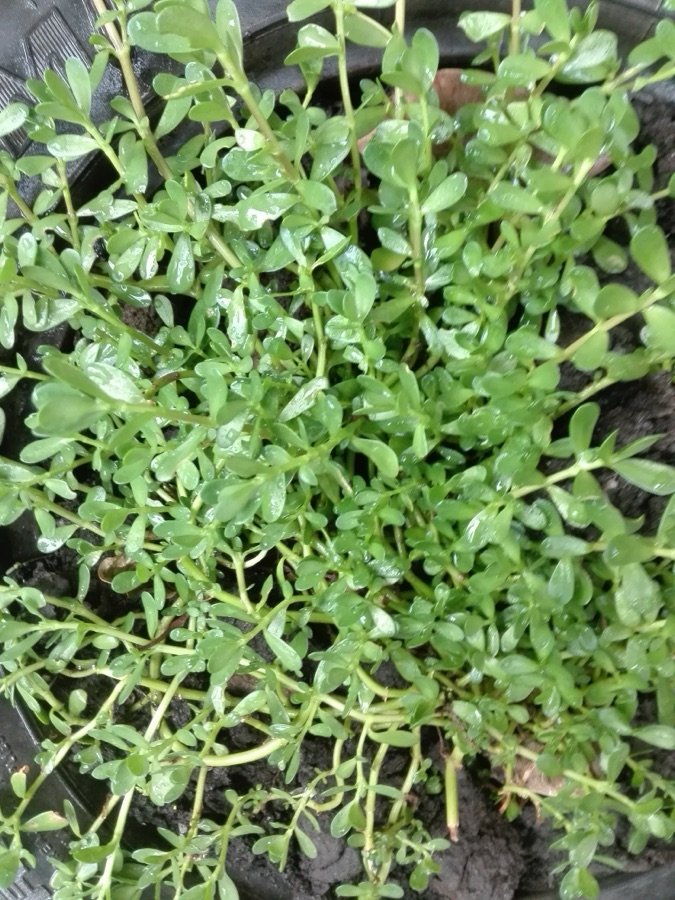
Photo: Nayan j Nath · CC BY-SA 4.0 · Wikimedia Commons

Matra and anupana
AS THE CLASSICAL TEXTS AND THE API PRESCRIBE
| Churna | 3–6 g |
| Swarasa | 10–20 ml |
| Kwatha | 50–100 ml |
| Anupana | Ghrita · Dugdha · Madhu |
| Kala | Pragbhakta |
Ghrita is the classical medhya anupana. Confirm the species: Bacopa monnieri, not Centella asiatica.
Reported from Sharangadhara Samhita and the Ayurvedic Pharmacopoeia of India. Laisha states what the texts prescribe; it does not recommend. No quantity here is adjusted for a particular person — not for agni, koshtha, bala, age, pregnancy, kidney or liver function, or anything already being taken.
Pharmacopoeial standard
Ayurvedic Pharmacopoeia of India, Part I
| Marker | Bacoside A |
| Assay | Not less than 1.0 per cent |
| Total ash | Total ash not more than 22 per cent |
| Acid-insoluble ash | Not more than 10 per cent |
| Alcohol-soluble extractive | Alcohol-soluble extractive not less than 4 per cent |
| Water-soluble extractive | Water-soluble extractive not less than 12 per cent |
| Foreign matter | Foreign matter not more than 2 per cent |
Bacoside A is the marker and it is the test that separates Bacopa monnieri from Centella asiatica — Centella has no bacosides at all. If the name is Brahmi and the bacosides are absent, you have Mandukaparni.
These are the pharmacopoeial limits for the article, not a test Laisha has run on anything. They are here so a practitioner can ask a supplier for a certificate of analysis and know what the numbers on it should say.
Rasapanchaka
| Rasa | TiktaKashayaMadhura |
| Guna | LaghuSara |
| Virya | Sheeta |
| Vipaka | Madhura |
| Prabhava | Charaka names brahmi among the medhya rasayana, the small group of dravya specifically classed as acting on the intellect. The texts treat that as prabhava. |
| Doshakarma | Tridoshahara, and particularly kaphapittahara. |
Tikta predominant. A tikta dravya with sheeta virya and madhura vipaka is the combination the texts associate with its medhya classification.
Karma and part used
These are the actions the classical texts record. They are statements about what the tradition holds, and this library does not restate them as findings about a human body.
| Upayukta anga | Panchanga (the whole plant) |
| Why it matters | The whole herb above the root is the article. It is a creeping plant of wet ground, and material collected from drains or polluted water carries whatever the water carried. |
Paryaya
Saraswati and Aindri are both names associated with intellect and are the reason the medhya classification is read into the name. Matsyakshi — fish-eyed — describes the leaf.
Names, by language
| English | Water hyssop |
| Sinhala | Lunuwila |
| Nepali | Brahmi |
| Hindi | Brahmi |
| Kannada | Neer brahmi |
| Tamil | Neerbrahmi |
| Telugu | Sambrani chettu |
| Malayalam | Brahmi |
| Marathi | Brahmi |
| Gujarati | Jalnevari |
| Bengali | Brahmi shak |
| Punjabi | Brahmi |
| Odia | Brahmi |
| Urdu | Brahmi |
Classical references
Rasa, guna, virya, vipaka and karma are recorded as the classical texts give them, with the text and section named so a student can open the book and check. Where an exact chapter and verse could not be confirmed, this library names the section rather than inventing a number.
Formulations it appears in
| Brahmi Ghrita | A ghee preparation named for the dravya. |
| Saraswatarishta | Named for brahmi's synonym Saraswati. |
| Brahmi Vati | Named for the dravya. |
Adulterants and substitutes
The substitution here is not fraud but a genuine collision of names: Centella asiatica is called Brahmi across southern India and is a different plant in a different family. A buyer asking for Brahmi in Kerala and in Uttar Pradesh may be handed two unrelated species, both correctly named by local usage. Anyone buying should ask for the botanical name, and this library states both plants separately for that reason.
Identity
Matched live against the GBIF backbone on 28 September 2026 at 97 per cent confidence. This is the single most consequential identity problem in the Indian materia medica: the name Brahmi is used for TWO unrelated plants. Bacopa monnieri is Brahmi in most of India and in the pharmacopoeia. Centella asiatica — Mandukaparni — is called Brahmi in much of the south and in Sri Lanka. They are different families, different appearance and different chemistry, and a product labelled Brahmi may be either.
A WAY TO REMEMBER IT
Bacopa is from a South American Arawak name. Monnieri honours Louis-Guillaume Le Monnier. Note it is Plantaginaceae, NOT Apiaceae — that is how you tell it from Centella asiatica, which is also called Brahmi.
What the tradition holds
Charaka names brahmi among the medhya rasayana in the Rasayana chapter — a short and specific list. Ayurveda records it as acting on the intellect and as tridoshahara. That is what the tradition holds and where it is written down, not a finding about what the herb does in a body.
Constituents. The herb carries triterpenoid saponins known as bacosides, which are what commercial extracts are standardised to. Content varies with the population and with growing conditions.
What the evidence says
| Status | Traditional use is extensive and long recorded. Modern clinical evidence is limited. |
| Suggested | Health Canada publishes monographs covering Ayurvedic ingredients and permits specific traditional-use claims, which reflects a regulator accepting a documented tradition rather than a body of clinical trial evidence. |
| Not established | There is not enough good clinical evidence to establish an effect on any named health condition. Long traditional use is not a substitute for that evidence, and this library does not present it as one. |
| The honest gap | Most published work uses extracts standardised to bacoside content. A whole herb bought dried is not that material. And a study that names only Brahmi without the binomial cannot be relied on to be about this plant at all. |
Safety
Generally well tolerated. Digestive upset is the commonly reported effect. The more practical risk is where it was grown: it is a plant of wet ground and is collected from drains and paddy margins, and it takes up what the water carries. Anyone on thyroid medicine, on sedatives, pregnant, or managing a diagnosed condition should speak to a doctor or a qualified practitioner first.
| Side effects | Nausea Stomach cramps Dry mouth Fatigue |
| Contraindications | No absolute contraindication is documented here. This is written deliberately rather than left blank. |
| Interactions | Sedatives and antiepileptics — additive sedation reported; bacosides have been studied with phenytoin. Thyroid hormone — T4 elevation reported in animal work. Amitriptyline — reduced absorption reported. Acetylcholinesterase inhibitors, including donepezil — cholinergic direction may be additive. |
| Pregnancy and breastfeeding | There is not enough evidence to establish safety in pregnancy or breastfeeding, and a qualified practitioner should be asked first. |
Growing it
| Climate | Tropical and subtropical wetland; grows in shallow water and on wet margins. |
| Soil | Wet, and clean. The growing water is part of the material. |
| Planting | Grown from cuttings, which root at the nodes readily in shallow water. |
| Harvest | The whole herb is cut and washed, then dried in shade. |
| What is not stated | This library does not state yields, because most supply is collected rather than cultivated and the collection sites are rarely recorded. |
Check this page
Print it and the code still works. It goes to this page and nowhere else.
What this is not
- This is a study and clinical reference for practitioners and students. The matra and anupana it records are what the classical texts and the Ayurvedic Pharmacopoeia of India PRESCRIBE — Laisha reports them, it does not recommend them. They are not a prescription for any particular person, and they are not adjusted for your age, agni, koshtha, bala, pregnancy, kidney or liver function, or anything else you are already taking. Only a qualified practitioner who has examined you can do that.
- Traditional classification is recorded as what the classical texts say, with the text and the place in it named so it can be checked. It is not restated as a finding about a human body.
- Nothing here replaces a qualified Ayurvedic practitioner or a doctor.
Sources
https://api.gbif.org/v1/species/match?name=Bacopa%20monnieri
https://pcimh.gov.in/
https://www.canada.ca/en/health-canada/services/drugs-health-products/natural-non-prescription/applications-submissions/product-licensing/compendium-monographs.html
https://niimh.nic.in/ebooks/esharangadhara/