Gokshura
गोक्षुर
Tribulus terrestris L.
Zygophyllaceae · Tribulus
Benefits & side effects
TRADITIONAL VIEW, WITH SAFETY LIMITS
Hindi name: Gokhru
What the texts say Gokshura does
- Mutrala — diuretic
- Vrishya — aphrodisiac, supports reproductive vigour
- Balya — strengthening
- Rasayana — rejuvenative
- Ashmarihara — used in urinary stones
- Vatahara — pacifies vata
What the evidence says. Traditional use is extensive and long recorded. Modern clinical evidence is limited.
Side effects and limits
- Digestive upset
- Disturbed sleep
Avoid or ask first: Existing kidney or liver disease — caution is advised in light of the reported cases above.
A traditional classification, not a recommendation. The full safety record is below.
Stands in 7 groups
- Mutravirechaniya — Promoting urine (named there as Shvadamshtra)
- Shothahara — Reducing swelling
- Krimighna — Destroying worms (named there as Shvadamshtra)
- Vidarigandhadi — Vata disorders and the wasting states (named there as Shvadamshtra)
- Viratarvadi — Urinary disease and Vata in the bladder (named there as Shvadamshtra)
- Laghu Panchamula — The lesser five roots (named there as Trikantaka)
- Kantaka Panchamula — The five thorny roots (named there as Trikantaka)
A Samhita can only be read forwards, from the group to its members. This is the same list read backwards.
Photographs
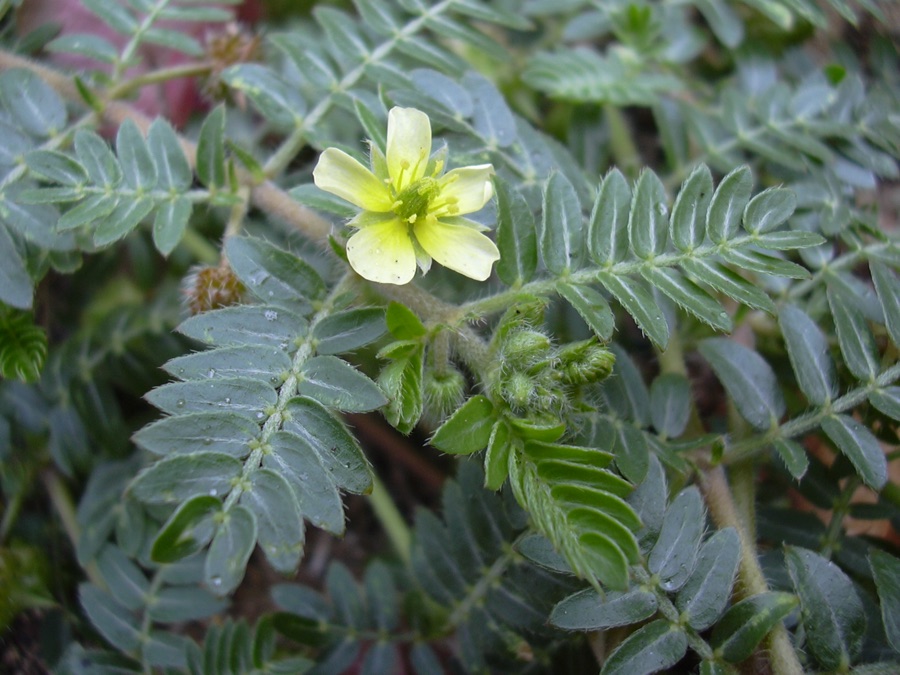
Photo: Forest & Kim Starr · CC BY 3.0 · Wikimedia Commons

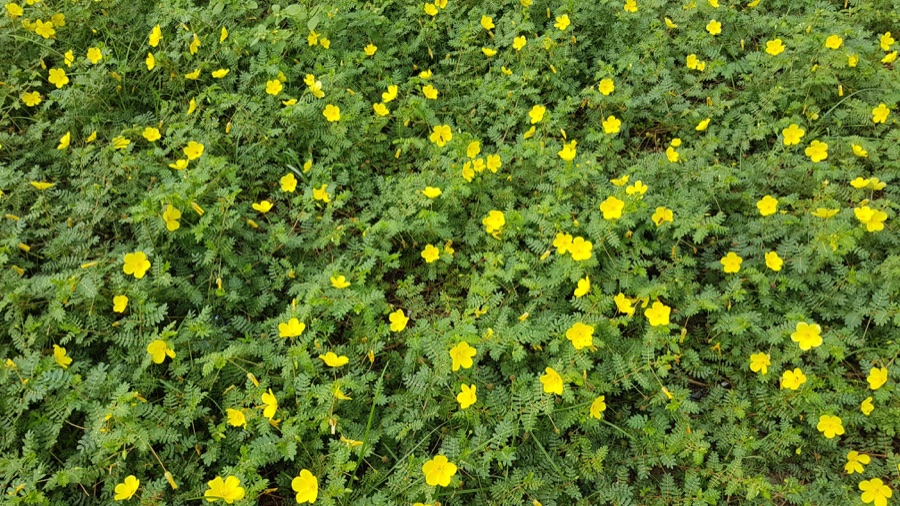
Photo: Obsidian Soul · CC0 · Wikimedia Commons

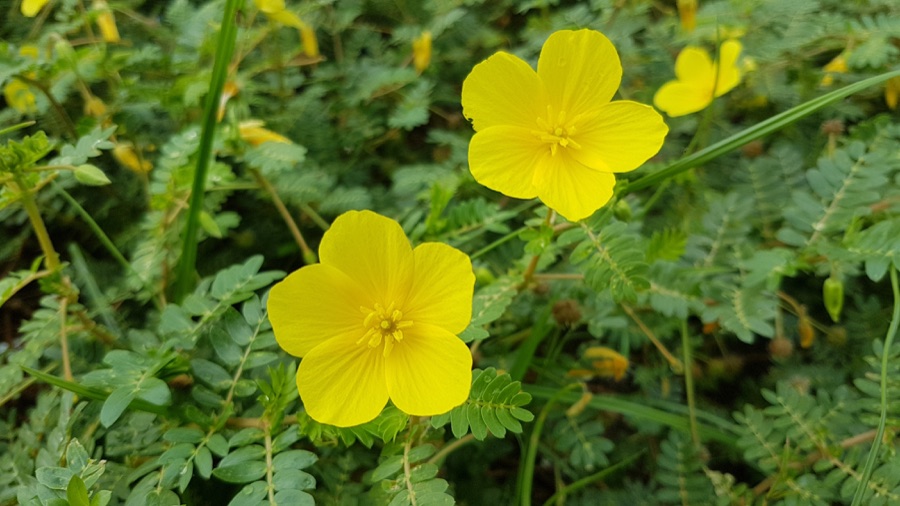
Photo: Obsidian Soul · CC0 · Wikimedia Commons

Matra and anupana
AS THE CLASSICAL TEXTS AND THE API PRESCRIBE
| Churna | 3–6 g |
| Kwatha | 50–100 ml |
| Anupana | Dugdha · Ushnodaka |
| Kala | Adhobhakta |
Dugdha is the classical anupana in mutrakrichra and as vrishya.
Reported from Sharangadhara Samhita and the Ayurvedic Pharmacopoeia of India. Laisha states what the texts prescribe; it does not recommend. No quantity here is adjusted for a particular person — not for agni, koshtha, bala, age, pregnancy, kidney or liver function, or anything already being taken.
Pharmacopoeial standard
Ayurvedic Pharmacopoeia of India, Part I
| Marker | Total saponins, expressed as diosgenin |
| Assay | |
| Total ash | |
| Acid-insoluble ash | |
| Alcohol-soluble extractive | |
| Water-soluble extractive | |
| Foreign matter |
Tribulus terrestris fruit. Material from different regions differs several-fold in saponin content, which is why origin is asked for.
These are the marker and the identity test for this dravya, and they are not a test Laisha has run on anything. Laisha does not state the numeric limits here: the assay, ash and extractive figures must be read from the current edition of the Ayurvedic Pharmacopoeia of India, because a wrong limit printed here is a number a laboratory would act on. The entries in this library that DO carry figures carry them because each one was checked.
Rasapanchaka
| Rasa | Madhura |
| Guna | GuruSnigdha |
| Virya | Sheeta |
| Vipaka | Madhura |
| Prabhava | The texts single out its action on the urinary passage and treat that as prabhava. |
| Doshakarma | Vatapittahara. Being guru and snigdha it can increase kapha. |
A single rasa, madhura, with sheeta virya and madhura vipaka — the combination the texts associate with its action on the urinary passage and on vata.
Karma and part used
These are the actions the classical texts record. They are statements about what the tradition holds, and this library does not restate them as findings about a human body.
| Upayukta anga | Phala (the fruit) Mula (the root), where Dashamoola is called for Panchanga |
| Why it matters | The fruit is the part most used and the part the name describes. The root is what Dashamoola calls for, and the two are not interchangeable — a formulation naming Dashamoola wants root. |
Paryaya
Gokshura means cow's hoof and Trikantaka means three-thorned: both name the spiny fruit, which is how the plant is identified and which is also why it is called puncture vine in English.
Names, by language
| English | Puncture vine |
| Sinhala | Neranchi |
| Nepali | Gokhuri |
| Hindi | Gokhru |
| Kannada | Neggilu |
| Tamil | Nerinjil |
| Telugu | Palleru |
| Malayalam | Njerinjil |
| Marathi | Sarate |
| Gujarati | Gokharu |
| Bengali | Gokshur |
| Punjabi | Bhakhra |
| Odia | Gokhyura |
| Urdu | Khar-e-khasak |
Classical references
Rasa, guna, virya, vipaka and karma are recorded as the classical texts give them, with the text and section named so a student can open the book and check. Where an exact chapter and verse could not be confirmed, this library names the section rather than inventing a number.
Formulations it appears in
| Gokshuradi Guggulu | A formulation named for the dravya. |
| Dashamoolarishta | Gokshura root is one of the ten roots. |
| Trikantakadi Kwatha | Gokshura is the principal dravya. |
Adulterants and substitutes
Pedalium murex is sold as Bada Gokhru, large gokshura, and Tribulus terrestris as Chota Gokhru, small gokshura. They are different families. Both names are in honest commercial use, so asking for gokhru without saying which one gets whatever the seller stocks. The fruit-for-root substitution described above is the other common one and is harder to see once the material is powdered.
Identity
Matched live against the GBIF backbone on 28 September 2026 at 99 per cent confidence. One of the ten roots of Dashamoola, where it is counted among the five lesser roots.
A WAY TO REMEMBER IT
Tribulus is the Latin caltrop, the four-spiked iron weapon thrown to lame horses — and the fruit is precisely that shape. Terrestris means of the ground. Go-kshura means cow's hoof, the same fruit described by what it pricks.
What the tradition holds
Gokshura is described in the Bhavaprakasha Nighantu and is counted among the Laghu Panchamoola. Ayurveda records it as mutrala and as balya. That is what the tradition holds and where it is written down, not a finding about what the plant does in a body.
Constituents. The fruit and herb carry steroidal saponins, of which protodioscin is the one commercial extracts are standardised to. Content varies markedly with the region the plant grew in, which is a documented and unusually large variation for this species.
What the evidence says
| Status | Traditional use is extensive and long recorded. Modern clinical evidence is limited. |
| Suggested | Health Canada publishes monographs covering Ayurvedic ingredients and permits specific traditional-use claims, which reflects a regulator accepting a documented tradition rather than a body of clinical trial evidence. |
| Not established | There is not enough good clinical evidence to establish an effect on any named health condition. Long traditional use is not a substitute for that evidence, and this library does not present it as one. |
| The honest gap | Published work uses standardised extracts of varying saponin content, and material from different regions differs enough that results do not carry across. |
Safety
The important caution is that this dravya is sold worldwide as a sports and performance supplement, which is a use the classical literature does not describe and which has produced reports of harm at doses far above traditional use. Reports of kidney injury and of liver injury associated with Tribulus products exist in the literature. Anyone with kidney or liver disease, on medication, pregnant, or managing a diagnosed condition should speak to a doctor or a qualified practitioner first.
| Side effects | Digestive upset Disturbed sleep |
| Contraindications | Existing kidney or liver disease — caution is advised in light of the reported cases above. |
| Interactions | Diuretics — additive diuresis; check electrolytes. Lithium — altered renal sodium handling can change lithium clearance. Antidiabetic and antihypertensive medicines — additive lowering. |
| Pregnancy and breastfeeding | Not to be used in pregnancy. There is not enough evidence to establish safety in breastfeeding, and a qualified practitioner should be asked first. |
Growing it
| Climate | Dry and hot; a weed of waste ground across much of India. |
| Soil | Poor, sandy, dry ground. It does not want good soil. |
| Planting | Self-sows freely from the spiny fruit, which is carried on hooves and tyres. |
| Harvest | Fruit is collected when ripe and dried. Roots for Dashamoola are lifted separately and are a different article. |
| What is not stated | Almost all supply is collected from waste ground rather than cultivated, so this library does not state yields. |
Check this page
Print it and the code still works. It goes to this page and nowhere else.
What this is not
- This is a study and clinical reference for practitioners and students. The matra and anupana it records are what the classical texts and the Ayurvedic Pharmacopoeia of India PRESCRIBE — Laisha reports them, it does not recommend them. They are not a prescription for any particular person, and they are not adjusted for your age, agni, koshtha, bala, pregnancy, kidney or liver function, or anything else you are already taking. Only a qualified practitioner who has examined you can do that.
- Traditional classification is recorded as what the classical texts say, with the text and the place in it named so it can be checked. It is not restated as a finding about a human body.
- Nothing here replaces a qualified Ayurvedic practitioner or a doctor.
Sources
https://api.gbif.org/v1/species/match?name=Tribulus%20terrestris
https://pcimh.gov.in/
https://www.canada.ca/en/health-canada/services/drugs-health-products/natural-non-prescription/applications-submissions/product-licensing/compendium-monographs.html
https://niimh.nic.in/ebooks/esharangadhara/
https://pcimh.gov.in/