Guduchi
गुडूची
Tinospora cordifolia (Willd.) Hook.f. & Thomson
Menispermaceae · Tinospora
Benefits & side effects
TRADITIONAL VIEW, WITH SAFETY LIMITS
Hindi name: Giloy
What the texts say Guduchi does
- Rasayana — rejuvenative
- Deepana — kindles digestion (appetiser)
- Balya — strengthening
- Jvarahara — used in fever
- Trishnahara — relieves thirst
- Dahaprashamana — relieves burning
What the evidence says. Traditional use is extensive and long recorded. Modern clinical evidence is limited.
Side effects and limits
- Digestive discomfort
Avoid or ask first: Autoimmune conditions — caution is advised, and a practitioner should be asked first.; Existing liver disease — caution is advised in light of the reported cases above.
A traditional classification, not a recommendation. The full safety record is below.
Stands in 15 groups
- Sandhaniya — Uniting and healing (named there as Madhuparni)
- Trishnanigrahana — Quenching thirst
- Jwarahara — Relieving fever
- Dahaprashamana — Allaying burning
- Snehopaga — Adjuvant to oleation (named there as Madhuparni)
- Trptighna — Relieving cloying satiety
- Stanyashodhana — Purifying breast milk
- Vayasthapana — Sustaining youth (named there as Amrita)
- Aragvadhadi — Kapha, poisoning, and wound cleansing
- Shyamadi — Purgation, poison, and retained Vata
- Patoladi — Pitta, Kapha, fever, and vomiting
- Kakolyadi — Pitta, bleeding, and the building of tissue (named there as Chhinnaruha)
- Guduchyadi — Fever, thirst, vomiting and burning
- Valli Panchamula — The five creeper roots
- Panchatikta — The five bitters
A Samhita can only be read forwards, from the group to its members. This is the same list read backwards.
Photographs
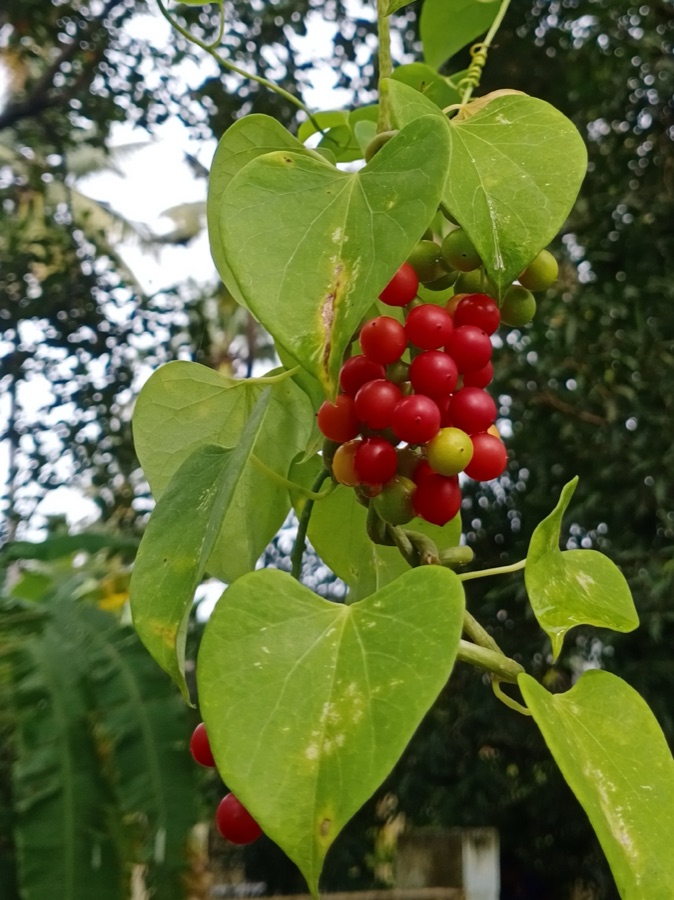
Photo: Sanu N · CC BY-SA 4.0 · Wikimedia Commons

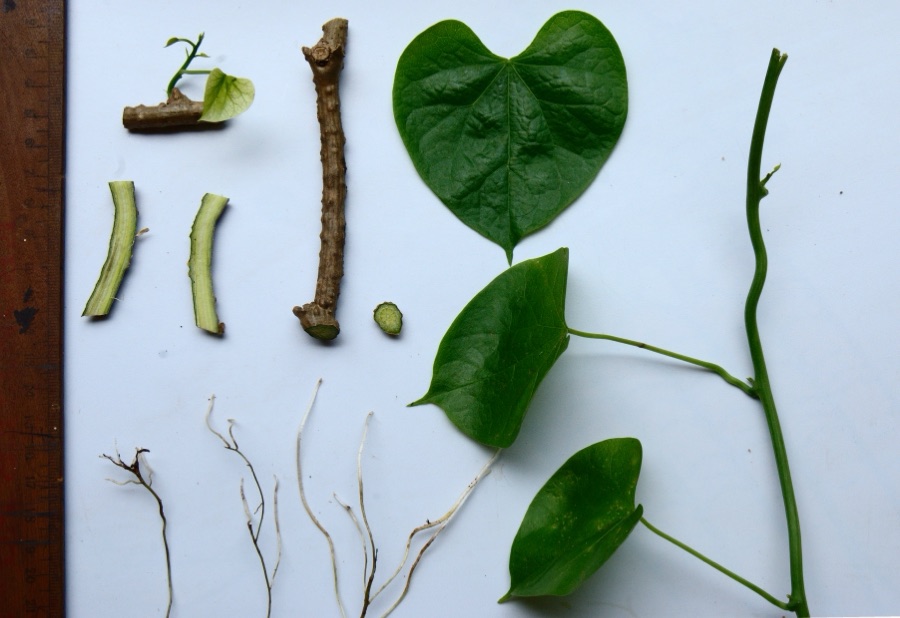
Photo: Arayilpdas at Malayalam Wikipedia · CC BY 3.0 · Wikimedia Commons

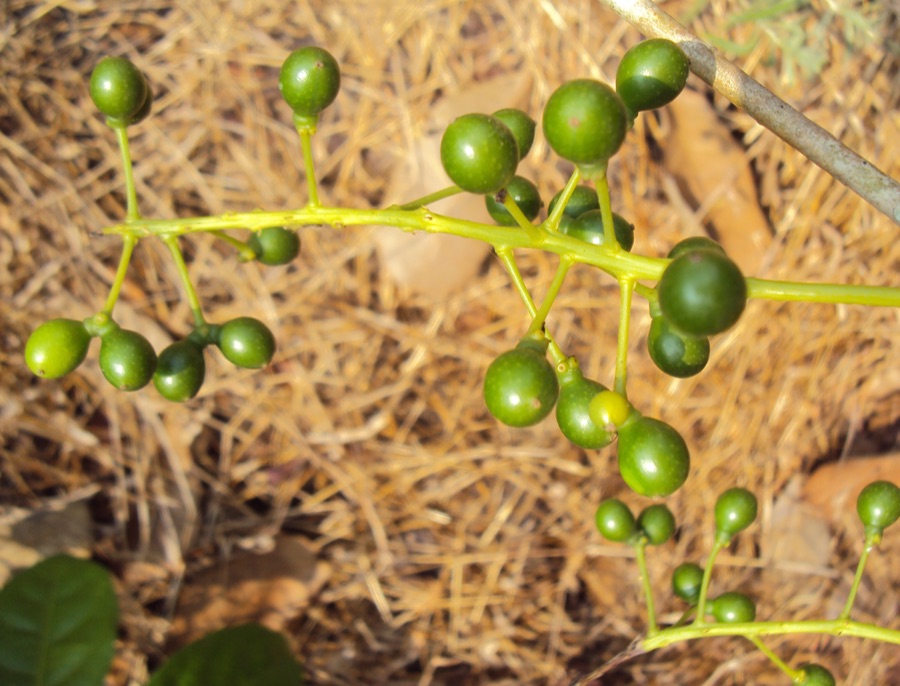
Photo: Vinayaraj · CC BY-SA 4.0 · Wikimedia Commons

Matra and anupana
AS THE CLASSICAL TEXTS AND THE API PRESCRIBE
| Churna | 3–6 g |
| Swarasa | 10–20 ml |
| Kwatha | 50–100 ml |
| Satva | 1–3 g |
| Anupana | Ushnodaka · Madhu · Ghrita |
| Kala | Adhobhakta |
Satva (the starch) is a distinct preparation with its own matra and is the sheeta form.
Reported from Sharangadhara Samhita and the Ayurvedic Pharmacopoeia of India. Laisha states what the texts prescribe; it does not recommend. No quantity here is adjusted for a particular person — not for agni, koshtha, bala, age, pregnancy, kidney or liver function, or anything already being taken.
Pharmacopoeial standard
Ayurvedic Pharmacopoeia of India, Part I
| Marker | Starch (satva) content and TLC identity |
| Assay | As the monograph gives |
| Total ash | Total ash not more than 16 per cent |
| Acid-insoluble ash | Not more than 3 per cent |
| Alcohol-soluble extractive | Alcohol-soluble extractive not less than 3 per cent |
| Water-soluble extractive | Water-soluble extractive not less than 11 per cent |
| Foreign matter | Foreign matter not more than 2 per cent |
Stem only. A high acid-insoluble ash points to adhering soil, and to stem collected from the ground rather than climbing.
These are the pharmacopoeial limits for the article, not a test Laisha has run on anything. They are here so a practitioner can ask a supplier for a certificate of analysis and know what the numbers on it should say.
Rasapanchaka
| Rasa | TiktaKashaya |
| Guna | LaghuSnigdha |
| Virya | Ushna |
| Vipaka | Madhura |
| Prabhava | Classified as rasayana. Charaka's Sutrasthana groups it among the dravya that act on fever, and the texts treat its rasayana action as prabhava rather than as a consequence of its rasapanchaka. |
| Doshakarma | Tridoshahara. A tikta dravya with ushna virya and madhura vipaka is an unusual combination, and it is that combination the texts credit for its action on all three doshas. |
Tikta predominant, with kashaya. It is among the dravya where the vipaka differs strikingly from the rasa, and that contrast is the usual examination point.
Karma and part used
These are the actions the classical texts record. They are statements about what the tradition holds, and this library does not restate them as findings about a human body.
| Upayukta anga | Kanda (the mature stem) |
| Why it matters | The mature stem is the dravya. The classical texts and the pharmacopoeia both specify the stem, and the leaf is not a substitute for it. Stem collected from a plant growing on a neem tree is traditionally held to be superior, which is a statement about the tradition rather than a tested claim. |
Paryaya
Amrita means nectar or the undying, and Chhinnaruha means one that grows again after being cut — a name describing the plant's habit, which is how a student is expected to recognise it.
Names, by language
| English | Heart-leaved moonseed |
| Sinhala | Rasakinda |
| Nepali | Gurjo |
| Hindi | Giloy |
| Kannada | Amruthaballi |
| Tamil | Seendhil |
| Telugu | Tippateega |
| Malayalam | Chittamruthu |
| Marathi | Gulvel |
| Gujarati | Galo |
| Bengali | Gulancha |
| Punjabi | Gilo |
| Odia | Guluchi |
| Urdu | Gilo |
Classical references
Rasa, guna, virya, vipaka and karma are recorded as the classical texts give them, with the text and section named so a student can open the book and check. Where an exact chapter and verse could not be confirmed, this library names the section rather than inventing a number.
Formulations it appears in
| Guduchi Satva | The starch settled out of the fresh stem; a preparation named for the dravya. |
| Amritarishta | Named for guduchi's own synonym, Amrita. |
| Guduchyadi Kashaya | Guduchi is the named principal dravya. |
| Chyawanprash | Present among the many dravya of the formulation. |
Adulterants and substitutes
Tinospora sinensis is collected and sold alongside it, particularly as dried stem where the two are hard to tell apart. Stems of unrelated climbers are also sold as giloy in loose markets. Once cut and dried the distinguishing features are largely gone, which is the argument for buying from a source that can say where it was collected.
Identity
Matched live against the GBIF backbone on 28 September 2026 at 97 per cent confidence. The name most often confused with it is Tinospora sinensis, a real and separate species sold under the same vernacular names in several markets; the two are not treated as interchangeable by the pharmacopoeia.
A WAY TO REMEMBER IT
Tinospora is teinos (stretched) + spora (seed). Cordifolia is heart-leaved. The heart-shaped leaf is the field mark; cordifolia tells you so.
What the tradition holds
Guduchi is classed among the rasayana dravya and the Bhavaprakasha Nighantu names a whole varga after it. Ayurveda records it as acting on all three doshas and describes a jvarahara action. That is what the tradition holds and where it is written down, not a finding about what the stem does in a body.
Constituents. The stem carries a range of alkaloids, diterpenoid lactones, glycosides and a starch fraction that is settled out separately as Guduchi Satva. Composition varies with the season of collection and with what the plant was climbing on.
What the evidence says
| Status | Traditional use is extensive and long recorded. Modern clinical evidence is limited. |
| Suggested | Health Canada publishes monographs covering Ayurvedic ingredients and permits specific traditional-use claims, which reflects a regulator accepting a documented tradition rather than a body of clinical trial evidence. |
| Not established | There is not enough good clinical evidence to establish an effect on any named health condition. Long traditional use is not a substitute for that evidence, and this library does not present it as one. |
| The honest gap | Published work rarely records which Tinospora species was used or the season of collection, and both change the material. Two papers on guduchi may not be papers on the same thing. |
Safety
Reports of liver injury associated with giloy products appeared in India during and after 2021, and while species misidentification and adulteration were proposed as explanations rather than the plant itself, the reports are real and are the reason this entry does not treat it as harmless. Anyone with liver disease, on medication, pregnant, or managing an autoimmune condition should speak to a doctor or a qualified practitioner before taking it.
| Side effects | Digestive discomfort |
| Contraindications | Autoimmune conditions — caution is advised, and a practitioner should be asked first. Existing liver disease — caution is advised in light of the reported cases above. |
| Interactions | Immunosuppressants, including after transplant — guduchi is used as an immunomodulator and the direction of effect opposes them. Antidiabetic medicines — a hypoglycaemic effect is reported; monitor rather than assume. A hepatotoxicity signal was reported in India in 2020–21, with a series of autoimmune-like hepatitis cases attributed to Tinospora. Misidentification with Tinospora crispa, which is hepatotoxic, is one proposed explanation and is a reason to be certain of the species and the supplier. Stop and investigate if transaminases rise. |
| Pregnancy and breastfeeding | There is not enough evidence to establish safety in pregnancy or breastfeeding, and a qualified practitioner should be asked first. |
Growing it
| Climate | Tropical and subtropical; grows through most of the Indian subcontinent as a climber on other trees. |
| Soil | Undemanding, drained. |
| Planting | Grown from stem cuttings, which root readily. Needs a host tree or a support to climb. |
| Harvest | Mature stem is cut, traditionally in the cooler months. The plant regrows from what is left, which is the habit its name Chhinnaruha describes. |
| What is not stated | This library has not verified region-specific spacing, variety and yield figures against a named agricultural authority for every growing country, and does not state them rather than guessing. |
Check this page
Print it and the code still works. It goes to this page and nowhere else.
What this is not
- This is a study and clinical reference for practitioners and students. The matra and anupana it records are what the classical texts and the Ayurvedic Pharmacopoeia of India PRESCRIBE — Laisha reports them, it does not recommend them. They are not a prescription for any particular person, and they are not adjusted for your age, agni, koshtha, bala, pregnancy, kidney or liver function, or anything else you are already taking. Only a qualified practitioner who has examined you can do that.
- Traditional classification is recorded as what the classical texts say, with the text and the place in it named so it can be checked. It is not restated as a finding about a human body.
- Nothing here replaces a qualified Ayurvedic practitioner or a doctor.
Sources
https://api.gbif.org/v1/species/match?name=Tinospora%20cordifolia
https://pcimh.gov.in/
https://www.canada.ca/en/health-canada/services/drugs-health-products/natural-non-prescription/applications-submissions/product-licensing/compendium-monographs.html
https://niimh.nic.in/ebooks/esharangadhara/