Kakamachi
काकमाची
Solanum nigrum L.
Solanaceae · Solanum
Benefits & side effects
TRADITIONAL VIEW, WITH SAFETY LIMITS
Hindi name: Makoy
What the texts say Kakamachi does
- Shothahara — reduces swelling
- Rasayana — rejuvenative
- Kamalahara — used in jaundice (kamala)
- Vranaropana — heals wounds
- Mutrala — diuretic
- Nidrajanana — induces sleep
What the evidence says. Traditional use is extensive and long recorded. Modern clinical evidence is limited.
Side effects and limits
- Digestive upset
- Drowsiness
Avoid or ask first: Unripe green fruit, in any quantity.; Pregnancy, in medicinal quantity.
A traditional classification, not a recommendation. The full safety record is below.
Stands in 1 group
- Surasadi — Kapha, worms, cough and breathlessness
A Samhita can only be read forwards, from the group to its members. This is the same list read backwards.
Photographs
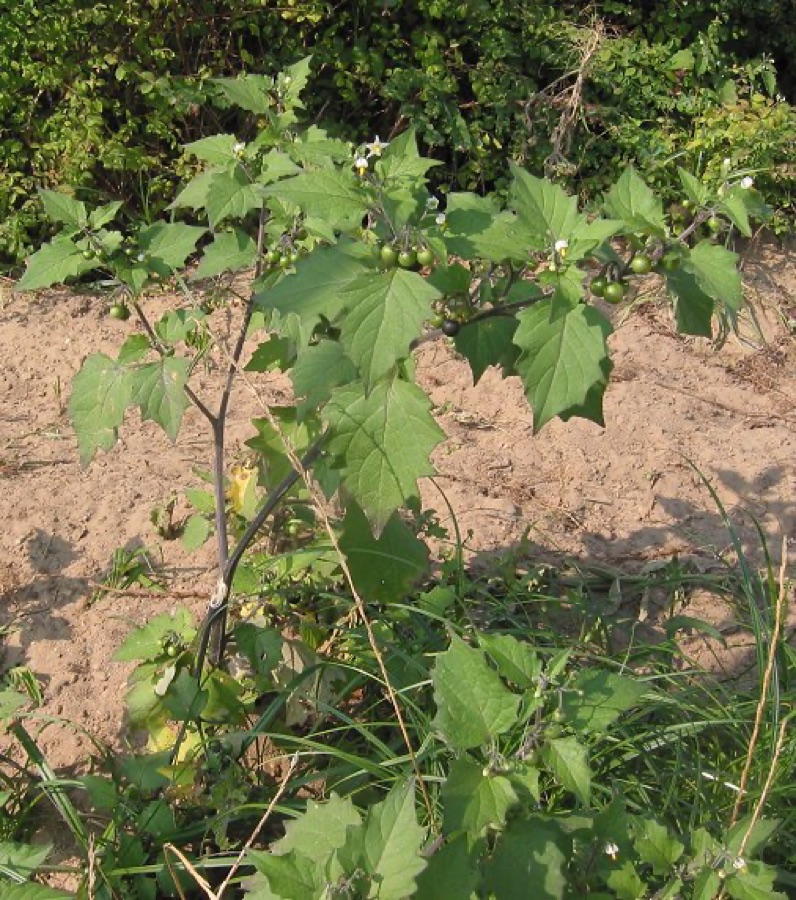
Photo: Unknown · CC BY-SA 3.0 · Wikimedia Commons

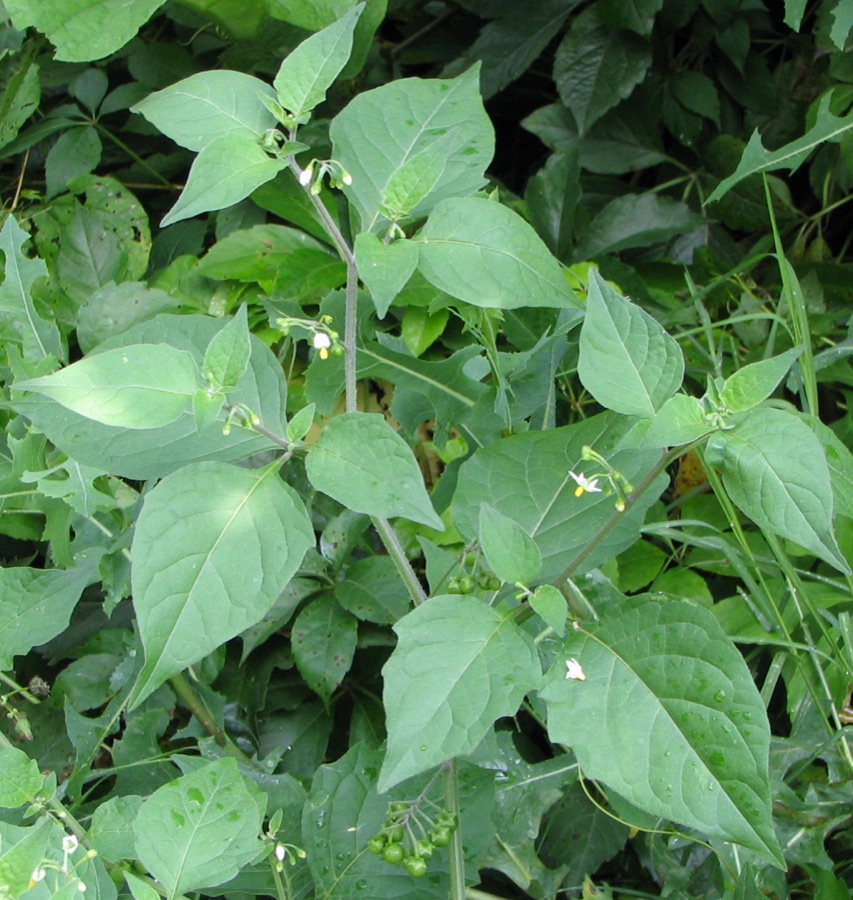
Photo: No machine-readable author provided. Bogdan assumed (based on copyright claims). · CC BY-SA 3.0 · Wikimedia Commons

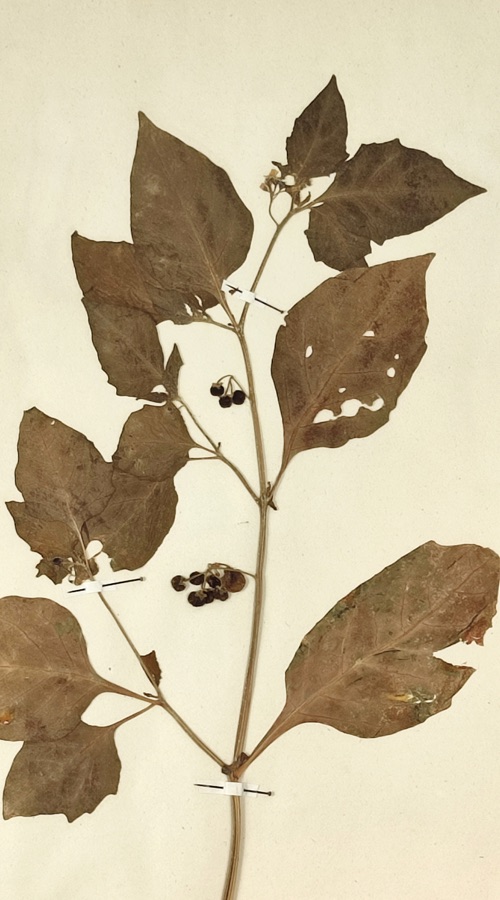
Photo: Giuseppe Frizzi · Public domain · Wikimedia Commons

Matra and anupana
AS THE CLASSICAL TEXTS AND THE API PRESCRIBE
| Panchanga swarasa | 10–20 ml |
| Kwatha | 50–100 ml |
| Anupana | Ushnodaka |
| Kala | Adhobhakta |
The classical yakrit and shotha drug. Unripe berries have caused poisoning.
Reported from Sharangadhara Samhita and the Ayurvedic Pharmacopoeia of India. Laisha states what the texts prescribe; it does not recommend. No quantity here is adjusted for a particular person — not for agni, koshtha, bala, age, pregnancy, kidney or liver function, or anything already being taken.
Rasapanchaka
| Rasa | TiktaKatuKashaya |
| Guna | LaghuSnigdha |
| Virya | Ushna |
| Vipaka | Katu |
| Prabhava | The texts treat kakamachi as acting on the liver and on swelling, and name it as a rasayana — unusual standing for a roadside weed. |
| Doshakarma | Tridoshahara. |
Tikta, katu and kashaya with ushna virya and katu vipaka.
Karma and part used
These are the actions the classical texts record. They are statements about what the tradition holds, and this library does not restate them as findings about a human body.
| Upayukta anga | Panchanga (the whole plant) Phala (the fruit) Patra (the leaf) |
| Why it matters | The leaf is eaten as a vegetable across India and the ripe fruit is eaten. The unripe green fruit is a different matter, as the safety section explains. |
Paryaya
Kaka means crow and machi a fly: the small black fruits were read as crow-berries. Rasayani is the paryaya that records its standing as a rejuvenative despite being a common weed.
Names, by language
| English | Black nightshade |
| Sinhala | Kalu kammaranti |
| Nepali | Bihi |
| Hindi | Makoy |
| Kannada | Ganike soppu |
| Tamil | Manathakkali |
| Telugu | Kamanchi |
| Malayalam | Manathakkali |
| Marathi | Kamoni |
| Gujarati | Piludi |
| Bengali | Gurkamai |
| Punjabi | Mako |
| Odia | Lunilunika |
| Urdu | Mako |
Classical references
Rasa, guna, virya, vipaka and karma are recorded as the classical texts give them, with the text and section named so a student can open the book and check. Where an exact chapter and verse could not be confirmed, this library names the section rather than inventing a number.
Formulations it appears in
| Kakamachi Ghrita | Named for the dravya. |
| Kakamachi Swarasa | The fresh juice, used as a dravya. |
| Panchatikta Ghrita | Kakamachi appears in some recensions. |
Adulterants and substitutes
The Solanum nigrum complex contains several closely related species and they are not reliably distinguished in the field or the market. This matters because glycoalkaloid content differs between them and with ripeness, so a plant eaten safely in one district may not be the same plant in another.
Identity
Matched live against the GBIF backbone on 28 September 2026 at 99 per cent confidence. The Solanum nigrum complex is a group of closely related and much-confused species, and that is directly relevant to the safety of this plant.
A WAY TO REMEMBER IT
Solanum, solace. Nigrum means black, for the ripe berry. Kaka-machi means crow's grape — the same berry, named by who eats it.
What the tradition holds
Kakamachi is described in the Bhavaprakasha Nighantu and named in the classical literature as a rasayana. That is what the tradition holds and where it is written down, not a finding about what the plant does in a body.
Constituents. The plant carries steroidal glycoalkaloids including solanine and solasonine, highest in the unripe green fruit and lowest in the ripe fruit and cooked leaf.
What the evidence says
| Status | Traditional use is extensive and long recorded. Modern clinical evidence is limited. |
| Suggested | Health Canada publishes monographs covering Ayurvedic ingredients and permits specific traditional-use claims, which reflects a regulator accepting a documented tradition rather than a body of clinical trial evidence. |
| Not established | There is not enough good clinical evidence to establish an effect on any named health condition. Long traditional use is not a substitute for that evidence, and this library does not present it as one. |
| The honest gap | Published work rarely identifies which member of the species complex was used. |
Safety
This plant is eaten as a vegetable by millions of people and has also poisoned people, and both facts are true because ripeness and cooking decide which. The unripe green fruit carries solanine, the compound responsible for green-potato poisoning, and children eating green berries is a recorded cause of poisoning with vomiting, drowsiness and confusion. Ripe fruit and cooked leaf carry far less. Traditional practice — cooking the leaf, eating only fully ripe fruit — is not superstition but the safety procedure. Anyone on medication, pregnant, or managing a diagnosed condition should speak to a doctor or a qualified practitioner first.
| Side effects | Digestive upset Drowsiness |
| Contraindications | Unripe green fruit, in any quantity. Pregnancy, in medicinal quantity. |
| Interactions | Digoxin and cardiac glycosides — Solanum nigrum contains solanine-type glycoalkaloids and unripe berries have caused poisoning; anything affecting cardiac conduction compounds it. Sedatives — additive CNS depression reported. The RIPE berry is the edible one. Unripe berries are the reported poisonings. |
| Pregnancy and breastfeeding | The cooked leaf as food is long established. Medicinal quantities are not used in pregnancy without a qualified practitioner. |
Growing it
| Climate | Tropical and temperate; a weed of cultivated ground everywhere. |
| Soil | Almost any, particularly rich cultivated soil. |
| Planting | Not planted. It self-sows in every vegetable garden. |
| Harvest | Leaf picked young and cooked. Fruit collected only when fully ripe and black. |
| What is not stated | This library has not verified region-specific spacing, variety and yield figures against a named agricultural authority for every growing country, and does not state them rather than guessing. |
Check this page
Print it and the code still works. It goes to this page and nowhere else.
What this is not
- This is a study and clinical reference for practitioners and students. The matra and anupana it records are what the classical texts and the Ayurvedic Pharmacopoeia of India PRESCRIBE — Laisha reports them, it does not recommend them. They are not a prescription for any particular person, and they are not adjusted for your age, agni, koshtha, bala, pregnancy, kidney or liver function, or anything else you are already taking. Only a qualified practitioner who has examined you can do that.
- Traditional classification is recorded as what the classical texts say, with the text and the place in it named so it can be checked. It is not restated as a finding about a human body.
- Nothing here replaces a qualified Ayurvedic practitioner or a doctor.
Sources
https://api.gbif.org/v1/species/match?name=Solanum%20nigrum
https://pcimh.gov.in/
https://www.canada.ca/en/health-canada/services/drugs-health-products/natural-non-prescription/applications-submissions/product-licensing/compendium-monographs.html
https://niimh.nic.in/ebooks/esharangadhara/