Kalmegha
कालमेघ
Andrographis paniculata (Burm.f.) Nees
Acanthaceae · Andrographis
Benefits & side effects
TRADITIONAL VIEW, WITH SAFETY LIMITS
What the texts say Kalmegha does
- Jwaraghna — used in fever
- Kamalahara — used in jaundice (kamala)
- Deepana — kindles digestion (appetiser)
- Krimighna — anthelmintic (against worms)
- Raktashodhana — purifies the blood
- Kushthaghna — used in skin disease
What the evidence says. Traditional use is extensive and long recorded. Modern clinical evidence is limited.
Side effects and limits
- Loss of appetite and nausea from the bitterness
- Digestive upset
- Headache
- Allergic rash
Avoid or ask first: Pregnancy.; Anyone trying to conceive, in light of the above.; Autoimmune conditions, given its immune-stimulating activity.; and more below.
A traditional classification, not a recommendation. The full safety record is below.
Stands in 3 groups
- Trishnanigrahana — Quenching thirst (named there as Kiratatikta)
- Jwarahara — Relieving fever (named there as Kiratatikta)
- Aragvadhadi — Kapha, poisoning, and wound cleansing (named there as Kiratatikta)
A Samhita can only be read forwards, from the group to its members. This is the same list read backwards.
Photographs
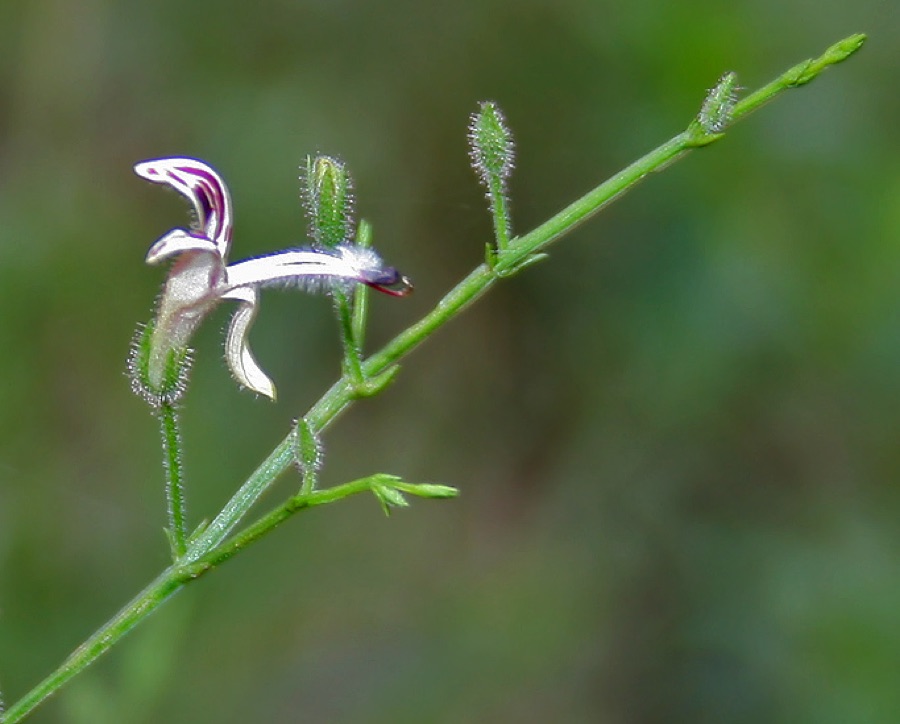
Photo: J.M.Garg · CC BY-SA 4.0 · Wikimedia Commons

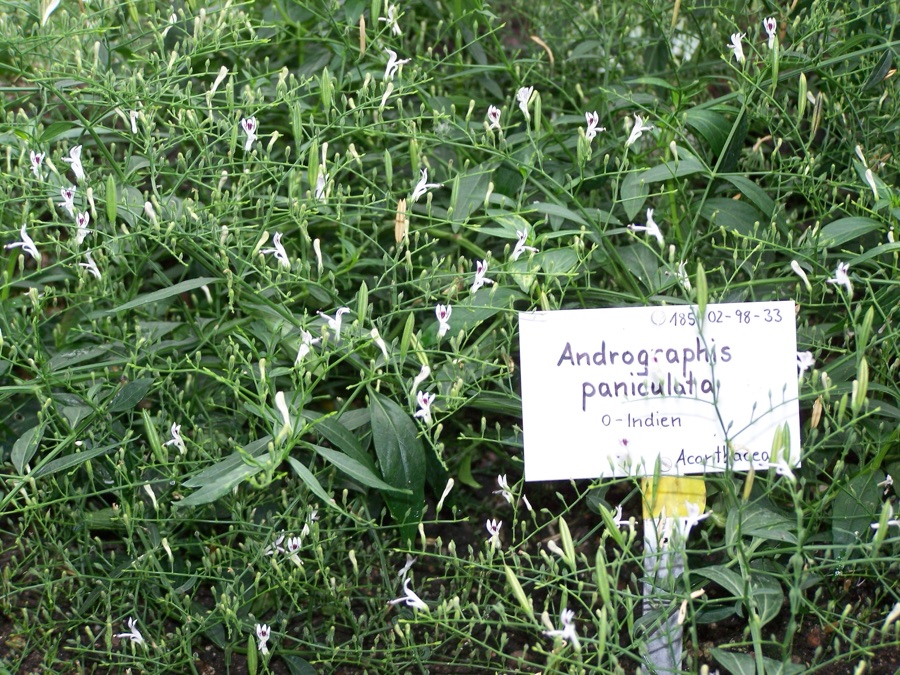
Photo: Uwe Thobae · CC BY-SA 3.0 · Wikimedia Commons

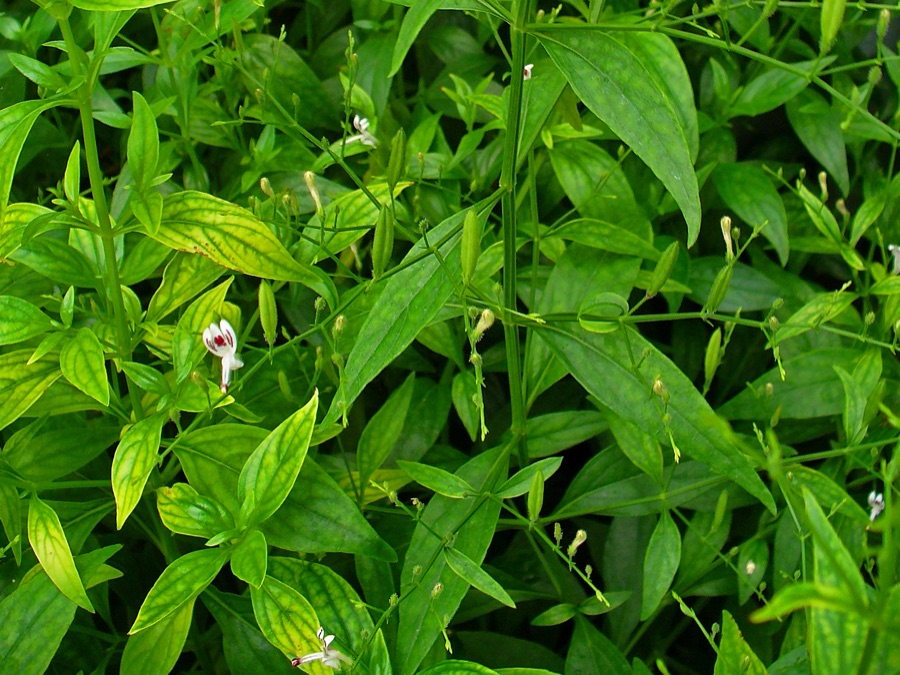
Photo: H. Zell · CC BY-SA 3.0 · Wikimedia Commons

Matra and anupana
AS THE CLASSICAL TEXTS AND THE API PRESCRIBE
| Churna | 1–3 g |
| Kwatha | 20–40 ml |
| Swarasa | 5–10 ml |
| Anupana | Ushnodaka · Madhu |
| Kala | Adhobhakta |
Intensely tikta; the matra is small because the bitterness itself limits it.
Reported from Sharangadhara Samhita and the Ayurvedic Pharmacopoeia of India. Laisha states what the texts prescribe; it does not recommend. No quantity here is adjusted for a particular person — not for agni, koshtha, bala, age, pregnancy, kidney or liver function, or anything already being taken.
Pharmacopoeial standard
Ayurvedic Pharmacopoeia of India, Part I
| Marker | Andrographolide |
| Assay | Not less than 1.0 per cent |
| Total ash | Total ash not more than 12 per cent |
| Acid-insoluble ash | Not more than 2 per cent |
| Alcohol-soluble extractive | Alcohol-soluble extractive not less than 10 per cent |
| Water-soluble extractive | Water-soluble extractive not less than 14 per cent |
| Foreign matter | Foreign matter not more than 2 per cent |
Andrographolide is the bitter principle; a sample that is not intensely bitter will not meet the limit.
These are the pharmacopoeial limits for the article, not a test Laisha has run on anything. They are here so a practitioner can ask a supplier for a certificate of analysis and know what the numbers on it should say.
Rasapanchaka
| Rasa | Tikta |
| Guna | LaghuRuksha |
| Virya | Sheeta |
| Vipaka | Katu |
| Prabhava | The texts treat kalmegha as acting on the liver and in fever, and it is the bitter herb of choice where nimba is not to hand. |
| Doshakarma | Kaphapittahara. Being ruksha and sheeta it increases vata. |
A single rasa, tikta, and it is the standard example of an extremely tikta dravya. Sheeta virya and katu vipaka.
Karma and part used
These are the actions the classical texts record. They are statements about what the tradition holds, and this library does not restate them as findings about a human body.
| Upayukta anga | Panchanga (the whole plant) Patra (the leaf) |
| Why it matters | The whole herb, collected at flowering, is the article. The leaf carries the most andrographolide. |
Paryaya
Bhunimba means earth-neem, because it is as bitter as nimba without being a tree. Mahatikta, the great bitter, says it plainly. The paryaya Kiratatikta is shared with Swertia chirata, which is a different plant, and that overlap is the source of real confusion.
Names, by language
| English | King of bitters |
| Sinhala | Heen kohomba |
| Nepali | Kalmegh |
| Hindi | Kalmegh |
| Kannada | Nelabevu |
| Tamil | Nilavembu |
| Telugu | Nelavemu |
| Malayalam | Kiriyathu |
| Marathi | Oli kiryata |
| Gujarati | Kariyatu |
| Bengali | Kalmegh |
| Punjabi | Chirayata |
| Odia | Bhuinimba |
| Urdu | Kalmegh |
Classical references
Rasa, guna, virya, vipaka and karma are recorded as the classical texts give them, with the text and section named so a student can open the book and check. Where an exact chapter and verse could not be confirmed, this library names the section rather than inventing a number.
Formulations it appears in
| Kalmeghasava | A fermented preparation named for the dravya. |
| Nilavembu Kudineer | Kalmegha is the principal dravya of this Siddha formulation, widely used in fevers. |
| Bhunimbadi Kwatha | Named for the dravya. |
Adulterants and substitutes
Swertia chirata, Kiratatikta, shares a paryaya with this plant and is a different family entirely; the two are sold interchangeably as chirayata across north India, and Swertia is scarcer and dearer, so the substitution runs from cheap to dear. Both are intensely bitter, so taste does not separate them.
Identity
Matched live against the GBIF backbone on 28 September 2026 at 99 per cent confidence. Called the king of bitters, and among the most intensely bitter plants used anywhere — the taste is the identification.
A WAY TO REMEMBER IT
Andrographis is andros (man) + graphis (a pencil or brush) — the anthers. Paniculata means the flowers are in a panicle. Kal-megha means dark cloud, for the bitterness and the colour.
What the tradition holds
Kalmegha is described in the Bhavaprakasha Nighantu as bhunimba. That is what the tradition holds and where it is written down, not a finding about what the herb does in a body.
Constituents. The herb carries diterpene lactones, principally andrographolide, which is what commercial extracts are standardised to and what makes it so bitter.
What the evidence says
| Status | Traditional use is extensive and long recorded. Modern clinical evidence is limited. |
| Suggested | Health Canada publishes monographs covering Ayurvedic ingredients and permits specific traditional-use claims, which reflects a regulator accepting a documented tradition rather than a body of clinical trial evidence. |
| Not established | There is not enough good clinical evidence to establish an effect on any named health condition. Long traditional use is not a substitute for that evidence, and this library does not present it as one. |
| The honest gap | Published work uses standardised andrographolide extracts of a strength the crude herb does not reach. |
Safety
Several cautions and they are documented rather than precautionary. It is used in fever, and fever in India includes malaria, dengue and typhoid — a diagnosis, not a herb, is the first step. Andrographis has documented effects on fertility in animal studies, which is why it is contraindicated in pregnancy. Allergic reactions including anaphylaxis have been reported. It may lower blood sugar and blood pressure and can add to medicines doing the same, and it may stimulate the immune system, which matters for anyone on medicines that suppress it. Anyone on medication, pregnant, or managing a diagnosed condition should speak to a doctor or a qualified practitioner first.
| Side effects | Loss of appetite and nausea from the bitterness Digestive upset Headache Allergic rash |
| Contraindications | Pregnancy. Anyone trying to conceive, in light of the above. Autoimmune conditions, given its immune-stimulating activity. Known allergy to plants of the Acanthaceae family. |
| Interactions | Antihypertensives and antidiabetic medicines — additive lowering. Anticoagulants and antiplatelets — antiplatelet activity reported for andrographolide. Immunosuppressants — immunostimulant direction opposes them. |
| Pregnancy and breastfeeding | Not to be used in pregnancy or breastfeeding. |
Growing it
| Climate | Tropical; an annual herb, cultivated and also wild. |
| Soil | Well-drained ground. |
| Planting | Grown from seed as a rainy-season annual. |
| Harvest | The whole herb is cut at flowering, when andrographolide is highest, and dried in shade. |
| What is not stated | This library has not verified region-specific spacing, variety and yield figures against a named agricultural authority for every growing country, and does not state them rather than guessing. |
Check this page
Print it and the code still works. It goes to this page and nowhere else.
What this is not
- This is a study and clinical reference for practitioners and students. The matra and anupana it records are what the classical texts and the Ayurvedic Pharmacopoeia of India PRESCRIBE — Laisha reports them, it does not recommend them. They are not a prescription for any particular person, and they are not adjusted for your age, agni, koshtha, bala, pregnancy, kidney or liver function, or anything else you are already taking. Only a qualified practitioner who has examined you can do that.
- Traditional classification is recorded as what the classical texts say, with the text and the place in it named so it can be checked. It is not restated as a finding about a human body.
- Nothing here replaces a qualified Ayurvedic practitioner or a doctor.
Sources
https://api.gbif.org/v1/species/match?name=Andrographis%20paniculata
https://pcimh.gov.in/
https://www.canada.ca/en/health-canada/services/drugs-health-products/natural-non-prescription/applications-submissions/product-licensing/compendium-monographs.html
https://niimh.nic.in/ebooks/esharangadhara/