Karavira
करवीर
Nerium oleander L.
Apocynaceae · Nerium
Benefits & side effects
TRADITIONAL VIEW, WITH SAFETY LIMITS
Hindi name: Kaner
What the texts say Karavira does
- Kushthaghna — used in skin disease
- Krimighna — anthelmintic (against worms)
- Vranashodhana — cleans wounds
- Vishaghna — antidote (against poison)
What the evidence says. Traditional use is extensive and long recorded. Modern clinical evidence is limited.
Side effects and limits
- Severe skin irritation on contact
- Nausea and vomiting — in this plant an early sign of poisoning, not a side effect
Avoid or ask first: Internal use of any kind, by anyone, in any quantity.; Self-treatment, absolutely.; Pregnancy and breastfeeding.; and more below.
A traditional classification, not a recommendation. The full safety record is below.
Photographs
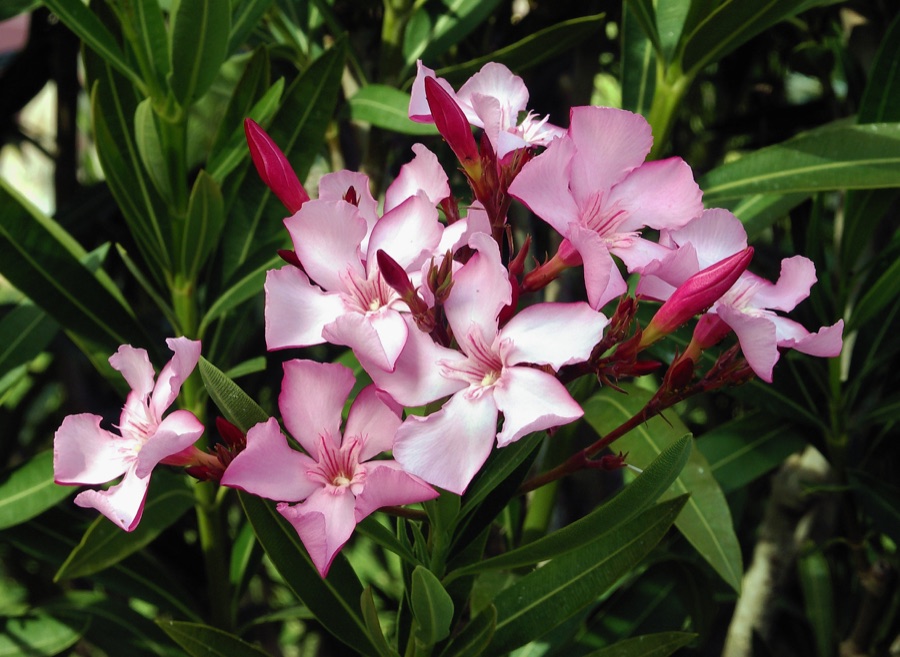
Photo: Alvesgaspar · CC BY 2.5 · Wikimedia Commons

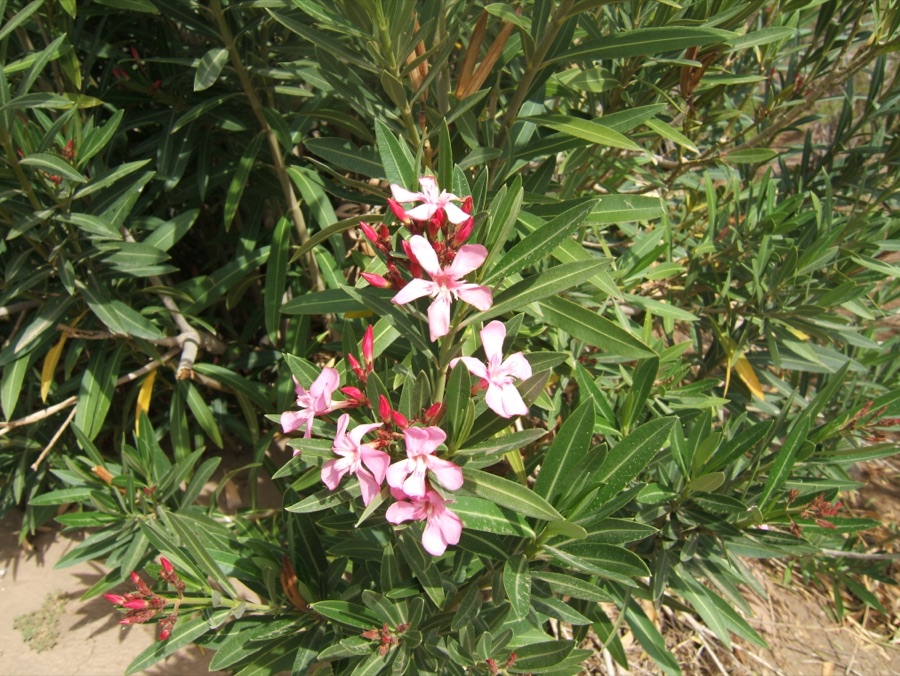
Photo: Unknown · CC BY 2.5 · Wikimedia Commons

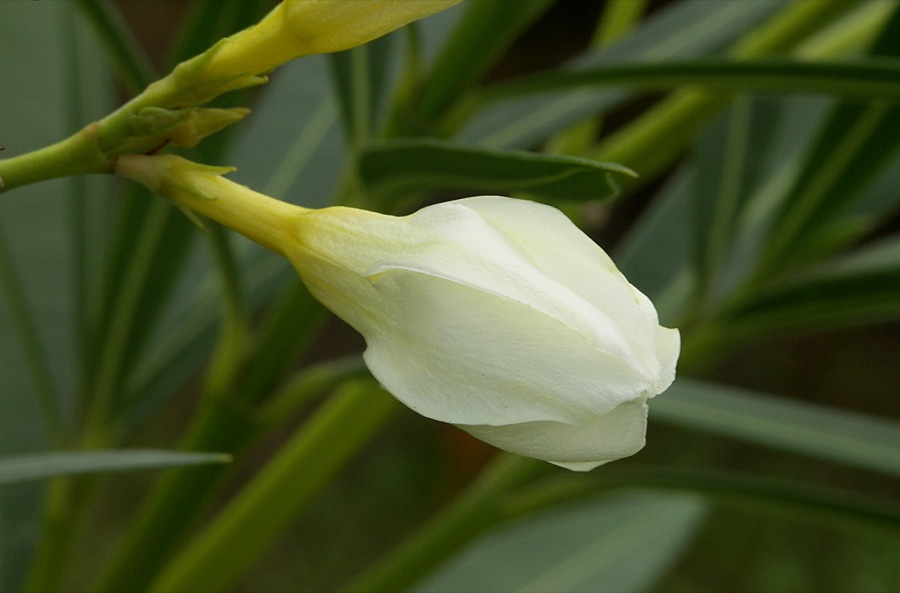
Photo: Joaquim Alves Gaspar · CC BY 2.5 · Wikimedia Commons

Matra and anupana
AS THE CLASSICAL TEXTS AND THE API PRESCRIBE
| Shodhita mula twak | 30–125 mg, specialist use only |
| Anupana | Ghrita |
Oleandrin is a cardiac glycoside. Every part is poisonous. Internal use only within a classical yoga after shodhana.
Reported from Sharangadhara Samhita and the Ayurvedic Pharmacopoeia of India. Laisha states what the texts prescribe; it does not recommend. No quantity here is adjusted for a particular person — not for agni, koshtha, bala, age, pregnancy, kidney or liver function, or anything already being taken.
Rasapanchaka
| Rasa | KatuTiktaKashaya |
| Guna | LaghuRukshaTikshna |
| Virya | Ushna |
| Vipaka | Katu |
| Prabhava | The texts use karavira externally for obstinate skin disease and for wounds where nothing gentler will serve, and class it firmly among the poisons. |
| Doshakarma | Kaphavatahara. |
Katu, tikta and kashaya with ushna virya and katu vipaka.
Karma and part used
These are the actions the classical texts record. They are statements about what the tradition holds, and this library does not restate them as findings about a human body.
| Upayukta anga | Mula (the root), externally and only after shodhana |
| Why it matters | The root is the article, used externally and only after purification. Every part of this plant is poisonous, including the flowers, the leaves and the smoke from burning it. |
Paryaya
Ashvamaraka and Hayamaraka both mean horse-killer. The tradition named this plant for what it does to a large animal that eats it, and a student should never need a second reminder.
Names, by language
| English | Oleander |
| Sinhala | Kaneru |
| Nepali | Karbir |
| Hindi | Kaner |
| Kannada | Kanagile |
| Tamil | Arali |
| Telugu | Ganneru |
| Malayalam | Arali |
| Marathi | Kanher |
| Gujarati | Karen |
| Bengali | Karabi |
| Punjabi | Kaner |
| Odia | Karabira |
| Urdu | Kaner |
Classical references
Rasa, guna, virya, vipaka and karma are recorded as the classical texts give them, with the text and section named so a student can open the book and check. Where an exact chapter and verse could not be confirmed, this library names the section rather than inventing a number.
Formulations it appears in
| Karavira Taila | An oil named for the dravya, used externally only. |
| Vishagarbha Taila | Purified karavira is among the dravya, for external use. |
Adulterants and substitutes
Nerium oleander and the yellow oleander, Cascabela thevetia, are both called Kaner in Indian markets and both are deadly, with different glycosides. That two poisons share a common name is the substitution problem here, and it matters because the poisoning picture and the treatment differ.
Identity
Matched live against the GBIF backbone on 28 September 2026 at 99 per cent confidence. Classed among the sthavara visha, the poisons of plant origin, and among the upavisha. The two answer different questions: sthavara visha is the ORIGIN, against jangama visha of animal origin; upavisha is the GRADE in Rasashastra, the lesser poisons usable after shodhana, against the mahavisha. Planted as an ornamental on roadsides and in gardens across India, which is precisely what makes it dangerous — it is the most accessible deadly plant most people will ever walk past.
A WAY TO REMEMBER IT
Nerium is neros, water — it grows along streams. Oleander is olea (olive) + dendron (tree), for the leaf shape. Kara-vira means the one that kills the hero: entirely poisonous.
What the tradition holds
Karavira is described in the Sushruta Samhita among the plant poisons and in the Bhavaprakasha Nighantu. That is what the tradition holds and where it is written down, not a finding about what the root does in a body.
Constituents. Every part carries cardiac glycosides, chiefly oleandrin, which act on the heart in the same way digoxin does.
What the evidence says
| Status | Traditional use is extensive and long recorded. Modern clinical evidence is limited. |
| Suggested | No claim of established clinical effect is made here. The modern literature on this plant is almost entirely about poisoning and about suicide. |
| Not established | There is not enough good clinical evidence to establish an effect on any named health condition. Long traditional use is not a substitute for that evidence, and this library does not present it as one. |
| The honest gap | Glycoside content varies by part and season and is not knowable without assay. |
Safety
This plant kills people and is one of the commonest causes of fatal plant poisoning in India. A very small quantity of leaf — a few leaves, and reports exist of one — can kill an adult through heart rhythm failure. Children have died from chewing flowers. Honey from its nectar has caused poisoning, and so has smoke from burning the wood and water in which cuttings stood. It is used in Ayurveda externally, after shodhana, and never internally by anyone reading this. Nothing here is a preparation to attempt. Suspected oleander poisoning is a hospital emergency, and digoxin-specific antibody treatment exists — reaching a hospital is the response, not a remedy.
| Side effects | Severe skin irritation on contact Nausea and vomiting — in this plant an early sign of poisoning, not a side effect |
| Contraindications | Internal use of any kind, by anyone, in any quantity. Self-treatment, absolutely. Pregnancy and breastfeeding. Children — including having the plant where a child can reach it. |
| Interactions | Oleandrin is a cardiac glycoside. With digoxin the toxicity is additive and the drug level will not show it. Any potassium-losing drug — diuretics, corticosteroids — increases glycoside toxicity. Every part of the plant is poisonous. Internal use only within a classical formulation after shodhana. |
| Pregnancy and breastfeeding | Not to be used in pregnancy or breastfeeding in any quantity or form. |
Growing it
| Climate | Tropical and subtropical; extremely drought-hardy. |
| Soil | Almost any, including poor and saline ground. |
| Planting | Grown from cuttings and planted widely as an ornamental — which is the reason so many poisonings happen. |
| Harvest | Roots are taken with protection and are a poison from the moment they leave the ground. |
| What is not stated | This library has not verified region-specific spacing, variety and yield figures against a named agricultural authority for every growing country, and does not state them rather than guessing. |
Check this page
Print it and the code still works. It goes to this page and nowhere else.
What this is not
- This is a study and clinical reference for practitioners and students. The matra and anupana it records are what the classical texts and the Ayurvedic Pharmacopoeia of India PRESCRIBE — Laisha reports them, it does not recommend them. They are not a prescription for any particular person, and they are not adjusted for your age, agni, koshtha, bala, pregnancy, kidney or liver function, or anything else you are already taking. Only a qualified practitioner who has examined you can do that.
- Traditional classification is recorded as what the classical texts say, with the text and the place in it named so it can be checked. It is not restated as a finding about a human body.
- Nothing here replaces a qualified Ayurvedic practitioner or a doctor.
Sources
https://api.gbif.org/v1/species/match?name=Nerium%20oleander
https://pcimh.gov.in/
https://www.canada.ca/en/health-canada/services/drugs-health-products/natural-non-prescription/applications-submissions/product-licensing/compendium-monographs.html
https://niimh.nic.in/ebooks/esharangadhara/