Karpasa
कर्पास
Gossypium herbaceum L.
Malvaceae · Gossypium
Benefits & side effects
TRADITIONAL VIEW, WITH SAFETY LIMITS
Hindi name: Kapas
What the texts say Karpasa does
- Vatahara — pacifies vata
- Stanyajanana — promotes breast milk
- Vedanasthapana — relieves pain
- Garbhashaya sankochaka — contracts the uterus
- Shothahara — reduces swelling
What the evidence says. Traditional use is extensive and long recorded. Modern clinical evidence is limited.
Side effects and limits
- Digestive upset
- Weakness
- Nausea
Avoid or ask first: Pregnancy — absolutely.; Breastfeeding.; Any man who may wish to father children, in light of the gossypol finding.; and more below.
A traditional classification, not a recommendation. The full safety record is below.
Stands in 7 groups
- Hridya — Good for the heart (named there as Badara)
- Hikkanigrahana — Arresting hiccough (named there as Badara)
- Purishavirajaniya — Correcting the colour of stool (named there as Badara)
- Shramahara — Relieving fatigue (named there as Badara)
- Swedopaga — Adjuvant to sudation (named there as Badara)
- Virechanopaga — Adjuvant to purgation (named there as Badara)
- Chhardinigrahana — Arresting vomiting (named there as Badara)
A Samhita can only be read forwards, from the group to its members. This is the same list read backwards.
Photographs
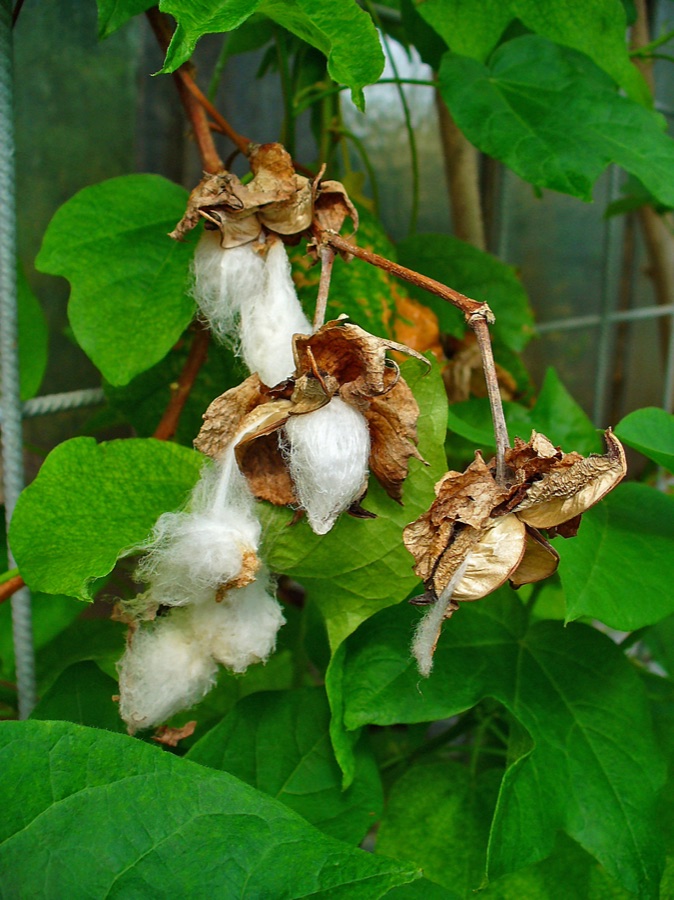
Photo: H. Zell · CC BY-SA 3.0 · Wikimedia Commons

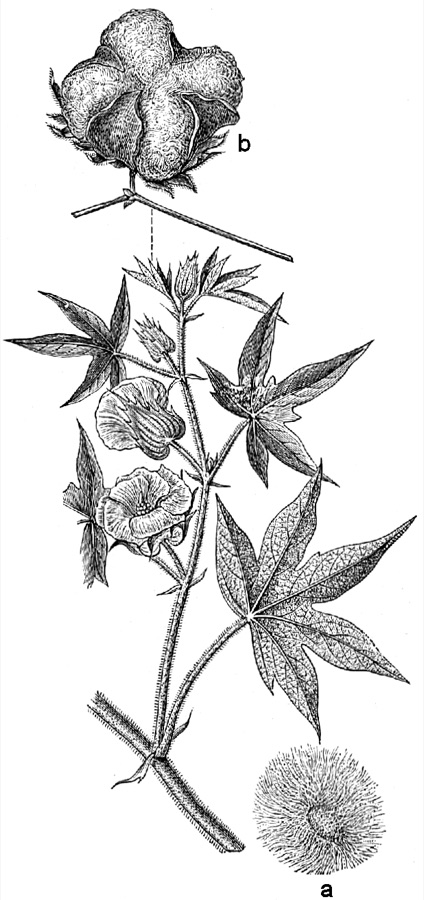
Photo: Nordisk familjebok · Public domain · Wikimedia Commons

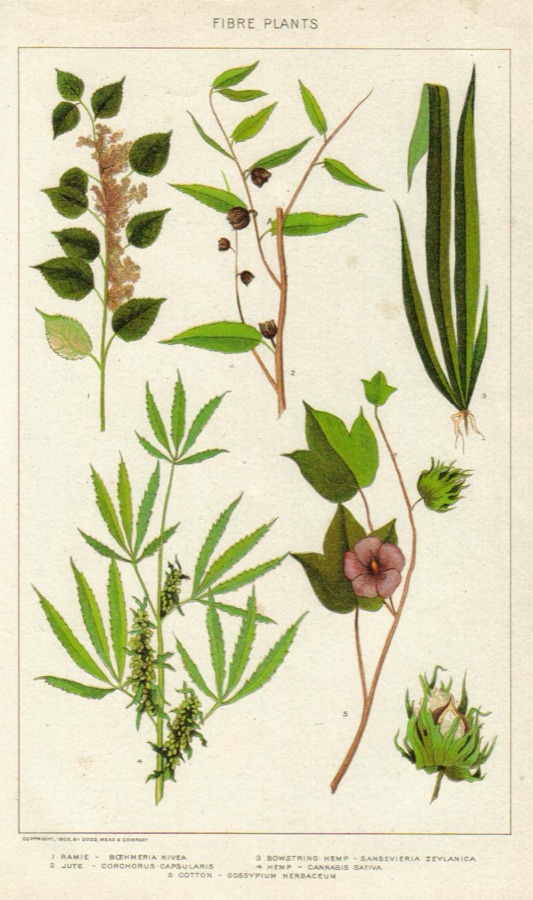
Photo: Dodd, Mead and Company · Public domain · Wikimedia Commons

Matra and anupana
AS THE CLASSICAL TEXTS AND THE API PRESCRIBE
| Mula twak kwatha | 20–40 ml |
| Anupana | Ushnodaka |
| Kala | Adhobhakta |
The root bark is an emmenagogue and is contraindicated in pregnancy. Gossypol in the seed is an antifertility agent.
Reported from Sharangadhara Samhita and the Ayurvedic Pharmacopoeia of India. Laisha states what the texts prescribe; it does not recommend. No quantity here is adjusted for a particular person — not for agni, koshtha, bala, age, pregnancy, kidney or liver function, or anything already being taken.
Rasapanchaka
| Rasa | MadhuraTikta |
| Guna | GuruSnigdha |
| Virya | Ushna |
| Vipaka | Katu |
| Prabhava | The texts use karpasa mula twak in obstetric practice and name it for the uterus, which is also the reason for the caution below. |
| Doshakarma | Vatahara. Being guru and snigdha it increases kapha. |
Madhura and tikta with ushna virya and katu vipaka.
Karma and part used
These are the actions the classical texts record. They are statements about what the tradition holds, and this library does not restate them as findings about a human body.
| Upayukta anga | Mula twak (the root bark) Beeja (the seed) Patra (the leaf) |
| Why it matters | The root bark is the dravya of the texts. The seed gives an oil, and both carry gossypol, which is the subject of the warning below. |
Paryaya
Karpasa gives the English word canvas, through Greek and Latin — one of the few dravya in this library whose Sanskrit name is still in daily use in another language.
Names, by language
| English | Cotton |
| Sinhala | Kapu |
| Nepali | Kapas |
| Hindi | Kapas |
| Kannada | Hatti |
| Tamil | Paruthi |
| Telugu | Patti |
| Malayalam | Parutti |
| Marathi | Kapus |
| Gujarati | Kapas |
| Bengali | Kapas |
| Punjabi | Kapah |
| Odia | Kapa |
| Urdu | Kapas |
Classical references
Rasa, guna, virya, vipaka and karma are recorded as the classical texts give them, with the text and section named so a student can open the book and check. Where an exact chapter and verse could not be confirmed, this library names the section rather than inventing a number.
Formulations it appears in
| Karpasa Mula Kwatha | Named for the root bark. |
| Karpasasthyadi Taila | Named for the dravya, used externally. |
| Dashamoola Taila | Karpasa appears in some recensions. |
Adulterants and substitutes
Root bark of Gossypium hirsutum is used where the tradition means Gossypium herbaceum, and hirsutum is what grows in Indian fields now. Cottonseed oil is also a common adulterant of other edible oils, including sesame, which is where most people encounter gossypol without knowing it.
Identity
Matched live against the GBIF backbone on 28 September 2026 at 99 per cent confidence. The Old World cotton of Indian tradition; most cotton grown in India today is Gossypium hirsutum, an American species, which matters for the safety note below.
A WAY TO REMEMBER IT
Gossypium is the Latin for cotton. Herbaceum means herbaceous, not woody — this is the old-world short-staple cotton.
What the tradition holds
Karpasa is described in the Bhavaprakasha Nighantu and its root bark is named in the classical literature for the uterus. That is what the tradition holds and where it is written down, not a finding about what the bark does in a body.
Constituents. The plant carries gossypol, a polyphenol concentrated in the seed and root. Gossypol was studied as a male contraceptive and abandoned because the infertility it caused was often permanent.
What the evidence says
| Status | Traditional use is extensive and long recorded. Modern clinical evidence is limited. |
| Suggested | No claim of established clinical effect is made here. What is documented about gossypol is set out in the safety section, because it is a harm rather than a benefit. |
| Not established | There is not enough good clinical evidence to establish an effect on any named health condition. Long traditional use is not a substitute for that evidence, and this library does not present it as one. |
| The honest gap | Gossypol content varies between cotton species and between glanded and glandless varieties, and is not knowable without assay. |
Safety
Two things, both serious. Gossypol was trialled as a male contraceptive in the twentieth century and development was abandoned because a significant proportion of men did not recover fertility after stopping it — the infertility was often permanent. Gossypol also causes low potassium with muscle weakness and paralysis, documented in populations eating unrefined cottonseed oil. Separately, the root bark is used traditionally to act on the uterus and has been used to procure abortion, so it is absolutely contraindicated in pregnancy. This is not a dravya for self-treatment in any form. Anyone on medication, pregnant, or managing a diagnosed condition should speak to a doctor or a qualified practitioner first.
| Side effects | Digestive upset Weakness Nausea |
| Contraindications | Pregnancy — absolutely. Breastfeeding. Any man who may wish to father children, in light of the gossypol finding. Self-treatment of any kind. |
| Interactions | Diuretic medicines — potassium loss adds together. Medicines for the heart, particularly digoxin — potassium loss raises the risk. |
| Pregnancy and breastfeeding | Not to be used in pregnancy in any quantity or form. Not to be used while breastfeeding. |
Growing it
| Climate | Tropical and subtropical with a dry ripening period. |
| Soil | Deep black cotton soil; deep-rooted and fairly drought-hardy. |
| Planting | Sown direct as an annual field crop. |
| Harvest | Bolls picked as they open. Root bark is taken when the crop is grubbed out at the end of the season. |
| What is not stated | This library has not verified region-specific spacing, variety and yield figures against a named agricultural authority for every growing country, and does not state them rather than guessing. |
Check this page
Print it and the code still works. It goes to this page and nowhere else.
What this is not
- This is a study and clinical reference for practitioners and students. The matra and anupana it records are what the classical texts and the Ayurvedic Pharmacopoeia of India PRESCRIBE — Laisha reports them, it does not recommend them. They are not a prescription for any particular person, and they are not adjusted for your age, agni, koshtha, bala, pregnancy, kidney or liver function, or anything else you are already taking. Only a qualified practitioner who has examined you can do that.
- Traditional classification is recorded as what the classical texts say, with the text and the place in it named so it can be checked. It is not restated as a finding about a human body.
- Nothing here replaces a qualified Ayurvedic practitioner or a doctor.
Sources
https://api.gbif.org/v1/species/match?name=Gossypium%20herbaceum
https://pcimh.gov.in/
https://www.canada.ca/en/health-canada/services/drugs-health-products/natural-non-prescription/applications-submissions/product-licensing/compendium-monographs.html
https://niimh.nic.in/ebooks/esharangadhara/