Katuki
कटुकी
Neopicrorhiza scrophulariiflora (Pennell) D.Y.Hong
Plantaginaceae · Neopicrorhiza
Benefits & side effects
TRADITIONAL VIEW, WITH SAFETY LIMITS
Hindi name: Kutki
What the texts say Katuki does
- Bhedana — breaks up hard, bound stool and expels it (purgative)
- Deepana — kindles digestion (appetiser)
- Pittarechana — purges pitta
- Jwaraghna — used in fever
- Krimighna — anthelmintic (against worms)
- Hridya — good for the heart
What the evidence says. Traditional use is extensive and long recorded. Modern clinical evidence is limited.
Side effects and limits
- Diarrhoea
- Abdominal cramping
- Nausea from the bitterness
Avoid or ask first: Pregnancy.; Conditions where a loose bowel would be dangerous.
A traditional classification, not a recommendation. The full safety record is below.
Stands in 7 groups
- Lekhaniya — Scraping and reducing (named there as Katurohini)
- Balya — Strength-giving (named there as Rohini)
- Stanyashodhana — Purifying breast milk (named there as Katurohini)
- Pippalyadi — Agni, Kapha, and the digestive disorders (named there as Katurohini)
- Patoladi — Pitta, Kapha, fever, and vomiting (named there as Katurohini)
- Nyagrodhadi — Wounds, burns, Pitta, and Prameha (named there as Rohini)
- Mustadi — Cleansing breast milk, Kapha, and the vagina (named there as Katurohini)
A Samhita can only be read forwards, from the group to its members. This is the same list read backwards.
Photographs
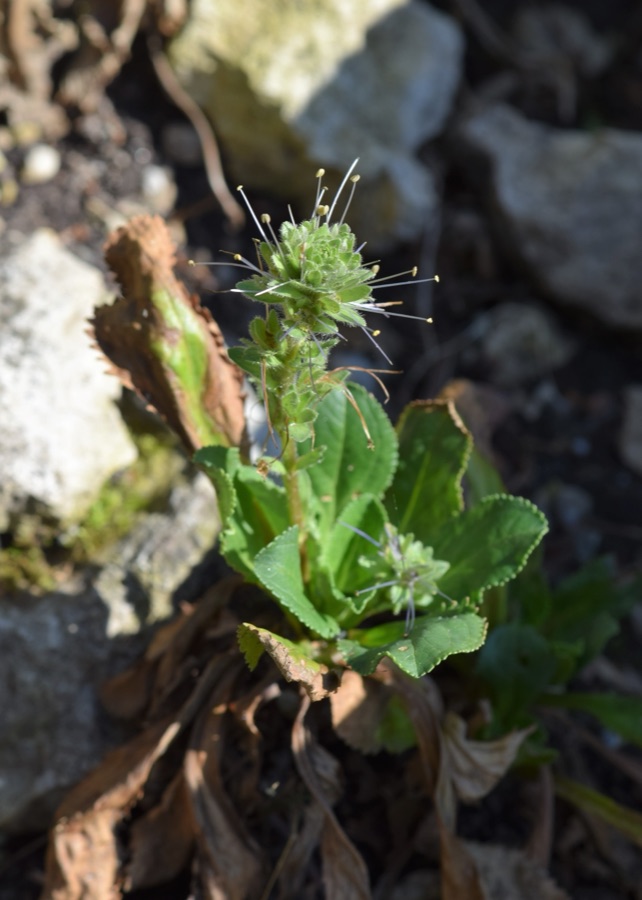
Photo: Krzysztof Ziarnek, Kenraiz · CC BY-SA 4.0 · Wikimedia Commons

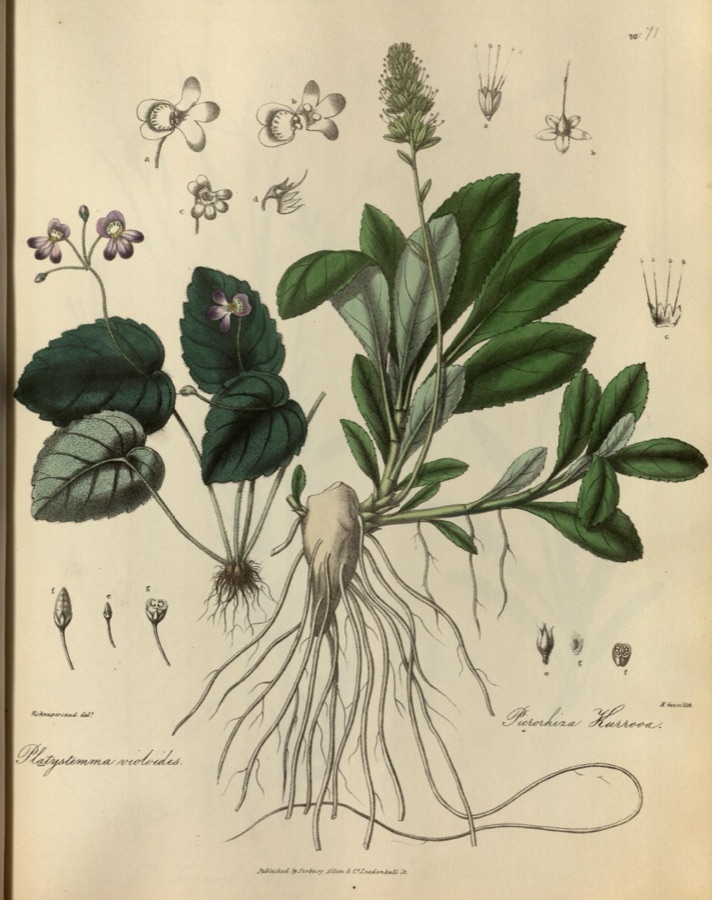
Photo: Royle, J. Forbes · Public domain · Wikimedia Commons

Matra and anupana
AS THE CLASSICAL TEXTS AND THE API PRESCRIBE
| Churna | 1–3 g |
| Kwatha | 20–40 ml |
| Anupana | Madhu · Ushnodaka |
| Kala | Adhobhakta |
Higher matra becomes virechaka; the deepana-pachana matra is the low end.
Reported from Sharangadhara Samhita and the Ayurvedic Pharmacopoeia of India. Laisha states what the texts prescribe; it does not recommend. No quantity here is adjusted for a particular person — not for agni, koshtha, bala, age, pregnancy, kidney or liver function, or anything already being taken.
Rasapanchaka
| Rasa | Tikta |
| Guna | LaghuRuksha |
| Virya | Sheeta |
| Vipaka | Katu |
| Prabhava | The texts single out katuki as bhedana — it moves the bowel — while being tikta and sheeta, a combination that is unusual and is the reason it is grouped apart from the other bitters. |
| Doshakarma | Kaphapittahara. Being ruksha and sheeta it increases vata. |
A single rasa, tikta, and it is the standard example of an intensely tikta dravya. Sheeta virya and katu vipaka.
Karma and part used
These are the actions the classical texts record. They are statements about what the tradition holds, and this library does not restate them as findings about a human body.
| Upayukta anga | Kanda (the rhizome) |
| Why it matters | The rhizome is the dravya. It is small, and the plant grows slowly at high altitude, which is the whole of the supply problem. |
Paryaya
Katuki and Katurohini both build on katu and on the intense bitterness. Matsyashakala, fish-scale, describes the overlapping scales on the rhizome, which is the identifying feature.
Names, by language
| English | Picrorhiza |
| Sinhala | Katuka rohini |
| Nepali | Kutki |
| Hindi | Kutki |
| Kannada | Katuka rohini |
| Tamil | Katukarohini |
| Telugu | Katukarohini |
| Malayalam | Katukarohini |
| Marathi | Kutki |
| Gujarati | Kadu |
| Bengali | Katki |
| Punjabi | Karru |
| Odia | Katuki |
| Urdu | Kutki |
Classical references
Rasa, guna, virya, vipaka and karma are recorded as the classical texts give them, with the text and section named so a student can open the book and check. Where an exact chapter and verse could not be confirmed, this library names the section rather than inventing a number.
Formulations it appears in
| Arogyavardhini Vati | Katuki is the principal dravya. |
| Tiktaka Ghrita | Among the dravya of the formulation. |
| Mahatiktaka Ghrita | Among the dravya of the formulation. |
Adulterants and substitutes
This is a dravya where scarcity has made adulteration routine. Gentiana kurroo and other bitter Himalayan roots are substituted, and so is Helleborus niger, which is a genuinely dangerous plant to receive by mistake. Because the article is a dried bitter rhizome and most buyers judge it by taste alone, a bitter substitute passes easily.
Identity
Matched live against the GBIF backbone on 28 September 2026 at 99 per cent confidence. Picrorhiza kurroa is a closely related Himalayan species also traded as Kutki and is what much Ayurvedic literature and most commerce means by the name; the two are not always distinguished in trade. This is also the most conservation-sensitive dravya in the library so far, and that is dealt with below rather than skipped.
A WAY TO REMEMBER IT
Neopicrorhiza is the new Picrorhiza: pikros (bitter) + rhiza (root) — bitter root, which is the whole plant in two words. Scrophulariiflora means the flower looks like a Scrophularia.
What the tradition holds
Katuki is described in the Bhavaprakasha Nighantu and is named in the classical literature among the bitters and among dravya acting on pitta. That is what the tradition holds and where it is written down, not a finding about what the rhizome does in a body.
Constituents. The rhizome carries iridoid glycosides, principally picroside I and II and kutkoside, together called kutkin. These are the compounds commercial extracts are standardised to.
What the evidence says
| Status | Traditional use is extensive and long recorded. Modern clinical evidence is limited. |
| Suggested | Health Canada publishes monographs covering Ayurvedic ingredients and permits specific traditional-use claims, which reflects a regulator accepting a documented tradition rather than a body of clinical trial evidence. |
| Not established | There is not enough good clinical evidence to establish an effect on any named health condition. Long traditional use is not a substitute for that evidence, and this library does not present it as one. |
| The honest gap | Published work uses standardised kutkin extracts, which are a concentrated article, and often does not state which Picrorhiza species the material came from. |
Safety
The most important thing about this dravya is where it comes from. Picrorhiza is listed on CITES Appendix II, which means international trade in it is restricted because wild collection threatens the species. Buying it without knowing its source may mean taking part in the emptying of a Himalayan hillside. On the body: it is a strong bitter and moves the bowel, so overuse causes diarrhoea and its consequences, and it is used traditionally in liver conditions, which are exactly the conditions where self-treatment is least wise. Anyone with liver disease, on medication, pregnant, or managing a diagnosed condition should speak to a doctor or a qualified practitioner first.
| Side effects | Diarrhoea Abdominal cramping Nausea from the bitterness |
| Contraindications | Pregnancy. Conditions where a loose bowel would be dangerous. |
| Interactions | Antidiabetic medicines — reported lowering of blood glucose. At higher matra it becomes virechaka, so any drug whose absorption depends on transit time may be affected. |
| Pregnancy and breastfeeding | Not to be used in pregnancy or breastfeeding. |
Growing it
| Climate | Alpine and subalpine Himalaya, roughly 3000 to 4500 metres. |
| Soil | Rocky alpine ground with good drainage. |
| Planting | Grown from rhizome division or seed. Slow, and difficult outside its own altitude. |
| Harvest | Rhizomes are lifted after several years and dried. Cultivated material is the only source that does not deplete wild stands. |
| What is not stated | Cultivation is established in parts of Himachal Pradesh and Uttarakhand but supplies only a fraction of demand. Where cultivated material can be had, it should be preferred, and this library states that as a matter of record rather than as advice about anyone's health. |
Check this page
Print it and the code still works. It goes to this page and nowhere else.
What this is not
- This is a study and clinical reference for practitioners and students. The matra and anupana it records are what the classical texts and the Ayurvedic Pharmacopoeia of India PRESCRIBE — Laisha reports them, it does not recommend them. They are not a prescription for any particular person, and they are not adjusted for your age, agni, koshtha, bala, pregnancy, kidney or liver function, or anything else you are already taking. Only a qualified practitioner who has examined you can do that.
- Traditional classification is recorded as what the classical texts say, with the text and the place in it named so it can be checked. It is not restated as a finding about a human body.
- Nothing here replaces a qualified Ayurvedic practitioner or a doctor.
Sources
https://api.gbif.org/v1/species/match?name=Neopicrorhiza%20scrophulariiflora
https://pcimh.gov.in/
https://www.canada.ca/en/health-canada/services/drugs-health-products/natural-non-prescription/applications-submissions/product-licensing/compendium-monographs.html
https://niimh.nic.in/ebooks/esharangadhara/