Madanaphala
मदनफल
Catunaregam spinosa (Thunb.) Tirveng.
Rubiaceae · Catunaregam
Benefits & side effects
TRADITIONAL VIEW, WITH SAFETY LIMITS
Hindi name: Mainphal
What the texts say Madanaphala does
- Vamaka — emetic
- Lekhana — scraping, reduces excess tissue and fat
- Shothahara — reduces swelling
- Vrana shodhana — cleans wounds
- Krimighna — anthelmintic (against worms)
What the evidence says. Traditional use is long recorded. Modern clinical evidence is limited.
Side effects and limits
- Vomiting, which is the intended action
- Weakness and thirst after the procedure
Avoid or ask first: Not used outside a supervised vamana procedure.; Not used in the very young, the very old, the debilitated, or in those with cardiac or respiratory disease, following the classical list of ayogya for vamana.
A traditional classification, not a recommendation. The full safety record is below.
Stands in 4 groups
- Asthapanopaga — Adjuvant to niruha basti
- Anuvasanopaga — Adjuvant to anuvasana basti
- Aragvadhadi — Kapha, poisoning, and wound cleansing (named there as Madana)
- Mushkakadi — Prameha, piles, gravel and jaundice (named there as Madana)
A Samhita can only be read forwards, from the group to its members. This is the same list read backwards.
Photographs
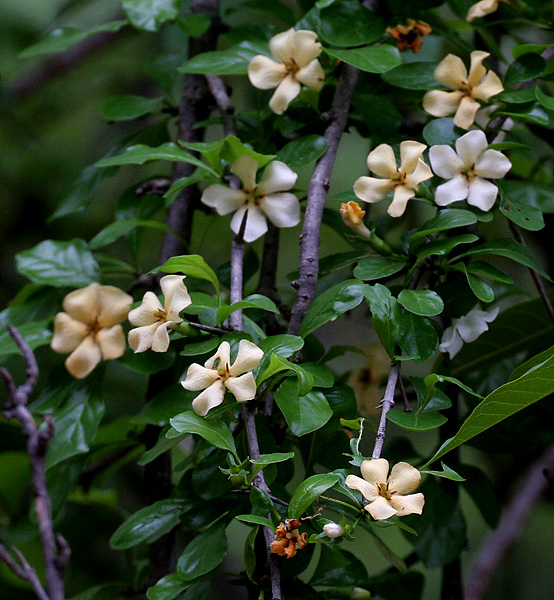
Photo: J.M.Garg · CC BY 3.0 · Wikimedia Commons

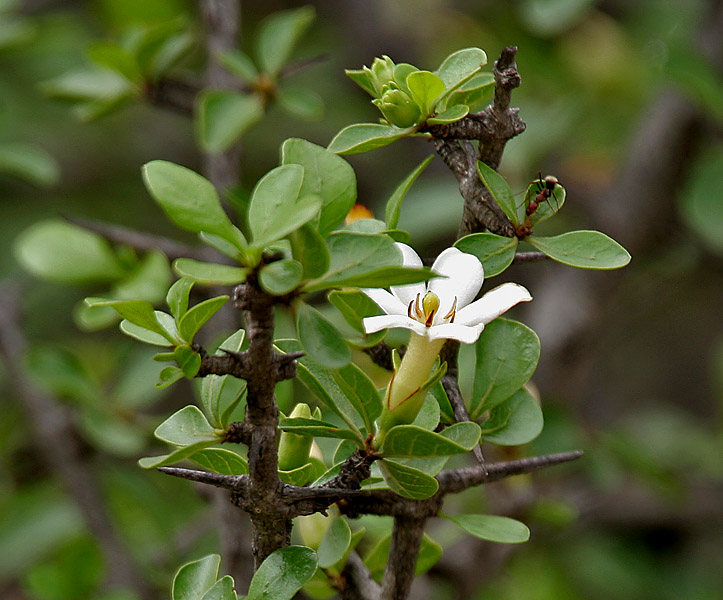
Photo: J.M.Garg · CC BY 3.0 · Wikimedia Commons

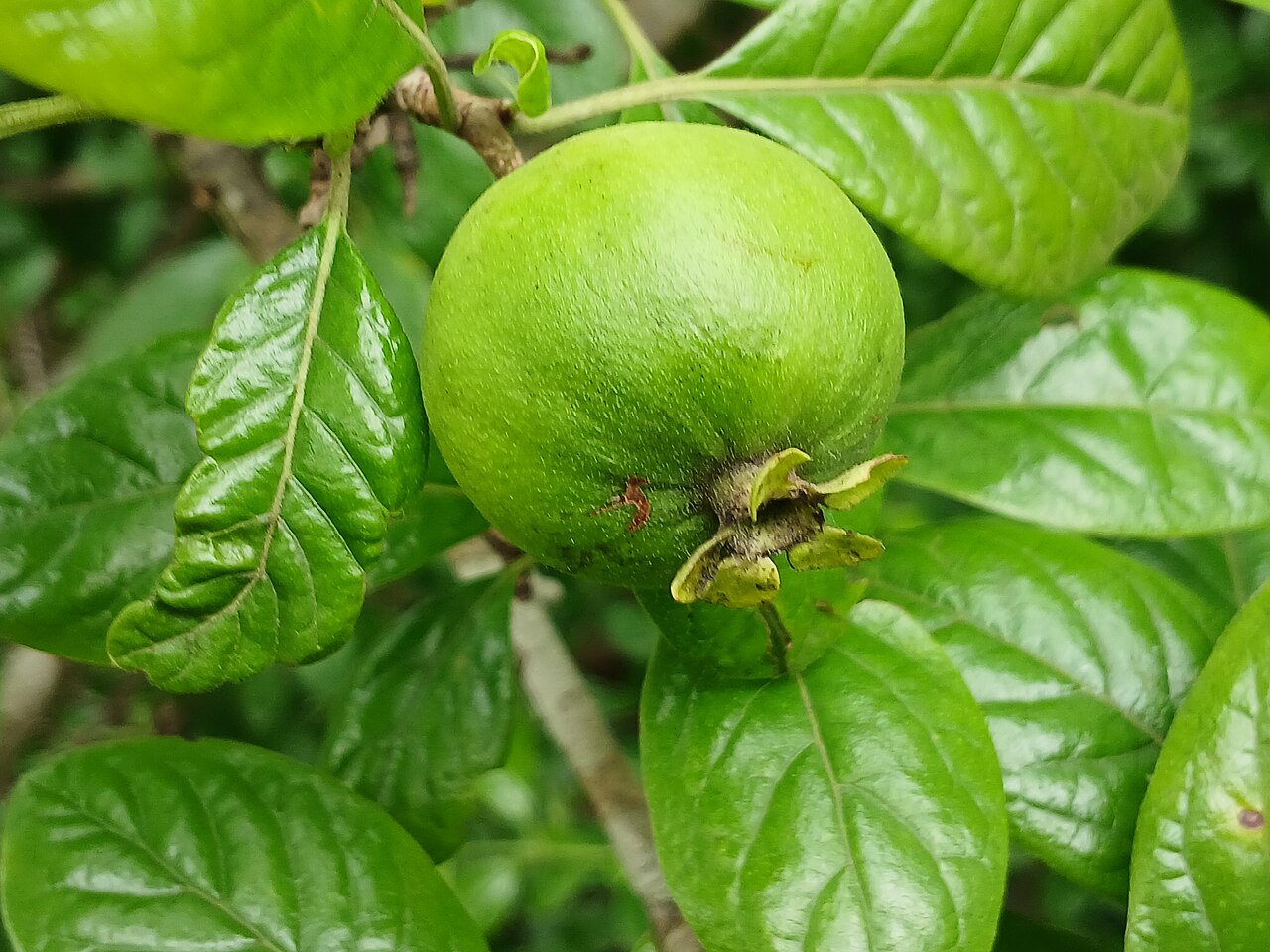
Photo: Nativeplants garden · CC BY-SA 4.0 · Wikimedia Commons

Matra and anupana
AS THE CLASSICAL TEXTS AND THE API PRESCRIBE
| Churna for vamana | 4–8 g, within a supervised procedure |
| Anupana | Madhu · Saindhava · Ushnodaka |
| Kala | As the vamana procedure directs |
A quantity for a supervised vamana conducted by a practitioner, never a dose to be taken by anyone on their own.
Reported from Sharangadhara Samhita and the Ayurvedic Pharmacopoeia of India. Laisha states what the texts prescribe; it does not recommend. No quantity here is adjusted for a particular person — not for agni, koshtha, bala, age, pregnancy, kidney or liver function, or anything already being taken.
Rasapanchaka
| Rasa | MadhuraTiktaKashaya |
| Guna | LaghuRukshaTikshna |
| Virya | Ushna |
| Vipaka | Katu |
| Prabhava | Madanaphala is called the foremost of all vamaka dravya, and Charaka states that it does not harm even when it fails to act, which is why it heads the group. |
| Doshakarma | Kaphavatahara. |
Madhura, tikta and kashaya with ushna virya and katu vipaka. It is the rare instance where the rasa gives almost no clue to the action, which the texts attribute to prabhava.
Karma and part used
These are the actions the classical texts record. They are statements about what the tradition holds, and this library does not restate them as findings about a human body.
| Upayukta anga | Phala (the dried fruit) |
| Why it matters | The dried fruit, and its pulp. It is the article for vamana and the seed is not used separately. |
Paryaya
Chhardana names the action directly - that which causes vomiting. The texts rarely leave the chief vamaka drug ambiguous.
Names, by language
| English | Emetic nut |
| Hindi | Mainphal |
| Kannada | Karehannu |
| Tamil | Marukkarai |
| Telugu | Manga |
| Malayalam | Malankara |
| Marathi | Gela |
| Gujarati | Mindhal |
| Bengali | Mayaphal |
| Odia | Mainaphala |
| Urdu | Mainphal |
Classical references
Formulations it appears in
| Madanaphala Pippali Yoga | Named for the dravya, the standard vamana preparation. |
| Vamana Yoga | The principal dravya of the classical emetic combinations. |
| Madanaphaladi Kwatha | Named for the dravya. |
Adulterants and substitutes
The fruits of several Rubiaceae are sold as mainphal, and old stock is the commoner problem: the emetic activity falls with storage, so a sample that is genuine but aged simply does not act. Charaka's instruction to collect it in a particular season and store it in a particular way is about potency, not ritual.
Identity
Long published as Randia dumetorum, which is the name most Indian textbooks still use. Catunaregam spinosa is the accepted name in the current backbone and both refer to the same plant.
A WAY TO REMEMBER IT
Catunaregam is from the Malayalam katuna regam. Spinosa, for the thorns. Madana means intoxicating or maddening; the fruit was also used to stupefy fish, which is the same property read from the other end.
What the tradition holds
Charaka gives the first chapter of the whole Kalpasthana to Madanaphala and names it the foremost of the vamaka dravya. That is what the tradition records and where it is set down.
What the evidence says
| Status | Traditional use is long recorded. Modern clinical evidence is limited. |
| Suggested | The dravya holds a pharmacopoeial monograph in India, which records an accepted identity and quality standard for the article. That is a standard for the material, not evidence of an effect in a body. |
| Not established | There is not enough good clinical evidence to establish an effect on any named health condition. Long traditional use is not a substitute for that evidence, and this library does not present it as one. |
| The honest gap | Published work on this dravya rarely records the origin or the standard of the material tested, so results cannot be attributed to a defined article. |
Safety
This is the principal emetic drug of Ayurveda and it works. Vamana is a supervised procedure with defined preparation, defined endpoints and defined complications, and this dravya is not something to take outside it. Charaka's remark that it does not harm even when it fails to act refers to its use within a properly conducted vamana, not to casual use. Anyone pregnant, on medication or managing a diagnosed condition should speak to a doctor or a qualified practitioner first.
| Side effects | Vomiting, which is the intended action Weakness and thirst after the procedure |
| Contraindications | Not used outside a supervised vamana procedure. Not used in the very young, the very old, the debilitated, or in those with cardiac or respiratory disease, following the classical list of ayogya for vamana. |
| Interactions | No specific drug interaction is documented for this dravya. That is the honest state of the evidence, not a statement that none exists — most Ayurvedic dravya have never been studied for interaction with modern medicines at all. |
| Pregnancy and breastfeeding | Not used in pregnancy. Vamana is classically contraindicated in pregnancy and an emetic drug has no place there. |
Check this page
Print it and the code still works. It goes to this page and nowhere else.
What this is not
- This is a study and clinical reference for practitioners and students. The matra and anupana it records are what the classical texts and the Ayurvedic Pharmacopoeia of India PRESCRIBE — Laisha reports them, it does not recommend them. They are not a prescription for any particular person, and they are not adjusted for your age, agni, koshtha, bala, pregnancy, kidney or liver function, or anything else you are already taking. Only a qualified practitioner who has examined you can do that.
- Traditional classification is recorded as what the classical texts say, with the text and the place in it named so it can be checked. It is not restated as a finding about a human body.
- Nothing here replaces a qualified Ayurvedic practitioner or a doctor.
Sources
https://api.gbif.org/v1/species/match?name=Catunaregam%20spinosa
https://pcimh.gov.in/
https://niimh.nic.in/ebooks/ebnighantu/
https://niimh.nic.in/ebooks/esharangadhara/