Mandukaparni
मण्डूकपर्णी
Centella asiatica (L.) Urb.
Apiaceae · Centella
Benefits & side effects
TRADITIONAL VIEW, WITH SAFETY LIMITS
What the texts say Mandukaparni does
- Medhya — supports intellect and memory
- Rasayana — rejuvenative
- Ayushya — promotes longevity
- Swarya — good for the voice
- Vayasthapana — preserves youth, slows ageing
- Kushthaghna — used in skin disease
What the evidence says. Traditional use is extensive and long recorded. Modern clinical evidence is limited.
Side effects and limits
- Digestive upset
- Drowsiness
- Skin reaction on external use
Avoid or ask first: Existing liver disease — caution is advised in light of the reported cases above.
A traditional classification, not a recommendation. The full safety record is below.
Stands in 1 group
- Vayasthapana — Sustaining youth
A Samhita can only be read forwards, from the group to its members. This is the same list read backwards.
Photographs
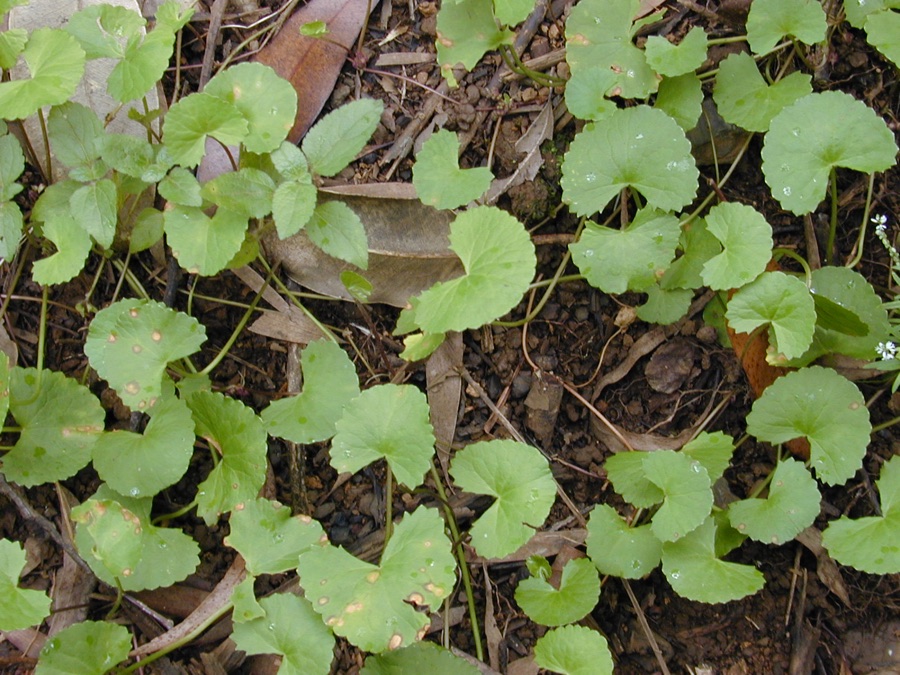
Photo: Forest & Kim Starr · CC BY 3.0 · Wikimedia Commons

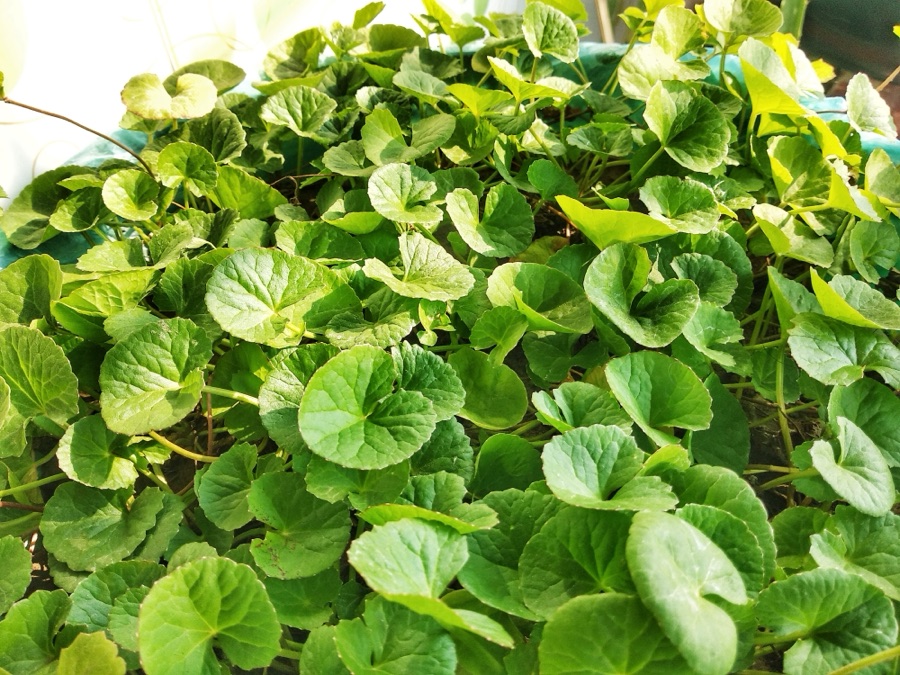
Photo: Shahidul Hasan Roman · CC BY-SA 4.0 · Wikimedia Commons

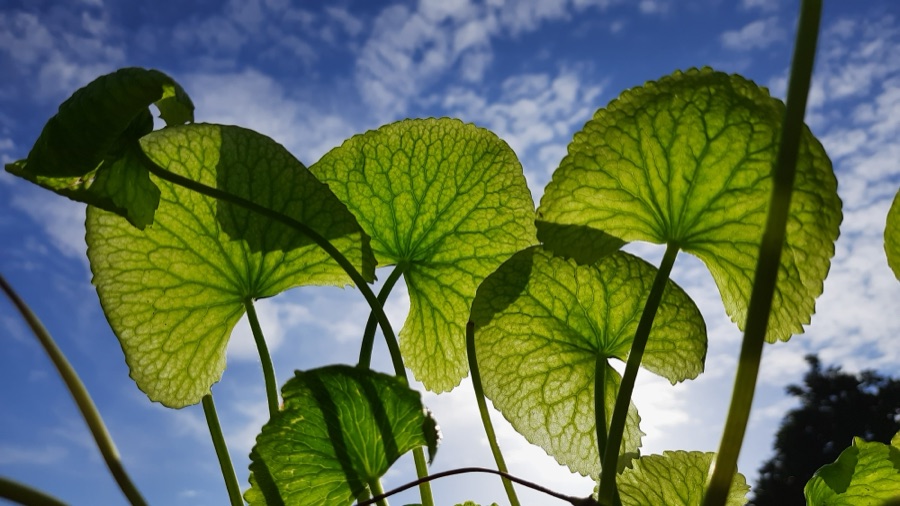
Photo: Rejin Narayanan · CC BY-SA 4.0 · Wikimedia Commons

Matra and anupana
AS THE CLASSICAL TEXTS AND THE API PRESCRIBE
| Swarasa | 10–20 ml |
| Churna | 3–6 g |
| Anupana | Dugdha · Ghrita |
| Kala | Pragbhakta |
One of Charaka's four medhya rasayana, where Bacopa is not.
Reported from Sharangadhara Samhita and the Ayurvedic Pharmacopoeia of India. Laisha states what the texts prescribe; it does not recommend. No quantity here is adjusted for a particular person — not for agni, koshtha, bala, age, pregnancy, kidney or liver function, or anything already being taken.
Pharmacopoeial standard
Ayurvedic Pharmacopoeia of India, Part I
| Marker | Asiaticoside |
| Assay | Not less than 2.0 per cent |
| Total ash | Total ash not more than 20 per cent |
| Acid-insoluble ash | Not more than 6 per cent |
| Alcohol-soluble extractive | Alcohol-soluble extractive not less than 5 per cent |
| Water-soluble extractive | Water-soluble extractive not less than 10 per cent |
| Foreign matter | Foreign matter not more than 2 per cent |
Asiaticoside is to Centella what bacoside is to Bacopa, and running both assays is how the Brahmi collision is settled in a laboratory.
These are the pharmacopoeial limits for the article, not a test Laisha has run on anything. They are here so a practitioner can ask a supplier for a certificate of analysis and know what the numbers on it should say.
Rasapanchaka
| Rasa | TiktaKashayaMadhura |
| Guna | LaghuSara |
| Virya | Sheeta |
| Vipaka | Madhura |
| Prabhava | Charaka names mandukaparni first among the medhya rasayana. That placement is the reason the name Brahmi attached itself to this plant at all. |
| Doshakarma | Tridoshahara. |
Tikta predominant with kashaya and madhura — the same rasa profile as Bacopa, which is part of why the two plants ended up sharing a name.
Karma and part used
These are the actions the classical texts record. They are statements about what the tradition holds, and this library does not restate them as findings about a human body.
| Upayukta anga | Panchanga (the whole plant) |
| Why it matters | The whole herb is the article. Like Bacopa it creeps on damp ground and is collected from field margins and roadsides, so where it grew is part of what it is. |
Paryaya
Mandukaparni means frog-leaf: the rounded leaf is read as a frog's foot, and that is the feature a student is taught to identify it by. The paryaya Brahmi is exactly the collision described above.
Names, by language
| English | Gotu kola |
| Sinhala | Gotu kola |
| Nepali | Ghodtapre |
| Hindi | Mandukaparni |
| Kannada | Ondelaga |
| Tamil | Vallarai |
| Telugu | Saraswataku |
| Malayalam | Kudangal |
| Marathi | Karivana |
| Gujarati | Khadbhrahmi |
| Bengali | Thankuni |
| Punjabi | Brahmi booti |
| Odia | Thalkudi |
| Urdu | Brahmi |
Classical references
Rasa, guna, virya, vipaka and karma are recorded as the classical texts give them, with the text and section named so a student can open the book and check. Where an exact chapter and verse could not be confirmed, this library names the section rather than inventing a number.
Formulations it appears in
| Brahma Rasayana | Among the dravya of the formulation. |
| Saraswata Churna | Mandukaparni is among the principal dravya. |
| Manasamitra Vataka | Among the dravya of the formulation. |
Adulterants and substitutes
Hydrocotyle species are collected with it and look similar on damp ground. But the substitution that matters is the one in the name: a buyer asking for Brahmi may be given this plant or Bacopa monnieri depending on which state they are standing in, and both sellers are following correct local usage. Ask for Centella asiatica by name if that is what is wanted.
Identity
Matched live against the GBIF backbone on 28 September 2026 at 99 per cent confidence. This is the other Brahmi. Across southern India and Sri Lanka this plant is called Brahmi; in the north and in the pharmacopoeia, Brahmi is Bacopa monnieri. They are different families — Apiaceae and Plantaginaceae — and the only safe way to buy either is by botanical name.
A WAY TO REMEMBER IT
Centella is a small coin, centellus, for the round leaf. Asiatica, of Asia. Manduka-parni means frog-leaf: the leaf is shaped like a frog's webbed foot. Note Apiaceae — that is how you separate it from Bacopa, also called Brahmi.
What the tradition holds
Charaka names mandukaparni first among the medhya rasayana in the Rasayana chapter. Ayurveda records it as tridoshahara and as acting on the intellect. That is what the tradition holds and where it is written down, not a finding about what the herb does in a body.
Constituents. The herb carries triterpenoid saponins including asiaticoside and madecassoside, which are what commercial extracts are standardised to. Content varies markedly with population and growing conditions.
What the evidence says
| Status | Traditional use is extensive and long recorded. Modern clinical evidence is limited. |
| Suggested | Health Canada publishes monographs covering Ayurvedic ingredients and permits specific traditional-use claims, which reflects a regulator accepting a documented tradition rather than a body of clinical trial evidence. |
| Not established | There is not enough good clinical evidence to establish an effect on any named health condition. Long traditional use is not a substitute for that evidence, and this library does not present it as one. |
| The honest gap | Published work overwhelmingly uses a standardised triterpene extract. Dried whole herb is a different material, and a paper that names only Brahmi without a binomial may be about the other plant entirely. |
Safety
Long eaten as a leafy vegetable in Sri Lanka and parts of India. Reports of liver injury associated with Centella preparations exist in the literature and are the reason this entry does not treat it as merely a salad herb. Because it is collected from damp roadsides and field margins, where it grew matters. Anyone with liver disease, on sedatives, pregnant, or approaching surgery should speak to a doctor or a qualified practitioner first.
| Side effects | Digestive upset Drowsiness Skin reaction on external use |
| Contraindications | Existing liver disease — caution is advised in light of the reported cases above. |
| Interactions | Sedatives, benzodiazepines and alcohol — additive sedation is documented for Centella. Hepatotoxicity has been reported with Centella supplements, usually within weeks; LiverTox carries it. Antidiabetic and cholesterol-lowering medicines — mild additive effects reported. |
| Pregnancy and breastfeeding | There is not enough evidence to establish safety in pregnancy or breastfeeding, and a qualified practitioner should be asked first. |
Growing it
| Climate | Tropical and subtropical, on damp ground. |
| Soil | Moist, and clean — it takes up what the ground and water carry. |
| Planting | Spreads by runners and is grown from them rather than from seed. |
| Harvest | The whole herb is cut, washed and dried in shade. |
| What is not stated | Most supply is collected rather than cultivated and collection sites are rarely recorded, so this library does not state yields. |
Check this page
Print it and the code still works. It goes to this page and nowhere else.
What this is not
- This is a study and clinical reference for practitioners and students. The matra and anupana it records are what the classical texts and the Ayurvedic Pharmacopoeia of India PRESCRIBE — Laisha reports them, it does not recommend them. They are not a prescription for any particular person, and they are not adjusted for your age, agni, koshtha, bala, pregnancy, kidney or liver function, or anything else you are already taking. Only a qualified practitioner who has examined you can do that.
- Traditional classification is recorded as what the classical texts say, with the text and the place in it named so it can be checked. It is not restated as a finding about a human body.
- Nothing here replaces a qualified Ayurvedic practitioner or a doctor.
Sources
https://api.gbif.org/v1/species/match?name=Centella%20asiatica
https://pcimh.gov.in/
https://www.canada.ca/en/health-canada/services/drugs-health-products/natural-non-prescription/applications-submissions/product-licensing/compendium-monographs.html
https://niimh.nic.in/ebooks/esharangadhara/