Nimba
निम्ब
Azadirachta indica A.Juss.
Meliaceae · Azadirachta
Benefits & side effects
TRADITIONAL VIEW, WITH SAFETY LIMITS
Hindi name: Neem
What the texts say Nimba does
- Krimighna — anthelmintic (against worms)
- Kandughna — relieves itching
- Kushthaghna — used in skin disease
- Jvarahara — used in fever
- Vishaghna — antidote (against poison)
What the evidence says. Not established for any internal health purpose, and the safety signal is far stronger than any benefit signal.
Side effects and limits
- Vomiting, often within minutes of ingestion
- Drowsiness progressing to altered consciousness
- Rapid breathing
- Diarrhoea
Avoid or ask first: Never give neem oil by mouth to an infant or young child.; Do not take neem oil internally at any age.
A traditional classification, not a recommendation. The full safety record is below.
Stands in 8 groups
- Udardaprashamana — Allaying urticaria
- Prajasthapana — Sustaining progeny (named there as Arishta)
- Asthapanopaga — Adjuvant to niruha basti
- Kandughna — Relieving itching
- Aragvadhadi — Kapha, poisoning, and wound cleansing
- Guduchyadi — Fever, thirst, vomiting and burning
- Lakshadi — Worms, itching, and the skin
- Panchatikta — The five bitters
A Samhita can only be read forwards, from the group to its members. This is the same list read backwards.
Photographs
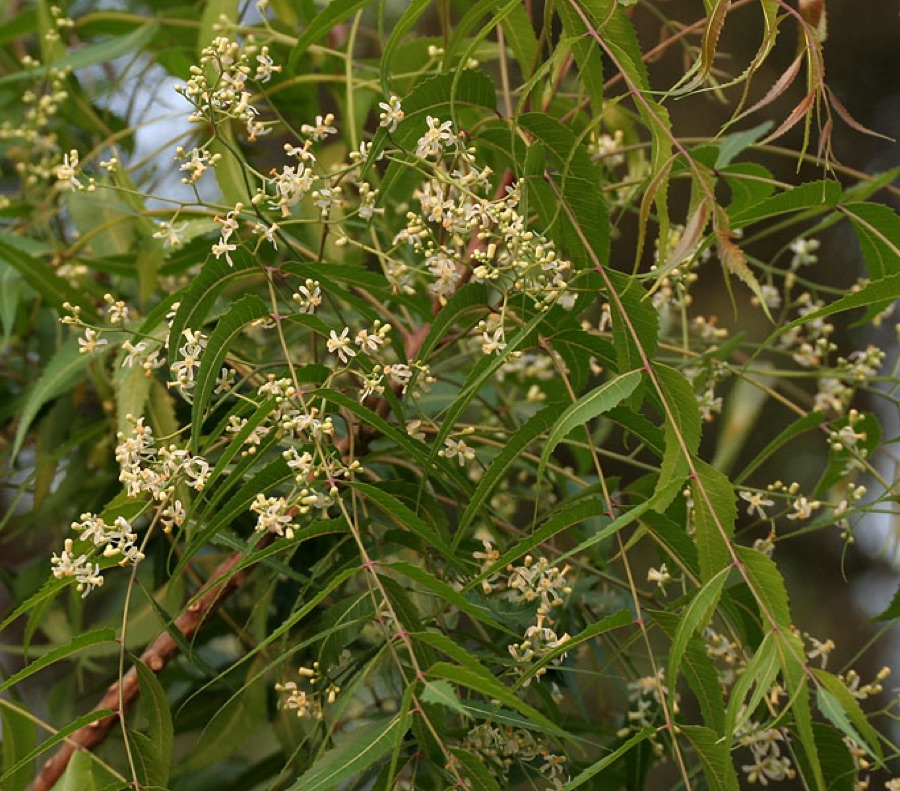
Photo: J.M.Garg · CC BY 3.0 · Wikimedia Commons

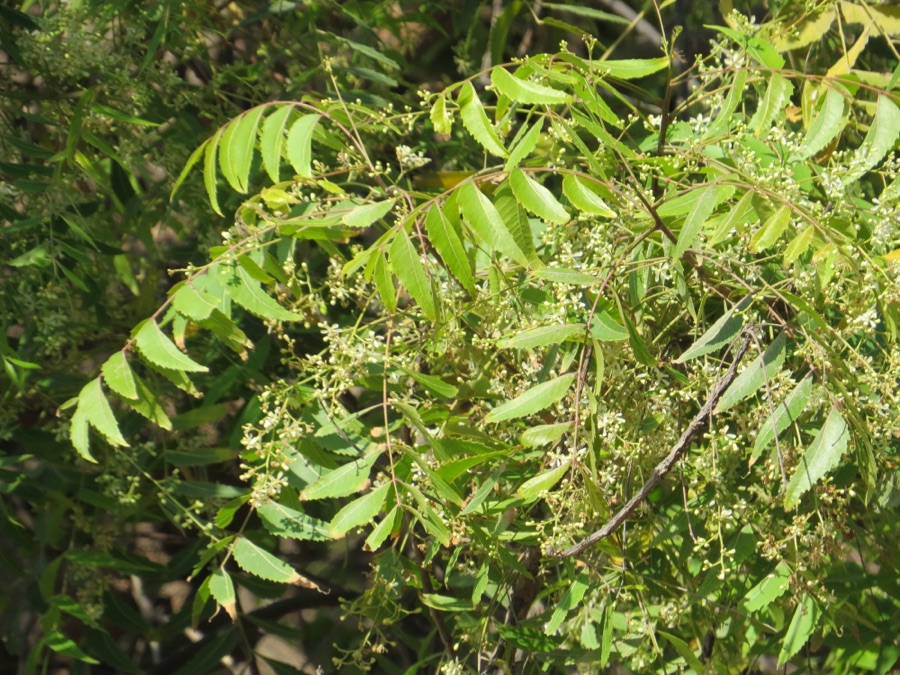
Photo: Vinayaraj · CC BY-SA 4.0 · Wikimedia Commons

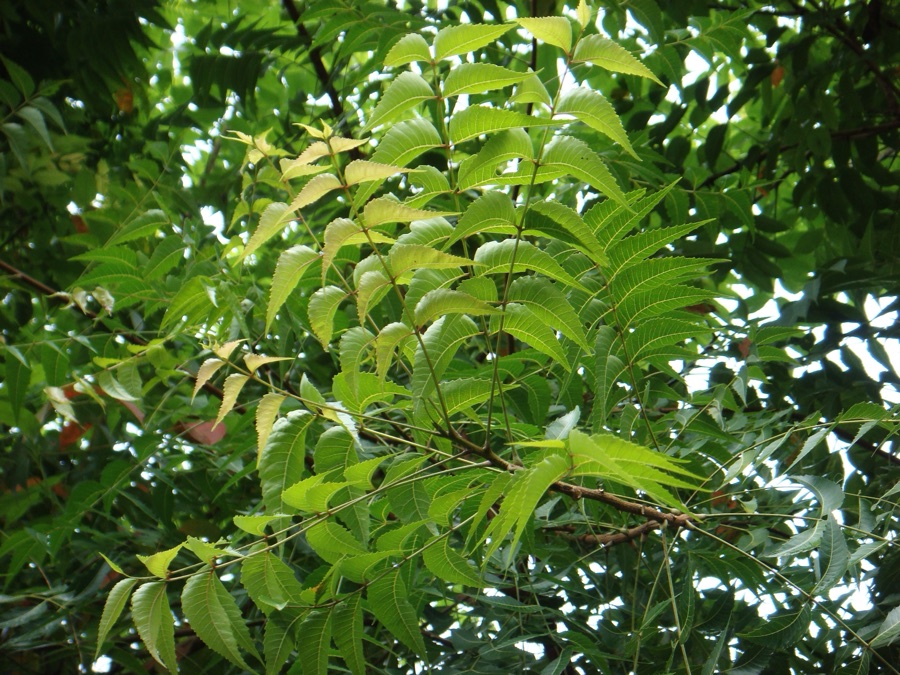
Photo: Challiyan at Malayalam Wikipedia · CC BY-SA 2.5 · Wikimedia Commons

Matra and anupana
AS THE CLASSICAL TEXTS AND THE API PRESCRIBE
| Churna | 2–4 g |
| Kwatha | 50–100 ml |
| Patra swarasa | 5–10 ml |
| Anupana | Ushnodaka · Madhu |
| Kala | Adhobhakta |
Neem oil is NOT interchangeable with these and is the form implicated in paediatric poisoning. Never give the oil to an infant.
Reported from Sharangadhara Samhita and the Ayurvedic Pharmacopoeia of India. Laisha states what the texts prescribe; it does not recommend. No quantity here is adjusted for a particular person — not for agni, koshtha, bala, age, pregnancy, kidney or liver function, or anything already being taken.
Pharmacopoeial standard
Ayurvedic Pharmacopoeia of India, Part I
| Marker | Nimbin and azadirachtin on TLC |
| Assay | As the monograph gives |
| Total ash | Total ash not more than 12 per cent |
| Acid-insoluble ash | Not more than 2 per cent |
| Alcohol-soluble extractive | Alcohol-soluble extractive not less than 4 per cent |
| Water-soluble extractive | Water-soluble extractive not less than 10 per cent |
| Foreign matter | Foreign matter not more than 2 per cent |
Melia azedarach — the bakain — is substituted for Azadirachta indica and is more toxic. The TLC separates them.
These are the pharmacopoeial limits for the article, not a test Laisha has run on anything. They are here so a practitioner can ask a supplier for a certificate of analysis and know what the numbers on it should say.
Rasapanchaka
| Rasa | TiktaKashaya |
| Guna | LaghuRuksha |
| Virya | Sheeta |
| Vipaka | Katu |
| Prabhava | The texts group nimba among the kandughna and krimighna dravya. |
| Doshakarma | Kaphapittahara. Being ruksha and sheeta it can increase vata, which the texts note. |
Tikta predominant. It is the dravya most often given as the example of tikta rasa itself.
Karma and part used
These are the actions the classical texts record. They are statements about what the tradition holds, and this library does not restate them as findings about a human body.
| Upayukta anga | Patra (leaf) Twak (bark) Phala (fruit) Taila (seed oil) |
| Why it matters | These are not interchangeable, and the difference is the most important thing on this page. Neem leaf and neem seed oil have very different safety records, and most of the documented harm involves the oil. |
Paryaya
Arishta means that which keeps off harm. Pichumarda names a use. The paryaya carry the reputation, not the pharmacology.
Names, by language
| English | Neem |
| Sinhala | Kohomba |
| Nepali | Neem |
| Arabic | Neem |
| Hindi | Neem |
| Kannada | Bevu |
| Tamil | Vembu |
| Telugu | Vepa |
| Malayalam | Aryaveppu |
| Marathi | Kadunimb |
| Gujarati | Limdo |
| Bengali | Nim |
| Punjabi | Nimm |
| Odia | Nimba |
| Urdu | Neem |
Classical references
Rasa, guna, virya, vipaka and karma are recorded as the classical texts give them, with the text and section named so a student can open the book and check. Where an exact chapter and verse could not be confirmed, this library names the section rather than inventing a number.
Formulations it appears in
| Nimbadi Churna | Named for the dravya. |
| Panchanimba Churna | Built on five parts of the neem tree. |
| Nimba Taila | The seed oil, used externally. |
Adulterants and substitutes
Melia azedarach, the bakain or Persian lilac, is a different tree that looks similar, grows alongside neem and is repeatedly sold as it. That substitution matters more than most: Melia azedarach is documented as toxic. Leaf shape distinguishes them on the tree and nothing distinguishes them in a powder.
Identity
Matched to the accepted name in the GBIF backbone at 99% confidence. The author abbreviation A.Juss. is Adrien-Henri de Jussieu, who described the species.
A WAY TO REMEMBER IT
Azadirachta is from Persian azad-dirakht, the free or noble tree. Indica, of India. The Persian name is inside the Latin.
What the tradition holds
Neem has a long place in Ayurveda as nimba, and the leaf, bark and oil have each been used differently. Neem twigs are widely used for cleaning teeth, and the oil is applied externally in traditional practice. That is what the tradition holds; it is not a finding about what the plant does in a body, and tradition is not a safety record — the oral toxicity in children described above occurred within traditional use.
What the evidence says
| Status | Not established for any internal health purpose, and the safety signal is far stronger than any benefit signal. |
| Suggested | Neem is studied in dermatology and as an agricultural pest deterrent, where azadirachtin is the active compound. Laisha does not hold a sourced clinical finding for any internal human use and states none. |
| Not established | No internal medicinal use of neem is established here. Where a plant's documented harm is better characterised than its documented benefit, that asymmetry is the finding. |
| The honest gap | Most of the reliable literature on neem in humans is case reports of poisoning rather than trials of benefit. That is an honest description of the evidence base, not a criticism of the plant. |
Safety
Neem oil is dangerous to infants and young children taken by mouth, and has killed. Adults have also developed toxic encephalopathy after ingesting neem oil. External and dental traditional uses have a different record from swallowing the oil, and the two should never be reasoned about together.
| Side effects | Vomiting, often within minutes of ingestion Drowsiness progressing to altered consciousness Rapid breathing Diarrhoea |
| Contraindications | Never give neem oil by mouth to an infant or young child. Do not take neem oil internally at any age. |
| Interactions | Antidiabetic medicines — a hypoglycaemic effect is documented for the leaf. Immunosuppressants — immunostimulant direction opposes them. Neem OIL in infants and small children has caused a Reye-like encephalopathy with fatty liver, documented in paediatric series. This is an absolute contraindication, not a caution, and it is the oil specifically. |
| Pregnancy and breastfeeding | Laisha holds no sourced safety position for neem in pregnancy or breastfeeding, and offers none. Given the documented toxicity of the oil, this is a question for a doctor rather than for a page. |
Growing it
| Climate | A hardy evergreen tree of hot, dry and semi-arid regions, long established across South Asia and Africa. |
| Soil | Tolerates poor, shallow and stony ground where little else will grow, which is much of why it was planted so widely. |
| Planting | Grown from seed or nursery-raised saplings. Seed viability is short, so fresh seed matters. |
| Harvest | Leaves are picked as needed; seed is collected when the fruit ripens and falls, and the oil is pressed from the kernel. |
| What is not stated | Laisha holds no sourced per-hectare yield, oil recovery rate or cost figure for neem, and none is offered. |
Check this page
Print it and the code still works. It goes to this page and nowhere else.
What this is not
- No dose is given, here or anywhere in this library — and for neem oil taken internally there is no safe amount to discuss.
- Nothing here is a recommendation to use neem internally.
- Where a plant's harm is better documented than its benefit, this library says so rather than balancing the two to look even-handed.
Sources
https://www.ncbi.nlm.nih.gov/books/NBK548429/
https://pmc.ncbi.nlm.nih.gov/articles/PMC5894275/
https://api.gbif.org/v1/species/match?name=Azadirachta%20indica
https://pcimh.gov.in/
https://niimh.nic.in/ebooks/esharangadhara/