Parpata
पर्पट
Fumaria indica (Hausskn.) Pugsley
Papaveraceae · Fumaria
One name, more than one plant
Matched live against the GBIF backbone on 28 September 2026 at 99 per cent confidence. Fumaria parviflora and Fumaria vaillantii are also used under this name, and in south India Oldenlandia corymbosa is used as Parpata instead — three genera in two families, set out below.
Benefits & side effects
TRADITIONAL VIEW, WITH SAFETY LIMITS
Hindi name: Pitpapra
What the texts say Parpata does
- Jwaraghna — used in fever
- Dahaprashamana — relieves burning
- Trishnanigrahana — quenching thirst
- Deepana — kindles digestion (appetiser)
- Raktashodhana — purifies the blood
What the evidence says. Traditional use is extensive and long recorded. Modern clinical evidence is limited.
Side effects and limits
- Digestive upset
- Drowsiness
- Dryness from its ruksha nature
Avoid or ask first: Pregnancy.
A traditional classification, not a recommendation. The full safety record is below.
Stands in 2 groups
- Trishnanigrahana — Quenching thirst (named there as Parpataka)
- Jwarahara — Relieving fever (named there as Parpataka)
A Samhita can only be read forwards, from the group to its members. This is the same list read backwards.
Photographs
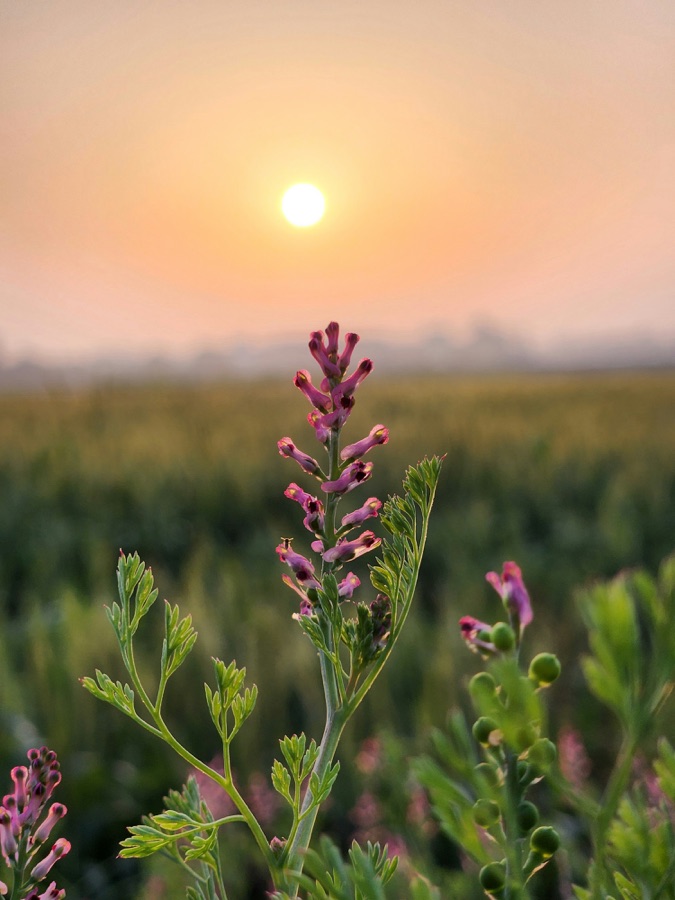
Photo: Prince8920 · CC BY-SA 4.0 · Wikimedia Commons

Matra and anupana
AS THE CLASSICAL TEXTS AND THE API PRESCRIBE
| Churna | 1–3 g |
| Phanta | 50–100 ml |
| Anupana | Sharkara · Ushnodaka |
| Kala | Adhobhakta |
One of the six of Shadanga Paniya, the classical jwarahara phanta.
Reported from Sharangadhara Samhita and the Ayurvedic Pharmacopoeia of India. Laisha states what the texts prescribe; it does not recommend. No quantity here is adjusted for a particular person — not for agni, koshtha, bala, age, pregnancy, kidney or liver function, or anything already being taken.
Rasapanchaka
| Rasa | TiktaKashaya |
| Guna | LaghuRuksha |
| Virya | Sheeta |
| Vipaka | Katu |
| Prabhava | The texts treat parpata as the chief dravya for pitta-dominant jwara and it is one of the six of Shadanga Paniya, the cooling drink given in fevers. |
| Doshakarma | Kaphapittahara. Being ruksha and sheeta it increases vata. |
Tikta and kashaya with sheeta virya and katu vipaka.
Karma and part used
These are the actions the classical texts record. They are statements about what the tradition holds, and this library does not restate them as findings about a human body.
| Upayukta anga | Panchanga (the whole plant) |
| Why it matters | The whole herb is the article, collected in flower during the cool season. |
Paryaya
Sukshmapatra, fine-leaved, names the feathery foliage. Renu and Pamsu both mean dust, describing how the dried herb crumbles.
Names, by language
| English | Indian fumitory |
| Sinhala | Parpataka |
| Nepali | Pitpapra |
| Hindi | Pitpapra |
| Kannada | Parpataka |
| Tamil | Tura |
| Telugu | Chataraasi |
| Malayalam | Parppadakapullu |
| Marathi | Pittapapada |
| Gujarati | Pittapapado |
| Bengali | Shahtara |
| Punjabi | Shahtara |
| Odia | Parpata |
| Urdu | Shahtara |
Classical references
Rasa, guna, virya, vipaka and karma are recorded as the classical texts give them, with the text and section named so a student can open the book and check. Where an exact chapter and verse could not be confirmed, this library names the section rather than inventing a number.
Formulations it appears in
| Shadanga Paniya | Parpata is one of the six dravya. |
| Parpatadi Kwatha | Named for the dravya. |
| Panchabhadra Kwatha | Among the dravya of the formulation. |
Adulterants and substitutes
Three plants are sold as Parpata across India: Fumaria species in the north, Oldenlandia corymbosa in the south, and Rungia repens in parts of the west. They are in different families. As with Rasna and Shankhapushpi, the honest answer to what Parpata is begins with where you are standing.
Identity
Matched live against the GBIF backbone on 28 September 2026 at 99 per cent confidence. Fumaria parviflora and Fumaria vaillantii are also used under this name, and in south India Oldenlandia corymbosa is used as Parpata instead — three genera in two families, set out below.
A WAY TO REMEMBER IT
Fumaria is from fumus, smoke — the grey-green foliage looks like smoke rising from the ground, and the crushed plant was said to smell of it. Indica, of India.
What the tradition holds
Parpata is named in the Charaka Samhita among the dravya used in fever and described in the Bhavaprakasha Nighantu. That is what the tradition holds and where it is written down, not a finding about what the herb does in a body.
Constituents. Fumaria carries isoquinoline alkaloids including protopine and fumaric acid. Oldenlandia, used under the same name, carries a quite different chemistry.
What the evidence says
| Status | Traditional use is extensive and long recorded. Modern clinical evidence is limited. |
| Suggested | Health Canada publishes monographs covering Ayurvedic ingredients and permits specific traditional-use claims, which reflects a regulator accepting a documented tradition rather than a body of clinical trial evidence. |
| Not established | There is not enough good clinical evidence to establish an effect on any named health condition. Long traditional use is not a substitute for that evidence, and this library does not present it as one. |
| The honest gap | Published work under the name Parpata may concern any of three unrelated plants and rarely says which. |
Safety
The classical indication is fever, and fever in India includes malaria, dengue and typhoid — which means a diagnosis rather than a herb is the first step. Fumaria carries isoquinoline alkaloids and has been associated with sedation and with slowed heart rate in larger amounts. A buyer cannot know which of three plants they have. Anyone on medication, pregnant, or managing a diagnosed condition should speak to a doctor or a qualified practitioner first.
| Side effects | Digestive upset Drowsiness Dryness from its ruksha nature |
| Contraindications | Pregnancy. |
| Interactions | No specific drug interaction is documented for this dravya. That is the honest state of the evidence, not a statement that none exists — most Ayurvedic dravya have never been studied for interaction. Tell the prescribing doctor it is being taken. Antidiabetic medicines — mild lowering reported for Fumaria. |
| Pregnancy and breastfeeding | Not to be used in pregnancy or breastfeeding. |
Growing it
| Climate | Cool season; a winter weed of cultivated fields across north India. |
| Soil | Cultivated ground, particularly wheat fields. |
| Planting | Not planted. It comes up as a weed in the winter crop. |
| Harvest | The whole herb is pulled in flower, washed and dried in shade. |
| What is not stated | This library has not verified region-specific spacing, variety and yield figures against a named agricultural authority for every growing country, and does not state them rather than guessing. |
Check this page
Print it and the code still works. It goes to this page and nowhere else.
What this is not
- This is a study and clinical reference for practitioners and students. The matra and anupana it records are what the classical texts and the Ayurvedic Pharmacopoeia of India PRESCRIBE — Laisha reports them, it does not recommend them. They are not a prescription for any particular person, and they are not adjusted for your age, agni, koshtha, bala, pregnancy, kidney or liver function, or anything else you are already taking. Only a qualified practitioner who has examined you can do that.
- Traditional classification is recorded as what the classical texts say, with the text and the place in it named so it can be checked. It is not restated as a finding about a human body.
- Nothing here replaces a qualified Ayurvedic practitioner or a doctor.
Sources
https://api.gbif.org/v1/species/match?name=Fumaria%20indica
https://pcimh.gov.in/
https://www.canada.ca/en/health-canada/services/drugs-health-products/natural-non-prescription/applications-submissions/product-licensing/compendium-monographs.html
https://niimh.nic.in/ebooks/esharangadhara/