Shyonaka
श्योनाक
Oroxylum indicum (L.) Kurz
Bignoniaceae · Oroxylum
Benefits & side effects
TRADITIONAL VIEW, WITH SAFETY LIMITS
Hindi name: Sonapatha
What the texts say Shyonaka does
- Deepana — kindles digestion (appetiser)
- Grahi — digestive that absorbs excess fluid and binds the stool
- Shothahara — reduces swelling
- Vatahara — pacifies vata
- Jwaraghna — used in fever
What the evidence says. Traditional use is extensive and long recorded. Modern clinical evidence is limited.
Side effects and limits
- Digestive upset
Avoid or ask first: No absolute contraindication is documented here. This is written deliberately rather than left blank.
A traditional classification, not a recommendation. The full safety record is below.
Stands in 3 groups
- Shothahara — Reducing swelling
- Ambashthadi — Wound healing and the binding of stool (named there as Katvanga)
- Brihat Panchamula — The greater five roots
A Samhita can only be read forwards, from the group to its members. This is the same list read backwards.
Photographs
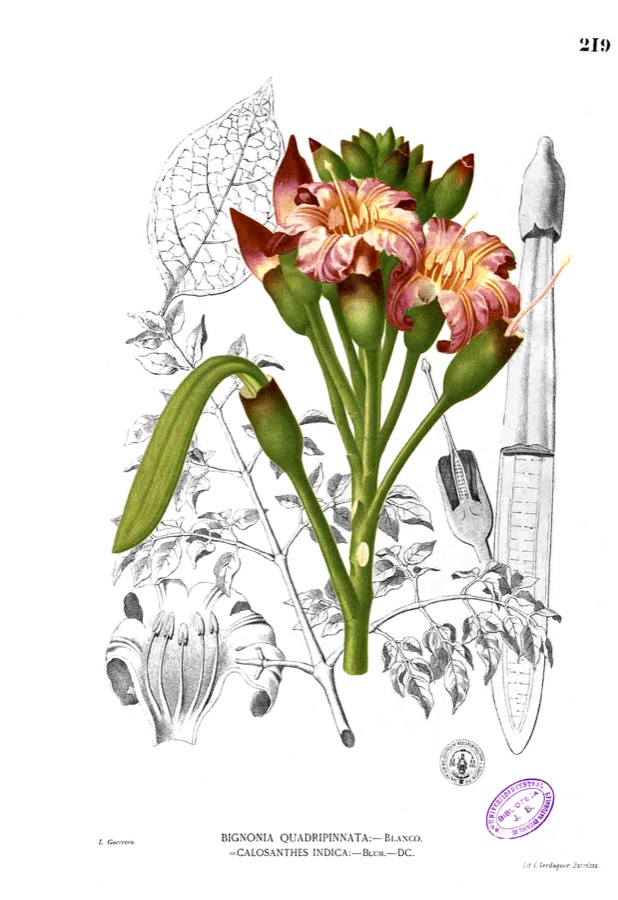
Photo: Francisco Manuel Blanco (O.S.A.) · Public domain · Wikimedia Commons

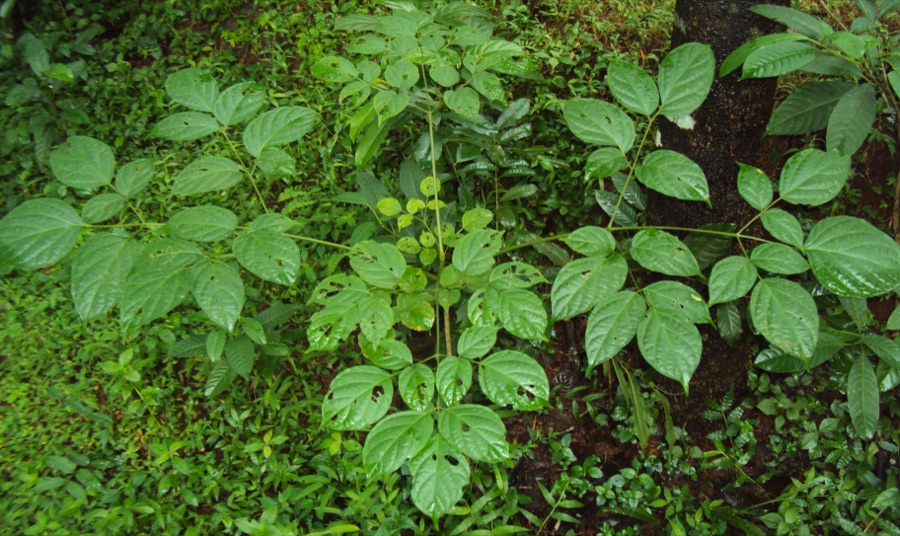
Photo: Vinayaraj · CC BY-SA 3.0 · Wikimedia Commons

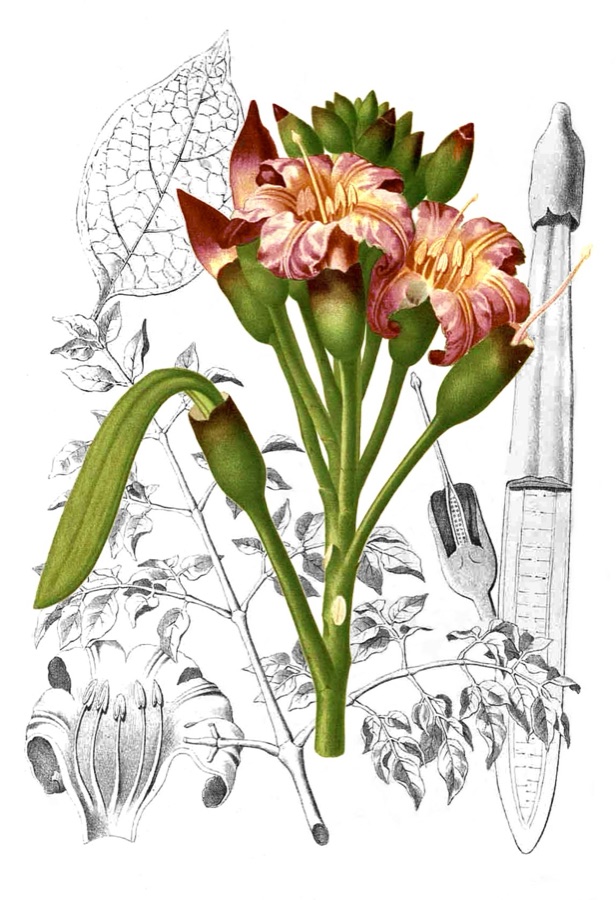
Photo: Francisco Manuel Blanco (O.S.A.) · Public domain · Wikimedia Commons

Matra and anupana
AS THE CLASSICAL TEXTS AND THE API PRESCRIBE
| Twak kwatha | 50–100 ml |
| Churna | 3–6 g |
| Anupana | Ushnodaka · Madhu |
| Kala | Adhobhakta |
One of the Dashamoola.
Reported from Sharangadhara Samhita and the Ayurvedic Pharmacopoeia of India. Laisha states what the texts prescribe; it does not recommend. No quantity here is adjusted for a particular person — not for agni, koshtha, bala, age, pregnancy, kidney or liver function, or anything already being taken.
Pharmacopoeial standard
Ayurvedic Pharmacopoeia of India, Part I
| Marker | Chrysin and oroxylin A |
| Assay | |
| Total ash | |
| Acid-insoluble ash | |
| Alcohol-soluble extractive | |
| Water-soluble extractive | |
| Foreign matter |
Oroxylum indicum root bark. The flavones are the accepted markers.
These are the marker and the identity test for this dravya, and they are not a test Laisha has run on anything. Laisha does not state the numeric limits here: the assay, ash and extractive figures must be read from the current edition of the Ayurvedic Pharmacopoeia of India, because a wrong limit printed here is a number a laboratory would act on. The entries in this library that DO carry figures carry them because each one was checked.
Rasapanchaka
| Rasa | TiktaKashayaMadhura |
| Guna | LaghuRuksha |
| Virya | Ushna |
| Vipaka | Katu |
| Prabhava | The texts treat it as deepana and grahi, and it is named for the digestive fire more often than the other great roots. |
| Doshakarma | Tridoshahara, and named so in the texts despite being ushna. |
Tikta and kashaya with madhura, ushna virya and katu vipaka.
Karma and part used
These are the actions the classical texts record. They are statements about what the tradition holds, and this library does not restate them as findings about a human body.
| Upayukta anga | Mula twak (the root bark) Twak (the stem bark) Beeja (the seed) |
| Why it matters | The root bark is what Dashamoola calls for. |
Paryaya
Dirghavrinta means long-stalked and names the enormous compound leaf. The tree is recognised at a distance by its flat sword-shaped pods standing upright against the sky, which is why one English name for it is midnight horror.
Names, by language
| English | Indian trumpet tree |
| Sinhala | Thotila |
| Nepali | Totala |
| Hindi | Sonapatha |
| Kannada | Tatuna |
| Tamil | Achi |
| Telugu | Dundilam |
| Malayalam | Palakappayyani |
| Marathi | Tetu |
| Gujarati | Tetu |
| Bengali | Shona |
| Punjabi | Tatpalanga |
| Odia | Phanphania |
| Urdu | Sona patha |
Classical references
Rasa, guna, virya, vipaka and karma are recorded as the classical texts give them, with the text and section named so a student can open the book and check. Where an exact chapter and verse could not be confirmed, this library names the section rather than inventing a number.
Formulations it appears in
| Dashamoolarishta | One of the ten roots. |
| Dashamoola Kwatha | One of the ten roots. |
| Chyawanprash | Among the dravya of the formulation. |
| Narayana Taila | Among the dravya of the formulation. |
Adulterants and substitutes
Unusually for Dashamoola there is no serious species confusion, because the genus holds one species and the tree is unmistakable. The substitution that does occur is stem bark sold as root bark, which is easier to collect and does not require digging, and which cannot be told apart once dried and cut.
Identity
Matched live against the GBIF backbone on 28 September 2026 at 99 per cent confidence. The genus holds this one species, which makes it one of the few Dashamoola members with no name dispute at all. One of the ten roots, counted among the five great roots.
A WAY TO REMEMBER IT
Oroxylum is oros (mountain) + xylon (wood). Indicum, of India. The enormous flat pods hanging from a bare tree are the field mark, and give it the name broken-bones tree.
What the tradition holds
Shyonaka is counted among the Brihat Panchamoola in the Sushruta Samhita and is recorded as deepana. That is what the tradition holds and where it is written down, not a finding about what the bark does in a body.
Constituents. The bark and seed carry flavonoids including baicalein, chrysin and oroxylin A. Content differs markedly between root bark, stem bark and seed.
What the evidence says
| Status | Traditional use is extensive and long recorded. Modern clinical evidence is limited. |
| Suggested | Health Canada publishes monographs covering Ayurvedic ingredients and permits specific traditional-use claims, which reflects a regulator accepting a documented tradition rather than a body of clinical trial evidence. |
| Not established | There is not enough good clinical evidence to establish an effect on any named health condition. Long traditional use is not a substitute for that evidence, and this library does not present it as one. |
| The honest gap | Published work often uses seed or stem bark extracts, which are different articles from the root bark the tradition calls for. |
Safety
No serious harm is documented for this dravya at traditional use, which is a statement about the absence of records and not a guarantee. It is almost always used as one of ten roots rather than alone. Anyone on medication, pregnant, or managing a diagnosed condition should speak to a doctor or a qualified practitioner first.
| Side effects | Digestive upset |
| Contraindications | No absolute contraindication is documented here. This is written deliberately rather than left blank. |
| Interactions | No specific interaction is documented here. Anyone on regular medication should still tell their doctor what they are taking. |
| Pregnancy and breastfeeding | There is not enough evidence to establish safety in pregnancy or breastfeeding, and a qualified practitioner should be asked first. |
Growing it
| Climate | Tropical and subtropical, in forest and on forest margins. |
| Soil | Well-drained ground; tolerant of poor soil. |
| Planting | A small tree, raised from the large winged seed. |
| Harvest | Root bark is taken from part of the root system so the tree survives. Pods are collected when they split. |
| What is not stated | Most supply is collected from wild trees rather than cultivated, and Dashamoola demand is heavy enough that this is a real pressure on wild populations. Root bark taken from a standing tree, rather than by felling it, is the practice that lets the tree live. |
Check this page
Print it and the code still works. It goes to this page and nowhere else.
What this is not
- This is a study and clinical reference for practitioners and students. The matra and anupana it records are what the classical texts and the Ayurvedic Pharmacopoeia of India PRESCRIBE — Laisha reports them, it does not recommend them. They are not a prescription for any particular person, and they are not adjusted for your age, agni, koshtha, bala, pregnancy, kidney or liver function, or anything else you are already taking. Only a qualified practitioner who has examined you can do that.
- Traditional classification is recorded as what the classical texts say, with the text and the place in it named so it can be checked. It is not restated as a finding about a human body.
- Nothing here replaces a qualified Ayurvedic practitioner or a doctor.
Sources
https://api.gbif.org/v1/species/match?name=Oroxylum%20indicum
https://pcimh.gov.in/
https://www.canada.ca/en/health-canada/services/drugs-health-products/natural-non-prescription/applications-submissions/product-licensing/compendium-monographs.html
https://niimh.nic.in/ebooks/esharangadhara/
https://pcimh.gov.in/