Snuhi
स्नुही
Euphorbia neriifolia L.
Euphorbiaceae · Euphorbia
Benefits & side effects
TRADITIONAL VIEW, WITH SAFETY LIMITS
Hindi name: Sehund
What the texts say Snuhi does
- Bhedana — breaks up hard, bound stool and expels it (purgative)
- Krimighna — anthelmintic (against worms)
- Kushthaghna — used in skin disease
- Shothahara — reduces swelling
- Vishaghna — antidote (against poison)
What the evidence says. Traditional use is extensive and long recorded. Modern clinical evidence is limited.
Side effects and limits
- Severe skin blistering on contact
- Burning of the mouth and gut
- Violent purgation
Avoid or ask first: Self-treatment, absolutely.; Internal use of raw or unpurified latex, by anyone.; Pregnancy and breastfeeding.; and more below.
A traditional classification, not a recommendation. The full safety record is below.
Stands in 1 group
- Shyamadi — Purgation, poison, and retained Vata (named there as Sudha)
A Samhita can only be read forwards, from the group to its members. This is the same list read backwards.
Photographs
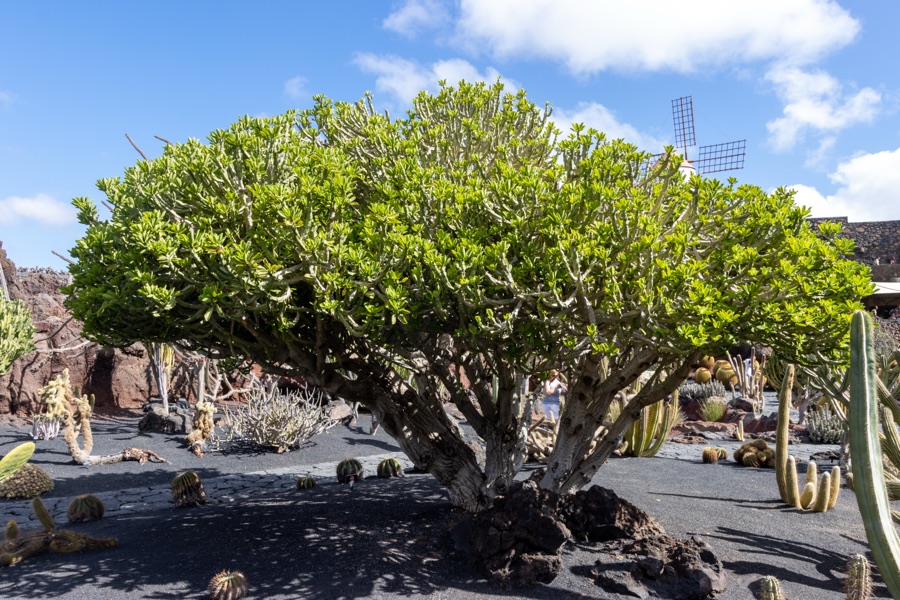
Photo: Photograph by Mike Peel (www.mikepeel.net). · CC BY-SA 4.0 · Wikimedia Commons

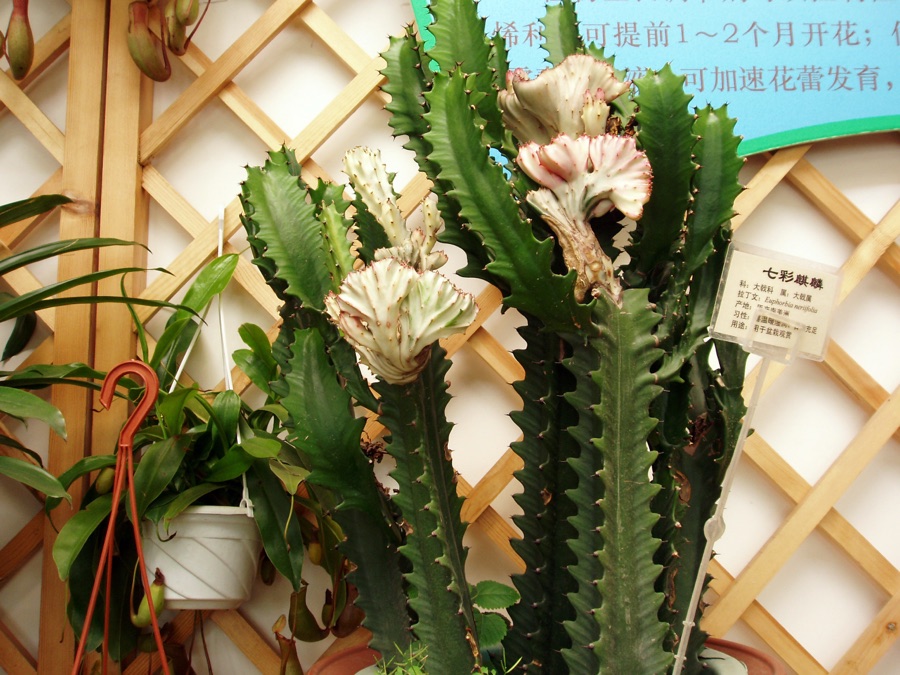
Photo: Taken by Fanghong · CC BY 2.5 · Wikimedia Commons

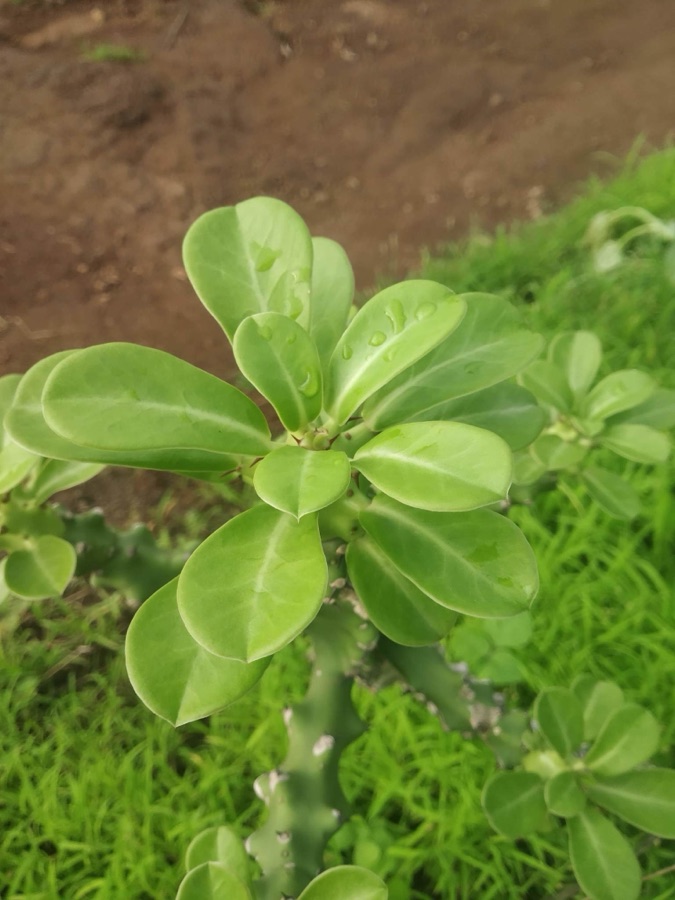
Photo: iNaturalist.org (S.MORE) (S.MORE) · CC0 · Wikimedia Commons

Matra and anupana
AS THE CLASSICAL TEXTS AND THE API PRESCRIBE
| Shodhita ksheera | 15–60 mg, specialist use only |
| Anupana | Ghrita |
Among the upavisha. The latex is a severe irritant and a drastic purgative; chiefly external, and internal use is specialist.
Reported from Sharangadhara Samhita and the Ayurvedic Pharmacopoeia of India. Laisha states what the texts prescribe; it does not recommend. No quantity here is adjusted for a particular person — not for agni, koshtha, bala, age, pregnancy, kidney or liver function, or anything already being taken.
Rasapanchaka
| Rasa | Katu |
| Guna | LaghuRukshaTikshna |
| Virya | Ushna |
| Vipaka | Katu |
| Prabhava | The texts treat snuhi ksheera as a strong bhedana and use it where a powerful purgative action is needed, always after purification and in very small quantity. |
| Doshakarma | Kaphavatahara. It increases pitta strongly. |
A single rasa, katu, with ushna virya and katu vipaka.
Karma and part used
These are the actions the classical texts record. They are statements about what the tradition holds, and this library does not restate them as findings about a human body.
| Upayukta anga | Ksheera (the latex), only after shodhana Patra (the leaf) |
| Why it matters | The latex is the article and it is never used raw or internally without purification. It is a caustic on skin and on the eye. |
Paryaya
Vajri, the thunderbolt one, names the ridged angular stem. Samantadugdha, milky all over, names the latex that runs from any cut.
Names, by language
| English | Indian spurge tree |
| Sinhala | Patuk |
| Nepali | Siundi |
| Hindi | Sehund |
| Kannada | Elekalli |
| Tamil | Ilaikalli |
| Telugu | Aku jemudu |
| Malayalam | Ilakkalli |
| Marathi | Nivadunga |
| Gujarati | Thor |
| Bengali | Manasa |
| Punjabi | Thor |
| Odia | Siju |
| Urdu | Zaqqum |
Classical references
Rasa, guna, virya, vipaka and karma are recorded as the classical texts give them, with the text and section named so a student can open the book and check. Where an exact chapter and verse could not be confirmed, this library names the section rather than inventing a number.
Formulations it appears in
| Snuhi Ksheera preparations | The purified latex, used in small quantity. |
| Kshara Sutra | Snuhi latex is used in preparing the medicated thread. |
| Snuhyadi Taila | Named for the dravya, used externally. |
Adulterants and substitutes
Other Euphorbia species with similar angular stems are used interchangeably, and they vary in the strength of their latex. Because the plant is a free hedge plant there is little economic incentive to substitute; the risk is the plant itself rather than what replaces it.
Identity
Matched live against the GBIF backbone on 28 September 2026 at 99 per cent confidence. Classed among the upavisha. The latex is a caustic and is the reason this plant is planted as a living fence — cattle will not touch it.
A WAY TO REMEMBER IT
Euphorbia honours Euphorbus, physician to a Numidian king. Neriifolia means Nerium-leaved — the leaf looks like an oleander's. A cactus-like Euphorbia wearing an oleander's leaf.
What the tradition holds
Snuhi is described in the Bhavaprakasha Nighantu, where its caustic nature is noted. That is what the tradition holds and where it is written down, not a finding about what the latex does in a body.
Constituents. The latex carries diterpene esters of the phorbol type, which are the irritant principle and are also known tumour promoters in laboratory models.
What the evidence says
| Status | Traditional use is extensive and long recorded. Modern clinical evidence is limited. |
| Suggested | No claim of established clinical effect is made here. The modern literature on Euphorbia latex is largely about chemical burns and eye injury. |
| Not established | There is not enough good clinical evidence to establish an effect on any named health condition. Long traditional use is not a substitute for that evidence, and this library does not present it as one. |
| The honest gap | Phorbol ester content varies by species and season and is not knowable without assay. |
Safety
The latex burns. Splashed on skin it causes blistering, and in the eye it causes severe keratitis with cases of lasting visual loss recorded regularly across India — often in people cutting hedges or using it as a home remedy. Swallowed unpurified it causes violent purgation, vomiting and inflammation of the gut, and poisoning is documented. Phorbol esters in Euphorbia latex are also known tumour promoters in laboratory models, which is a reason this library does not present it as a casual remedy. It is used in Ayurveda in very small purified quantity under a practitioner and is not for self-treatment in any form. If latex enters an eye, wash with clean water and go to a hospital.
| Side effects | Severe skin blistering on contact Burning of the mouth and gut Violent purgation |
| Contraindications | Self-treatment, absolutely. Internal use of raw or unpurified latex, by anyone. Pregnancy and breastfeeding. Children. Any use near the eyes. |
| Interactions | Any medicine taken by mouth — violent purgation reduces absorption. Medicines for the heart, particularly digoxin — potassium loss raises the risk. |
| Pregnancy and breastfeeding | Not to be used in pregnancy or breastfeeding in any quantity or form. |
Growing it
| Climate | Dry tropical; planted as a living fence across India. |
| Soil | Poor, dry, well-drained ground. |
| Planting | Grown from stem cuttings, which root readily. |
| Harvest | Latex is collected from cut stems with protection, and purified before any use. |
| What is not stated | This library has not verified region-specific spacing, variety and yield figures against a named agricultural authority for every growing country, and does not state them rather than guessing. |
Check this page
Print it and the code still works. It goes to this page and nowhere else.
What this is not
- This is a study and clinical reference for practitioners and students. The matra and anupana it records are what the classical texts and the Ayurvedic Pharmacopoeia of India PRESCRIBE — Laisha reports them, it does not recommend them. They are not a prescription for any particular person, and they are not adjusted for your age, agni, koshtha, bala, pregnancy, kidney or liver function, or anything else you are already taking. Only a qualified practitioner who has examined you can do that.
- Traditional classification is recorded as what the classical texts say, with the text and the place in it named so it can be checked. It is not restated as a finding about a human body.
- Nothing here replaces a qualified Ayurvedic practitioner or a doctor.
Sources
https://api.gbif.org/v1/species/match?name=Euphorbia%20neriifolia
https://pcimh.gov.in/
https://www.canada.ca/en/health-canada/services/drugs-health-products/natural-non-prescription/applications-submissions/product-licensing/compendium-monographs.html
https://niimh.nic.in/ebooks/esharangadhara/