Trivrit
त्रिवृत्
Operculina turpethum (L.) Silva Manso
Convolvulaceae · Operculina
Benefits & side effects
TRADITIONAL VIEW, WITH SAFETY LIMITS
Hindi name: Nisoth
What the texts say Trivrit does
- Virechana — purgative
- Pittarechana — purges pitta
- Krimighna — anthelmintic (against worms)
- Kushthaghna — used in skin disease
- Shothahara — reduces swelling
What the evidence says. Traditional use is extensive and long recorded. Modern clinical evidence is limited.
Side effects and limits
- Abdominal cramping
- Diarrhoea and dehydration
- Nausea
- Weakness after purgation
Avoid or ask first: Pregnancy.; Intestinal obstruction, appendicitis or undiagnosed abdominal pain.; Inflammatory bowel disease.; and more below.
A traditional classification, not a recommendation. The full safety record is below.
Stands in 2 groups
- Asthapanopaga — Adjuvant to niruha basti
- Shyamadi — Purgation, poison, and retained Vata
A Samhita can only be read forwards, from the group to its members. This is the same list read backwards.
Photographs
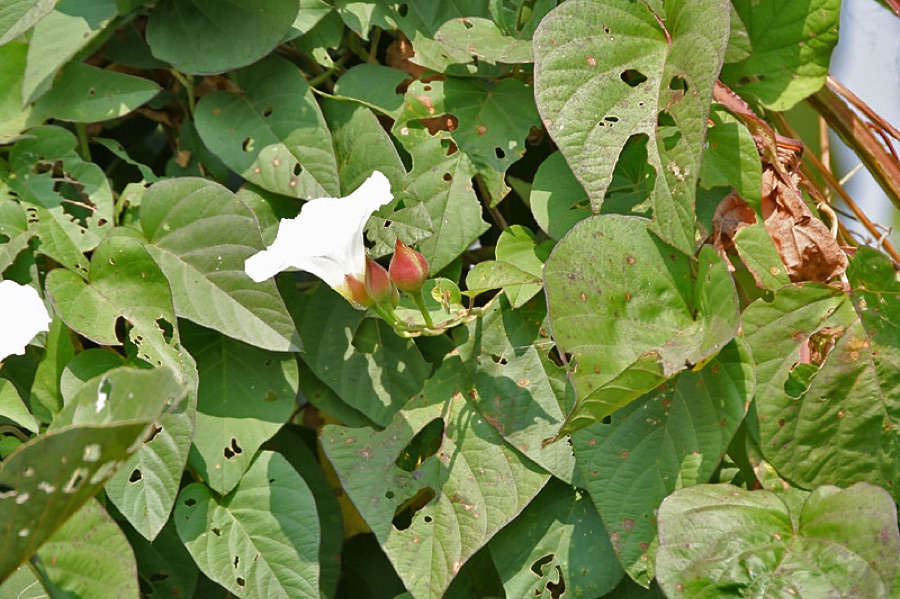
Photo: J.M.Garg · CC BY-SA 4.0 · Wikimedia Commons

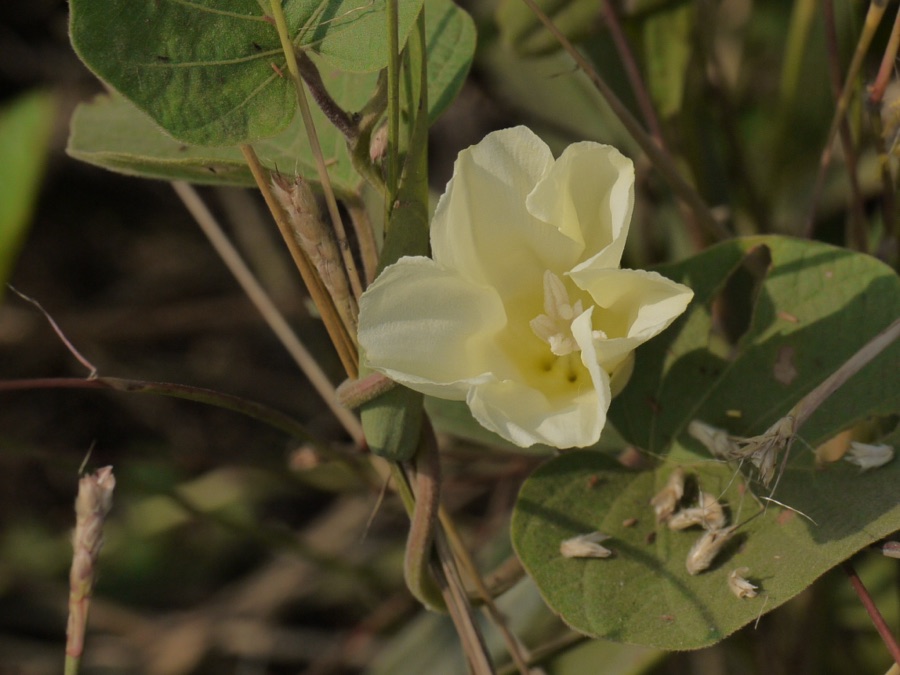
Photo: Dinesh Valke from Thane, India · CC BY-SA 2.0 · Wikimedia Commons

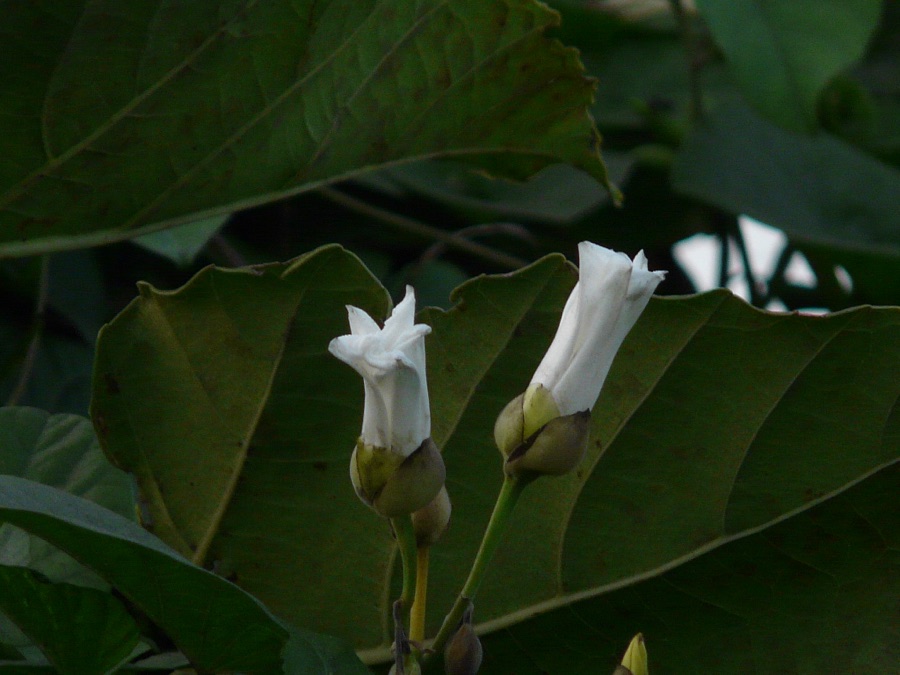
Photo: Dinesh Valke from Thane, India · CC BY-SA 2.0 · Wikimedia Commons

Matra and anupana
AS THE CLASSICAL TEXTS AND THE API PRESCRIBE
| Churna | 3–6 g |
| Anupana | Ushnodaka · Madhu · Draksha kwatha |
| Kala | Early morning, on an empty stomach |
Shyama trivrit is the more drastic variety and is not the same drug as the gentler Aruna.
Reported from Sharangadhara Samhita and the Ayurvedic Pharmacopoeia of India. Laisha states what the texts prescribe; it does not recommend. No quantity here is adjusted for a particular person — not for agni, koshtha, bala, age, pregnancy, kidney or liver function, or anything already being taken.
Rasapanchaka
| Rasa | KatuTiktaKashaya |
| Guna | LaghuRukshaTikshna |
| Virya | Ushna |
| Vipaka | Katu |
| Prabhava | The texts name trivrit the foremost of the virechana dravya and describe it as mrudu virechana, a gentle purgative, which is why it is preferred over harsher ones like danti and jayapala. |
| Doshakarma | Kaphapittahara. Being ruksha and tikshna it increases vata. |
Katu, tikta and kashaya with ushna virya and katu vipaka.
Karma and part used
These are the actions the classical texts record. They are statements about what the tradition holds, and this library does not restate them as findings about a human body.
| Upayukta anga | Mula twak (the root bark) |
| Why it matters | The bark of the root is the dravya, and the woody core is discarded — the core carries little activity and its presence is how weak material is bulked out. |
Paryaya
Rechani names the action directly. The texts distinguish Shweta Trivrit, the white kind, which is the one used, from Shyama Trivrit, the dark kind, which they describe as harsher and warn against for the weak. Shyama is not a synonym for Trivrit: it is the name of the more drastic variety, against the gentler Aruna or Shweta. Charaka Kalpasthana 7 treats them separately, and a prescription reading Shyama Trivrit is not asking for the same drug.
Names, by language
| English | Turpeth |
| Sinhala | Trasthawalu |
| Nepali | Nisoth |
| Hindi | Nisoth |
| Kannada | Bilikanagadde |
| Tamil | Sivadai |
| Telugu | Tegada |
| Malayalam | Trikolpakonna |
| Marathi | Nisottar |
| Gujarati | Nasottar |
| Bengali | Teori |
| Punjabi | Nisoth |
| Odia | Dudhalata |
| Urdu | Turbud |
Classical references
Rasa, guna, virya, vipaka and karma are recorded as the classical texts give them, with the text and section named so a student can open the book and check. Where an exact chapter and verse could not be confirmed, this library names the section rather than inventing a number.
Formulations it appears in
| Trivrit Lehya | A linctus named for the dravya. |
| Avipattikara Churna | Trivrit is the purgative dravya of the formulation. |
| Abhayadi Modaka | Among the dravya of the formulation. |
Adulterants and substitutes
The dark kind, Shyama Trivrit, is cheaper and is sold as the white — which matters because the texts themselves say the dark is harsher and not for the weak. Woody root core is ground in with the bark to add weight, producing material that is simply weak. Marsdenia tenacissima is also traded under the name in some markets.
Identity
Matched live against the GBIF backbone on 28 September 2026 at 99 per cent confidence. Ipomoea turpethum is a synonym. This is the dravya Ayurveda names first for virechana, purgation, and the texts single it out as the gentlest of the strong purgatives.
A WAY TO REMEMBER IT
Operculina is operculum, a little lid — the seed capsule opens by a lid. Turpethum is from the Persian turbid, the drug name itself. Tri-vrit means three-turned, for the twining stem.
What the tradition holds
Charaka gives a whole chapter of the Kalpasthana to trivrit, and the Bhavaprakasha Nighantu distinguishes its two kinds. That is what the tradition holds and where it is written down, not a finding about what the root does in a body.
Constituents. The root bark carries glycoresins, chiefly turpethin, which are the purgative principle.
What the evidence says
| Status | Traditional use is extensive and long recorded. Modern clinical evidence is limited. |
| Suggested | Health Canada publishes monographs covering Ayurvedic ingredients and permits specific traditional-use claims, which reflects a regulator accepting a documented tradition rather than a body of clinical trial evidence. |
| Not established | There is not enough good clinical evidence to establish an effect on any named health condition. Long traditional use is not a substitute for that evidence, and this library does not present it as one. |
| The honest gap | Published work is sparse and rarely distinguishes the white from the dark kind, which the tradition treats as materially different. |
Safety
This is a purgative and every caution follows from that. Overuse causes fluid and salt loss, and potassium loss matters for anyone on heart medicines. It is not for abdominal pain that has not been diagnosed, because purging an obstruction or an appendicitis is dangerous. Classical virechana is a supervised procedure with preparation and after-care, not a laxative taken casually, and the texts are emphatic that it is not for the weak, the very young or the very old. Anyone on medication, pregnant, or managing a diagnosed condition should speak to a doctor or a qualified practitioner first.
| Side effects | Abdominal cramping Diarrhoea and dehydration Nausea Weakness after purgation |
| Contraindications | Pregnancy. Intestinal obstruction, appendicitis or undiagnosed abdominal pain. Inflammatory bowel disease. Children and the frail, whom the texts themselves exclude. |
| Interactions | Any oral drug — a virechaka shortens transit and reduces absorption. Separate doses. Diuretics and corticosteroids — additive fluid and potassium loss with repeated purgation. |
| Pregnancy and breastfeeding | Not to be used in pregnancy or breastfeeding. |
Growing it
| Climate | Tropical; a twining perennial climber. |
| Soil | Well-drained ground. |
| Planting | Grown from seed or root cuttings; needs support. |
| Harvest | Roots lifted from mature plants, the bark stripped from the woody core and dried. |
| What is not stated | This library has not verified region-specific spacing, variety and yield figures against a named agricultural authority for every growing country, and does not state them rather than guessing. |
Check this page
Print it and the code still works. It goes to this page and nowhere else.
What this is not
- This is a study and clinical reference for practitioners and students. The matra and anupana it records are what the classical texts and the Ayurvedic Pharmacopoeia of India PRESCRIBE — Laisha reports them, it does not recommend them. They are not a prescription for any particular person, and they are not adjusted for your age, agni, koshtha, bala, pregnancy, kidney or liver function, or anything else you are already taking. Only a qualified practitioner who has examined you can do that.
- Traditional classification is recorded as what the classical texts say, with the text and the place in it named so it can be checked. It is not restated as a finding about a human body.
- Nothing here replaces a qualified Ayurvedic practitioner or a doctor.
Sources
https://api.gbif.org/v1/species/match?name=Operculina%20turpethum
https://pcimh.gov.in/
https://www.canada.ca/en/health-canada/services/drugs-health-products/natural-non-prescription/applications-submissions/product-licensing/compendium-monographs.html
https://niimh.nic.in/ebooks/esharangadhara/