Tulasi
तुलसी
Ocimum tenuiflorum L.
Lamiaceae · Ocimum
Benefits & side effects
TRADITIONAL VIEW, WITH SAFETY LIMITS
Hindi name: Tulsi
What the texts say Tulasi does
- Kaphahara — pacifies kapha
- Krimighna — anthelmintic (against worms)
- Deepana — kindles digestion (appetiser)
- Hridya — good for the heart
- Daurgandhyanashana — removes foul odour
What the evidence says. Traditional use is extensive and long recorded. Modern clinical evidence is limited.
Side effects and limits
- Acidity or burning in those prone to it
Avoid or ask first: No absolute contraindication is documented here for ordinary domestic use. This is written deliberately rather than left blank.
A traditional classification, not a recommendation. The full safety record is below.
Stands in 3 groups
- Shwasahara — Relieving breathlessness (named there as Surasa)
- Krimighna — Destroying worms (named there as Surasa)
- Surasadi — Kapha, worms, cough and breathlessness (named there as Surasa)
A Samhita can only be read forwards, from the group to its members. This is the same list read backwards.
Photographs
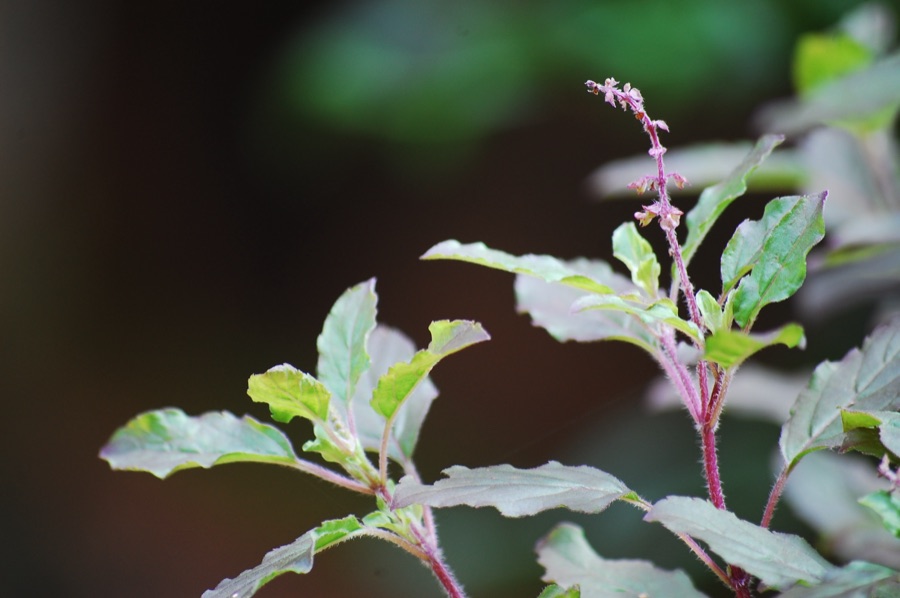
Photo: Challiyan at Malayalam Wikipedia · CC BY-SA 2.5 · Wikimedia Commons

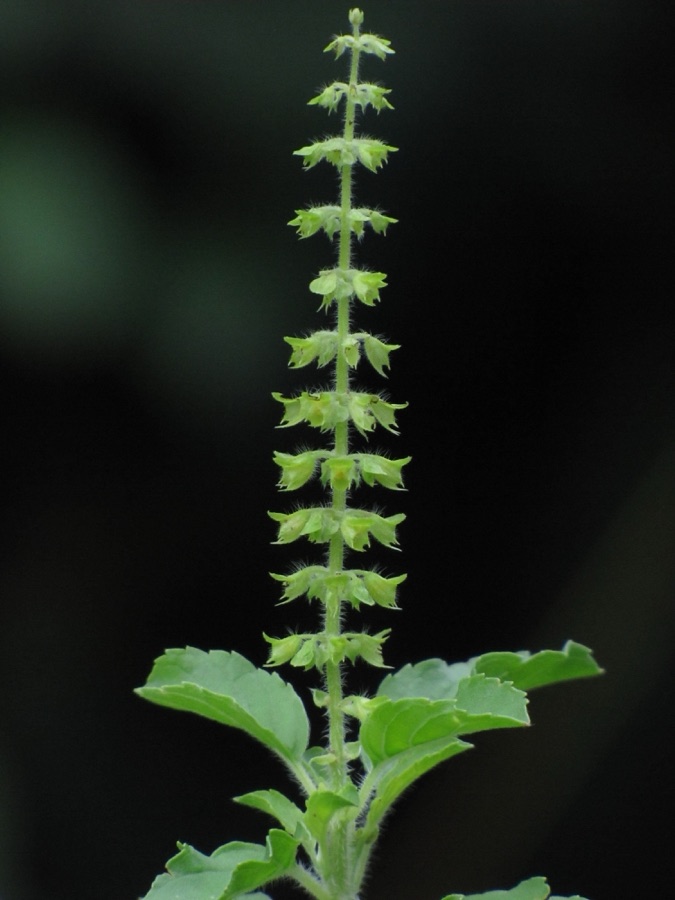
Photo: Vaikoovery · CC BY 3.0 · Wikimedia Commons

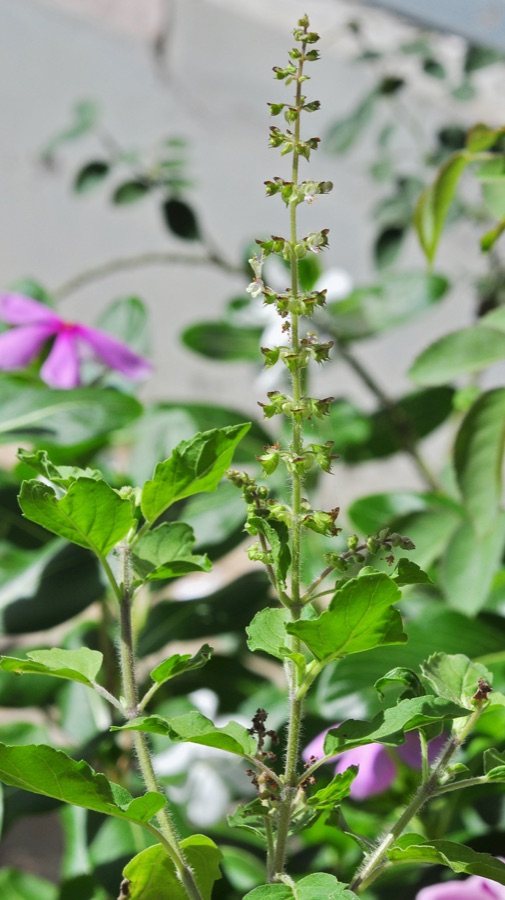
Photo: Joydeep · CC BY-SA 3.0 · Wikimedia Commons

Matra and anupana
AS THE CLASSICAL TEXTS AND THE API PRESCRIBE
| Patra swarasa | 5–10 ml |
| Churna | 1–3 g |
| Phanta | 50–100 ml |
| Anupana | Madhu · Ushnodaka |
| Kala | Adhobhakta |
Classical kasahara and jwarahara. Antiplatelet activity is documented.
Reported from Sharangadhara Samhita and the Ayurvedic Pharmacopoeia of India. Laisha states what the texts prescribe; it does not recommend. No quantity here is adjusted for a particular person — not for agni, koshtha, bala, age, pregnancy, kidney or liver function, or anything already being taken.
Pharmacopoeial standard
Ayurvedic Pharmacopoeia of India, Part I
| Marker | Eugenol and ursolic acid |
| Assay | |
| Total ash | |
| Acid-insoluble ash | |
| Alcohol-soluble extractive | |
| Water-soluble extractive | |
| Foreign matter |
Eugenol in Ocimum sanctum. The several Ocimum species differ markedly in their volatile oil, so the species matters before the assay does.
These are the marker and the identity test for this dravya, and they are not a test Laisha has run on anything. Laisha does not state the numeric limits here: the assay, ash and extractive figures must be read from the current edition of the Ayurvedic Pharmacopoeia of India, because a wrong limit printed here is a number a laboratory would act on. The entries in this library that DO carry figures carry them because each one was checked.
Rasapanchaka
| Rasa | KatuTikta |
| Guna | LaghuRukshaTikshna |
| Virya | Ushna |
| Vipaka | Katu |
| Prabhava | The texts group tulasi among the dravya acting on kapha and on the respiratory passage, and treat its action there as characteristic. |
| Doshakarma | Kaphavatahara. Being ushna and tikshna it increases pitta, which the texts state. |
Katu and tikta, both with ushna virya and katu vipaka — a dravya with no cooling element anywhere in its rasapanchaka, which is the usual contrast with amalaki.
Karma and part used
These are the actions the classical texts record. They are statements about what the tradition holds, and this library does not restate them as findings about a human body.
| Upayukta anga | Patra (leaf) Bija (seed) |
| Why it matters | The leaf is the part most used. The texts also name the seed and the root, and the pharmacopoeia treats the leaf as the article. |
Paryaya
Bahumanjari describes the many flower spikes and is the feature a student is taught to recognise it by. Apetarakshasi records the plant's protective reputation rather than a property.
Names, by language
| English | Holy basil |
| Sinhala | Maduruthala |
| Nepali | Tulasi |
| Hindi | Tulsi |
| Kannada | Tulasi |
| Tamil | Thulasi |
| Telugu | Tulasi |
| Malayalam | Thulasi |
| Marathi | Tulas |
| Gujarati | Tulsi |
| Bengali | Tulsi |
| Punjabi | Tulsi |
| Odia | Tulasi |
| Urdu | Tulsi |
Classical references
Rasa, guna, virya, vipaka and karma are recorded as the classical texts give them, with the text and section named so a student can open the book and check. Where an exact chapter and verse could not be confirmed, this library names the section rather than inventing a number.
Formulations it appears in
| Tribhuvankirti Rasa | Tulasi is among the dravya. |
| Tulasi Swarasa | The fresh leaf juice, used as the article itself. |
Adulterants and substitutes
Other Ocimum species — sweet basil, and the lemon-scented kinds — are grown and sold as tulasi in several markets, and dried leaf of any of them looks much the same. The two classical varieties, the dark Krishna and the light Rama, are distinguished on the plant by stem and leaf colour and not at all once dried.
Identity
Matched live against the GBIF backbone on 28 September 2026 at 97 per cent confidence. Ocimum sanctum L. is the name in most Ayurvedic literature and is a synonym of this one. Ocimum basilicum, sweet basil, is a different species and is not tulasi.
A WAY TO REMEMBER IT
Ocimum is the Greek okimon, a fragrant herb. Tenuiflorum means slender-flowered. Note tenuiflorum, not sanctum — sanctum is the synonym you will still see everywhere.
What the tradition holds
Tulasi is described in the Bhavaprakasha Nighantu among the flowering dravya and is grown in households across India for reasons that are religious as much as medicinal. Ayurveda records it as acting on kapha and vata. That is what the tradition holds and where it is written down, not a finding about what the leaf does in a body.
Constituents. The leaf carries a volatile oil whose composition differs markedly between the varieties and with the season — eugenol predominates in some chemotypes and methyl eugenol or methyl chavicol in others. Two tulasi plants can therefore be chemically quite different.
What the evidence says
| Status | Traditional use is extensive and long recorded. Modern clinical evidence is limited. |
| Suggested | Health Canada publishes monographs covering Ayurvedic ingredients and permits specific traditional-use claims, which reflects a regulator accepting a documented tradition rather than a body of clinical trial evidence. |
| Not established | There is not enough good clinical evidence to establish an effect on any named health condition. Long traditional use is not a substitute for that evidence, and this library does not present it as one. |
| The honest gap | Chemotype variation is large and rarely recorded in published work, so results from a study on one tulasi population may not describe another. |
Safety
Widely eaten and used domestically across India with a long record of ordinary use. The cautions worth stating are its ushna and tikshna nature in those with a pitta tendency, and reports in the literature discussing effects on fertility which are not settled. Anyone pregnant, trying to conceive, on medication, or approaching surgery should speak to a doctor or a qualified practitioner first.
| Side effects | Acidity or burning in those prone to it |
| Contraindications | No absolute contraindication is documented here for ordinary domestic use. This is written deliberately rather than left blank. |
| Interactions | Warfarin, clopidogrel, aspirin — antiplatelet activity is documented for tulsi; bleeding time may lengthen. Antidiabetic medicines — a hypoglycaemic effect is documented in trials. Pentobarbital and sedatives — additive sedation reported in animal work. Stop roughly a week before surgery. |
| Pregnancy and breastfeeding | There is not enough evidence to establish safety in pregnancy or breastfeeding as a concentrated medicinal preparation, and discussion in the literature about effects on fertility is unresolved. A qualified practitioner should be asked first. |
Growing it
| Climate | Tropical and subtropical; grown in household courtyards across the subcontinent. |
| Soil | Drained, moderately fertile. |
| Planting | Grown from seed, and readily self-seeds. |
| Harvest | Leaf is picked through the growing season; the plant is cut before flowering where the leaf is wanted. |
| What is not stated | This library has not verified region-specific spacing, variety and yield figures against a named agricultural authority for every growing country, and does not state them rather than guessing. |
Check this page
Print it and the code still works. It goes to this page and nowhere else.
What this is not
- This is a study and clinical reference for practitioners and students. The matra and anupana it records are what the classical texts and the Ayurvedic Pharmacopoeia of India PRESCRIBE — Laisha reports them, it does not recommend them. They are not a prescription for any particular person, and they are not adjusted for your age, agni, koshtha, bala, pregnancy, kidney or liver function, or anything else you are already taking. Only a qualified practitioner who has examined you can do that.
- Traditional classification is recorded as what the classical texts say, with the text and the place in it named so it can be checked. It is not restated as a finding about a human body.
- Nothing here replaces a qualified Ayurvedic practitioner or a doctor.
Sources
https://api.gbif.org/v1/species/match?name=Ocimum%20tenuiflorum
https://pcimh.gov.in/
https://www.canada.ca/en/health-canada/services/drugs-health-products/natural-non-prescription/applications-submissions/product-licensing/compendium-monographs.html
https://niimh.nic.in/ebooks/esharangadhara/
https://pcimh.gov.in/