Vatsanabha
वत्सनाभ
Aconitum ferox Wall. ex Ser.
Ranunculaceae · Aconitum
Benefits & side effects
TRADITIONAL VIEW, WITH SAFETY LIMITS
Hindi name: Bachnag
What the texts say Vatsanabha does
- Jwaraghna — used in fever
- Vedanasthapana — relieves pain
- Deepana — kindles digestion (appetiser)
- Yogavahi — carries the properties of what it is combined with
- Shoolaprashamana — relieves colicky pain
What the evidence says. Traditional use is extensive and long recorded. Modern clinical evidence is limited.
Side effects and limits
- Tingling and numbness of the mouth and tongue — this is an early sign of poisoning, not a side effect to tolerate
- Nausea and vomiting
- Palpitations
Avoid or ask first: Self-treatment, absolutely and without exception.; Pregnancy and breastfeeding.; Children.; and more below.
A traditional classification, not a recommendation. The full safety record is below.
Photographs
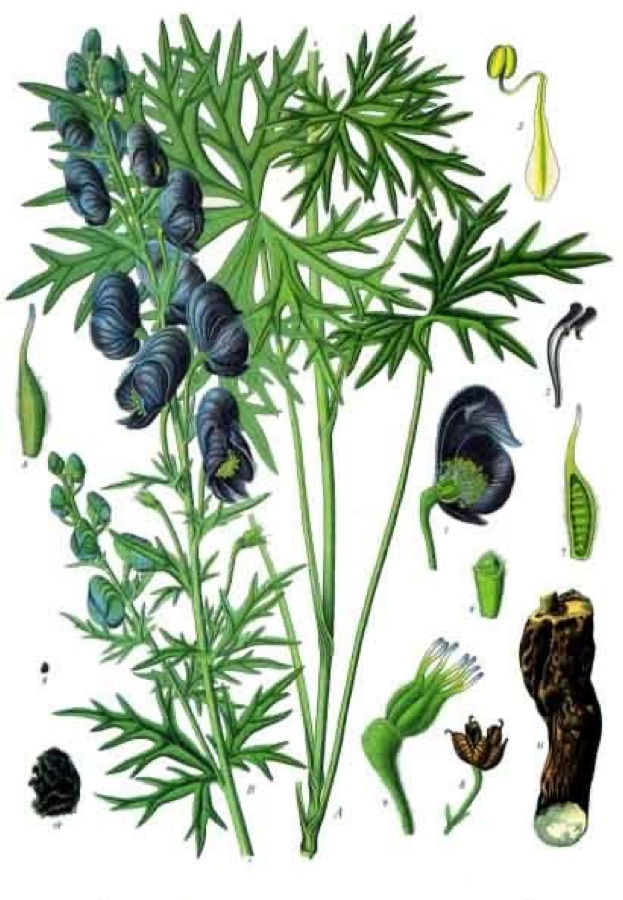
Photo: Franz Eugen Köhler, Köhler's Medizinal-Pflanzen · Public domain · Wikimedia Commons

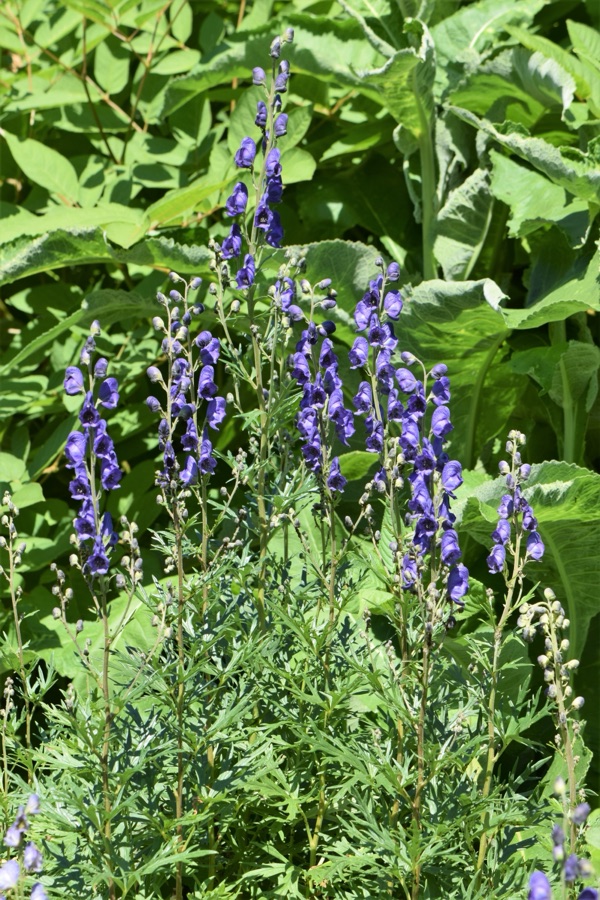
Photo: Krzysztof Ziarnek, Kenraiz · CC BY-SA 4.0 · Wikimedia Commons

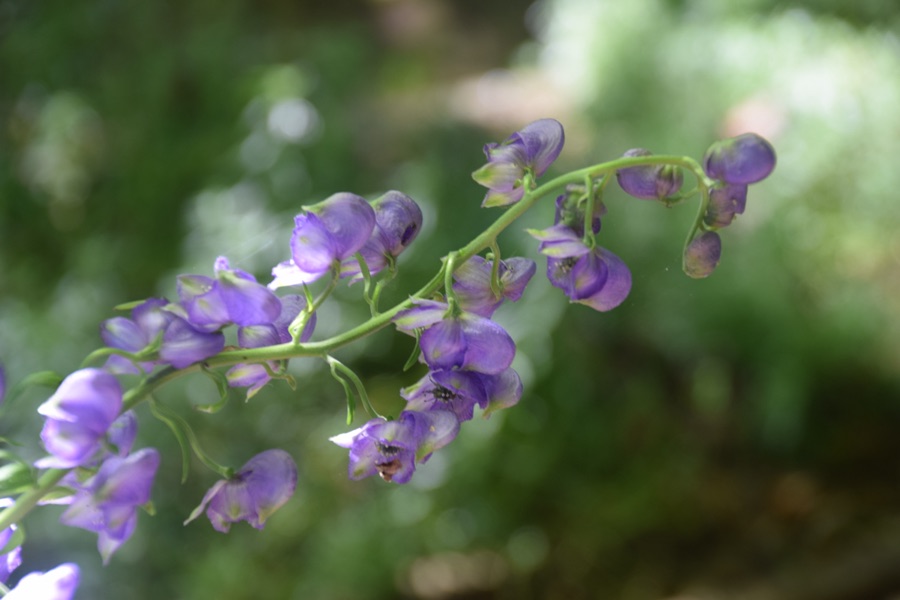
Photo: Krzysztof Golik · CC BY-SA 4.0 · Wikimedia Commons

Matra and anupana
AS THE CLASSICAL TEXTS AND THE API PRESCRIBE
| Shodhita churna | 15–30 mg (roughly 1/8 to 1/4 ratti), specialist use only |
| Anupana | Madhu · Ghrita |
The mahavisha. Only after proper shodhana, only inside a classical yoga such as Tribhuvana Kirti or Anandabhairava rasa, and it is Schedule E(1) in India. Aconitine is fatal at milligram quantities.
Reported from Sharangadhara Samhita and the Ayurvedic Pharmacopoeia of India. Laisha states what the texts prescribe; it does not recommend. No quantity here is adjusted for a particular person — not for agni, koshtha, bala, age, pregnancy, kidney or liver function, or anything already being taken.
Rasapanchaka
| Rasa | Madhura |
| Guna | LaghuRukshaTikshnaVyavayiVikasi |
| Virya | Ushna |
| Vipaka | Madhura |
| Prabhava | The texts treat vatsanabha as yogavahi — it carries other dravya with it — and this, with its speed, is why it appears in so many rasa formulations despite being a poison. |
| Doshakarma | Kaphavatahara. |
Described as madhura after shodhana, with ushna virya and madhura vipaka. The raw root is not characterised by rasa in the texts because it is not a thing to taste.
Karma and part used
These are the actions the classical texts record. They are statements about what the tradition holds, and this library does not restate them as findings about a human body.
| Upayukta anga | Mula kanda (the tuber), and only after shodhana |
| Why it matters | The tuber is the article, and it is never used raw. Shodhana — the specified purification, classically by boiling in cow's urine or in milk for a stated time — is not a refinement but the difference between a medicine and a poison. An entry that named the part without naming the process would be describing how to harm someone. |
Paryaya
The first paryaya is simply Visha, poison. Amrita, nectar, sits beside it in the same list — the tradition's own way of saying that what the process does to this root decides which of the two it is.
Names, by language
| English | Indian aconite |
| Sinhala | Wasanavi |
| Nepali | Bikh |
| Hindi | Bachnag |
| Kannada | Vasanabhi |
| Tamil | Vasanavi |
| Telugu | Vasanabhi |
| Malayalam | Vatsanabhi |
| Marathi | Bachnag |
| Gujarati | Vachnag |
| Bengali | Kathbish |
| Punjabi | Bachnag |
| Odia | Bachhanaga |
| Urdu | Bish |
Classical references
Rasa, guna, virya, vipaka and karma are recorded as the classical texts give them, with the text and section named so a student can open the book and check. Where an exact chapter and verse could not be confirmed, this library names the section rather than inventing a number.
Formulations it appears in
| Tribhuvana Kirti Rasa | Purified vatsanabha is among the dravya. |
| Anandabhairava Rasa | Purified vatsanabha is among the dravya. |
| Mrityunjaya Rasa | Purified vatsanabha is among the dravya. |
Adulterants and substitutes
Other Aconitum species are collected and sold as vatsanabha, and they differ in alkaloid content and in how much shodhana they need — which makes substitution here a life-safety problem and not a quality one. Ativisha, Aconitum heterophyllum, is a different plant of the same genus that is NOT a poison and is used freely; confusing the two in either direction is dangerous, in one direction because a poison is used as a safe herb, and in the other because an effective herb is subjected to unnecessary processing.
Identity
Matched live against the GBIF backbone on 28 September 2026 at 99 per cent confidence. This is the first of the sthavara visha — the plant poisons — and Ayurveda classes it as a poison outright rather than as a herb with cautions. Everything in this entry follows from that.
A WAY TO REMEMBER IT
Aconitum, the classical monkshood. Ferox means fierce. Of all the epithets in this library, this is the one to take literally.
What the tradition holds
Vatsanabha is described in the Sushruta Samhita among the plant poisons, and the Rasatarangini gives its shodhana. That is what the tradition holds and where it is written down, not a finding about what the root does in a body.
Constituents. The tuber carries diterpenoid alkaloids, chiefly aconitine and its relatives. Aconitine acts on the sodium channels of heart and nerve, which is the mechanism behind both its use and its lethality.
What the evidence says
| Status | Traditional use is extensive and long recorded. Modern clinical evidence is limited. |
| Suggested | No claim of established clinical effect is made here. What is documented in the modern literature about this plant is overwhelmingly about poisoning, not treatment, and that is stated in the safety section rather than here. |
| Not established | There is not enough good clinical evidence to establish an effect on any named health condition. Long traditional use is not a substitute for that evidence, and this library does not present it as one. |
| The honest gap | Alkaloid content varies with species, altitude and season, and the reduction achieved by shodhana varies with how exactly it was done. Neither is knowable without assay, which is the practical reason this dravya belongs only with a qualified practitioner. |
Safety
This is a deadly poison and this library will not present it as anything else. Aconitine is among the most toxic plant compounds known: a few milligrams can kill an adult, death can follow within hours from heart rhythm failure, and there is no specific antidote. Aconite poisoning is a recurring cause of fatal herbal poisoning worldwide, and it happens most often through wrongly prepared or wrongly identified material. Raw vatsanabha is lethal. Properly purified vatsanabha is a prescription-level medicine that belongs solely in the hands of a qualified practitioner who knows the shodhana was done and by whom. No quantity of this dravya is appropriate for self-treatment, ever, in any form. Anyone who suspects aconite poisoning needs emergency hospital care immediately, not a herbal remedy.
| Side effects | Tingling and numbness of the mouth and tongue — this is an early sign of poisoning, not a side effect to tolerate Nausea and vomiting Palpitations |
| Contraindications | Self-treatment, absolutely and without exception. Pregnancy and breastfeeding. Children. Heart disease of any kind. Any use of raw or unpurified material, by anyone. |
| Interactions | Aconitine is cardiotoxic and neurotoxic at milligram quantities. Anything affecting cardiac conduction — digoxin, beta blockers, calcium channel blockers, antiarrhythmics — compounds the risk. Used only after proper shodhana, only within a classical formulation, and it is Schedule E(1) in India. |
| Pregnancy and breastfeeding | Not to be used in pregnancy or breastfeeding in any quantity or form. |
Growing it
| Climate | Alpine Himalaya, roughly 3000 to 4500 metres. |
| Soil | Moist, humus-rich alpine ground. |
| Planting | A perennial grown from tubers or seed. Collection from the wild is under pressure and several Himalayan Aconitum species are assessed as threatened. |
| Harvest | Tubers are lifted in autumn and dried. They are a poison from the moment they leave the ground and are handled as one. |
| What is not stated | Several Himalayan Aconitum species are under collection pressure and are assessed as threatened. Cultivated material should be preferred where it can be had. |
Check this page
Print it and the code still works. It goes to this page and nowhere else.
What this is not
- This is a study and clinical reference for practitioners and students. The matra and anupana it records are what the classical texts and the Ayurvedic Pharmacopoeia of India PRESCRIBE — Laisha reports them, it does not recommend them. They are not a prescription for any particular person, and they are not adjusted for your age, agni, koshtha, bala, pregnancy, kidney or liver function, or anything else you are already taking. Only a qualified practitioner who has examined you can do that.
- Traditional classification is recorded as what the classical texts say, with the text and the place in it named so it can be checked. It is not restated as a finding about a human body.
- Nothing here replaces a qualified Ayurvedic practitioner or a doctor.
Sources
https://api.gbif.org/v1/species/match?name=Aconitum%20ferox%20Wall.%20ex%20Ser.
https://pcimh.gov.in/
https://www.canada.ca/en/health-canada/services/drugs-health-products/natural-non-prescription/applications-submissions/product-licensing/compendium-monographs.html
https://niimh.nic.in/ebooks/esharangadhara/