Vidanga
विडङ्ग
Embelia ribes Burm.f.
Primulaceae · Embelia
Benefits & side effects
TRADITIONAL VIEW, WITH SAFETY LIMITS
Hindi name: Vaividang
What the texts say Vidanga does
- Krimighna — anthelmintic (against worms)
- Deepana — kindles digestion (appetiser)
- Pachana — digests ama (digestive)
- Rasayana — rejuvenative
- Shoolaprashamana — relieves colicky pain
- Vibandhahara — relieves constipation
What the evidence says. Traditional use is extensive and long recorded. Modern clinical evidence is limited.
Side effects and limits
- Digestive upset
- Burning sensation
Avoid or ask first: Pregnancy.; Anyone trying to conceive, in light of the above.
A traditional classification, not a recommendation. The full safety record is below.
Stands in 6 groups
- Shirovirechanopaga — Adjuvant to nasal evacuation
- Trptighna — Relieving cloying satiety
- Krimighna — Destroying worms
- Surasadi — Kapha, worms, cough and breathlessness
- Pippalyadi — Agni, Kapha, and the digestive disorders
- Trimada — The three that reduce
A Samhita can only be read forwards, from the group to its members. This is the same list read backwards.
Photographs
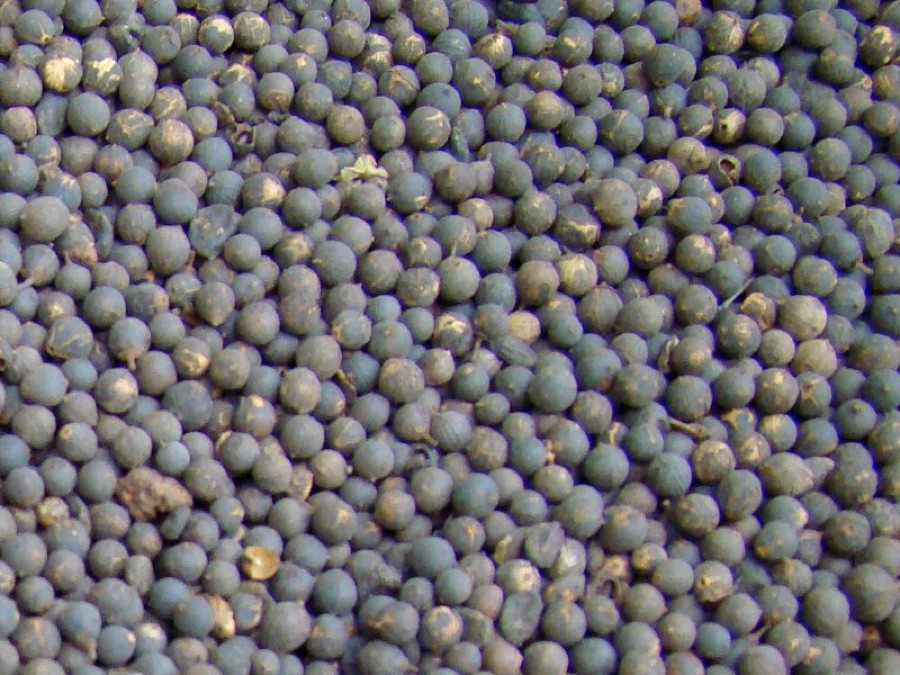
Photo: Earthshine.. at English Wikipedia · Public domain · Wikimedia Commons

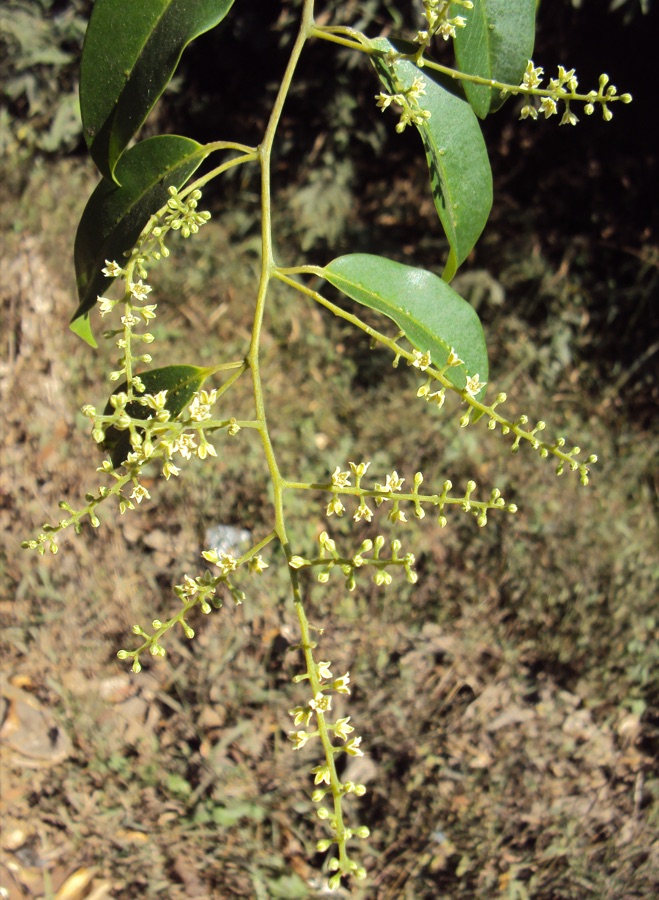
Photo: Vinayaraj · CC BY-SA 3.0 · Wikimedia Commons

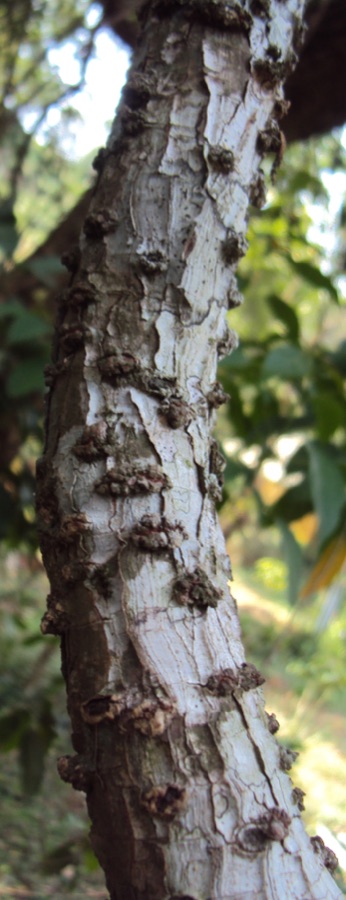
Photo: Vinayaraj · CC BY-SA 3.0 · Wikimedia Commons

Matra and anupana
AS THE CLASSICAL TEXTS AND THE API PRESCRIBE
| Churna | 3–6 g |
| Anupana | Ushnodaka · Madhu · Takra |
| Kala | Pragbhakta, on an empty stomach, for krimi |
Classically followed by a virechana to expel what has been killed.
Reported from Sharangadhara Samhita and the Ayurvedic Pharmacopoeia of India. Laisha states what the texts prescribe; it does not recommend. No quantity here is adjusted for a particular person — not for agni, koshtha, bala, age, pregnancy, kidney or liver function, or anything already being taken.
Pharmacopoeial standard
Ayurvedic Pharmacopoeia of India, Part I
| Marker | Embelin |
| Assay | Not less than 2.0 per cent |
| Total ash | Total ash not more than 7 per cent |
| Acid-insoluble ash | Not more than 1 per cent |
| Alcohol-soluble extractive | Alcohol-soluble extractive not less than 5 per cent |
| Water-soluble extractive | Water-soluble extractive not less than 5 per cent |
| Foreign matter | Foreign matter not more than 2 per cent |
Embelia robusta and the fruits of other species are substituted and carry little or no embelin.
These are the pharmacopoeial limits for the article, not a test Laisha has run on anything. They are here so a practitioner can ask a supplier for a certificate of analysis and know what the numbers on it should say.
Rasapanchaka
| Rasa | KatuKashaya |
| Guna | LaghuRukshaTikshna |
| Virya | Ushna |
| Vipaka | Katu |
| Prabhava | Vidanga is the dravya the classical literature names first and most consistently for krimi, and the texts treat that as its prabhava rather than as following from its rasapanchaka. |
| Doshakarma | Kaphavatahara. Being ushna and tikshna it increases pitta. |
Katu and kashaya with ushna virya and katu vipaka.
Karma and part used
These are the actions the classical texts record. They are statements about what the tradition holds, and this library does not restate them as findings about a human body.
| Upayukta anga | Phala (the fruit) |
| Why it matters | The dried fruit is the dravya. It resembles black pepper closely enough that one English name for it is false black pepper, and that resemblance runs the other way too — it has been found bulking pepper. |
Paryaya
Krimighna and Jantughna both name the same action against worms, and no dravya in the materia medica is more singularly identified with it. Chitratandula, speckled grain, describes the fruit.
Names, by language
| English | False black pepper |
| Sinhala | Walangasal |
| Nepali | Bayubidanga |
| Hindi | Vaividang |
| Kannada | Vayuvilanga |
| Tamil | Vizhalari |
| Telugu | Vayuvidangalu |
| Malayalam | Vizhalari |
| Marathi | Vavding |
| Gujarati | Vayvidang |
| Bengali | Biranga |
| Punjabi | Baberang |
| Odia | Bidanga |
| Urdu | Baobarang |
Classical references
Rasa, guna, virya, vipaka and karma are recorded as the classical texts give them, with the text and section named so a student can open the book and check. Where an exact chapter and verse could not be confirmed, this library names the section rather than inventing a number.
Formulations it appears in
| Vidangarishta | A fermented preparation named for the dravya. |
| Vidangadi Churna | Named for the dravya. |
| Krimikuthara Rasa | Among the dravya of the formulation. |
Adulterants and substitutes
Embelia tsjeriam-cottam is collected and sold as vidanga and is the commonest substitute. Because vidanga so closely resembles black pepper, the two are also found in each other's sacks — vidanga bulking pepper, which is fraud against the pepper buyer, and pepper sold as vidanga, which is fraud in the other direction. The test is the tail: vidanga fruit carries a short stalk and a beak-like tip that pepper does not.
Identity
Matched live against the GBIF backbone on 28 September 2026 at 99 per cent confidence. Embelia tsjeriam-cottam is a related species traded under the same name and is discussed below. This species is assessed as threatened in parts of its Indian range, which is recorded in the cultivation note rather than passed over.
A WAY TO REMEMBER IT
Embelia is from the Sinhalese embilla. Ribes is from Arabic ribas, sour — the same word behind the currant genus Ribes.
What the tradition holds
Vidanga heads the Krimighna group in the Charaka Samhita and is described in the Bhavaprakasha Nighantu. That is what the tradition holds and where it is written down, not a finding about what the fruit does in a body.
Constituents. The fruit carries embelin, a benzoquinone, which is the constituent commercial material is assessed on.
What the evidence says
| Status | Traditional use is extensive and long recorded. Modern clinical evidence is limited. |
| Suggested | Health Canada publishes monographs covering Ayurvedic ingredients and permits specific traditional-use claims, which reflects a regulator accepting a documented tradition rather than a body of clinical trial evidence. |
| Not established | There is not enough good clinical evidence to establish an effect on any named health condition. Long traditional use is not a substitute for that evidence, and this library does not present it as one. |
| The honest gap | Published work studies isolated embelin far more often than the whole fruit, and the two are not the same article. |
Safety
Used for a very long time and no serious harm is documented at traditional use. Two things are worth knowing. Embelin has been studied for an effect on fertility in animals, which is why this entry does not treat it as harmless for anyone trying to conceive, and it is contraindicated in pregnancy. And worm infection is a diagnosis a laboratory makes, not a guess — treating it by assumption means the wrong thing may be being treated. Anyone on medication, pregnant, or managing a diagnosed condition should speak to a doctor or a qualified practitioner first.
| Side effects | Digestive upset Burning sensation |
| Contraindications | Pregnancy. Anyone trying to conceive, in light of the above. |
| Interactions | No specific drug interaction is documented. Embelin has been studied as an antifertility agent in animals, which is the reason to avoid it when conception is being attempted. |
| Pregnancy and breastfeeding | Not to be used in pregnancy or breastfeeding. |
Growing it
| Climate | Tropical, a large climbing shrub of forest and hill slopes. |
| Soil | Well-drained forest ground. |
| Planting | Grown from seed or cuttings; a woody climber needing support. |
| Harvest | Fruits are collected ripe and sun-dried. |
| What is not stated | Embelia ribes is assessed as threatened in parts of its Indian range under collection pressure. Cultivated material should be preferred where it can be had, and this library records that as a matter of fact rather than as advice about anyone's health. |
Check this page
Print it and the code still works. It goes to this page and nowhere else.
What this is not
- This is a study and clinical reference for practitioners and students. The matra and anupana it records are what the classical texts and the Ayurvedic Pharmacopoeia of India PRESCRIBE — Laisha reports them, it does not recommend them. They are not a prescription for any particular person, and they are not adjusted for your age, agni, koshtha, bala, pregnancy, kidney or liver function, or anything else you are already taking. Only a qualified practitioner who has examined you can do that.
- Traditional classification is recorded as what the classical texts say, with the text and the place in it named so it can be checked. It is not restated as a finding about a human body.
- Nothing here replaces a qualified Ayurvedic practitioner or a doctor.
Sources
https://api.gbif.org/v1/species/match?name=Embelia%20ribes%20Burm.f.
https://pcimh.gov.in/
https://www.canada.ca/en/health-canada/services/drugs-health-products/natural-non-prescription/applications-submissions/product-licensing/compendium-monographs.html
https://niimh.nic.in/ebooks/esharangadhara/