 Laisha
AI Operating System for Agriculture
Enter Laisha
Laisha
AI Operating System for Agriculture
Enter Laisha
Medicago sativa · Also called: Lucerne, Rijka, Berseem shabdar, Luzerne, Alfalfa criolla, Erba medica, Yonca, Lyutserna
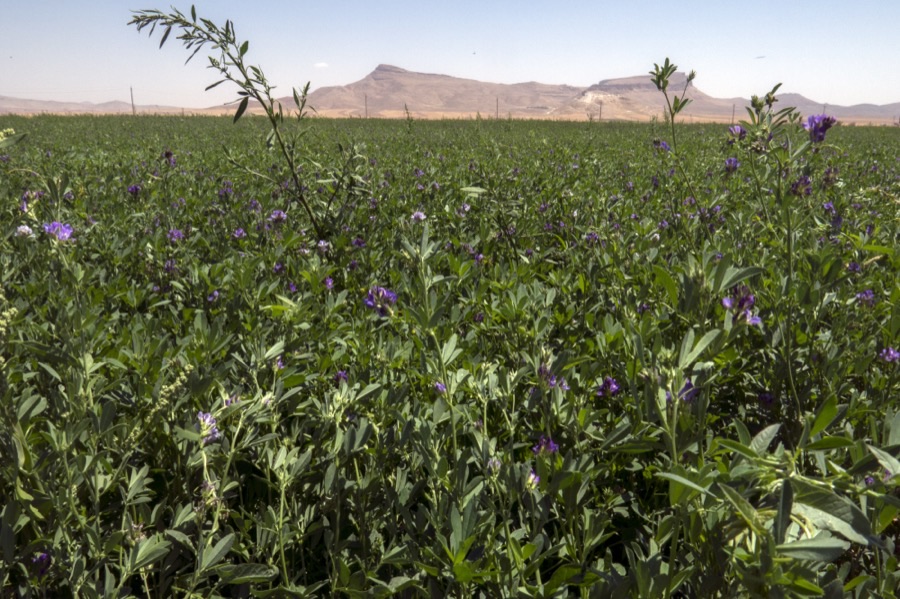
Photo: Mahdikarimi70, CC BY-SA 4.0 (Wikimedia Commons)
Alfalfa is the most important forage crop in the world and the reason a great deal of the world's milk exists. One sowing lasts three to ten years and is cut three to ten times a year, so the ploughing, the seed and the establishment are paid for once and the cutting goes on for most of a decade. Its roots go down two to five metres and sometimes far further, which is why it keeps growing through a drought that stops a grass pasture dead. It fixes more nitrogen than almost any other crop, so the field it leaves behind is worth more than the field it started on. The United States, Argentina, China, Canada, Russia, Italy and Spain grow the most. Its one strange rule is that it cannot follow itself: an old alfalfa stand poisons its own seedlings, so a worn-out field must grow something else before it can grow alfalfa again.
If you see: New alfalfa seedlings sown into a thinning old alfalfa field that come up and then stall, stay stunted and die away, while the same seed grows well elsewhere.
It likely means: The old stand is stopping them. Alfalfa releases substances that prevent its own seedlings establishing, so a field cannot simply be thickened up by resowing.
Do this: Do not try to patch or thicken an old alfalfa stand by sowing more alfalfa into it.
If you see: A stand that was thick and productive in its second year and is thin and patchy by its fourth, with grass filling the gaps.
It likely means: Usually cutting management: too many cuts, cuts taken too early, a late autumn cut, or machinery on a wet field crushing the crowns.
Do this: Cut at bud to one-tenth flower rather than earlier, and count your cuts rather than cutting by habit.
If you see: A pale, slow, hungry-looking stand that never thickens, with no nodules on the roots when a plant is dug up, or nodules that are white inside.
It likely means: The bacteria alfalfa needs are not there, or the inoculant died, or the soil is too acid for nodulation to work at all.
Do this: Test the soil for acidity, because alfalfa will not nodulate properly on sour ground however well it was inoculated.
If you see: Cattle or sheep with a swollen left side, breathing hard and distressed, shortly after being turned onto fresh alfalfa.
It likely means: Bloat. Fresh alfalfa produces a stable foam in the rumen that the animal cannot belch away, and it can kill within an hour.
Do this: Get veterinary help immediately, because severe bloat kills quickly and is treatable if caught.
If you see: Hay that is coarse and stemmy with most of the leaf missing, which animals pick over and leave, and which buyers grade down.
It likely means: Either it was cut too late, or the leaves shattered off during turning and baling because the hay was handled bone dry in the heat.
Do this: Cut at bud to one-tenth flower rather than waiting for full bloom.
If you see: Growing tips chewed ragged and leaves skeletonised to a greyish lace, worst in the first growth of the season, with small pale grubs in the tips.
It likely means: Alfalfa weevil larvae. They feed on the youngest leaves, which are the most valuable part of the crop.
Do this: Walk the field before each cut and look at the tips rather than at the whole plant.
If you see: Plants dying out in the low parts of the field, lifting with rotted brown taproots, while the higher ground stays thick.
It likely means: Waterlogging. The deep taproot that makes this crop valuable is also what drowns first.
Do this: Check the drainage before establishing a stand, since this cannot be fixed once the crop is in.
Growing the crop is only part of the job. The last part is knowing what a normal harvest looks like where you are, and knowing what your hay is worth before you agree a price with anybody.
If you forget every other page of this guide, keep these lines. They are the whole crop, in order, short enough to carry in your head.
The field has gone purple. Have I left it too long?
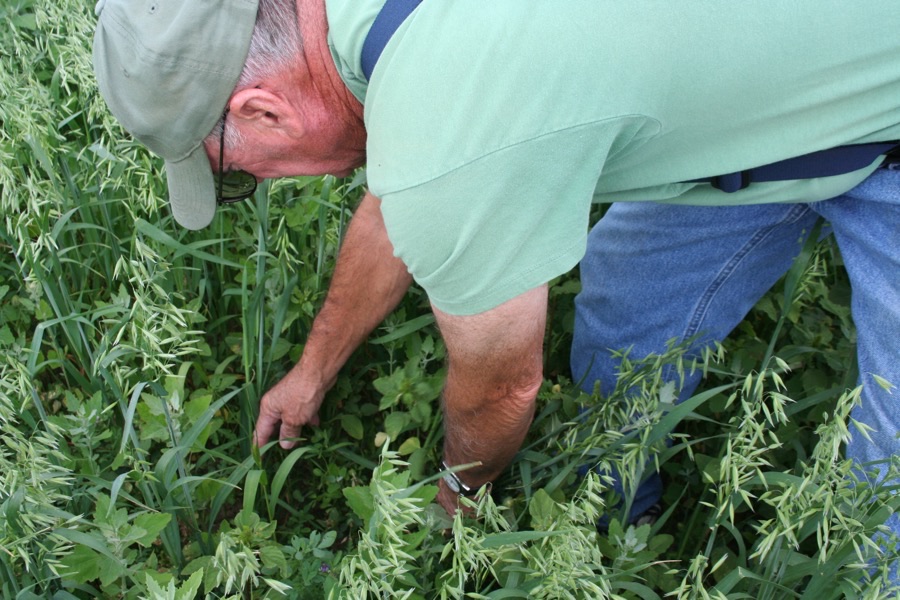
Why is there a cereal growing through this newly sown alfalfa?
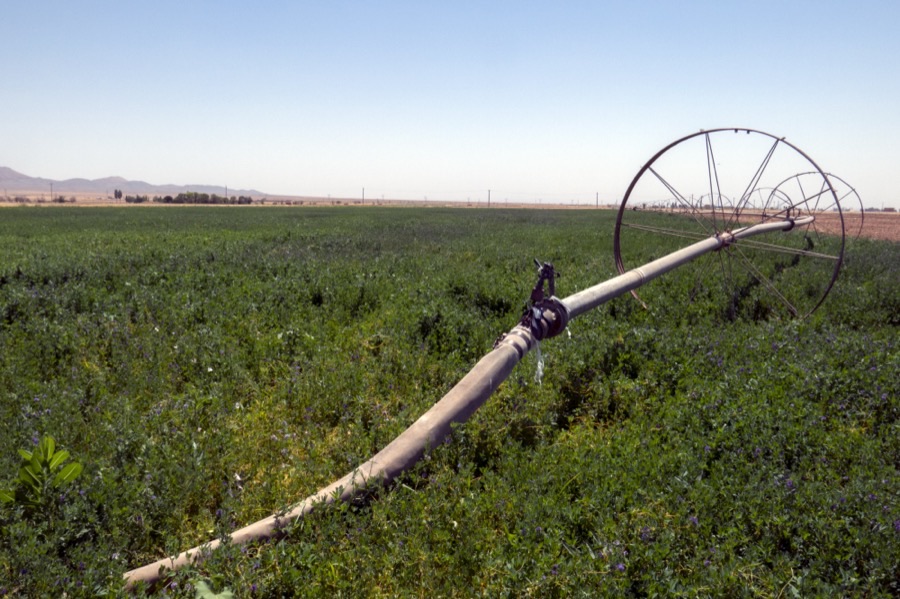
How do I judge whether a stand is still worth keeping?