 Laisha
AI Operating System for Agriculture
Enter Laisha
Laisha
AI Operating System for Agriculture
Enter Laisha
Prunus armeniaca · Also called: Khubani, Khurmani, Chuli, Zardalu, Kayısı, Mishmish, Abricot, Albaricoque
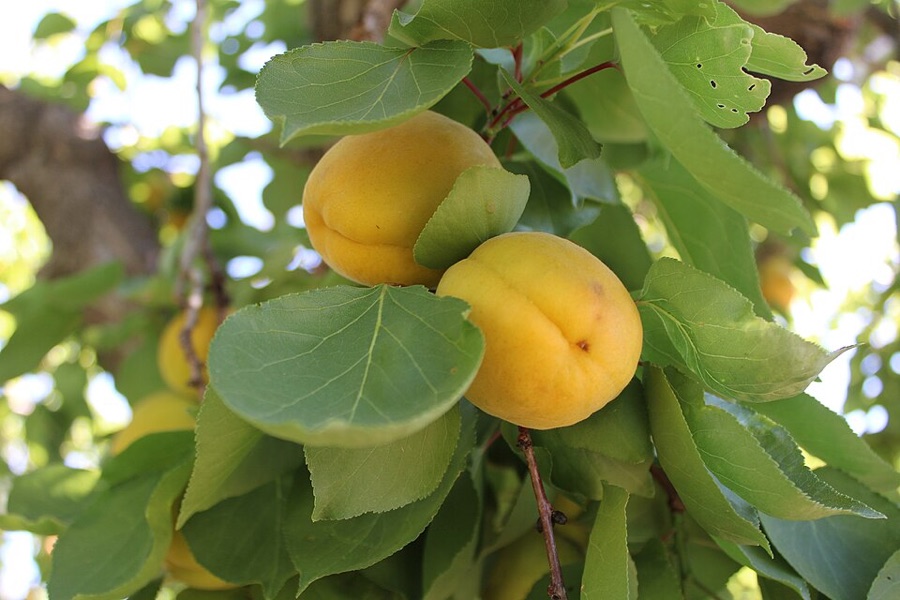
Photo: Chris Light, CC BY-SA 4.0 (Wikimedia Commons)
Apricot feeds mountain households where very little else will grow. Across the high valleys of Central and South Asia it is the tree that carries a village through the winter, because the fruit dries into something that keeps for a year, the kernel inside the stone is eaten or pressed for oil, and the wood and leaves are used too. Turkey produces far more than any other country, and Iran, Uzbekistan and the Himalayan valleys follow. It is also the most frost-exposed fruit tree there is. It flowers earlier than plum, peach or almond, on the first warm spell of the year, and in many districts it loses the whole crop to a single cold night more often than it keeps it.
If you see: Flowers that opened and then browned and dropped within a day or two after a clear cold night, with the small green centre of each flower blackened when you cut one open.
It likely means: Frost killed the open flowers. Apricot flowers earlier than any other fruit tree, on bare wood, which is why it is caught more often than the rest.
Do this: Accept that this year's crop is gone, because nothing applied afterwards restores a frosted flower. The tree itself is unharmed.
If you see: A healthy-looking branch, or a whole limb, that wilts and dies suddenly during or just after the growing season, sometimes with gum oozing from the wood and a sour smell under the bark.
It likely means: Wood disease or canker entering through a wound, frequently a pruning cut made in cold wet weather. Apricot is more prone to this than plum or peach.
Do this: Cut the affected branch well back into clean healthy wood and remove it from the orchard rather than leaving it lying.
If you see: Fruit going brown and soft with small buff-coloured cushions on the skin, spreading from fruit to touching fruit, and shrivelled black fruit still hanging on the branches.
It likely means: Brown rot. It spreads fastest in warm wet weather, enters through bruises and splits, and survives the winter inside those shrivelled hanging fruits.
Do this: Pick off and remove every shrivelled hanging fruit and every rotten one on the ground, and take them out of the orchard.
If you see: A very heavy set of small fruit crowded along the branches, with the branches bending under the load and the fruit failing to size up or sweeten.
It likely means: The tree set far more than it can carry and nobody thinned it. Apricot oversets badly, and small fruit is worth much less both fresh and dried.
Do this: Thin once the natural drop is over, to roughly a hand's width between the fruit you keep, even though it feels wasteful.
If you see: Blobs of clear or amber jelly-like gum oozing from the trunk or main branches, sometimes with sunken dark bark beneath, and sometimes with sawdust mixed into the gum.
It likely means: Gum is the tree's response to injury and says something is wrong at that spot. Sawdust in it points to a borer, and sunken dead bark to a canker.
Do this: Scrape gently to see what is underneath, because the response is quite different for an insect and for a disease.
If you see: Small round reddish or purple spots on the leaves whose centres dry, fall out and leave clean round holes, so the leaves look as though they have been peppered with shot.
It likely means: A leaf disease that thrives in wet spring weather. It also marks young fruit with small rough spots that lower the grade.
Do this: Rake up and remove fallen leaves and affected fruit rather than leaving them under the tree over winter.
If you see: Dried apricots that are sticky rather than leathery, with grey or white growth on them, a fermented or musty smell, and pieces stuck together in the sack.
It likely means: They were packed before they were dry enough, or they were rewetted by rain or dew during drying, or they were bagged while still warm.
Do this: Dry until a piece gives no juice at all when squeezed hard, which is the only reliable test in the field.
Growing the crop is only part of the job. The last part is knowing what a normal harvest looks like where you are, and knowing what your fruit is worth before you agree a price with anybody.
If you forget every other page of this guide, keep these lines. They are the whole crop, in order, short enough to carry in your head.
How do I know these round golden-yellow fruit with a groove down one side are ready to pick?
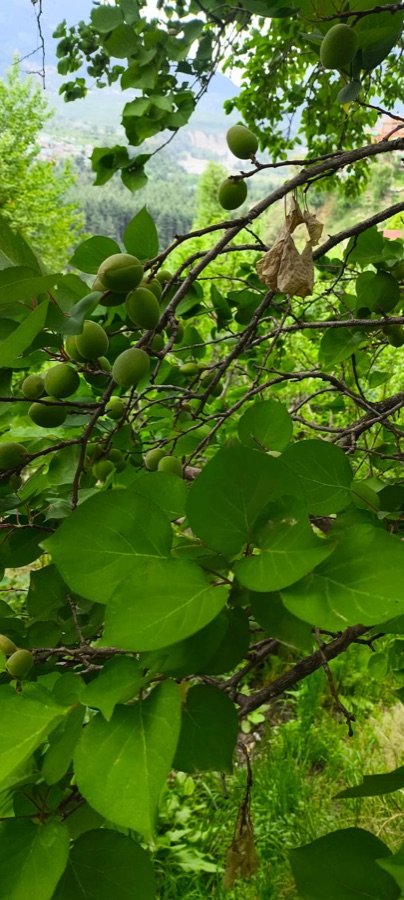
Why are these branches carrying so many small green fruit packed tightly along them?
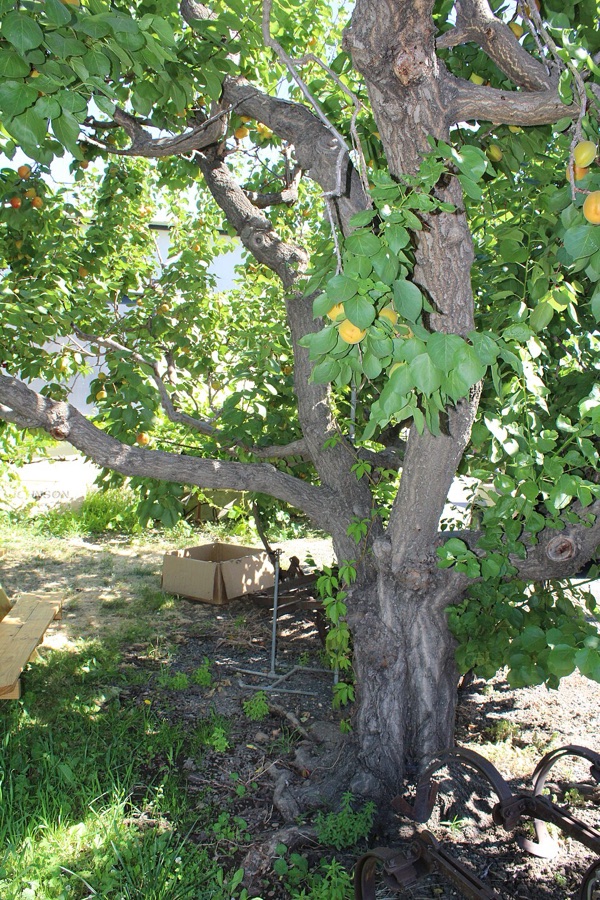
What is this whole tree with a short gnarled trunk, low spreading branches and golden fruit through the crop?