 Laisha
AI Operating System for Agriculture
Enter Laisha
Laisha
AI Operating System for Agriculture
Enter Laisha
Areca catechu · Also called: Areca nut (betel nut), Betel nut, Supari, Adakka, Adike, Pakku, Paan supari, Pinang
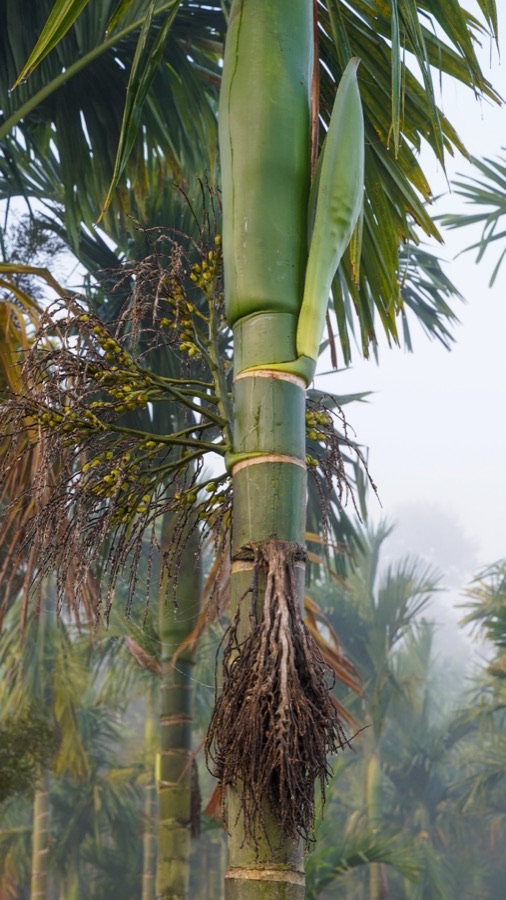
Photo: Timothy A. Gonsalves, CC BY-SA 4.0 (Wikimedia Commons)
Areca is the crop that pays a smallholding in the wet tropics for fifty years. India grows far more than any other country, with Myanmar, Bangladesh, Indonesia, China and Sri Lanka following, and in the hill districts of Karnataka, Kerala and Assam it is the backbone of the village economy. The palms are planted close, they take very little ground each, and the space between them and the trunks themselves carry a second and third crop: banana and cocoa below, black pepper and vanilla climbing the stems. One garden can therefore pay four ways. It is also a crop with an honest problem, which this guide states at the top rather than at the bottom: the nut causes cancer in the people who chew it, and several governments are moving to restrict it. That is a real risk to a planting that takes eight years to come into bearing.
If you see: A harvest season in which somebody has fallen, or climbers going up wet trunks in the rain without ropes because the bunches are ready.
It likely means: The most dangerous thing about this crop. Bearing palms are fifteen to twenty-five metres of smooth trunk, and falls during harvest kill and disable people every season.
Do this: Use a proper harness and safety rope for every climb without exception, however short the climb looks.
If you see: Young nuts with dark water-soaked patches falling in large numbers during continuous monsoon rain, sometimes with a whitish growth on the fallen nuts.
It likely means: The fruit rot of areca, which spreads in long wet spells and can take most of a season's crop from a garden that looked well a fortnight earlier.
Do this: Collect and destroy every fallen nut rather than leaving them lying in the garden to infect the next bunch.
If you see: A palm whose central spear leaf turns brown and pulls out with an easy tug, smelling foul, with the rest of the crown still green for a while afterwards.
It likely means: Bud rot. The single growing point at the top of the palm has rotted, and a palm cannot grow a new one, so the tree is already dead.
Do this: Cut the palm down and burn it rather than leaving it standing, since it will not recover and it infects its neighbours.
If you see: Palms whose lower leaves yellow from the tips inward, year after year, with the crown shrinking, the nuts getting smaller and the yield falling slowly to nothing.
It likely means: The yellow leaf disease of areca, which is carried in the palm itself and has no cure. Affected palms decline over years rather than dying at once.
Do this: Do not replant areca into a garden where this has taken hold, because the replacement palms will go the same way.
If you see: Large numbers of small green nuts dropping shortly after they set, on palms that look otherwise healthy, leaving thin bunches.
It likely means: Usually water shortage or poor feeding at the wrong moment, although the fruit rot causes it too during wet spells.
Do this: Water right through the dry season, because a palm short of water sheds nuts before it sheds leaves.
If you see: Young palms with leaves browned and dried at the tips and edges, worst on the side facing the sun, sometimes dying back entirely.
It likely means: Sun scorch. Young areca is far more easily burned by full sun than most crops, which is why it is raised and planted under shade.
Do this: Shade every young palm for its first two or three years with palm leaves, a temporary crop or planted shade.
If you see: Stored nuts with visible mould, a musty smell, or kernels that are soft rather than hard, and a buyer who refuses the whole lot.
It likely means: The nuts were not dried far enough before storage, or the store lets in damp.
Do this: Dry until a nut rattles inside its husk, which means the kernel has shrunk away and is dry enough to keep.
Growing the crop is only part of the job. The last part is knowing what a normal harvest looks like where you are, and knowing what your nut is worth before you agree a price with anybody.
If you forget every other page of this guide, keep these lines. They are the whole crop, in order, short enough to carry in your head.
What is this long green pointed thing growing out of the top of the palm?
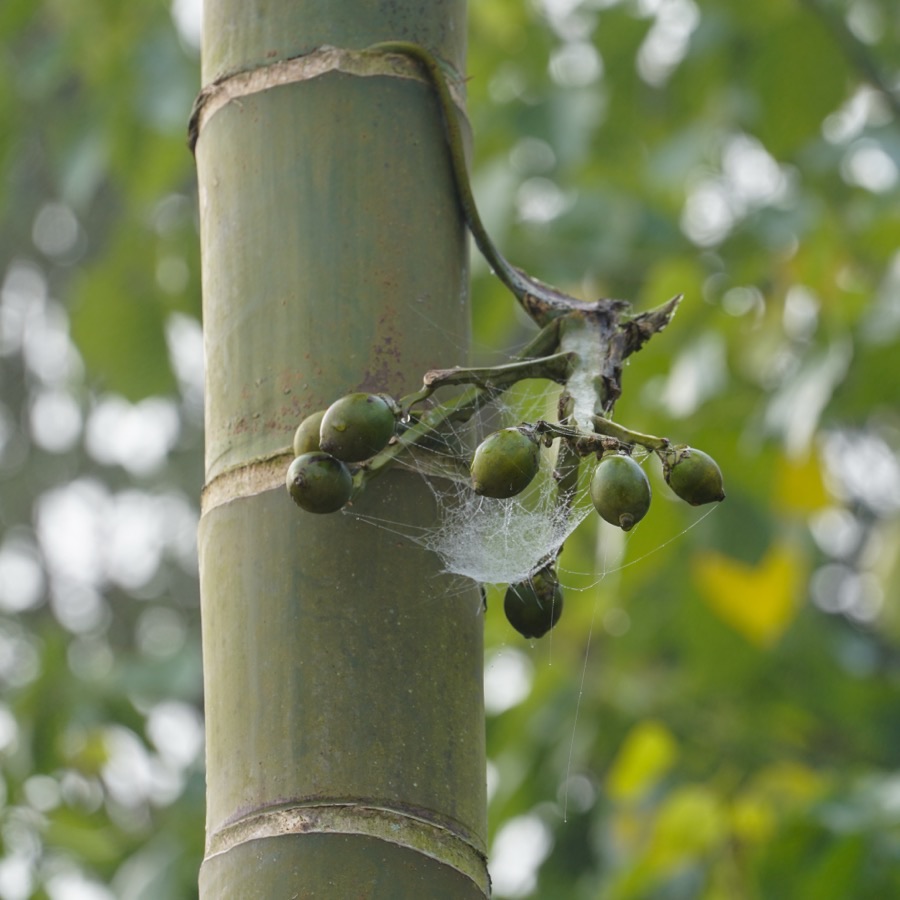
When are these green nuts ready to cut?
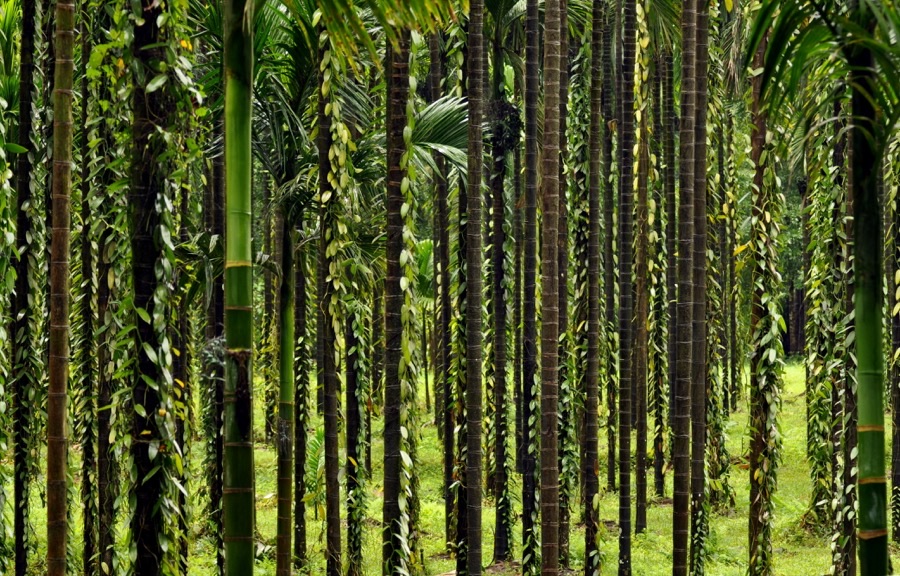
Why are there vines growing up every trunk in this garden?