Maranta arundinacea · Also called: West Indian arrowroot, Bermuda arrowroot, Koova, Ararut, Sagube, Shimipampana, Araruta
Photo: François Delonnay, CC BY-SA 4.0 (Wikimedia Commons)
Arrowroot is grown for one thing: a starch so fine and so easily digested that it has been fed to infants, to the sick and to the elderly for centuries, in places where nothing else would stay down. That is a small market but a steady and a well-paid one, and it is not a market that cassava or maize starch can take. The crop itself is undemanding and unusual in one very useful way: it grows well in partial shade, which means it fits under coconut, areca and fruit trees on land that is already doing something else. The West Indies, especially St Vincent, are its traditional home; India grows it in Kerala and Odisha, and it is grown across Southeast Asia, the Philippines and Brazil. The hard part is not the field. It is that the starch has to be washed out of the rhizome within a day or two of digging, and that is a full day's work for a family.
Growing Arrowroot, Stage by Stage
1. Get the land ready — Deep, loose, moist and shaded.
2. Plant rhizome pieces, which are this crop's planting material — Last year's crop, cut into pieces with a bud each.
3. Weed, water and earth up — Weed early, then let the leaves do it.
4. Let it fill, and wait for the tops to die back — The last two months are when the starch is made.
5. Watch for trouble — Few pests. The real losses come after digging.
6. Harvest, and wash the starch out the same day — This is the one thing that cannot be put off.
7. Settle, dry, store the starch and sell it — Wash it again, and again. Whiteness is the grade.
Common Problems & Troubleshooting
If you see: Starch that has dried grey, yellowish or brown instead of a clean white.
It likely means: Either the papery scales were not taken off the rhizomes, or the crop sat too long between digging and washing and began to ferment.
Do this: Peel or rub off every bit of the brown papery scale before pulping.
If you see: A good-looking crop of rhizomes that yields very little starch.
It likely means: Usually dug too early. The rhizomes fill with starch in the last part of a ten to twelve month season.
Do this: Wait for the leaves to yellow and the tops to begin dying back before digging.
If you see: Rhizomes that are tough and stringy, hard to grate, and give a pulp full of fibre.
It likely means: Left in the ground too long past maturity.
Do this: Dig once the tops have died back, rather than leaving the crop standing indefinitely.
If you see: A buyer paying a cassava-starch price, or questioning whether the powder is really arrowroot.
It likely means: The name is shared by at least five different plants and by cheaper substitute starches. Yours has to be identified to be paid for.
Do this: Sell it as West Indian arrowroot and give the botanical name, Maranta arundinacea.
If you see: Plants yellowing and wilting in patches, with soft rotten rhizomes underneath.
It likely means: Water standing in the ground. This crop wants steady moisture and no waterlogging, which are not the same thing.
Do this: Plant on ridges or raised beds where the ground is flat or the rain is heavy.
If you see: Stored starch that has taken on a smell, or gone lumpy and hard.
It likely means: It was stored damp, or next to something strong-smelling. Starch takes up both moisture and smells readily.
Do this: Dry the starch thoroughly in the sun until it is a fine free-flowing powder.
Yield & Market Value
Growing the crop is only part of the job. The last part is knowing what a normal harvest looks like where you are, and knowing what your arrowroot is worth before you agree a price with anybody.
Remember It This Way
If you forget every other page of this guide, keep these lines. They are the whole crop, in order, short enough to carry in your head.
Grown from rhizome pieces. Every piece needs a bud.
It will grow in partial shade, so it fits under trees.
Deep loose soil. Heavy clay breaks the rhizomes.
Earth it up two or three times.
Stop the nitrogen before the rhizomes fill.
Ten to twelve months. Dig when the tops die back.
Dig only what you can wash the same day.
Take every papery scale off, or the starch goes grey.
Wash and settle it two or three times. White is the price.
Dry it hard, sieve it, and keep it away from every smell.
Test Yourself: Identification
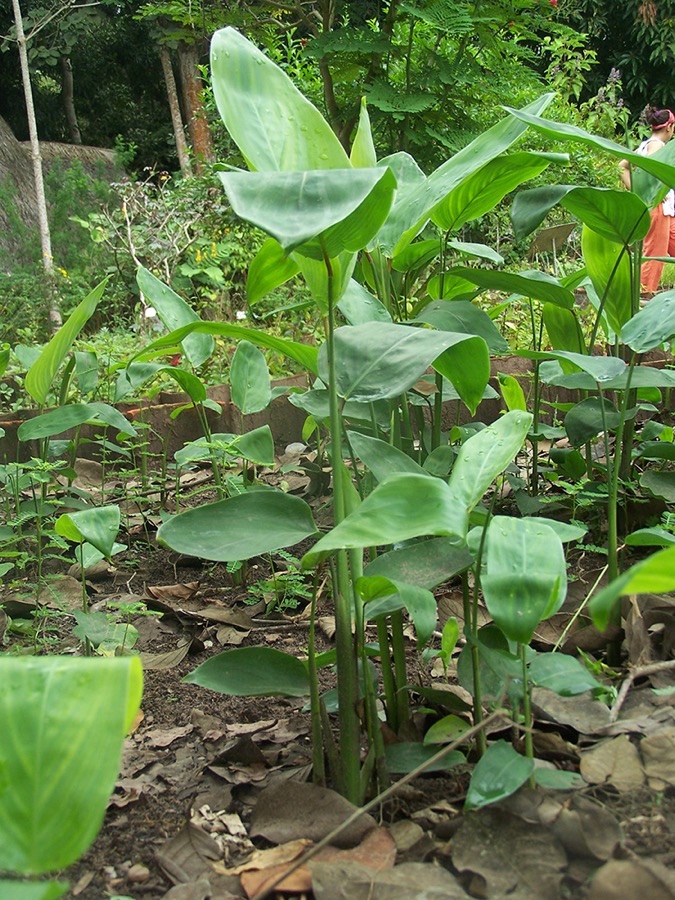
What does the standing crop look like?
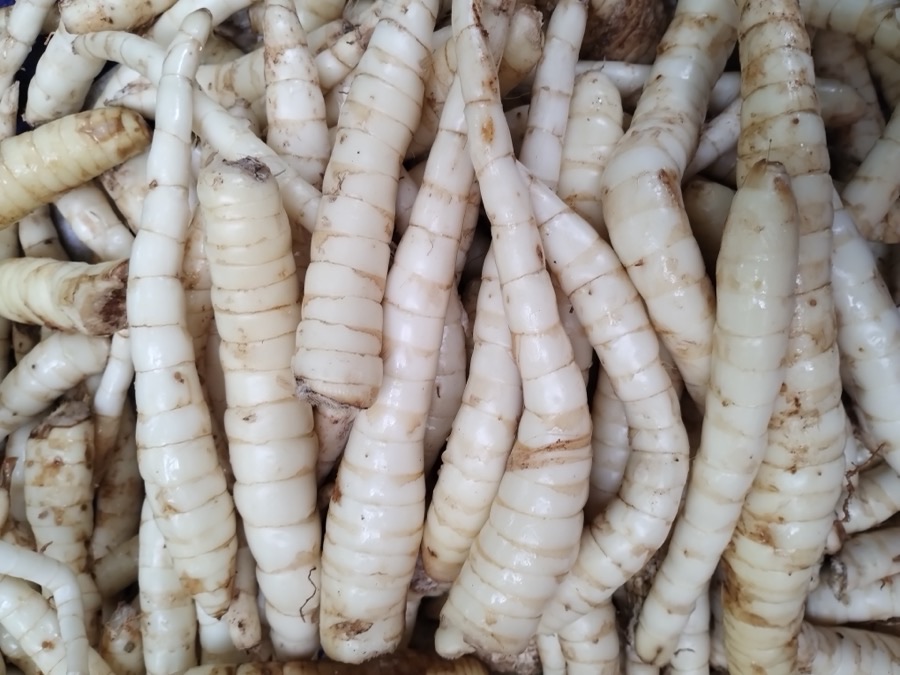
What does the crop look like when it is dug?
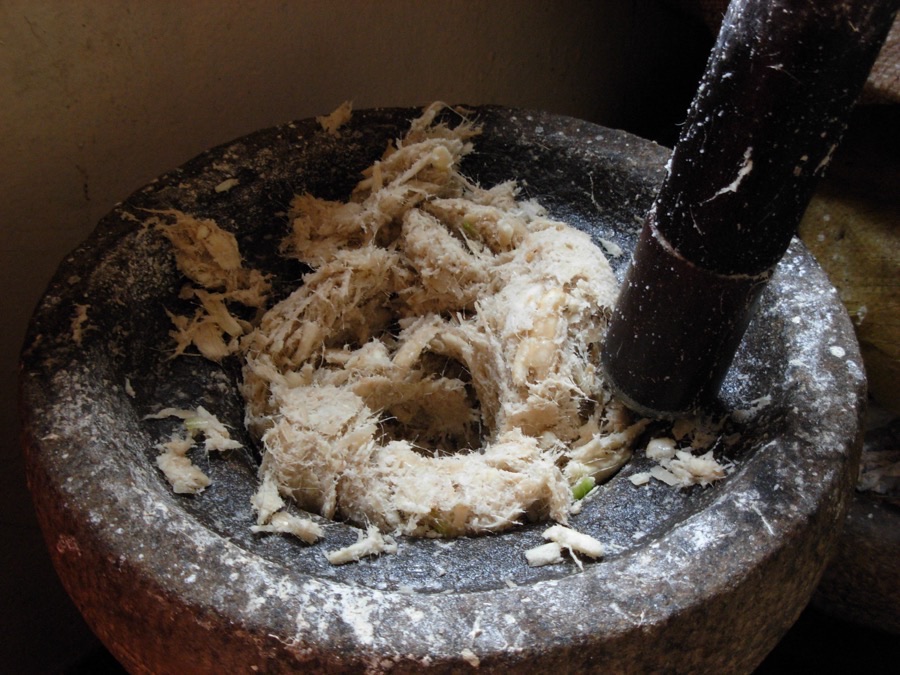
How is the starch actually got out?
Honest Limits of This Guide
Timings here are given by season and by the state of the crop rather than in named months, because arrowroot is grown in both hemispheres. Count from your own rains.
At least five unrelated plants are sold as arrowroot. This guide covers Maranta arundinacea, the true West Indian arrowroot. East Indian arrowroot (Curcuma angustifolia), Queensland arrowroot (Canna edulis) and Polynesian arrowroot (Tacca leontopetaloides) are different crops and are not covered here.
Starch recovery figures vary widely with how carefully the rhizomes were descaled, how fine the pulping was, and how many times the starch was washed. The range given describes careful hand processing.
The processing described here is the traditional hand method, because that is how most of this crop is still made. A grower with a mill and settling tanks will do the same steps faster and recover more.
There is no photograph here of the crop being dug, or of the starch settling in vessels, because usable pictures of that work are not available under a licence this library can use.
No varieties are named here. Planting material is rhizomes saved from the previous crop and passed between growers rather than bought as named varieties.
No chemical treatments are named here. The starch is eaten and is commonly fed to infants, to the sick and to the elderly, and what is permitted differs by country and by buyer.
Sources
GBIF Backbone Taxonomy species-match record for Maranta arundinacea L. — Global Biodiversity Information Facility (GBIF), Copenhagen (source)
EPPO Global Database — Maranta arundinacea (EPPO code MARAR) — European and Mediterranean Plant Protection Organization (EPPO), Paris (source)
FAO guidance on growing tropical root and tuber crops — Food and Agriculture Organization of the United Nations (FAO), Rome (source)
FAO guidance on post-harvest handling and small-scale starch extraction — Food and Agriculture Organization of the United Nations (FAO), Rome (source)
Laisha knows Arrowroot better than this page can show.Photo diagnosis for pests and disease, live market prices, and an agronomist you can ask at two in the morning. Ten days free, no card. After that 10 US dollars a month, one price worldwide.Start ten free days
 Laisha
AI Operating System for Agriculture
Enter Laisha