 Laisha
AI Operating System for Agriculture
Enter Laisha
Laisha
AI Operating System for Agriculture
Enter Laisha
Asparagus officinalis · Also called: Garden asparagus, Sparrow grass, Espárrago, Spargel, Asperge, Shatavari plant, Aspargo, Asparago
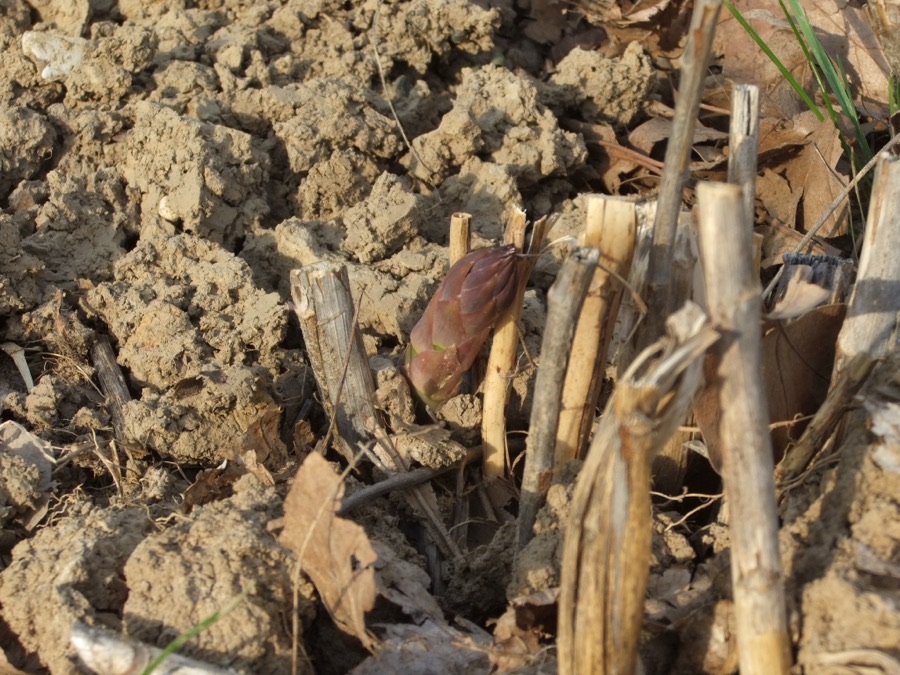
Photo: Vmenkov, CC BY-SA 3.0 (Wikimedia Commons)
Asparagus is one of very few vegetables that is planted once and cut for fifteen or twenty years. That is its whole attraction and its whole difficulty: it costs two years of patience before it pays anything, and then it pays every spring for a very long time. China grows most of the world's crop, Peru is the largest exporter and built a serious export industry on it, and Mexico, Germany, Spain, Italy, the United States and Japan all produce. It sells at a high price into city and export markets, it tolerates salty ground better than most vegetables, and once established it asks less of a grower each year than almost any other high-value crop.
If you see: A bed that yielded well for a few years and now sends up thin, few and weak spears every spring.
It likely means: It was cut for too many weeks. Every spear cut is food the crown does not get, and a bed cut past its season starves a little more each year until it stops.
Do this: Stop cutting after six to eight weeks, and after two weeks in the second year, whatever is still coming.
If you see: Patches of the bed where spears come up few, thin and yellowish, ferns yellow early, and a dug-up crown shows reddish-brown streaks and rotted roots.
It likely means: Crown and root rot, the disease that ends asparagus beds. It lives in the soil and is worse in wet ground and in beds that have been dug or damaged.
Do this: Never plant asparagus where asparagus has grown before, since the fungus stays in that soil.
If you see: Spears whose tips have opened out into little branches before you got to them, with the stem starting to go woody.
It likely means: They were left too long. In warm weather a spear grows several centimetres a day and passes from perfect to unsaleable within a day or two.
Do this: Cut the bed every day in warm weather, and twice a day at the peak.
If you see: A bed three or four years old so full of grass and perennial weeds that you can barely see the rows, with yields falling.
It likely means: Weeds were not cleared before planting, or were allowed in afterwards. A perennial bed cannot be dug over, so weeds that establish are very hard to remove.
Do this: Clear every perennial weed and grass root before planting, which is the only easy time.
If you see: Orange-brown powdery spots appearing along the fern stems in the middle of the season, turning dark brown or black later, with the ferns yellowing early.
It likely means: Asparagus rust. It attacks the ferns, which means it attacks next year's crop rather than this year's.
Do this: Cut and carry away all dead fern material at the end of every season, since the fungus survives on it.
If you see: Small dark beetles with pale square markings on the ferns, grey soft grubs beside them, and stems chewed bare in patches.
It likely means: Asparagus beetle. It eats the ferns, and ferns are what feed the crown for next year.
Do this: Pick beetles and grubs off by hand in the morning when they are slow, which is usually enough on a small bed.
If you see: Spears arriving at market curved upward at the tip and no longer straight, although they were cut straight.
It likely means: They were laid flat after cutting. A cut asparagus spear is still alive and still trying to grow upward, and it bends within hours.
Do this: Stand cut spears upright with their ends in a little clean water immediately.
Growing the crop is only part of the job. The last part is knowing what a normal harvest looks like where you are, and knowing what your spears are worth before you agree a price with anybody.
If you forget every other page of this guide, keep these lines. They are the whole crop, in order, short enough to carry in your head.
What does a spear look like when it is ready to cut?
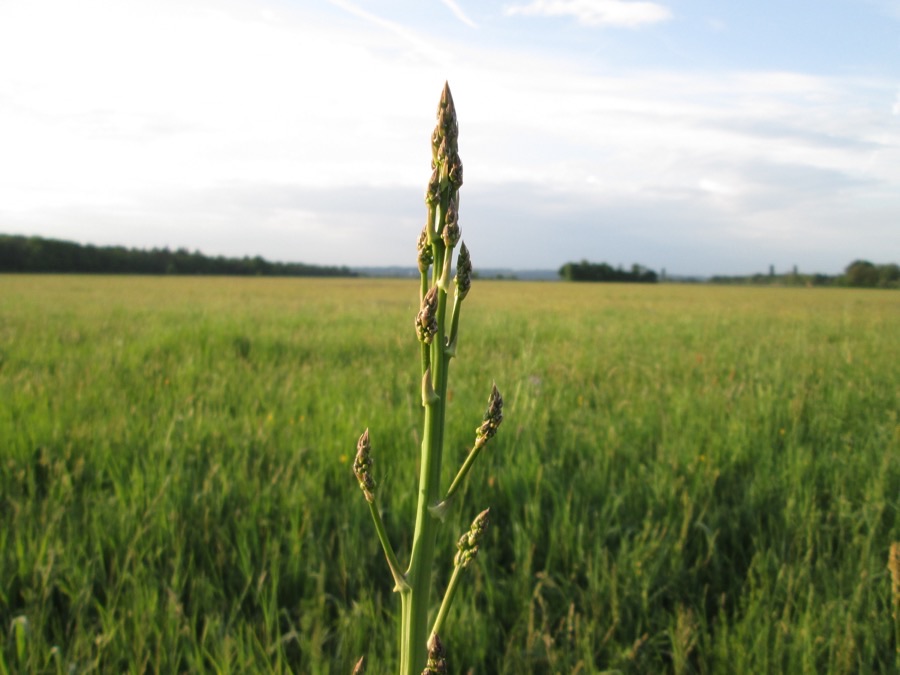
The tip has opened out into little branches. Can I still cut it?
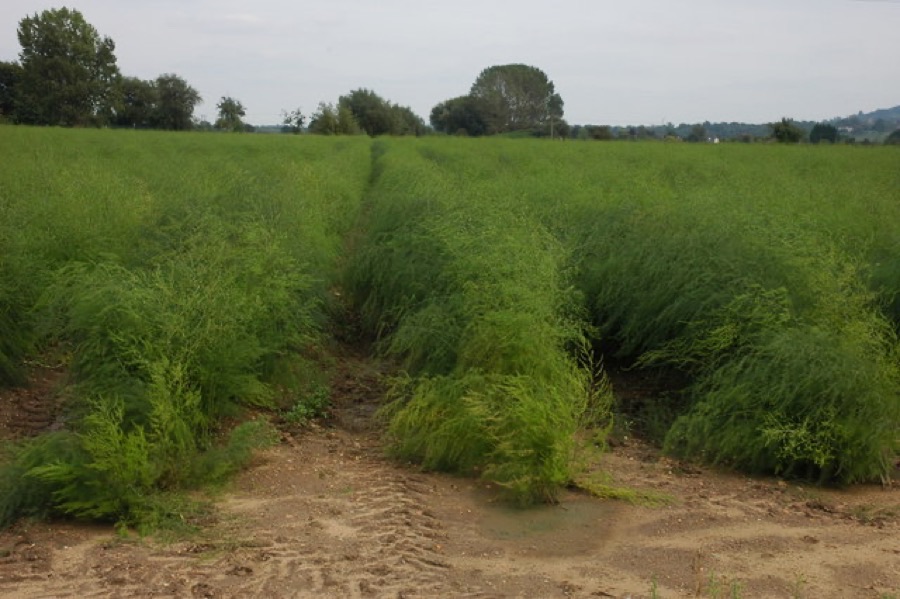
Why is the whole field allowed to grow into tall feathery bushes?