 Laisha
AI Operating System for Agriculture
Enter Laisha
Laisha
AI Operating System for Agriculture
Enter Laisha
Vigna subterranea · Also called: Bambara bean, Bambara nut, Njugu mawe, Nyimo, Ntoyo, Okpa, Epa roro, Gurjiya
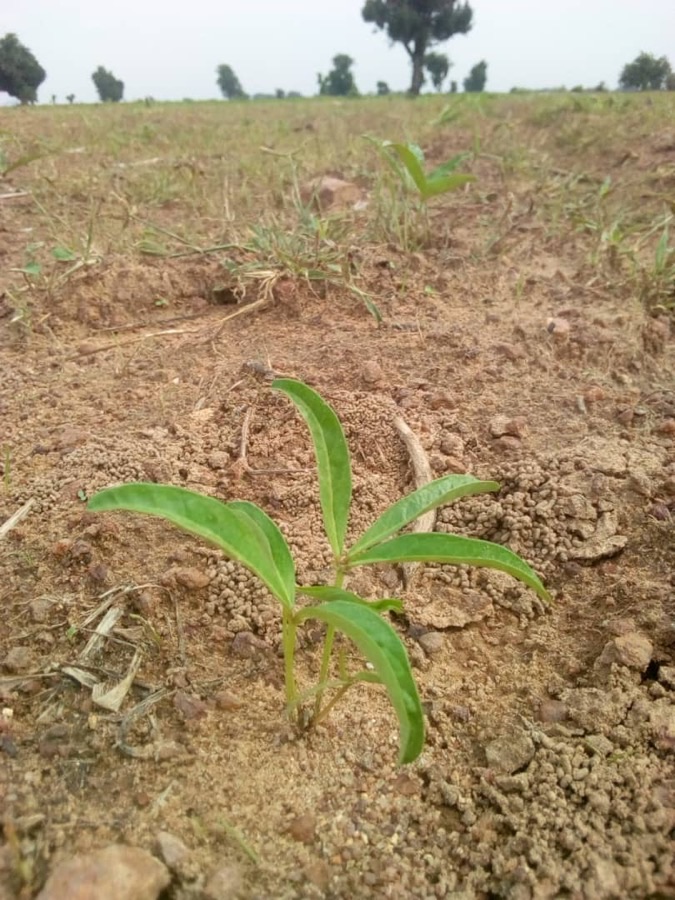
Photo: Yq2Yq, CC0 (Wikimedia Commons)
Bambara groundnut is Africa's own crop and one of the toughest food plants in the world. It was domesticated in West Africa, it is grown across the drylands from Senegal to Tanzania and on into Indonesia and Malaysia, and it produces on poor sandy ground in seasons that leave groundnut and cowpea with nothing. It is grown overwhelmingly by women, mostly on small plots, mostly for the household. Its real distinction is nutritional: it carries starch, protein and some fat all in the one seed, which almost no other pulse does, so a family eating bambara groundnut is close to a complete meal from a single crop. Its honest drawback is the cooking. Dry bambara seed takes three or four hours on the fire, and in a household gathering its own firewood that is a real cost which no yield figure ever shows.
If you see: Large healthy dark green plants with plenty of leaf and almost no pods when you scrape at the base or lift one.
It likely means: The ground was too rich, or nitrogen was applied. This crop makes its own nitrogen, and extra pushes it into leaf rather than pod.
Do this: Do not apply nitrogen or fresh manure to bambara groundnut at any stage.
If you see: Flowers at the soil surface that never turn into pods, with the little stalks behind them stopping against a hard crusted surface rather than pushing in.
It likely means: The soil at the base of the plants has set hard. The pod stalk is soft and cannot push through a crust.
Do this: Draw loose soil up around the crown of each plant while it is still safe to work near them, before flowering begins.
If you see: Far fewer pods than flowers, with small broken stalks visible at the base of the plants where you have been hoeing or walking.
It likely means: The pod stalks were broken off by weeding, hoeing or walking through the crop after the ground-level flowers appeared.
Do this: Finish all weeding before the flowers appear at the soil surface, and then leave the crop alone.
If you see: Pods that are rotten, mouldy or already sprouting when you lift the crop, sometimes with seedlings coming up in the row.
It likely means: The ground was wet while the pods were ripening, or the crop was left in the ground after the rains returned.
Do this: Lift the crop as soon as the leaves yellow rather than leaving it in the ground.
If you see: Small brown or dark spots with paler edges spreading across the leaves in wet weather, joining up until the leaves dry and fall early.
It likely means: Leaf spot, the commonest disease of this crop, which spreads by rain splash and is worst in a wet season on a crowded stand.
Do this: Space the plants properly so that air moves between them rather than sowing too thickly.
If you see: Small round holes in the seed and fine dust in the bottom of the container, with hollow seeds when you open them.
It likely means: Storage weevils. They often come in with the harvest and multiply quietly in the store over months.
Do this: Store the crop in the pod rather than shelled, since the shell is real protection.
If you see: Dry seed that is still hard after two hours on the fire, using far more firewood than the meal is worth.
It likely means: This is normal for the crop rather than a fault. Dry bambara seed is hard and genuinely takes three or four hours unless it is prepared first.
Do this: Soak the seed overnight before cooking, which shortens the time on the fire considerably.
Growing the crop is only part of the job. The last part is knowing what a normal harvest looks like where you are, and knowing what your seed is worth before you agree a price with anybody.
If you forget every other page of this guide, keep these lines. They are the whole crop, in order, short enough to carry in your head.
What is this small plant with leaves in threes on a dry sandy field?
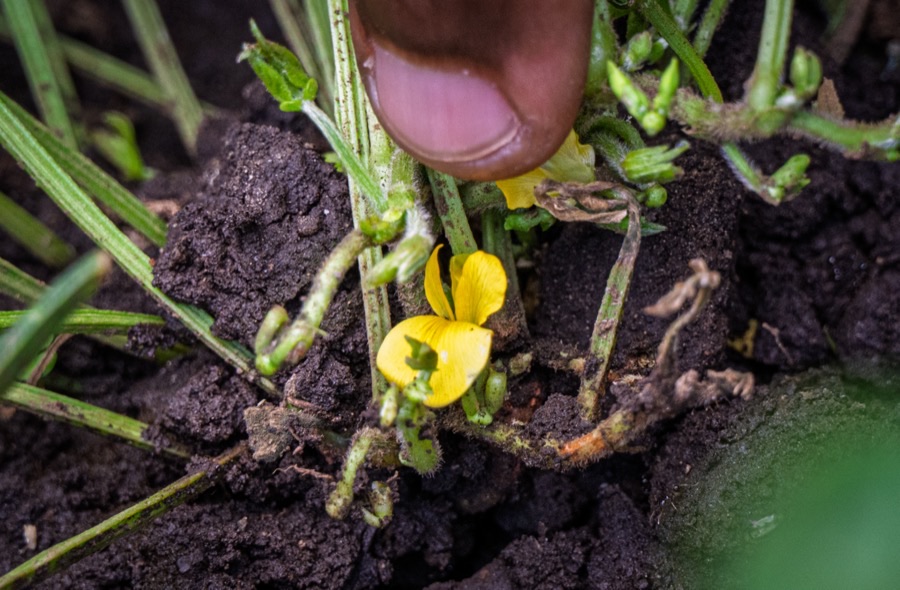
Why is this yellow flower down in the soil instead of up on the plant?
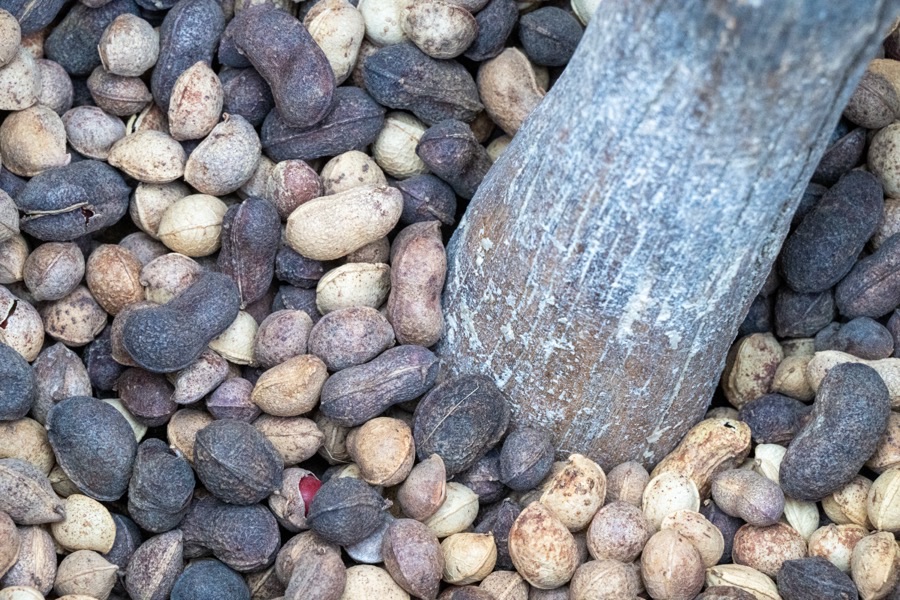
Why are these pods so many different colours, and why are they being pounded?