 Laisha
AI Operating System for Agriculture
Enter Laisha
Laisha
AI Operating System for Agriculture
Enter Laisha
Momordica charantia · Also called: Bitter melon, Karela, Pavakkai, Kakarakaya, Hagalakayi, Ampalaya, Ku gua, Momordica
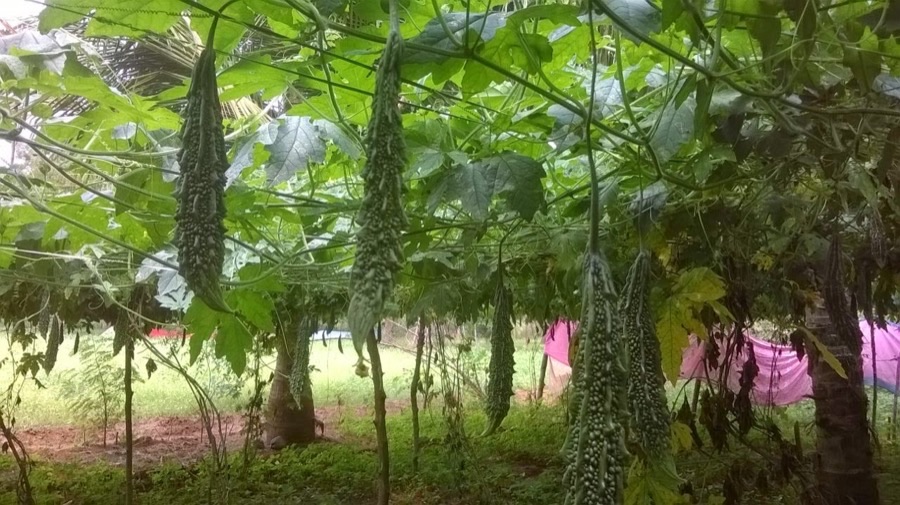
Photo: USHA A, CC BY-SA 4.0 (Wikimedia Commons)
Bitter gourd is one of the fastest-paying vegetables a smallholder can grow. It gives its first fruit about two months after sowing, it goes on producing for months if it is picked often, and it sells steadily because it is an everyday vegetable across South and South East Asia, China, the Caribbean and much of Africa. India, China, the Philippines, Bangladesh and Viet Nam grow the most. It needs a trellis and it needs watching for one particular pest, and in return it turns a small piece of ground into a regular weekly income rather than a single harvest.
If you see: Large numbers of yellow flowers opening and dropping off within a day, with no fruit forming behind them.
It likely means: Almost always the male flowers doing exactly what they should. This plant carries separate male and female flowers, the males come first and in far greater numbers, and they fall after a day.
Do this: Look behind the flower: a female has a tiny bitter gourd already formed there, a male has a plain stalk.
If you see: Small puncture marks on young fruit, which then yellows, softens and rots, with maggots inside when cut open.
It likely means: Fruit fly. It lays its eggs inside the fruit, so nothing applied to the outside reaches the grubs, and it is the main pest of this crop almost everywhere.
Do this: Cover each young fruit with a paper or plastic bag as soon as it is finger-length.
If you see: Fruit that is bent, twisted or flattened on one side, which buyers pay less for.
It likely means: It grew lying on the ground or pressed against a stem or another fruit instead of hanging free.
Do this: Train the vine onto a trellis so fruit hangs clear.
If you see: Fruit turning yellow and then orange on the vine, splitting open to show bright red seed coats inside.
It likely means: It was left too long. This vegetable is eaten unripe, and a ripe fruit is finished for sale however handsome it looks.
Do this: Pick eight to twelve days after set, while the fruit is firm and green with sharp ridges.
If you see: A huge leafy vine covering the whole trellis with plenty of male flowers and very few females or fruit.
It likely means: Too much nitrogen, or the vine was never tipped, or both.
Do this: Pinch out the growing tip when the vine reaches the top of the trellis, since side shoots carry the female flowers.
If you see: Leaves yellow-mottled, crumpled or distorted, with stunted growth and small misshapen fruit.
It likely means: A virus, usually carried by whitefly or aphids. It cannot be cured.
Do this: Pull out and destroy affected plants rather than hoping they recover.
If you see: A sowing where many seeds have simply sat in the ground without sprouting.
It likely means: The hard seed coat kept the water out.
Do this: Soak the seed overnight in clean water before sowing.
Growing the crop is only part of the job. The last part is knowing what a normal harvest looks like where you are, and knowing what your fruit is worth before you agree a price with anybody.
If you forget every other page of this guide, keep these lines. They are the whole crop, in order, short enough to carry in your head.
Why is the whole crop grown up a trellis?
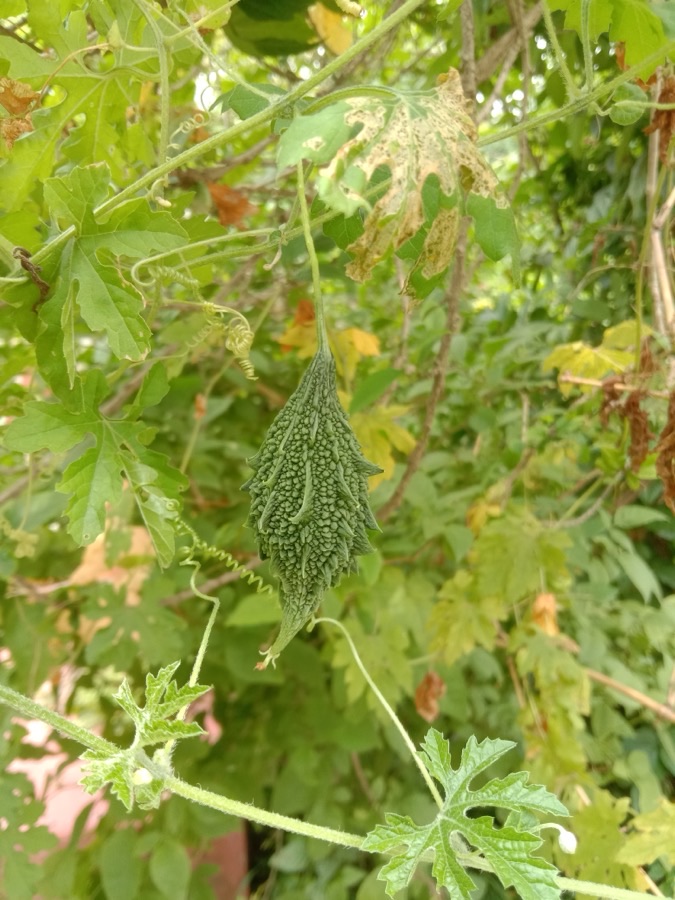
When is the fruit on its stem ready to pick?
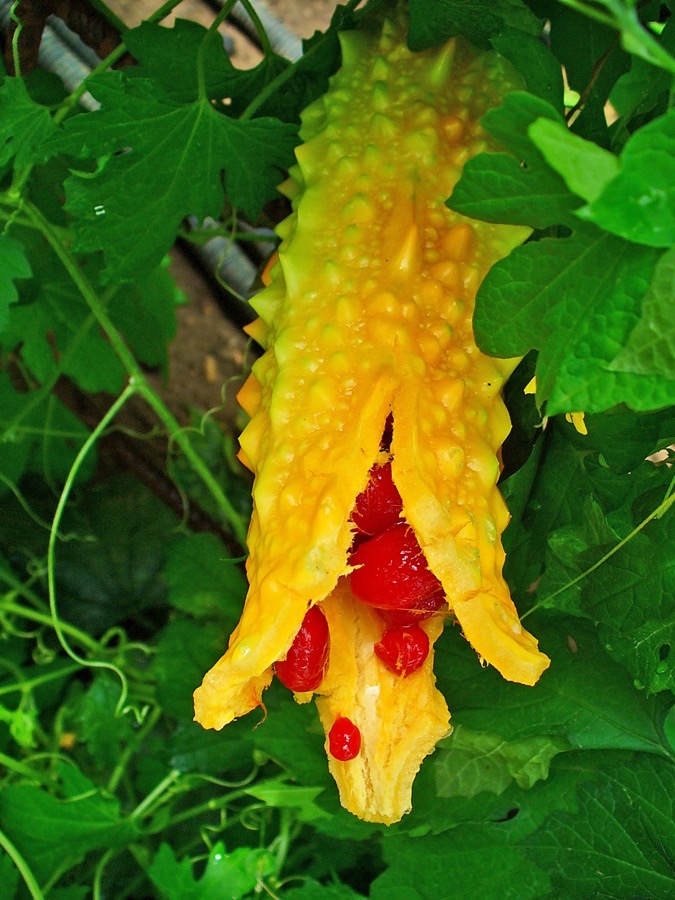
A fruit has turned orange and burst open. What happened?