 Laisha
AI Operating System for Agriculture
Enter Laisha
Laisha
AI Operating System for Agriculture
Enter Laisha
Vigna mungo · Also called: Urad, Urd, Urad dal, Mash, Minumulu, Uzhunnu, Ulundu, Biri
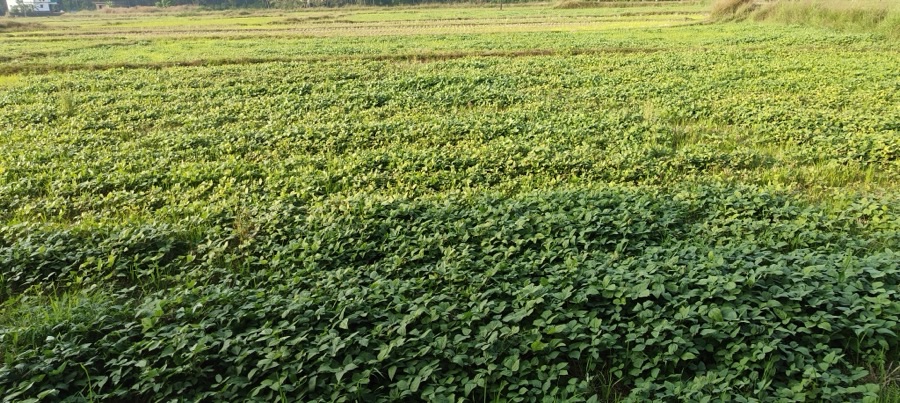
Photo: Rohan Pinto, CC BY-SA 4.0 (Wikimedia Commons)
Black gram is the pulse that cannot be substituted. Its seed is unusually slippery when ground and soaked, and that is exactly what makes idli and dosa batter rise and papad hold together, so no other pulse will do the job. India grows the overwhelming majority of it, with Myanmar, Pakistan, Bangladesh, Nepal and Thailand also producing. For a grower its great use is that it will take a rice field after the rice is cut and live on the water left in the soil, turning a fallow into a crop and leaving nitrogen behind for the next rice. It tolerates heavier and wetter ground than mung bean, which is why the two are grown in different fields on the same farm. Its worst problem is a virus that no spray can cure.
If you see: Bright yellow patches and streaks mixed with green on the newest leaves, plants stunted beside healthy neighbours, and pods few and misshapen.
It likely means: Yellow mosaic virus, carried between plants by whiteflies. It cannot be cured and an affected plant will not recover.
Do this: Buy kinds sold as resistant to yellow mosaic virus, which is the main and often the only effective defence.
If you see: A crop sown as one thing that turns out to be the other, or a buyer refusing a lot because the seed is the wrong colour for what was agreed.
It likely means: Black gram and mung bean have been confused. They are different species grown on different ground for different dishes.
Do this: Look at the seed: black gram is black with a raised white mark along one edge, and mung bean is green.
If you see: Small round holes in the stored seed with fine dust beneath it, and hollow seeds when you open them.
It likely means: Storage weevils, which often come in with the harvest and multiply quietly over months.
Do this: Dry the seed hard before storing, because damp seed is far more readily attacked.
If you see: Seed sprouting inside the pod when you open it, with a small white root, after rain on a ripe crop.
It likely means: Rain at maturity. The seed germinates readily and will do so in the pod if it stays wet.
Do this: Time the sowing so that the picking weeks fall in dry weather rather than in the rains.
If you see: Large dark green leafy plants with plenty of growth and very few pods.
It likely means: Too much nitrogen, or a field too rich, or heat and drought at flowering that made the plant shed what it set.
Do this: Do not apply nitrogen to black gram, since it makes its own and extra grows leaf.
If you see: Leaves that are thickened, crinkled, brittle and much larger than normal, on stunted plants that flower poorly and set almost nothing.
It likely means: Leaf crinkle, another virus of this crop. Like yellow mosaic it cannot be cured.
Do this: Pull out and destroy affected plants as soon as you see them.
If you see: Pickers with itching hands, arms and eyes after a day of harvesting, and reluctance to go back into the crop.
It likely means: The stiff hairs on the pods. Black gram pods are far hairier than mung bean pods and the hairs irritate skin and eyes.
Do this: Provide long sleeves and encourage pickers to cover their arms.
Growing the crop is only part of the job. The last part is knowing what a normal harvest looks like where you are, and knowing what your seed is worth before you agree a price with anybody.
If you forget every other page of this guide, keep these lines. They are the whole crop, in order, short enough to carry in your head.
What is this low green crop growing in a field that had rice in it a month ago?
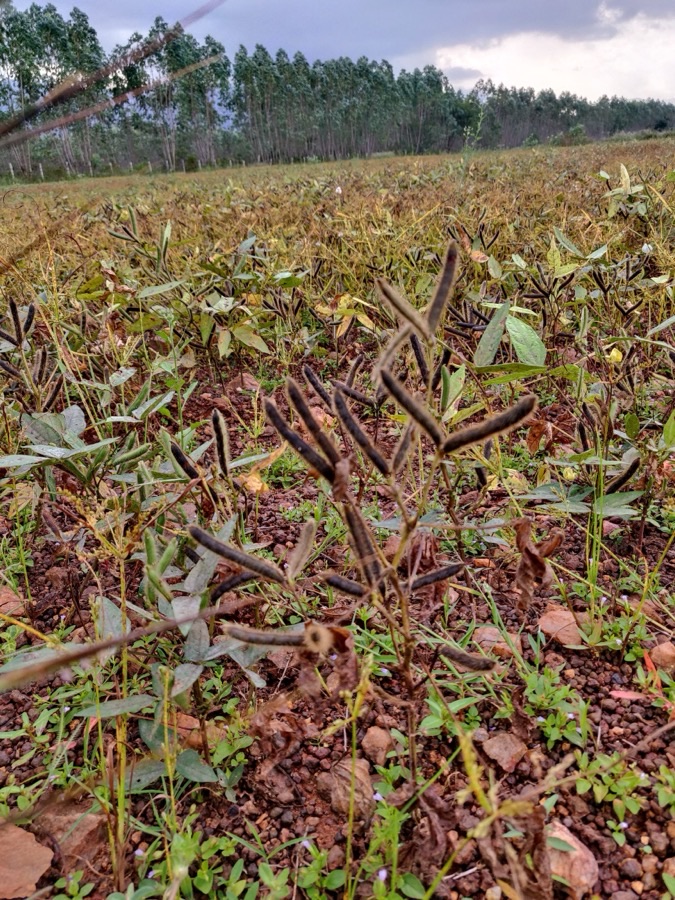
Why are these pods standing up instead of hanging down?
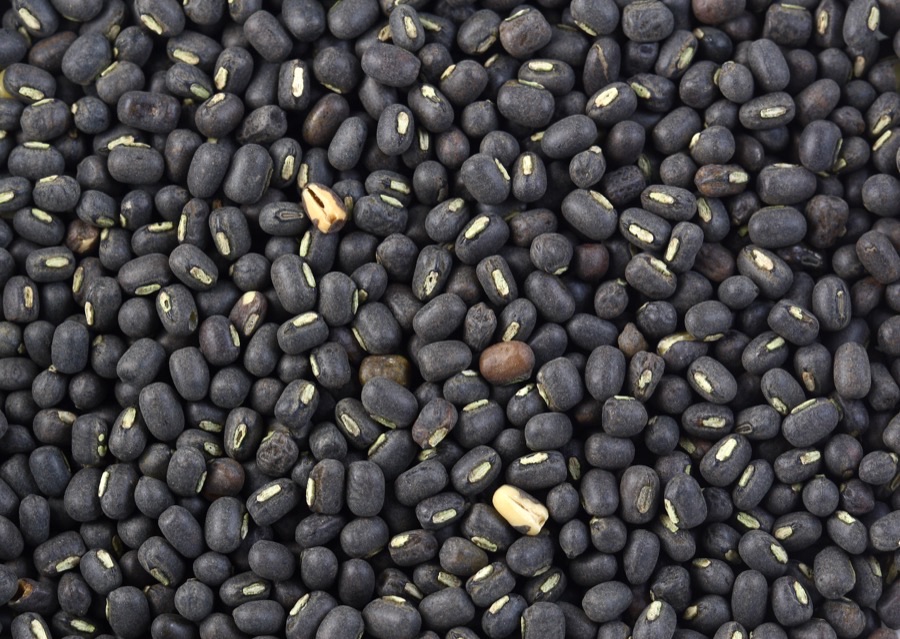
How do I know this is black gram and not something else in the sack?