 Laisha
AI Operating System for Agriculture
Enter Laisha
Laisha
AI Operating System for Agriculture
Enter Laisha
Piper nigrum · Also called: Pepper, Peppercorn, Kali mirch, Milagu, Kurumulaku, Golmirch, Poivre noir, Pimienta negra
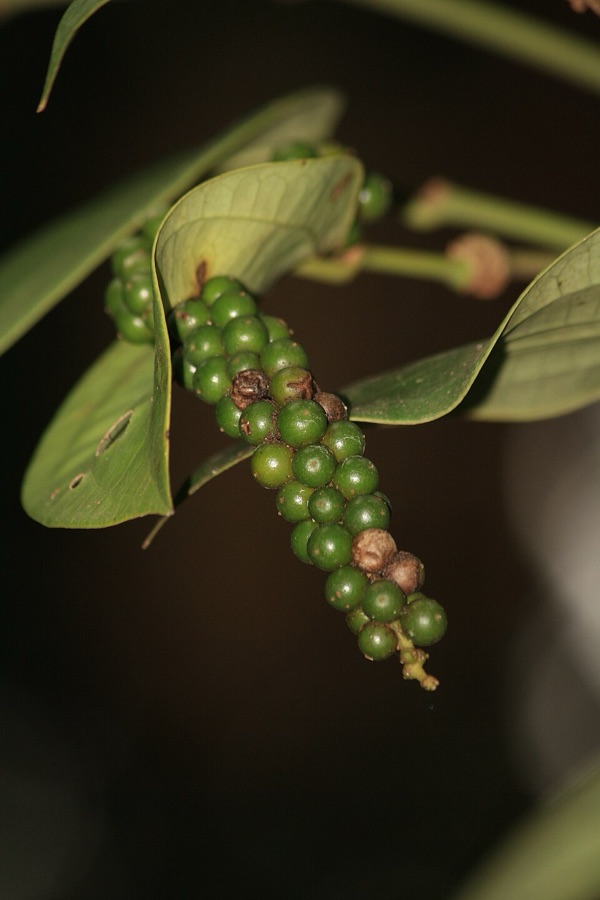
Photo: Primejyothi, CC BY-SA 3.0 (Wikimedia Commons)
Pepper is worth more per kilogram than almost anything else a smallholder can grow, and it keeps producing for twenty years or more once established. A few dozen vines on the edge of a plot, climbing trees that are already there, can be worth more than a field of grain. Vietnam, Indonesia, Brazil and India are the largest producers, and a great deal of it comes from holdings of under a hectare. It also takes up almost no ground, because it grows upwards on a support rather than sideways. The difficulties are that it takes three or four years before it earns anything, that it is killed quickly by water standing at its base, and that most of the price is decided after harvest, in how the berries are dried.
If you see: A mature vine whose leaves yellow, droop and fall from the top downwards over a few weeks, with the stem at ground level going black and soft, usually starting after a spell of heavy rain.
It likely means: Foot rot, a soil-borne disease that attacks the base and roots of the vine in wet conditions. It is the single biggest killer of established pepper and it moves fast once it starts.
Do this: Remove the affected vine including as much root as you can, and take it right out of the garden rather than leaving it at the base.
If you see: A vine that yellows, loses leaves and produces smaller spikes gradually over one or two years rather than collapsing, with fewer and shorter roots and small swellings on them when you dig.
It likely means: Slow decline, usually root damage by very small soil-living worms together with root disease. It is gradual, which is why it is usually noticed a year after it started.
Do this: Look at the roots of a declining vine rather than only at the leaves, since the cause is below ground and cannot be seen from above.
If you see: Berries on the spike that are dark, shrivelled and hollow when you crush them, mixed with sound ones, with small round holes in some of them.
It likely means: A small beetle whose grub feeds inside the developing berry. The berry stays on the spike and dries into a light hollow corn that a buyer will reject or discount.
Do this: Pick and destroy affected spikes rather than leaving them on the vine, because that is where the next generation comes from.
If you see: Healthy well-grown vines four or five years old that keep producing leaves and shoots but carry few spikes or none at all, season after season.
It likely means: Usually too much shade, too much nitrogen, or cuttings taken from the wrong part of a parent vine. Sometimes the vine simply has not had the dry spell it needs before the rains.
Do this: Prune the support tree hard and let light in. Heavy shade is the commonest reason a well-grown vine does not flower.
If you see: Young spikes turning yellow and dropping off the vine in numbers before the berries have filled, leaving bare stalks or nothing at all.
It likely means: Most often water stress at a critical moment, either a hard dry spell while the spikes were setting or a sudden flood after one. Poor feeding and heavy shade also cause it.
Do this: Look at water first. A vine that dried out hard and was then soaked sheds spikes almost every time.
If you see: Dried pepper with a musty or sour smell, dull grey-brown patches instead of even black, and grit or soil among the corns.
It likely means: The pepper was dried on bare ground, spread too thickly, or rewetted by rain or dew part-way through drying. All three cause mould that cannot be removed afterwards.
Do this: Dry on mats, tarpaulins or clean concrete rather than on bare ground, every time, without exception.
If you see: Dried corns that are unusually small, very light in the hand, deeply wrinkled and pale rather than firm and evenly black.
It likely means: The spikes were picked too early, before the berries had filled. Immature berries lose most of their weight in drying and never develop proper colour.
Do this: Wait for one or two berries on a spike to turn red or yellow before picking that spike, which is the reliable signal.
Growing the crop is only part of the job. The last part is knowing what a normal harvest looks like where you are, and knowing what your pepper is worth before you agree a price with anybody.
If you forget every other page of this guide, keep these lines. They are the whole crop, in order, short enough to carry in your head.
What is this narrow hanging spike packed with small round green berries, among leaves with strong curved veins running from base to tip?
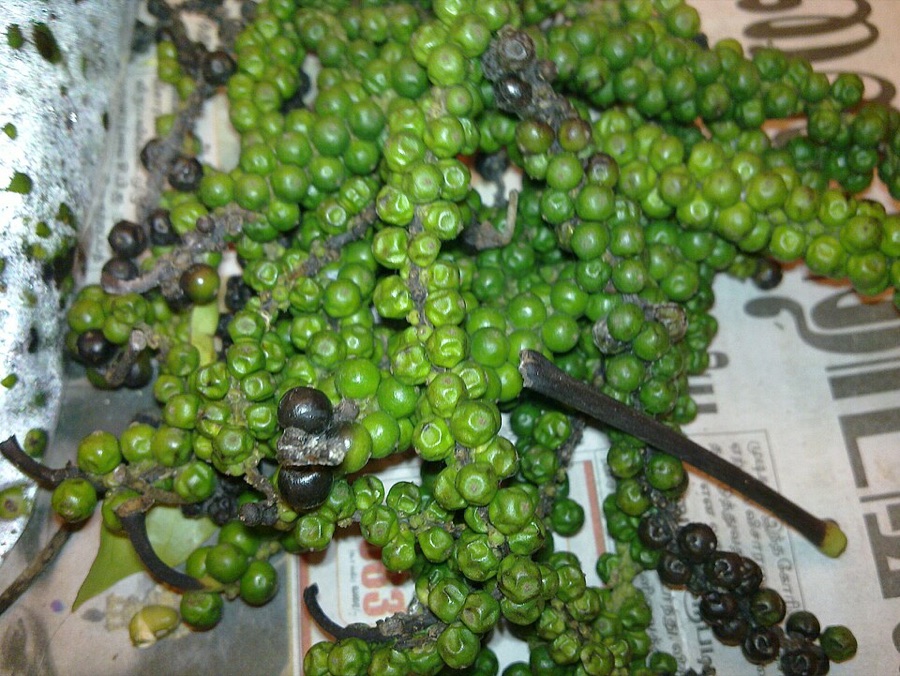
These picked spikes are mostly green with a few berries gone dark. Were they picked at the right time?
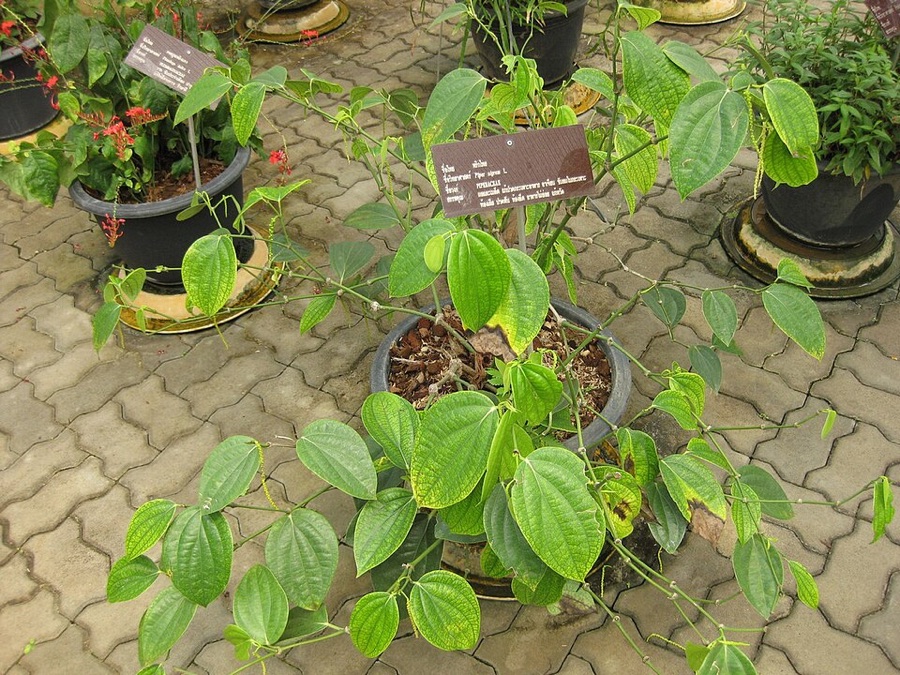
What is this plant with broad heart-shaped leaves on jointed stems that trail along the ground and climb upwards?
This plant is also a dravya of Ayurveda. Maricha in Dravyaguna: its botanical identity, rasa, virya and karma, the part used, the dose the texts give, and its safety record.