 Laisha
AI Operating System for Agriculture
Enter Laisha
Laisha
AI Operating System for Agriculture
Enter Laisha
Fagopyrum esculentum · Also called: Kuttu, Kotu, Ogal, Phapar, Sarrasin, Blé noir, Alforfón, Trigo sarraceno
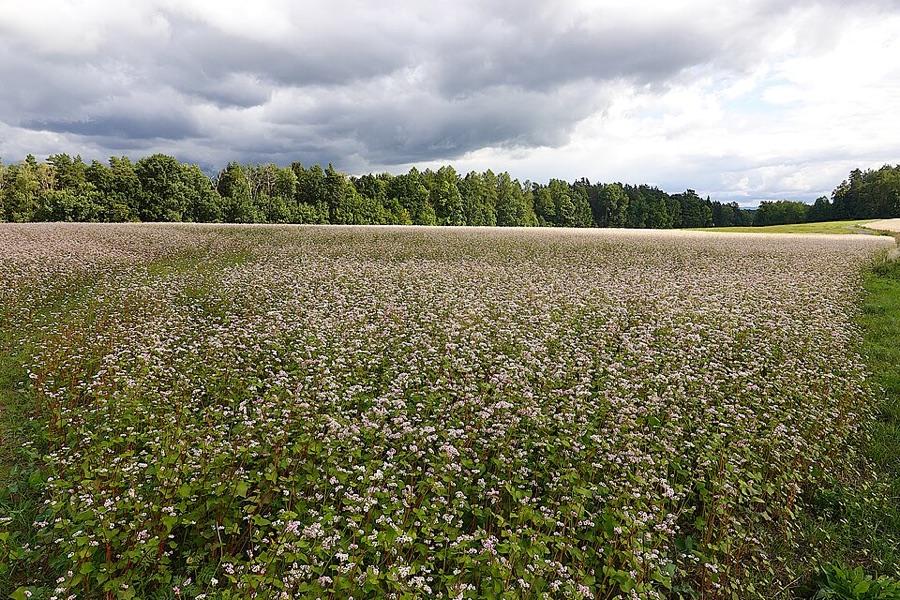
Photo: Robbie Morrison, CC BY 4.0 (Wikimedia Commons)
Buckwheat is the crop you can still plant when something else has failed. It goes from seed to harvest in about two and a half months, grows on poor, acid, stony ground where cereals give nothing, needs almost no fertiliser, and smothers weeds while it grows. Russia and China produce the most, and it is a staple in the hill districts of Nepal, Bhutan and northern India, in Ukraine and in parts of eastern Europe and Japan. It contains no gluten, which makes it valuable to people who cannot eat wheat. Its difficulty is that it never ripens evenly: the same plant carries open flowers and ripe seed at the same moment for weeks, so every harvest is a compromise between seed that has not filled yet and seed already falling on the ground.
If you see: A tall lush crop that has fallen flat across the field after wind or rain, with stems bent at the base and the seed heads lying on the soil.
It likely means: The crop was too well fed or sown on rich ground. Buckwheat has hollow brittle stems and grows soft and tall wherever there is plenty of nitrogen.
Do this: Do not apply nitrogen to buckwheat, ever, and avoid sowing it straight after a heavily manured crop.
If you see: A field that flowers heavily for weeks and sets very little seed, with plenty of white flowers and very few brown grains forming behind them.
It likely means: Usually too few insects working the field, or hot dry weather during flowering, or both. Buckwheat needs insects to move the flower dust and sets poorly in heat.
Do this: Keep hives near the field or arrange with a beekeeper, since buckwheat is an excellent bee crop and both of you gain.
If you see: A large quantity of loose black seed lying on the soil after cutting or carting, and noticeably less in the sack than the standing crop suggested.
It likely means: The crop was cut or handled in dry heat. Ripe buckwheat seed detaches at the lightest touch, and shattering is the main loss in this crop.
Do this: Cut in the cool damp of early morning or while dew is still on the crop, never in the heat of the afternoon.
If you see: The whole crop blackened and collapsed within a day or two of a cold night, with soft stems and leaves that have gone limp and dark.
It likely means: Frost. Buckwheat is killed outright by frost at any stage, and there is no recovery from it.
Do this: Count your frost-free days before sowing and do not sow unless there are at least about seventy left.
If you see: A thin uneven stand with bare patches, weeds coming through the gaps, and plants of noticeably different sizes across the field.
It likely means: Old seed, cold soil at sowing, dry ground, or seed left uncovered on the surface for birds.
Do this: Use fresh seed, because buckwheat loses the ability to sprout faster than cereal seed and old seed is a common cause.
If you see: A large proportion of broken and split grains after threshing, with pale kernel showing through the dark hulls.
It likely means: The crop was threshed too hard or when too dry. Buckwheat seed has a brittle hull and cracks far more easily than cereal grain.
Do this: Thresh gently by beating rather than with force, and stop as soon as the seed is off.
If you see: Stored seed with a sharp bitter or paint-like smell, tasting soapy, and flour from it that nobody wants to eat.
It likely means: The seed was stored damp or too warm, or it was cracked before storage. Buckwheat is higher in oil than cereals and goes rancid rather than simply mouldy.
Do this: Dry until a seed cannot be dented with a fingernail before storing anything.
Growing the crop is only part of the job. The last part is knowing what a normal harvest looks like where you are, and knowing what your seed is worth before you agree a price with anybody.
If you forget every other page of this guide, keep these lines. They are the whole crop, in order, short enough to carry in your head.
What is this dense low crop covered in small white flowers, with no ears or heads anywhere on it?
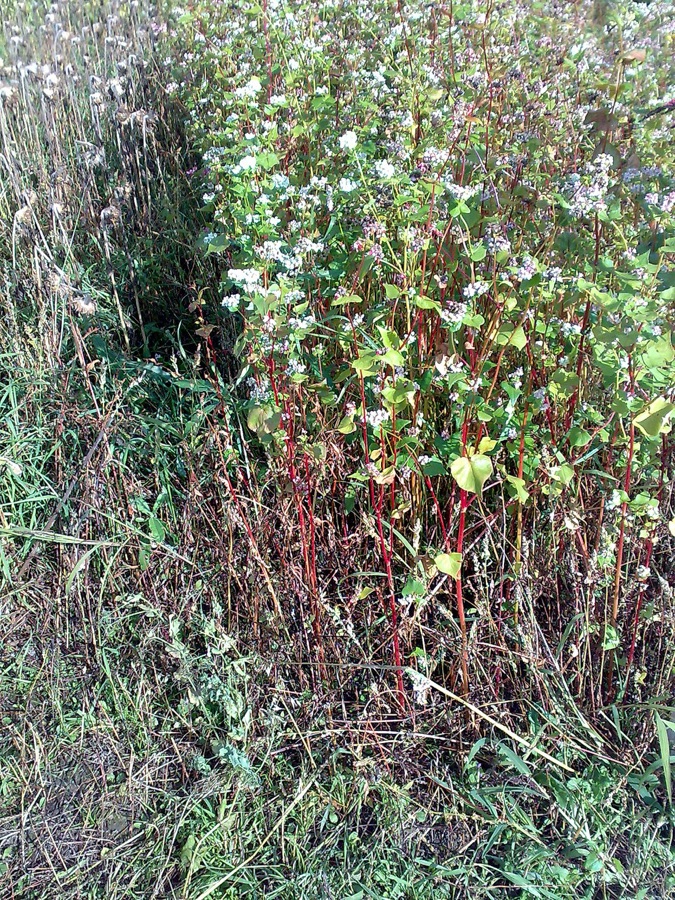
Why does this plant have white flowers at the top and dark seeds lower down at the same time?
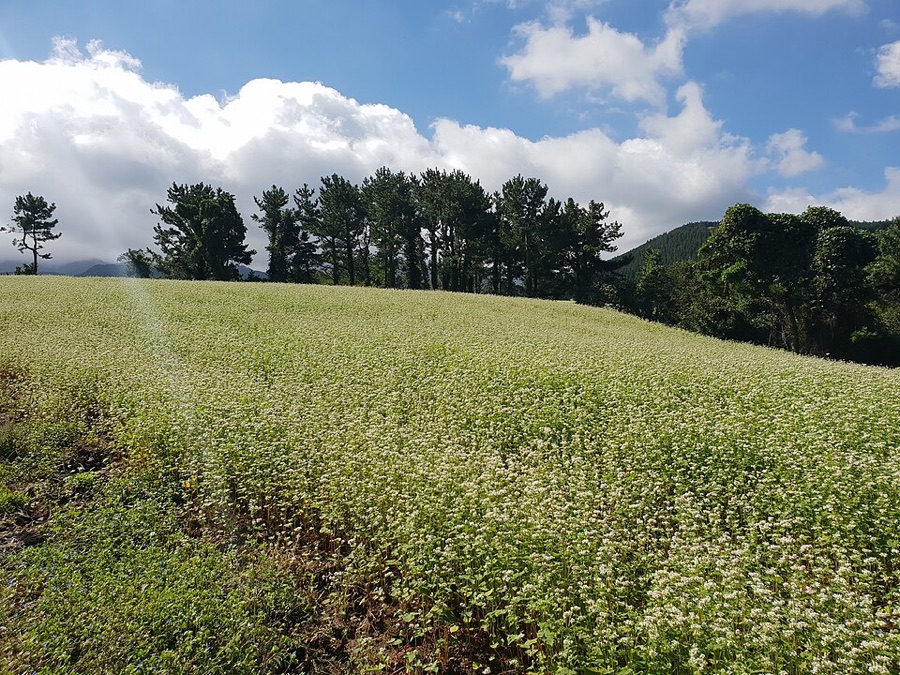
What is this crop doing on a stony hillside where the neighbours grow nothing?