 Laisha
AI Operating System for Agriculture
Enter Laisha
Laisha
AI Operating System for Agriculture
Enter Laisha
Brassica napus · Also called: canola, oilseed rape, OSR, rape, colza, swede rape, Argentine canola, raps
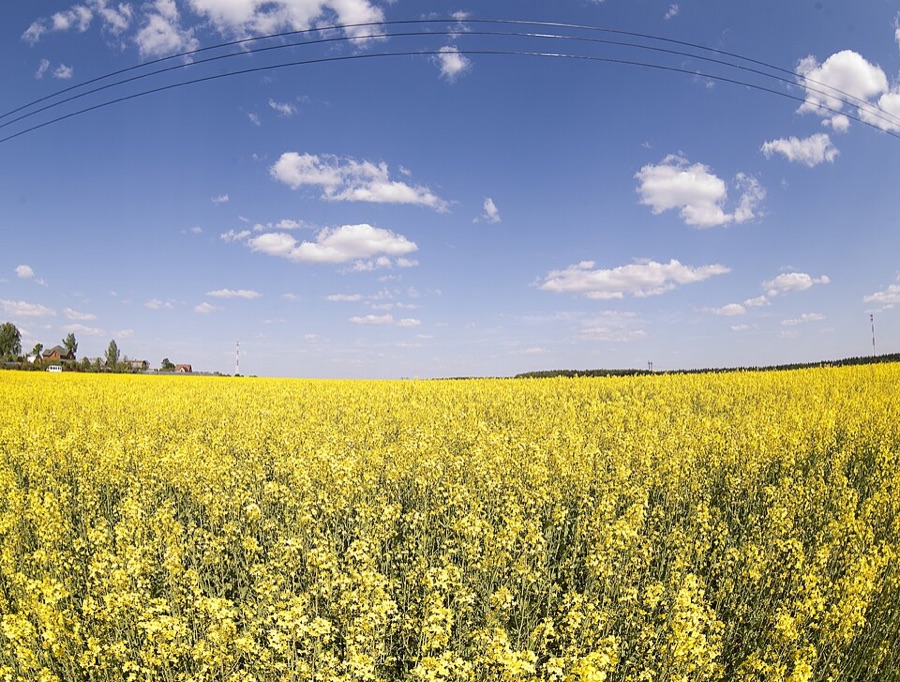
Photo: Nickolas Titkov from Moscow, Russian Federation, CC BY-SA 2.0 (Wikimedia Commons)
Rapeseed is among the largest oilseed crops in the world and is grown commercially in more countries than almost any other crop in this library. It produces one of the highest oil yields per hectare of any field crop, the meal left after pressing is a valuable protein feed for livestock, and the flowers feed bees on an enormous scale. It fits into a cereal rotation as a break crop, which means it interrupts the diseases that build up when wheat follows wheat, and farmers who grow it for that reason alone often find it pays for itself twice. In countries with cold winters it is sown in autumn and survives the winter as a low rosette. In warmer countries it is a spring or a cool-season crop.
If you see: Large bare patches across the field a week or two after sowing, with reasonable rows of seedlings in between them and no obvious insect damage on the plants that did emerge.
It likely means: The seed went in too deep, the seedbed was too loose or too cloddy for the seed to find moisture, or the surface dried out before germination.
Do this: Dig into a bare patch. Seed that sprouted and died underground tells you it was sown too deep or lost contact with moist soil.
If you see: Small round holes punched through the leaves of newly emerged seedlings, giving a shot-hole appearance, with tiny dark beetles that jump when disturbed, worst in warm dry weather.
It likely means: Flea beetles feeding on the seedlings. They can remove a whole field within days of emergence and are the single most common cause of a failed rapeseed establishment in many countries.
Do this: Inspect daily from emergence until the crop has four true leaves. After that stage the crop grows away from the damage and the risk falls sharply.
If you see: Bleached white patches on the stems during or after flowering, stems that snap easily at that point, and hard black bodies the size of a grain inside the hollow stem when you split it open.
It likely means: Sclerotinia stem rot. The hard black bodies survive in the soil for years, which is why rotation matters more than anything else with this disease.
Do this: Split a few affected stems and look for the black bodies inside, because that finding distinguishes this from other stem problems.
If you see: Seed lying loose on the soil under a standing crop before it has been cut, and pods on the plant already split open along the seam with nothing inside them.
It likely means: The crop was left past maturity. Rapeseed pods split and shed as they dry, and once it begins the loss is rapid.
Do this: Harvest immediately. Everything still in the pods can be saved and what is on the ground is gone.
If you see: The youngest leaves at the top of the plant turning pale yellow-green while the older leaves lower down stay a normal colour, with cupping of the pale leaves and poor flowering.
It likely means: Most often a shortage of sulphur, which this crop needs more of than most because the oil it makes is built from it. Paleness starting at the top rather than the bottom is the distinguishing sign.
Do this: Check which end of the plant the paleness started from, because nitrogen shortage yellows the oldest leaves from the bottom up instead.
If you see: Large areas of an autumn-sown crop dead or missing when growth restarts in spring, with surviving plants thin and the field looking patchy where it was even before the winter.
It likely means: Winter kill. The crop went into the cold either too small to survive it or too large and forward, or it sat in waterlogged ground through the winter.
Do this: Assess how many plants per unit area survived before deciding anything. Rapeseed compensates remarkably well and a thin crop frequently still yields.
If you see: Large areas of the crop flattened and lying over after wind or rain, with the stems bent near the base rather than snapped cleanly, and the lying crop ripening unevenly.
It likely means: The stand was too thick, or it received too much nitrogen or too much late water, producing tall soft stems that could not carry the weight of the pods.
Do this: Do not try to stand it up. Harvest badly lodged areas first because they will not dry evenly and will spoil where they touch the soil.
Growing the crop is only part of the job. The last part is knowing what a normal harvest looks like where you are, and knowing what your seed is worth before you agree a price with anybody.
If you forget every other page of this guide, keep these lines. They are the whole crop, in order, short enough to carry in your head.
What crop is this, a large field of waist-high plants covered in small bright yellow flowers, stretching to the horizon?
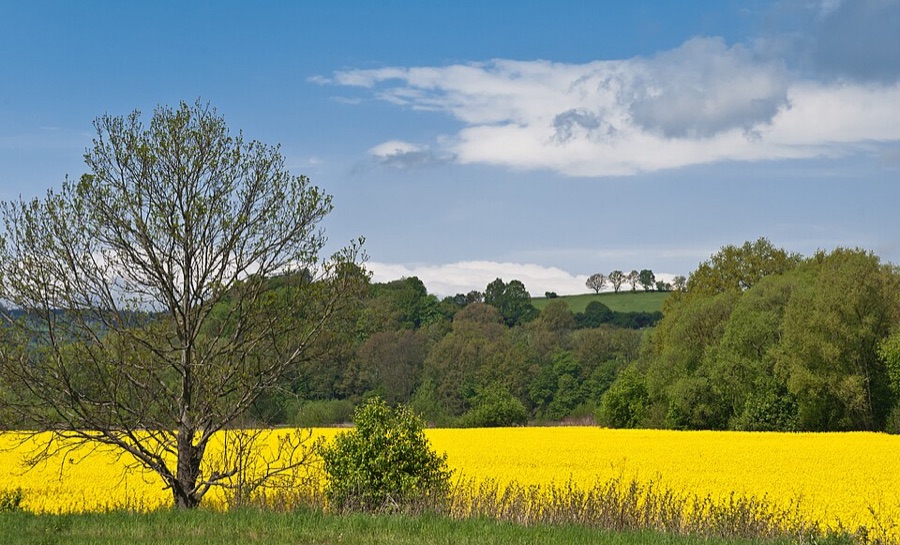
What is the bright yellow block of colour in this landscape, sitting between hedges and woodland in spring?
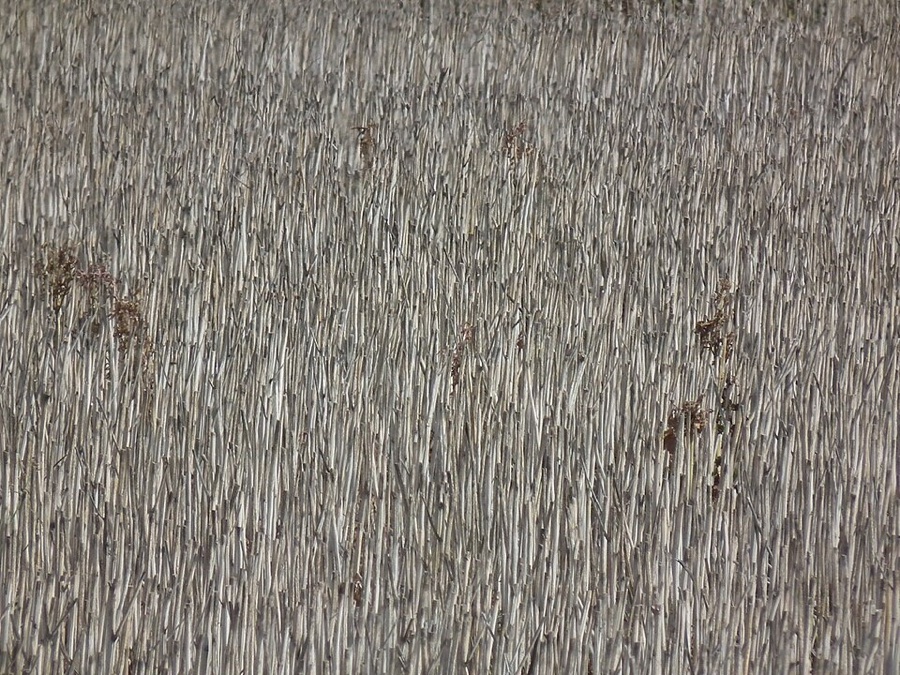
What has happened in this field of short pale grey-brown stubble with a few dried stems still standing?