Averrhoa carambola · Also called: Star fruit, Starfruit, Five-corner fruit, Kamrakh, Carambolo, Belimbing, Khe, Tamarta
Photo: Deepugn at Malayalam Wikipedia, CC BY-SA 3.0 (Wikimedia Commons)
Carambola is one of the few tropical fruit trees that crops more than once a year. In a warm climate with reasonable water it will flower and fruit two or three times over, so the same tree keeps paying rather than giving one lump and then nothing for eleven months. It is a handsome, fast tree that starts bearing in three or four years, and it grows across Southeast Asia, southern China, India, Brazil, the Caribbean and Florida. The fruit sells on looking perfect, because the star shape is the whole reason anyone buys it, and the five thin ridges bruise and brown at the lightest touch. Almost everything in this guide about thinning, bagging and handling exists to protect those five edges. There is also one honest warning about who should not eat it, and it is at the foot of this guide rather than buried.
Growing Carambola, Stage by Stage
1. Get the land ready — Warm, sheltered, deep and well-drained.
2. Plant a grafted tree as your planting material — A named sweet variety, not a seedling from a fruit you liked.
3. Weed, water and feed — Steady water all year, because there is nearly always fruit on the tree.
4. Shape the tree, thin the fruit, bag the best — Everything here is about protecting five thin edges.
5. Watch for trouble — Fruit fly inside the fruit, and anything that rubs the ridges.
6. Harvest by hand, one fruit at a time — Cut it off, hold it by the ends, and put it down once.
7. Keep it cool and sell it whole — You are selling a shape. Protect it to the last minute.
Common Problems & Troubleshooting
If you see: Brown scars and marks along the five edges of otherwise good fruit.
It likely means: Something touched them: wind rubbing the fruit against a leaf or twig, a hand gripping across the ridges, or fruit packed touching in a crate.
Do this: Thin the fruit so what is left hangs clear of leaves and branches.
If you see: Fruit that is sharp and sour when a buyer expected it sweet.
It likely means: Either the tree is a sour variety or a seedling, or the fruit was picked before it had coloured fully.
Do this: Plant grafted trees of a named sweet variety if you are selling for fresh eating.
If you see: Small punctures on the fruit with soft rotting patches, and maggots inside when cut open.
It likely means: Fruit fly. It lays under the skin and the grubs develop inside, where nothing applied to the surface will reach them.
Do this: Bag the fruit while it is still small and green, which is the most effective step available.
If you see: Fruit splitting along the ridges, often after rain or irrigation.
It likely means: The tree went dry and then got a sudden lot of water, so the inside swelled faster than the skin could stretch.
Do this: Water steadily and often rather than heavily and seldom.
If you see: Branches snapping under a heavy crop or in wind.
It likely means: The wood is brittle and the tree sets very heavily. A loaded branch with no support is easily lost.
Do this: Head the young tree back early so it makes a low sturdy frame rather than long thin limbs.
If you see: Leaves turning yellow between veins that stay green, on a tree that is otherwise growing.
It likely means: Usually a shortage in the soil rather than a disease, and often worse on alkaline ground or where the tree has been overwatered.
Do this: Check that water is not standing around the roots, since waterlogging causes the same look.
Yield & Market Value
Growing the crop is only part of the job. The last part is knowing what a normal harvest looks like where you are, and knowing what your carambola is worth before you agree a price with anybody.
Remember It This Way
If you forget every other page of this guide, keep these lines. They are the whole crop, in order, short enough to carry in your head.
You are selling a shape. Five edges, all of them unmarked.
Plant grafted, and decide sweet or sour before you buy.
Shelter it. Wind rubs the fruit and breaks the branches.
Water steadily. It is carrying fruit nearly all year.
Thin so every fruit hangs clear of leaves and twigs.
Bag the fruit small and green. It stops flies and marks both.
Prop a loaded branch. This wood snaps.
It barely sweetens after picking. Wait for full colour.
Hold it by the ends. A thumb on a ridge browns by tomorrow.
Single layer, soft lining, never tipped between containers.
Test Yourself: Identification
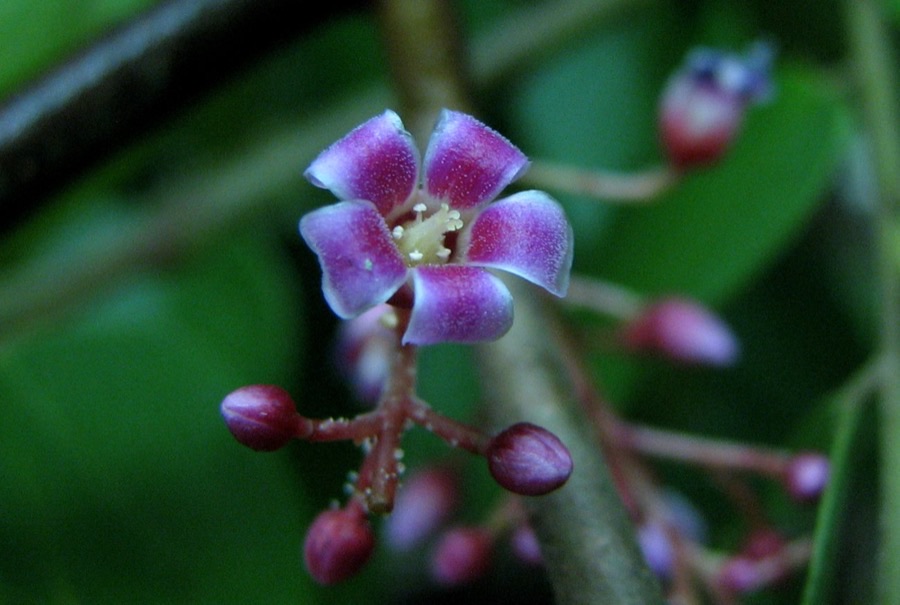
What do the flowers look like?
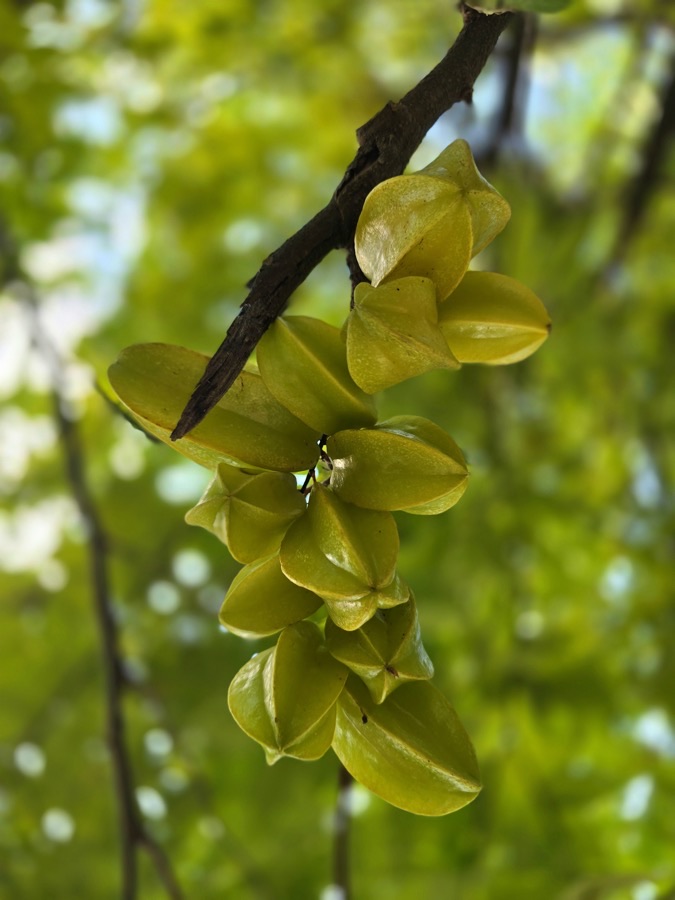
What does unripe fruit look like?
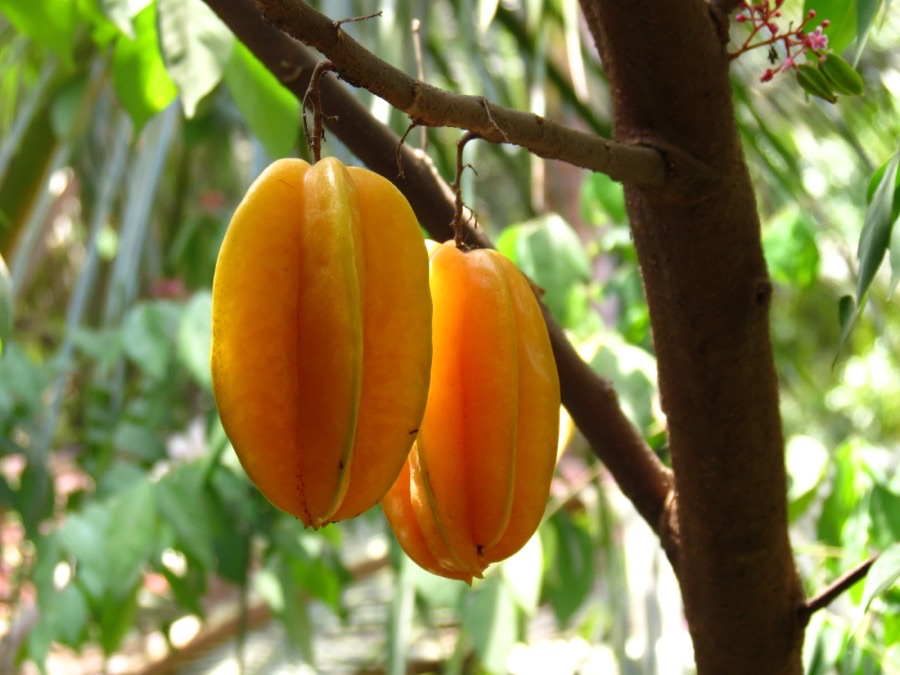
When is the fruit ready to pick?
Honest Limits of This Guide
This fruit is genuinely unsafe for some people. Carambola contains a neurotoxin and a large amount of oxalate, and people whose kidneys are not working properly cannot clear them. Serious illness and deaths have been documented in people with kidney disease who ate it, including in small quantities and as juice. This guide states that plainly because anyone selling this fruit should know it. It is not medical advice and it does not describe symptoms or treatment; anyone with kidney trouble should ask a doctor before eating carambola at all.
Timings here are given by season and by the state of the tree rather than in named months, because carambola is grown across many tropical countries and crops two or three times a year rather than on a single calendar.
Sweet and sour types are both grown and both worth growing, but they sell to different buyers at different prices. This guide covers both and does not assume you are growing one or the other.
The photographs show garden and small-orchard trees rather than a commercial planting with bagging in place, because usable pictures of that are not available under a licence this library can use. The bagging section is written in words rather than shown.
Variety advice is deliberately local and no varieties are named here. Types differ greatly in sweetness, fruit size and how well they stand heat, and which suits a district is a question for a local nursery.
No chemical treatments are named here. The fruit is eaten fresh with its skin, the fruit fly grub sits inside where sprays do not reach, and what is permitted differs by country and by buyer.
Sources
GBIF Backbone Taxonomy species-match record for Averrhoa carambola L. — Global Biodiversity Information Facility (GBIF), Copenhagen (source)
EPPO Global Database — Averrhoa carambola (EPPO code AVRCA) — European and Mediterranean Plant Protection Organization (EPPO), Paris (source)
FAO guidance on establishing and managing tropical fruit orchards — Food and Agriculture Organization of the United Nations (FAO), Rome (source)
FAO guidance on post-harvest handling of soft thin-skinned tropical fruit — Food and Agriculture Organization of the United Nations (FAO), Rome (source)
Laisha knows Carambola better than this page can show.Photo diagnosis for pests and disease, live market prices, and an agronomist you can ask at two in the morning. Ten days free, no card. After that 10 US dollars a month, one price worldwide.Start ten free days
 Laisha
AI Operating System for Agriculture
Enter Laisha