Chayote is a crop that keeps giving from a single planting. One vine on a good support can carry hundreds of fruits a year and keep doing it for several years, from a plot small enough to sit beside a house. It came from Mexico and Guatemala and is now grown across Latin America and the Caribbean, in Réunion, across North East India where it is simply called squash, in the Philippines, Indonesia, China, Japan and Australia. Three different foods come off the same plant: the fruit, the young shoots, which sell well in their own right, and after a few years the swollen roots underneath. For a family with a wall, a fence or a few poles and not much land, few crops return as much food for as little.
Growing Chayote, Stage by Stage
1. Get the land ready and build the support — Rich, well-drained ground and a support strong enough to hold a heavy vine for years.
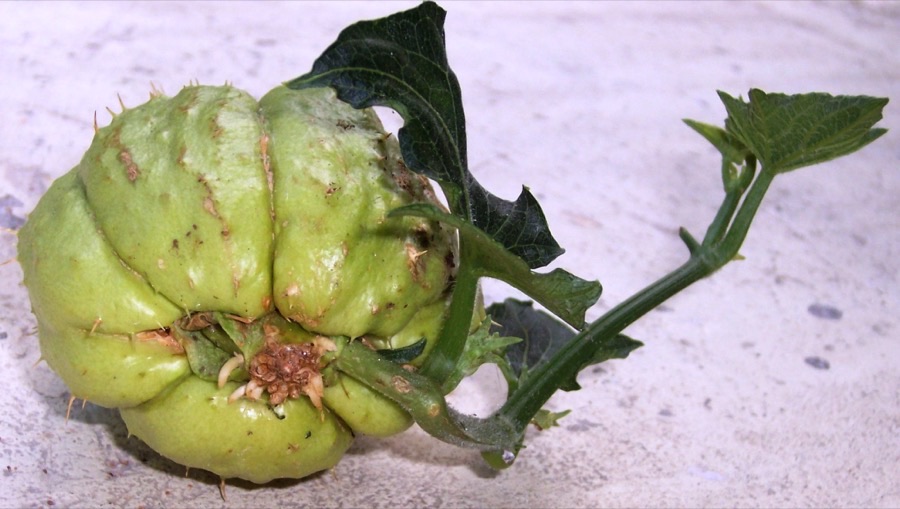
2. Get your planting material — A whole mature fruit that has begun to sprout, because the seed never leaves the fruit.
3. Plant the sprouted fruit — Lay it at an angle with the sprouting end up and out of the soil, never buried flat.
4. Water, weed and feed — Steady moisture and regular feeding, because this vine works hard for years.
5. Flowering and fruit set — Male and female flowers on the same vine, and insects have to move pollen between them.
6. Watch for trouble — Rot at the base in wet ground, mildew on the leaves, and fruit flies in the fruit.
7. Harvest the fruit and the shoots — Pick young and often, because chayote toughens fast and a big fruit is worth less.
8. Store, sell and keep the roots — Keep fruits cool and humid, sell them quickly, and remember the roots are a crop too.
Common Problems & Troubleshooting
If you see: A planted fruit that never sprouts and is found soft and rotten when dug up.
It likely means: It was buried completely, or planted in wet ground, or planted before it had sprouted. A whole fruit under soil is a large lump of wet flesh and it rots easily.
Do this: Lay the fruit at an angle with the sprouting end above the soil surface.
If you see: A support that sags, leans or comes down under a vine in full fruit.
It likely means: The frame was built for the plant as it looked at planting rather than as it would be a year later. A loaded chayote vine is very heavy.
Do this: Build the support before planting, using strong posts set deep and proper wire.
If you see: Large fruits with tough skin, a hard seed inside, and a buyer offering much less than expected.
It likely means: They were left on the vine too long. Chayote is eaten young, and it toughens quickly once it passes that stage.
Do this: Pick every two or three days once cropping starts, rather than weekly.
If you see: A huge healthy vine covered in leaves and flowers that sets very few fruits.
It likely means: Usually poor pollination, or fierce heat, or a vine fed so richly that it grew leaves instead of fruit.
Do this: Check that both kinds of flower are present, clusters of male and single females with a tiny fruit behind them.
If you see: Stored fruits developing sunken dark pits on the skin that were not there at picking.
It likely means: They were stored too cold. Chayote is damaged by chilling well above freezing, and the marks appear days later.
Do this: Store at around ten degrees rather than in an ordinary cold store.
If you see: Fruits in store pushing out a shoot from the narrow end while the flesh goes soft.
It likely means: This is normal for chayote and not a disease. The seed grows inside the fruit, so a fruit left standing will start sprouting by itself.
Do this: Sell fruits quickly rather than holding them.
Yield & Market Value
Growing the crop is only part of the job. The last part is knowing what a normal harvest looks like where you are, and knowing what your chayote is worth before you agree a price with anybody.
Remember It This Way
If you forget every other page of this guide, keep these lines. They are the whole crop, in order, short enough to carry in your head.
Plant the whole fruit. There is no seed to take out.
Wait until it has sprouted before you plant it.
Lay it at an angle with the sprouting nose above the soil.
Build the support first. A loaded vine is very heavy.
Give each plant three to five metres. It covers a lot.
Water steadily. The fruit is mostly water.
Do not let water stand at the base. The roots rot.
Pick young, while a fingernail still marks the skin.
Pick every two or three days once it starts.
Shoots and roots are food too, not only the fruit.
Test Yourself: Identification
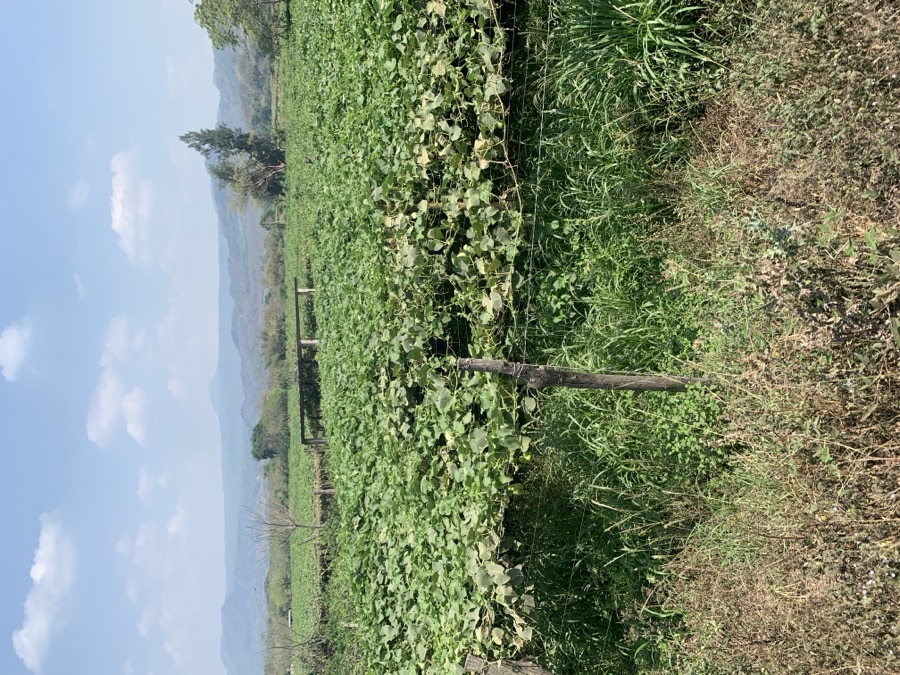
What does a chayote planting look like?
What does chayote planting material look like?
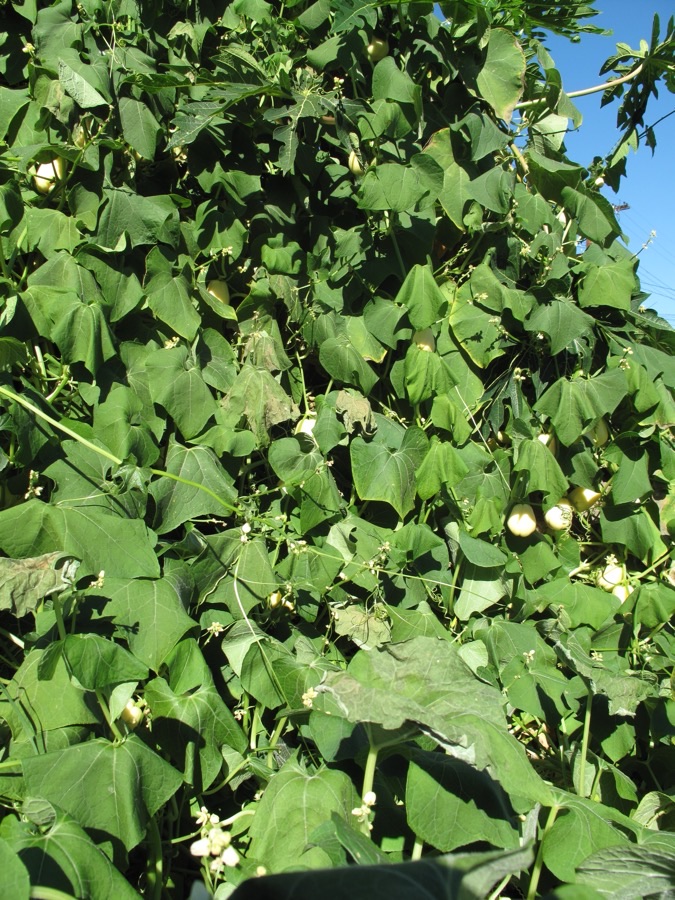
When is a fruit on the vine ready to pick?
Honest Limits of This Guide
Timings here are given by season and by the state of the plant rather than in named months, because chayote is grown from Mexico to Réunion to North East India in both hemispheres. Count from your own warm season or the start of your own rains.
Yield figures are very wide ranges, because this crop is grown both as a single vine over a doorway and as hectares of overhead frames. Use them to check whether your own result is roughly normal, not as a target.
This guide describes overhead frames because that is how the crop is grown commercially, but many growers use a wall, a fence or a tree instead and get good crops. The guide does not pretend one is the only way.
The swollen roots and the young shoots are mentioned as real foods and real products, but this guide does not go into detail on growing specifically for either. Both are usually taken from a plant grown for fruit.
This guide names no chemical treatments. The fruit and the shoots are both eaten, often with the skin on, and the answers that matter most here are drainage, airflow, picking up fallen fruit and clean planting material.
Sources
GBIF Backbone Taxonomy species-match record for Sechium edule (Jacq.) Sw. — Global Biodiversity Information Facility (GBIF), Copenhagen (source)
EPPO Global Database — Sechium edule (EPPO code SEHED) — European and Mediterranean Plant Protection Organization (EPPO), Paris (source)
FAO work on tropical and subtropical vegetables and post-harvest handling, with FAOSTAT production data — Food and Agriculture Organization of the United Nations (FAO), Rome (source)
Laisha knows Chayote better than this page can show.Photo diagnosis for pests and disease, live market prices, and an agronomist you can ask at two in the morning. Ten days free, no card. After that 10 US dollars a month, one price worldwide.Start ten free days
 Laisha
AI Operating System for Agriculture
Enter Laisha