 Laisha
AI Operating System for Agriculture
Enter Laisha
Laisha
AI Operating System for Agriculture
Enter Laisha
Prunus avium · Also called: Sweet cherry, Wild cherry, Gean, Mazzard, Cereza, Cerise, Ciliegia, Kirsche
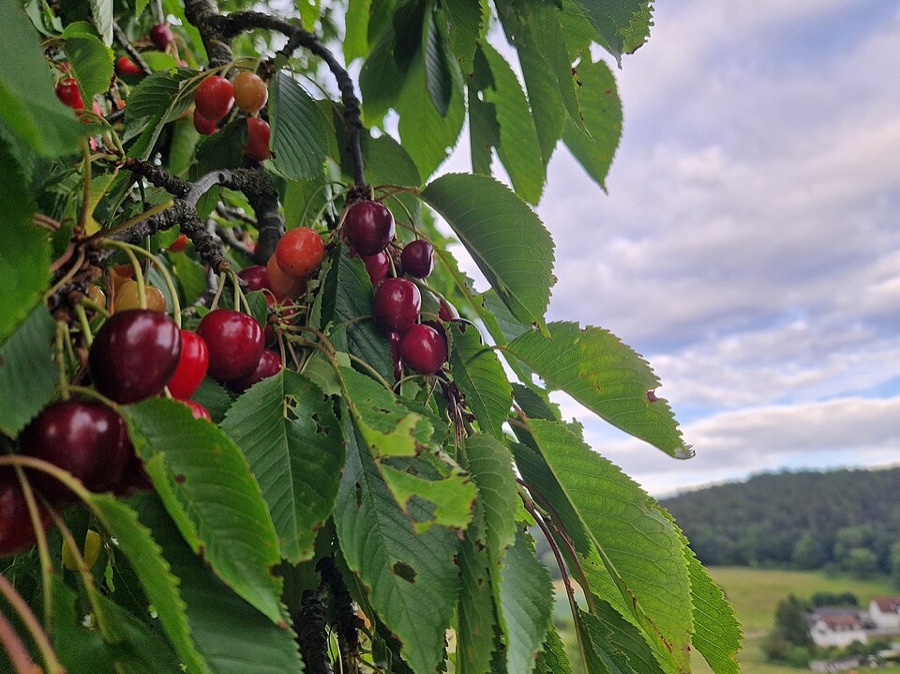
Photo: Gerda Arendt, CC0 (Wikimedia Commons)
Cherry is the highest-value fruit in this library per kilogram, and it ripens early, before most other summer fruit reaches the market. On hill land in Turkey, Central Asia, the Himalayan valleys and southern Europe a few well-grown trees can be worth more than a field of grain. The catch is that everything about this crop happens in a fortnight and can be destroyed in an afternoon. Ripe cherries take up water through their skins, so rain in the last week before harvest splits them and a whole crop becomes unsellable within a day. Birds take another share. And once picked, the fruit lasts days. It is a crop that rewards attention concentrated into a very short window rather than steady work across a season.
If you see: Ripe or nearly ripe cherries with splits in the skin, usually around the stalk end or in a ring, appearing within a day of heavy rain, and rotting shortly afterwards.
It likely means: The fruit absorbed water through its skin faster than the skin could stretch, and split. This is the defining problem of growing cherries and it happens in hours.
Do this: Pick immediately if rain is forecast and the fruit is close to ready, because slightly early fruit is worth a great deal more than split fruit.
If you see: Fruit disappearing rapidly as it colours, with pecked and half-eaten cherries left hanging and stones still attached to the stalks.
It likely means: Birds. They find cherries at the first blush of colour, days before you would pick, and a flock can strip a tree in a morning.
Do this: Net the trees before any fruit colours rather than after you notice losses, because by then the birds have learned where the tree is.
If you see: Sunken dark patches on branches or the trunk with amber gum oozing from them, leaves with small holes as if shot through, and whole branches dying back in spring.
It likely means: Bacterial canker. It enters through wounds, particularly pruning cuts made in cold wet weather, and through leaf scars in autumn.
Do this: Cut affected branches well back into clean healthy wood during dry warm weather, and take the wood out of the orchard.
If you see: A healthy tree that flowers heavily every spring and then drops its flowers and tiny fruitlets, leaving nothing on the branches by early summer.
It likely means: Usually no compatible pollen, because many sweet cherries will not set fruit from their own flowers. Frost during flowering and cold wet weather keeping bees away do the same.
Do this: Find out whether your kind sets fruit from its own flowers, because a lone tree of a self-incompatible kind is the commonest cause.
If you see: Ripe cherries with a small brown spot and a soft sunken area beside the stalk, and a small white legless maggot inside the flesh when the fruit is opened.
It likely means: A fruit fly that lays its eggs into the cherry as it begins to colour, with the maggot feeding inside where nothing applied outside can reach it.
Do this: Pick up and destroy all fallen and infested fruit rather than leaving it under the tree, because that is where the next generation comes from.
If you see: Fruit arriving at market with shrivelled brown stalks, or with no stalk at all and a torn wet scar where it was attached.
It likely means: The fruit was pulled rather than lifted by the stalk, or it was picked too warm and left in the sun, and the stalk dried out.
Do this: Pick by taking the stalk between finger and thumb and lifting, never by pulling the fruit itself.
If you see: A tall tree carrying most of its fruit high up out of reach, impossible to net, and picked only by ladder or not at all.
It likely means: Either a vigorous root was planted where a dwarfing one was needed, or upward growth was never cut back each year.
Do this: Cut back upward growth every year from now on, accepting that recovering a tall tree takes several seasons.
Growing the crop is only part of the job. The last part is knowing what a normal harvest looks like where you are, and knowing what your fruit is worth before you agree a price with anybody.
If you forget every other page of this guide, keep these lines. They are the whole crop, in order, short enough to carry in your head.
These cherries are ripe and wet from rain. What am I looking at, and what should I do?
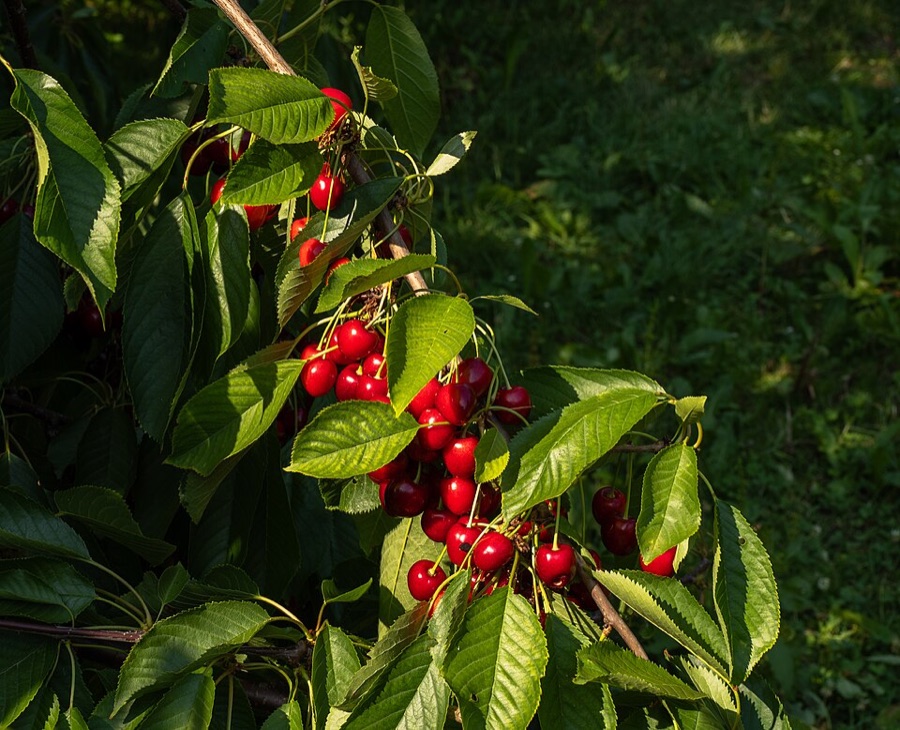
Where exactly on the branch is this crop hanging from, and what does that tell me about pruning?
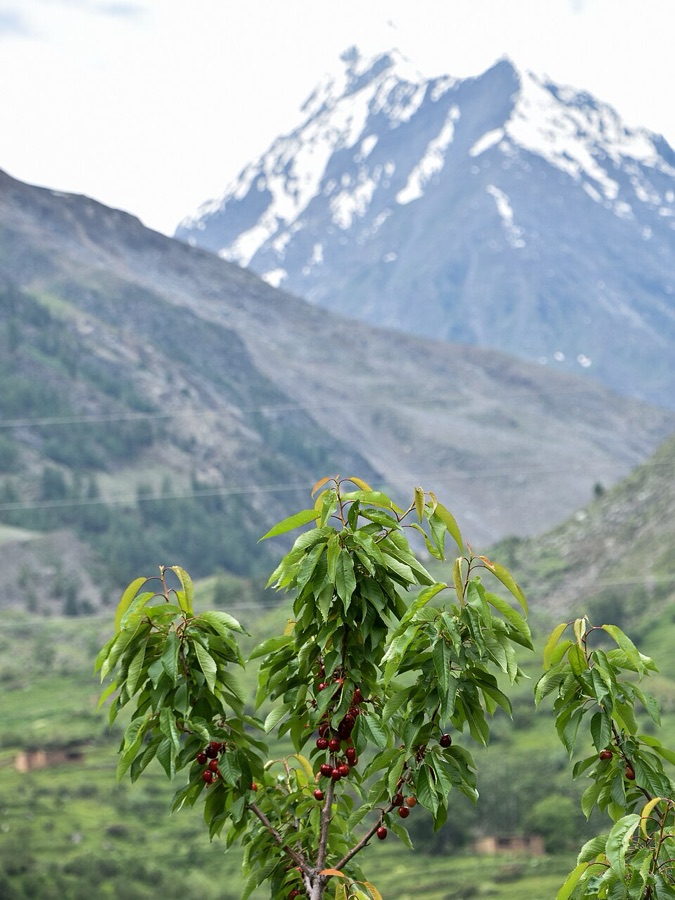
What is this young upright tree carrying dark ripe fruit, growing in a high mountain valley?