Cumin is a short, cheap, high-value crop that grows where very little else will: the dry margins of the desert, on light soils, through a cool rainless winter. India grows something like two thirds or more of the world's cumin, almost all of it in Gujarat and Rajasthan, with Syria, Türkiye, Iran, Afghanistan, China, Egypt, Mexico and Chile also producing. The whole crop takes about a hundred days. It is also one of the most weather-dependent crops in this library, because a single spell of cloudy humid weather at the wrong moment can destroy it.
Growing Cumin, Stage by Stage
1. Get the land ready — Light well-drained soil, worked to a fine seedbed, on land that has been off this family for years.
2. Choose your seed and planting material — Buy fresh clean seed of a named kind, and ask about wilt and blight above everything else.
3. Sow the seed — Sow shallow into a fine moist bed at the start of the cool dry season.
4. Water — A few light waterings, never heavy, and none once the seed is filling.
5. Weeds and feeding — Weed carefully by hand, feed lightly, and keep the crop open so air moves through it.
6. Flowering and seed set — Small white or pink umbels open in the driest weeks, and the weather now decides the crop.
7. Watch for trouble — Blight takes the season and wilt takes the field. Both are decided by weather and rotation more than by anything else.
8. Harvest — Pull the whole plants when the seed has turned brown, in the cool of the morning.
9. Thresh, store and sell — Thresh on a clean surface, keep it out of the sun, and store sealed, because the price is colour and smell.
Common Problems & Troubleshooting
If you see: Growing tips and flower heads browning and then blackening, spreading down the plant, with the field going brown within days after cloudy humid weather.
It likely means: Blight, the disease that takes cumin crops. It follows cloud, humidity and dew, and it moves extremely fast.
Do this: Watch the weather through flowering, not only the plants, since the forecast is the early warning.
If you see: Plants yellowing and wilting in patches that grow larger each week, easily pulled up, with browning inside the stem when it is cut open.
It likely means: A soil-borne wilt. It lives in the soil for years, has no cure, and is made far worse by growing cumin repeatedly in the same ground.
Do this: Never sow cumin after cumin, coriander or fennel, and leave three or four years between them.
If you see: A thin patchy stand with bare areas, or seedlings that seem to have come up and then stopped under a hard surface.
It likely means: Sown too deep, or a crust formed over the bed, or the seedbed was too rough for such a small seed.
Do this: Work the ground to a genuinely fine level bed before sowing.
If you see: A buyer deducting for soil and grit in seed that looks reasonably clean to you.
It likely means: It was threshed or dried on bare ground. Cumin is graded closely by eye and small amounts of grit are visible in it.
Do this: Thresh and dry on mats, cloth or a clean hard floor, never on bare soil.
If you see: Stored seed that has gone pale and dull and smells faint when crushed.
It likely means: It was dried in full sun, or stored warm and in the light. Colour and smell are exactly what the spice trade pays for.
Do this: Finish drying in the shade with moving air rather than in full sun.
If you see: A soft leafy crop flattened on the ground before the seed has filled, slow to ripen, and browning underneath.
It likely means: Too much nitrogen or too much water, giving soft growth the stems cannot hold and trapping damp air at ground level.
Do this: Do not apply heavy nitrogen to this crop.
Yield & Market Value
Growing the crop is only part of the job. The last part is knowing what a normal harvest looks like where you are, and knowing what your seed is worth before you agree a price with anybody.
Remember It This Way
If you forget every other page of this guide, keep these lines. They are the whole crop, in order, short enough to carry in your head.
A dry sunny cool season, or do not grow it at all.
Never cumin after cumin. The wilt stays in the soil.
Fine level seedbed. The seed is tiny and sown shallow.
Break the crust before the seedlings have to.
Few waterings, all light, none once the seed fills.
No heavy nitrogen. Soft growth blights and falls over.
Watch the forecast at flowering, not just the plants.
Cloud and damp at flowering is the whole danger.
Pull the plants in the cool morning or the seed shatters.
Thresh on a mat, finish in shade, store sealed and dark.
Test Yourself: Identification
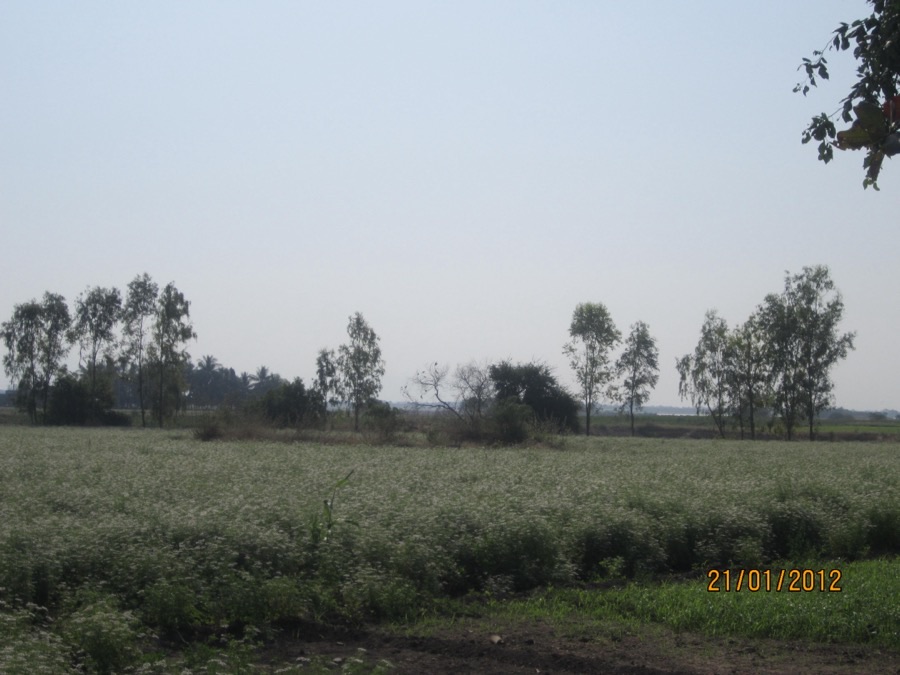
What does a cumin field look like when the crop is in flower?
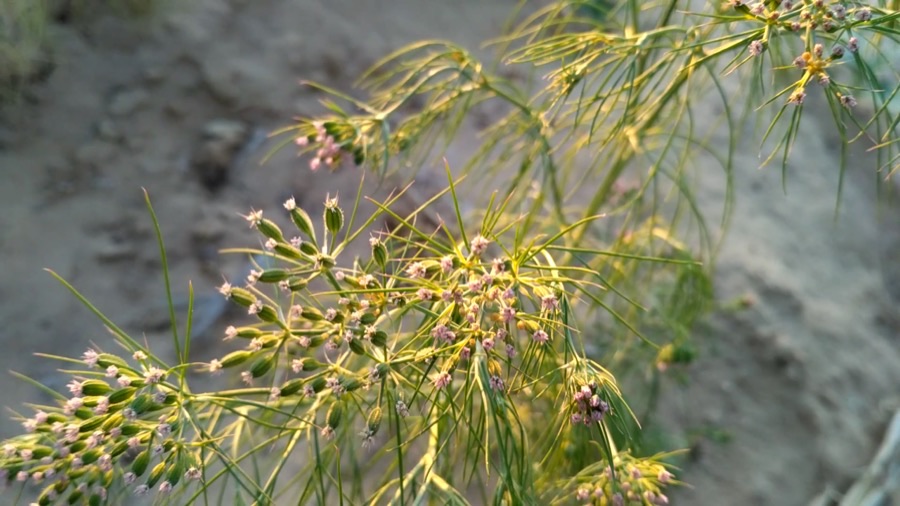
What does a single plant look like close up?
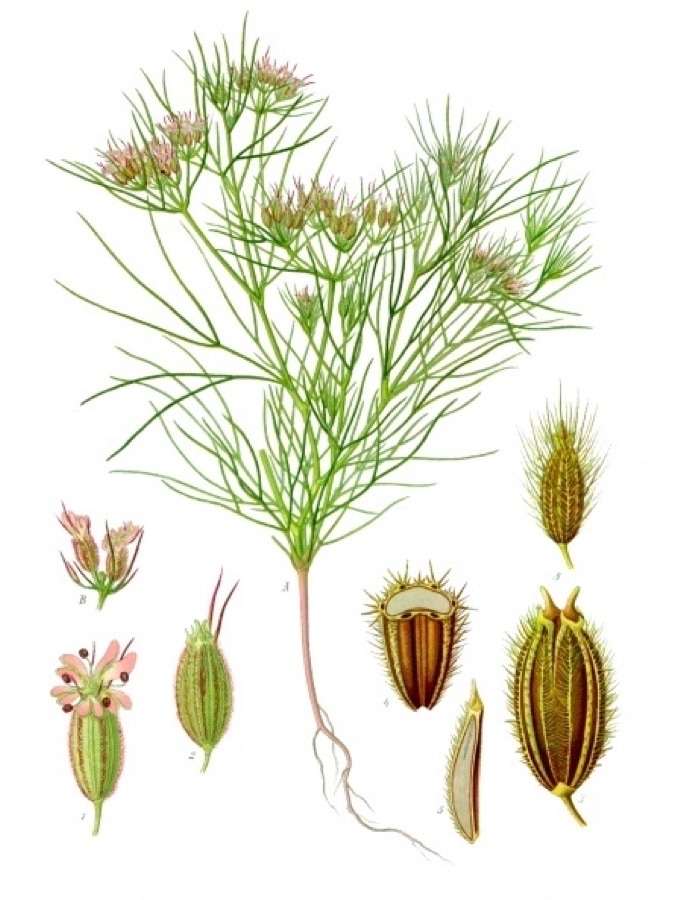
How do the flower, the fruit and the seed actually fit together?
Honest Limits of This Guide
Cumin needs a rainless, sunny, cool season and this guide is blunt that where winters are humid or cloudy it is a gamble rather than a crop. That is a limit of the plant, not of the farming.
Timings are given in days from sowing and by the cool dry season rather than in named months, because the crop is grown across a wide band of the subtropics. Count from your own sowing date.
Blight is fought on the forecast rather than on the symptoms, and what is registered for it differs sharply between countries. This guide deliberately names no product and says to ask a licensed dealer in advance rather than after the damage, because by then it is too late.
Yields swing more with weather at flowering than with anything a grower does, so any average figure is misleading. Treat the ranges here as a rough idea of scale only.
One of the four photographs is a nineteenth-century botanical plate rather than a field photograph. It is used because it shows the flower, the fruit and the fruit in cross-section more clearly than any photograph available, and it is labelled as an illustration rather than passed off as a photograph.
In Ayurveda
This plant is also a dravya of Ayurveda. Jeeraka in Dravyaguna: its botanical identity, rasa, virya and karma, the part used, the dose the texts give, and its safety record.
Sources
GBIF Backbone Taxonomy species-match record for Cuminum cyminum L. — Global Biodiversity Information Facility (GBIF), Copenhagen (source)
EPPO Global Database — Cuminum cyminum (EPPO code CVUCY) — European and Mediterranean Plant Protection Organization (EPPO), Paris (source)
FAOSTAT crops and livestock products — production data for spices including cumin — Food and Agriculture Organization of the United Nations (FAO), Rome (source)
Laisha knows Cumin better than this page can show.Photo diagnosis for pests and disease, live market prices, and an agronomist you can ask at two in the morning. Ten days free, no card. After that 10 US dollars a month, one price worldwide.Start ten free days
 Laisha
AI Operating System for Agriculture
Enter Laisha