Durio zibethinus · Also called: Durio, Duren, Thurian, Sau rieng, Civet fruit, King of fruits, Durian kampung, Doerian
Photo: Samuel Lee, CC BY 4.0 (Wikimedia Commons)
Durian is the highest-value tree fruit in Southeast Asia and one of the highest anywhere. Thailand, Malaysia, Indonesia, Vietnam and the Philippines grow almost all of it, and the export trade to China has made good orchards genuinely valuable land. It is also a demanding tree: it wants an equatorial climate with rain through the year, it takes four to six years to bear even when grafted, and it is very easily killed by a root disease that follows wet soil. Two things about it are unlike anything else in this library. Its flowers open at night and are pollinated by bats, so the wildlife around the orchard is part of the farming. And the ripe fruit falls, weighing two or three kilograms and covered in hard spines, which makes standing under a bearing tree genuinely dangerous.
Growing Durian, Stage by Stage
1. Get the land ready — Deep, sloping, well-drained ground. Drainage is a matter of life and death here.
2. Plant grafted trees as your planting material — Two varieties at least, and never a seedling.
3. Weed, water and feed — Keep it fed and watered, and keep the trunk dry.
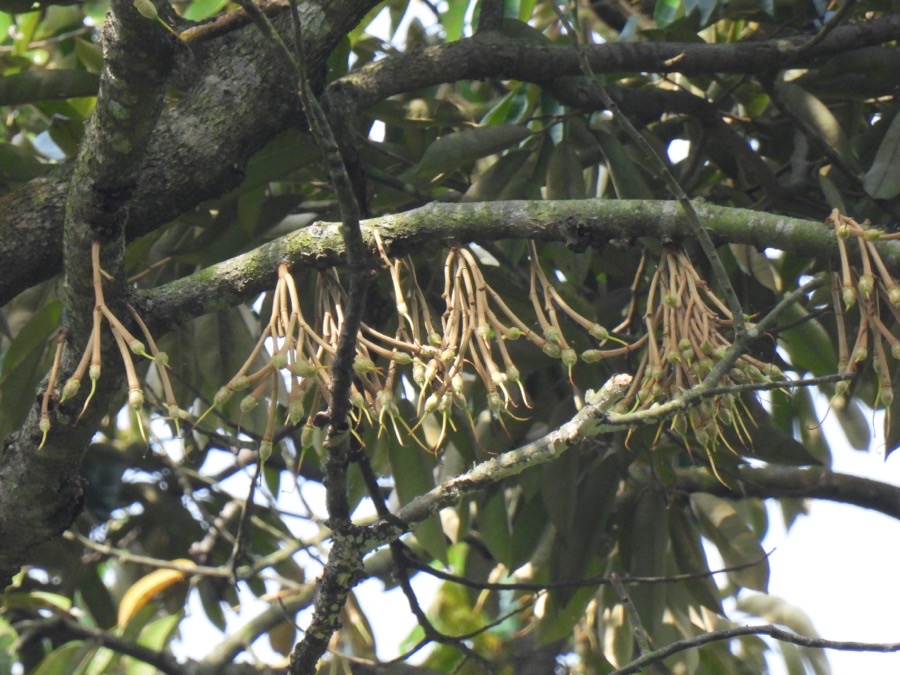
4. Shape the tree and look after the flowering — Flowers come on the old wood, at night, and the bats do the work.
5. Watch for trouble — One disease kills more durians than everything else together.
6. Harvest: let it fall, or cut at the right moment — The two methods, and why standing under the tree is dangerous.
7. Keep it and sell it quickly — A few days at most. This fruit is a race.
Common Problems & Troubleshooting
If you see: Dark wet patches weeping gum low on the trunk, and part of the canopy yellowing and thinning.
It likely means: The root and stem disease that follows wet soil. It kills more durian trees than everything else put together.
Do this: Improve drainage at once and cut channels so water cannot stand anywhere near the trunk.
If you see: A mature tree that flowers heavily and sets very little fruit.
It likely means: Either there is no second variety to supply pollen, or the bats that carry it are not reaching the flowers.
Do this: Plant at least two different varieties, spread through the orchard rather than in separate blocks.
If you see: Fruit that never softens properly and whose flesh stays firm, pale and without flavour.
It likely means: It was cut before it was mature. A durian cut early does not develop its flavour afterwards, however long it is kept.
Do this: Let the fruit fall and collect it each morning if you are selling locally, since that gives the best flavour.
If you see: Branches breaking under the weight of the crop.
It likely means: Too many heavy fruits on one branch, or a tree that was never trained to a strong frame.
Do this: Thin the young fruit so that each branch carries only what it can hold.
If you see: Fruit that has split open on the ground or in the crate.
It likely means: It fell onto a hard surface, or it was fully ripe and left too long, or it was stacked under other fruit.
Do this: String nets or lay cushioning under the trees to catch falling fruit.
If you see: Holes in the fruit with droppings around them, and tunnels in the flesh when it is opened.
It likely means: Fruit borer. The grub works inside where nothing applied to the outside will reach it.
Do this: Collect and destroy all fallen and damaged fruit, since that is where the pest carries on.
Yield & Market Value
Growing the crop is only part of the job. The last part is knowing what a normal harvest looks like where you are, and knowing what your durian is worth before you agree a price with anybody.
Remember It This Way
If you forget every other page of this guide, keep these lines. They are the whole crop, in order, short enough to carry in your head.
A ripe durian falls without warning. Keep people from under it.
Bats pollinate it, at night. Do not drive them off.
Never spray in the evening while it is flowering.
Plant two varieties at least, mixed through the block.
Plant high on a mound. Wet soil kills durian trees.
Never let soil or mulch touch the trunk.
Flowers come on the old wood. Do not cut it away.
Thin the fruit or the branch will break.
Cut early and it never develops flavour. Let it fall if you can.
Three to five days whole. Have the buyer waiting.
Test Yourself: Identification
What do the flowers look like, and when do they open?
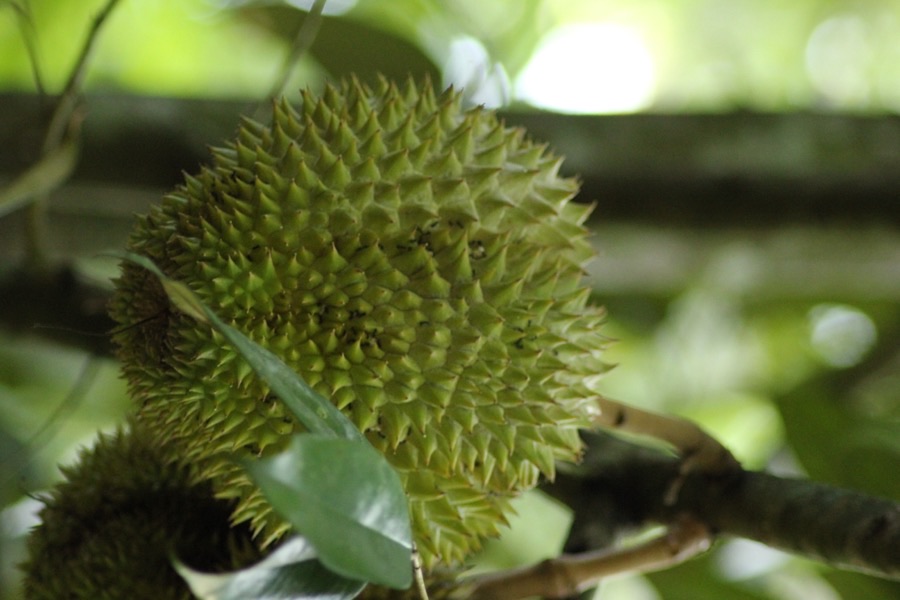
What does the developing fruit look like?
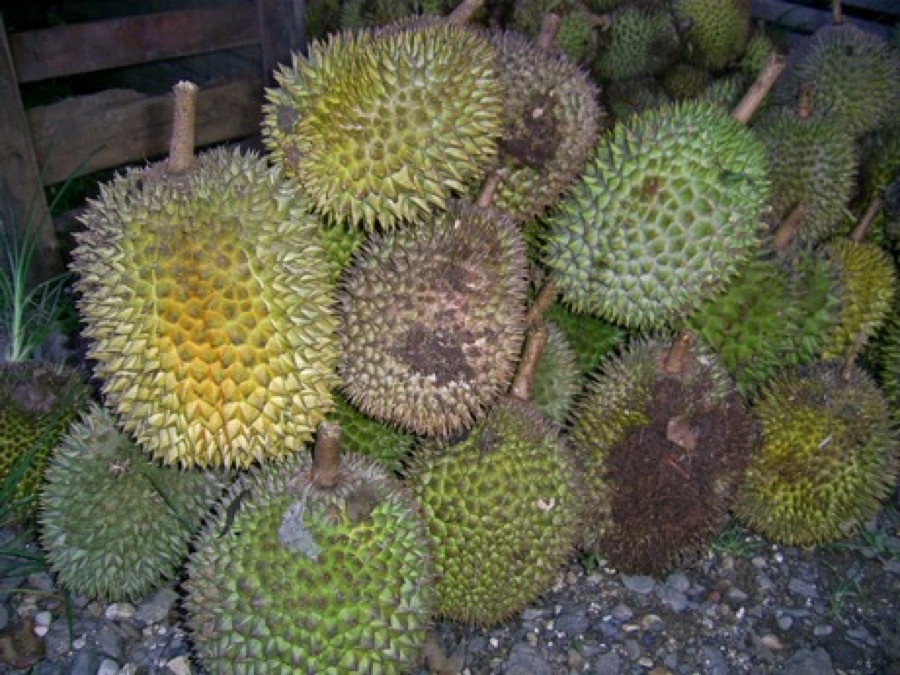
What does the harvested crop look like?
Honest Limits of This Guide
The danger from falling fruit is stated plainly because it is real. A ripe durian weighs two or three kilograms, is covered in hard spines and falls without warning from a tall tree. Anyone working in or near a bearing orchard should know it.
Timings here are given by season and by the state of the tree rather than in named months, because durian is grown near the equator with local flowering seasons that differ between districts.
Variety advice is deliberately local and no varieties are named here. The price difference between named varieties is the largest single number in this crop, and which ones sell well is entirely a matter of your own market.
The root and stem disease is described by what it looks like rather than by treatment, because control depends on drainage above all and because chemical management differs by country and is a matter for a local extension officer.
The trade-off between letting fruit fall and cutting it at judged maturity is given as a real choice rather than a rule. Traditional practice favours fallen fruit for flavour; export trade requires cut fruit. Both are legitimate and they suit different buyers.
The photographs show fruit, flowers and a market lot rather than an orchard with nets in place, because usable pictures of durian orchard operations are not available under a licence this library can use.
No chemical treatments are named here. The fruit is eaten fresh, the crop depends entirely on bats visiting at night, and what is permitted differs by country and by buyer.
Sources
GBIF Backbone Taxonomy species-match record for Durio zibethinus Murray — Global Biodiversity Information Facility (GBIF), Copenhagen (source)
EPPO Global Database — Durio zibethinus (EPPO code DURZI) — European and Mediterranean Plant Protection Organization (EPPO), Paris (source)
FAO guidance on establishing and managing tropical fruit orchards — Food and Agriculture Organization of the United Nations (FAO), Rome (source)
FAO guidance on post-harvest handling of tropical fruit — Food and Agriculture Organization of the United Nations (FAO), Rome (source)
Laisha knows Durian better than this page can show.Photo diagnosis for pests and disease, live market prices, and an agronomist you can ask at two in the morning. Ten days free, no card. After that 10 US dollars a month, one price worldwide.Start ten free days
 Laisha
AI Operating System for Agriculture
Enter Laisha