 Laisha
AI Operating System for Agriculture
Enter Laisha
Laisha
AI Operating System for Agriculture
Enter Laisha
Solanum melongena · Also called: Aubergine, Brinjal, Baingan, Begun, Kathiri, Vangi, Melongene, Garden egg
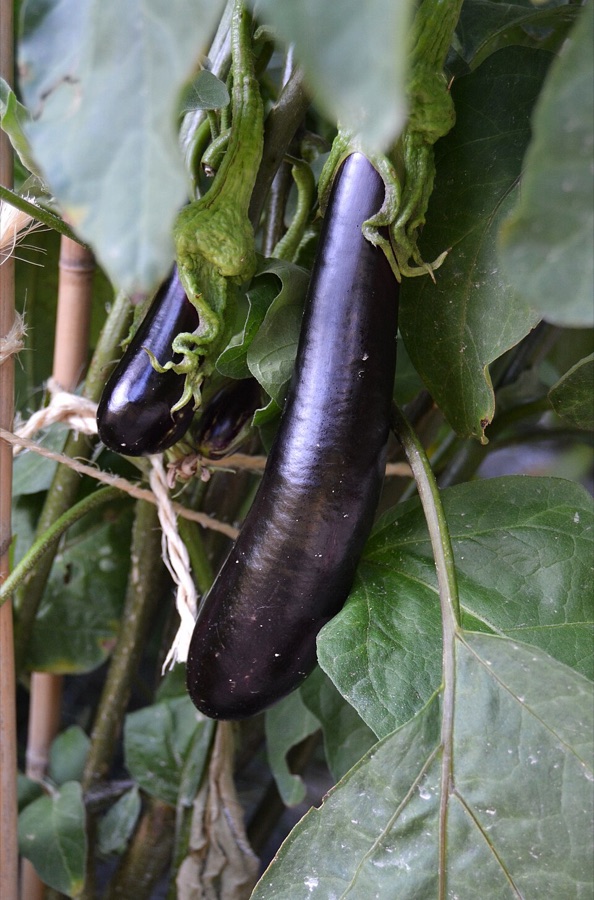
Photo: Joanbanjo, CC BY-SA 4.0 (Wikimedia Commons)
Eggplant is one of the most productive vegetables a small plot can carry. One planting keeps bearing for months rather than giving a single harvest, so a few rows feed a household and sell a basket every few days through a long season. China and India grow most of the world's crop, and it is a staple vegetable across South and South East Asia, the Middle East, the Mediterranean and much of Africa. It also tolerates heat and some drought better than tomato does, which makes it the reliable crop in seasons when tomato fails. Its weakness is a single insect. In much of Asia a caterpillar that bores into the shoots and then into the fruit is the reason eggplant is among the most heavily sprayed vegetables grown, and learning to manage it without reaching for a spray every week is the most valuable thing in this guide.
If you see: Growing shoot tips wilting and drooping over while the rest of the plant looks healthy, and small holes in the fruit near the green cap, sometimes plugged with dark droppings.
It likely means: A caterpillar that bores into the soft shoot first and later into the fruit. It is inside the plant, which is why the damage appears before you ever see the insect.
Do this: Cut off every wilted shoot tip below the damage and carry it right out of the field. Dropping it between the rows lets the caterpillar walk back.
If you see: A healthy-looking plant that wilts completely within a day or two and never recovers overnight, with the leaves still green rather than yellow, and a cut stem base that oozes a milky thread when held in clear water.
It likely means: A bacterial disease living in the soil that blocks the plant's water channels. There is no cure, it survives in the ground for years and it builds up under any nightshade crop.
Do this: Pull out and remove affected plants including their roots, and do not compost them on ground you intend to plant again.
If you see: Plants that have become small-leaved, pale, upright and unusually bushy with many thin shoots, producing distorted flowers or none at all, and no fruit whatever the season.
It likely means: A disease spread by small sap-sucking insects that makes the plant grow shoots instead of fruit. There is no spray that cures a plant showing it.
Do this: Pull out and remove affected plants as soon as you are confident, because they are the source from which the insects carry it to the rest.
If you see: Plenty of purple flowers opening and then dropping off with their stalks a day or two later, leaving no small fruit behind, on large healthy dark green bushes.
It likely means: Either the weather is too hot or too cold for fruit to set, or the plant has been given too much nitrogen and is making leaf instead of fruit.
Do this: Look at the feeding first. Heavy nitrogen alone reliably produces this, and the cure is to stop rather than to add something else.
If you see: Fruit that has lost its shine and gone dull or yellowish-brown, feels light for its size, and is full of hard brown seed and bitter when cut open.
It likely means: The fruit was left on the plant too long. Eggplant is picked while immature, and the eating stage is well before the fruit is botanically ripe.
Do this: Pick every two or three days rather than once a week, because fruit goes from perfect to past it in a few days in warm weather.
If you see: Leaves curling downwards, going bronze or speckled and dropping early, with fine webbing under the leaves or clouds of tiny white insects rising when you shake a plant.
It likely means: Sap-sucking pests such as mites, whitefly or aphids. They multiply fastest in hot dry conditions and on plants pushed hard with nitrogen.
Do this: Look under the leaves rather than on top, because that is where all of these live and where you will see them first.
If you see: Seedlings in the nursery bed toppling over with a thin, dark, pinched patch on the stem right at soil level, spreading outwards in a patch from where it started.
It likely means: Damping off, a fungus that attacks seedlings at soil level. It thrives where seed is sown thickly, the bed is kept too wet, and air does not move.
Do this: Sow more thinly next time and raise the nursery bed so water drains away from it.
Growing the crop is only part of the job. The last part is knowing what a normal harvest looks like where you are, and knowing what your fruit is worth before you agree a price with anybody.
If you forget every other page of this guide, keep these lines. They are the whole crop, in order, short enough to carry in your head.
How do I know when this glossy dark purple fruit hanging under a spiny green cap is ready to pick?
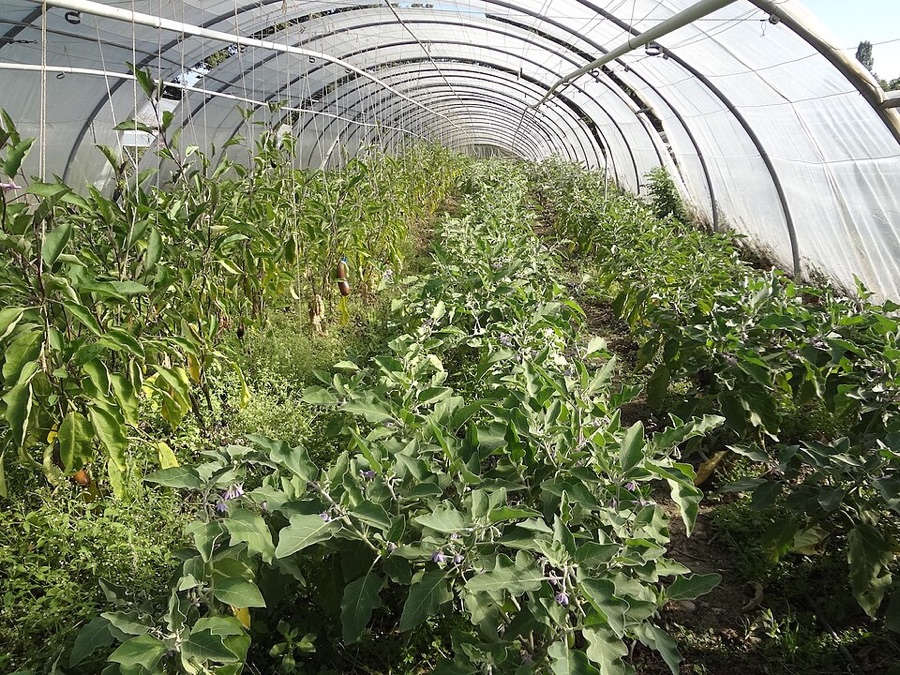
What is this crop of spreading grey-green bushes with large lobed leaves and small purple flowers, grown in widely spaced rows?
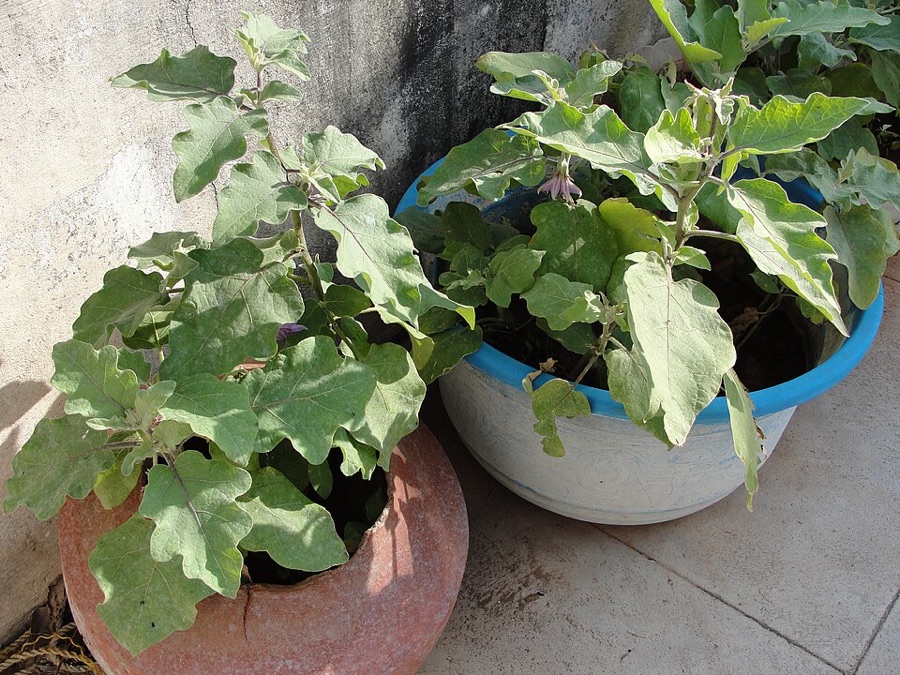
What are these big soft lobed grey-green leaves and small purple star-shaped flowers on a knee-high branching plant?