Photo: Yercaud-elango, CC BY-SA 4.0 (Wikimedia Commons)
Feijoa is a fruit with one rule that decides everything about growing it: it is not picked, it falls. A feijoa that is ready drops off the tree, and a feijoa taken off the tree by hand will never taste like one that fell. So the harvest is not a day of picking but weeks of walking under the trees gathering what is on the ground, ideally every day. That single fact rules out a lot of farms and suits others very well. New Zealand built the commercial trade, and Colombia, Azerbaijan, Georgia, Iran, Italy, Australia and the United States all grow it. The bush is hardy, wind-proof, evergreen and handsome enough to serve as a shelterbelt or a hedge, and its flowers have sweet fleshy petals that people eat and that birds pollinate the tree while eating.
Growing Feijoa, Stage by Stage
1. Get the land ready — Well drained, sunny, and somewhere with a real winter.
2. Plant two named varieties, from cuttings rather than seed — One variety on its own is a disappointment.
3. Weed, water and feed lightly — Steady water while the fruit fills, and not much else.
4. Prune low, and understand the flowers — Keep it a bush you can see the ground under.
5. Watch for trouble — Few diseases. The losses are on the ground.
6. Harvest by gathering what has fallen — Every day, for weeks. This is the crop.
7. Keep it cool and sell it quickly — It arrives ripe and the clock is already running.
Common Problems & Troubleshooting
If you see: Healthy mature bushes that flower well and set almost no fruit.
It likely means: Usually only one variety planted, or too warm a winter, or the birds that pollinate it being kept away.
Do this: Plant at least two different named varieties that flower at the same time, mixed through the block.
If you see: Fruit that looks fine, softens in the house, and tastes flat and grassy.
It likely means: It was picked off the tree rather than gathered off the ground. A feijoa taken early softens but never develops its flavour.
Do this: Gather only what has fallen, and never pull fruit off the tree.
If you see: Fruit found on the ground already brown, split, stung or half eaten.
It likely means: It lay there too long. A fallen feijoa is fully ripe and on the clock from the moment it lands.
Do this: Gather every day through the fall, without missing a day.
If you see: A heavy crop of small fruit that falls early.
It likely means: Usually water shortage while the fruit was filling, sometimes a very heavy set with no thinning.
Do this: Water steadily through dry weather, especially while the fruit is filling.
If you see: Gathered fruit going brown inside within days.
It likely means: It was bruised, or it was held warm. A ripe feijoa marks at every knock and has no shelf life to spare.
Do this: Handle each fruit gently and lay it in shallow trays rather than tipping it into crates.
If you see: Confusion with a nursery or a buyer over what this plant is called.
It likely means: It genuinely has two current scientific names and a common name that says guava when it is not one.
Do this: Give both names: Acca sellowiana and Feijoa sellowiana, which are the same plant.
Yield & Market Value
Growing the crop is only part of the job. The last part is knowing what a normal harvest looks like where you are, and knowing what your feijoas are worth before you agree a price with anybody.
Remember It This Way
If you forget every other page of this guide, keep these lines. They are the whole crop, in order, short enough to carry in your head.
Plant two different varieties, or you will get flowers and no fruit.
It needs a cool winter. It is not a tropical plant.
Buy cuttings or grafts. Seedlings are a lottery.
Let the birds work the flowers. They come for the petals.
Keep the skirt lifted and the ground beneath smooth.
Do not pick it. It falls when it is ready.
Fruit taken off the tree softens but never tastes right.
Walk under the trees every single day for four to six weeks.
Cool it the same morning. It is already ripe.
Sell it within days. There is nothing to gain by waiting.
Test Yourself: Identification
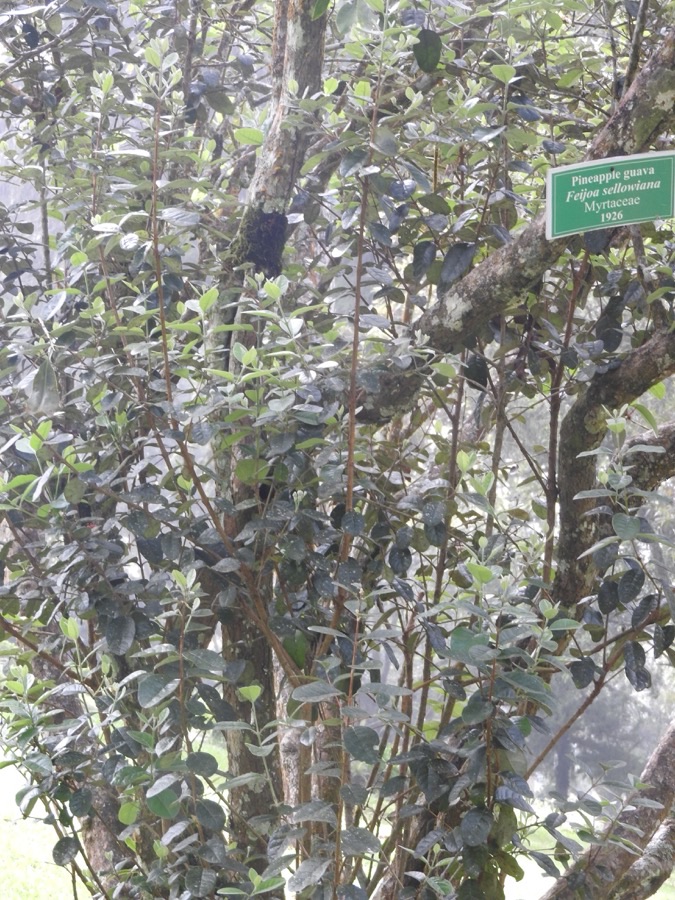
What does the plant look like?
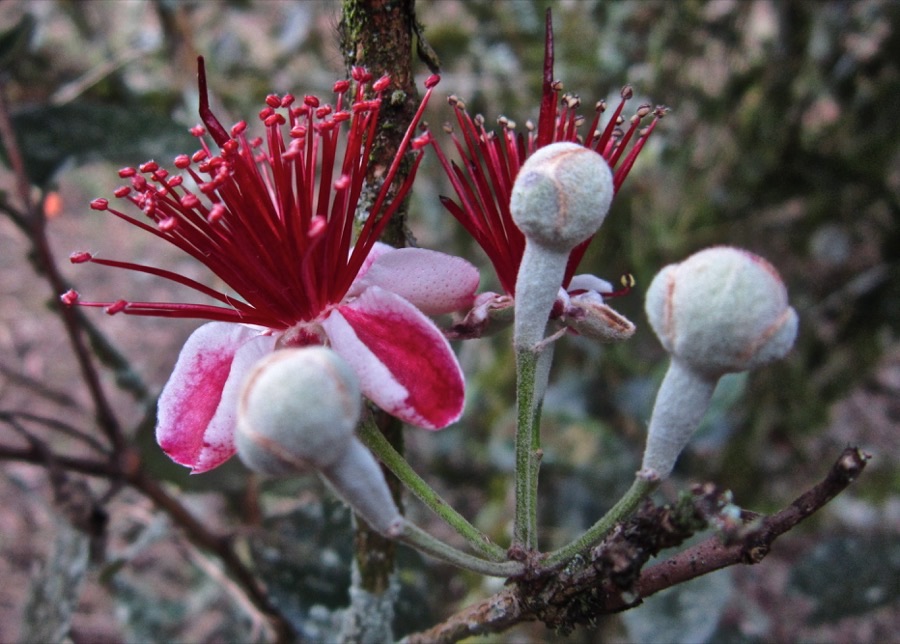
What do the flowers look like, and why does it matter?
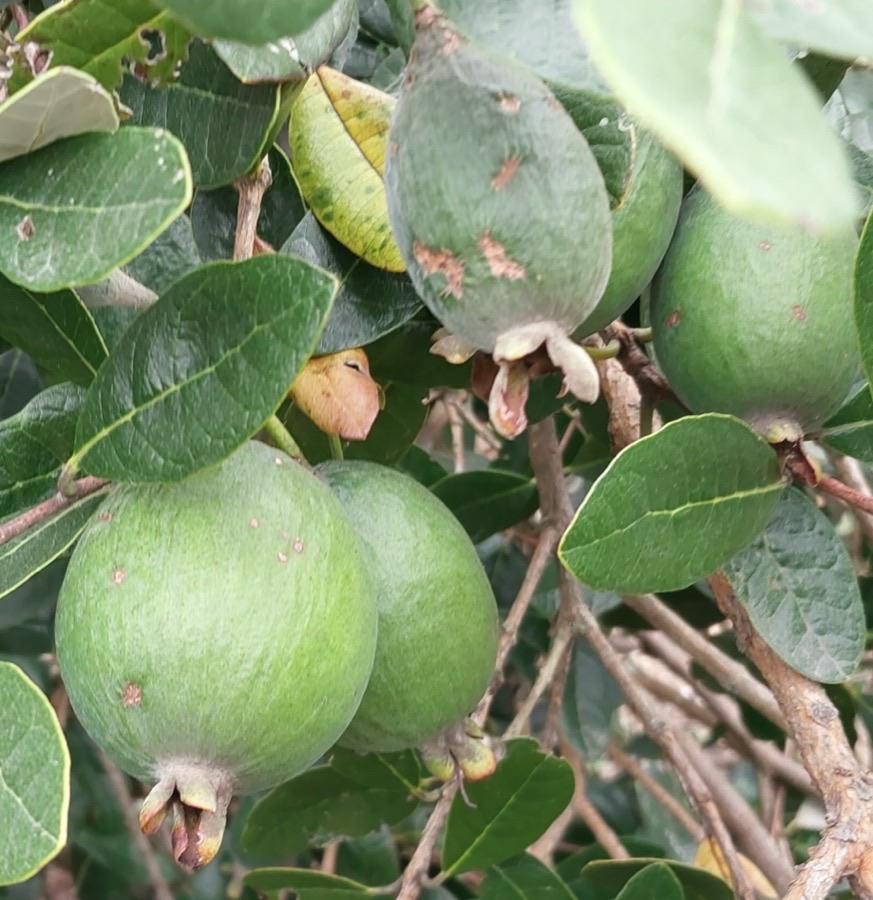
What does the fruit look like on the bush?
Honest Limits of This Guide
Timings here are given by season and by the state of the plant rather than in named months, because feijoa is grown in both hemispheres. Count from your own winter.
Two respected databases currently disagree about whether the accepted name is Acca sellowiana or Feijoa sellowiana. This guide uses the first and gives the second throughout, because both are in active use and neither is a mistake.
This plant needs a cool winter and is included because it is a good crop where that exists, not because it can be grown everywhere. It is not a tropical fruit despite being sold as one.
The labour of gathering fallen fruit daily for four to six weeks is the dominant cost of this crop and this guide cannot put a number on it, because it depends on your orchard and your wages. Walk a small planting through one season before committing more land.
There is no photograph here of fruit being gathered from the ground, or of an orchard floor kept for that purpose, because usable pictures of that work are not available under a licence this library can use.
No varieties are named here. Types differ a great deal in fruit size, flavour and in whether they need a partner, and which suits a district is a question for a local nursery — but plant more than one whatever they say.
No chemical treatments are named here. Both the fruit and the flower petals are eaten raw and birds work the flowers, and what is permitted differs by country and by buyer.
Sources
World Flora Online taxon record for Acca sellowiana (O.Berg) Burret (wfo-0000281732) — World Flora Online Consortium (source)
GBIF Backbone Taxonomy species-match records for Acca sellowiana and Feijoa sellowiana — Global Biodiversity Information Facility (GBIF), Copenhagen (source)
FAO guidance on establishing and managing subtropical fruit plantings — Food and Agriculture Organization of the United Nations (FAO), Rome (source)
FAO guidance on post-harvest handling of soft subtropical fruit — Food and Agriculture Organization of the United Nations (FAO), Rome (source)
Laisha knows Feijoa better than this page can show.Photo diagnosis for pests and disease, live market prices, and an agronomist you can ask at two in the morning. Ten days free, no card. After that 10 US dollars a month, one price worldwide.Start ten free days
 Laisha
AI Operating System for Agriculture
Enter Laisha