 Laisha
AI Operating System for Agriculture
Enter Laisha
Laisha
AI Operating System for Agriculture
Enter Laisha
Ficus carica · Also called: Anjeer, Anjir, Teen, Incir, Higo, Figue, Figo, Feige
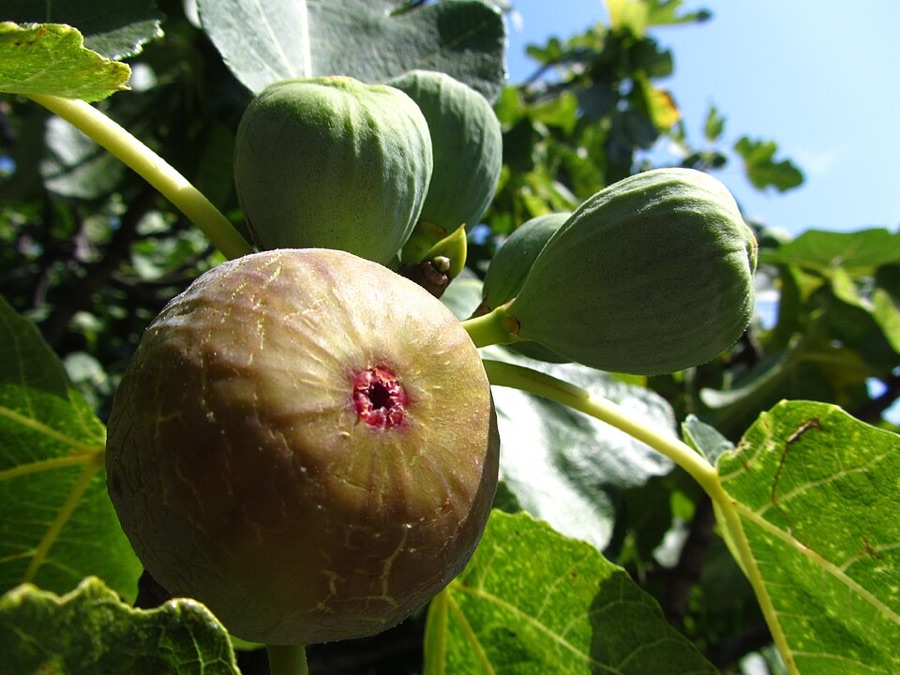
Photo: Stefan Thiesen, CC BY-SA 3.0 (Wikimedia Commons)
Fig asks less of a grower than almost any other fruit tree and gives more back than most. It grows from a cutting pushed into the ground, tolerates poor stony soil and real drought, needs no pollination in the kinds most people grow, and begins cropping within two or three years. Turkey produces far more than any other country, with Egypt, Morocco, Algeria and Iran following, and much of the world's crop is dried rather than eaten fresh. That drying is what makes it valuable to a smallholding far from a market, because a fresh fig lasts two days and a dried one lasts a year. The one thing it will not forgive is being picked early, because a fig taken before it is ready never ripens afterwards.
If you see: Figs that stayed hard and rubbery after picking, taste sour or bland, and leak sticky white sap from the stalk end when cut.
It likely means: They were picked before they were ripe. A fig does not ripen after it leaves the tree, so an early-picked fig stays exactly as it was.
Do this: Wait for three signs together: the fruit softens, the neck bends so it hangs down, and the skin shows fine cracks.
If you see: Small figs forming and then yellowing and dropping off in numbers before they ever swell, leaving the tree bare by midsummer.
It likely means: Either the kind needs a specific tiny wasp to set fruit and that insect is not present where you are, or the tree is badly short of water, or it is very young.
Do this: Find out what kind you have, because a type that needs a pollinating insect will drop every fruit in a district where the insect does not live.
If you see: Ripe figs split open at the eye or down the side, sometimes with a fermented smell, small flies around them, and a pinkish ooze at the opening.
It likely means: Rain or heavy watering at ripening, followed by organisms entering through the open eye. A ripe fig is open at the base, which is exactly how souring gets in.
Do this: Reduce or stop watering as the fruit begins to soften and colour, because uneven water is the main cause you control.
If you see: A large vigorous tree making long lush shoots and big leaves every year, with very few figs and those that form staying small.
It likely means: Too much water, too much nitrogen, or too much root room. Fig fruits best when it is slightly constrained rather than comfortable.
Do this: Stop feeding, particularly with nitrogen, and reduce watering to what the tree needs to survive rather than to grow.
If you see: No early figs at all in a year when neighbours have them, on a tree that was cut back hard during the resting season.
It likely means: The early crop was pruned off. Those small figs sit on wood that grew last year, so cutting that wood removes them before they ever start.
Do this: Look along last season's shoots in late winter before pruning, and you will see small figs already sitting there.
If you see: Ripening figs pecked open, or with small holes and maggots inside, and clouds of tiny flies around the tree as the fruit softens.
It likely means: Birds and small flies both find figs at exactly the moment they ripen, and the open eye of a ripe fig gives the flies a way in.
Do this: Pick daily during ripening, because fruit left hanging ripe is what feeds both of them.
If you see: A fig growing strongly near a building with lifted paving nearby, blocked or slow drains, and nearby crops or plants failing for no obvious reason.
It likely means: Fig roots run very wide and very shallow and go a long way looking for water. They lift what is above them and enter drains and take water from anything planted near.
Do this: Plant well away from drains, walls and paving in the first place, since moving an established fig is not realistic.
Growing the crop is only part of the job. The last part is knowing what a normal harvest looks like where you are, and knowing what your fruit is worth before you agree a price with anybody.
If you forget every other page of this guide, keep these lines. They are the whole crop, in order, short enough to carry in your head.
One of these figs is ready and two are not. How can I tell which?
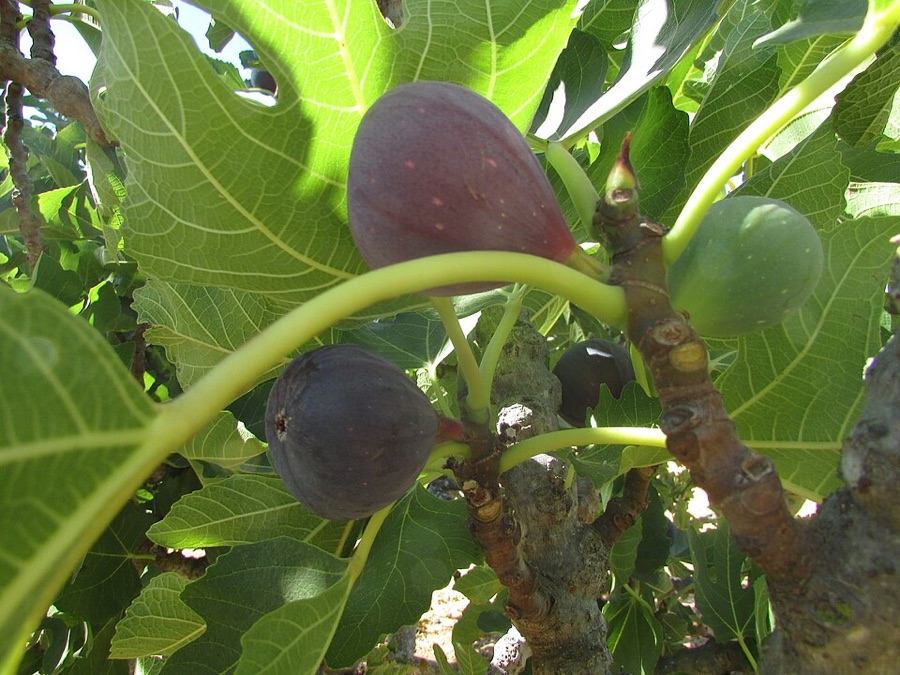
Where exactly on the plant do figs grow, and what does that tell me about pruning?
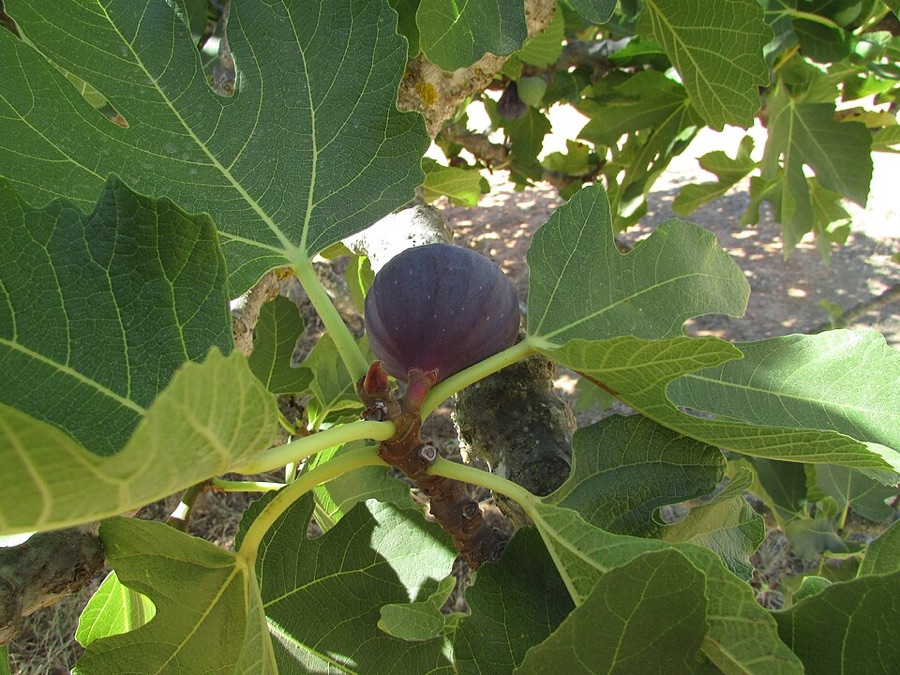
What is this plant with very large deeply lobed leaves and a single dark fruit tucked in where a leaf joins the stem?