 Laisha
AI Operating System for Agriculture
Enter Laisha
Laisha
AI Operating System for Agriculture
Enter Laisha
Eleusine coracana · Also called: Ragi, Nachni, Nachani, Mandua, Madua, Kodo (Nepal), Kodra, Kezhvaragu
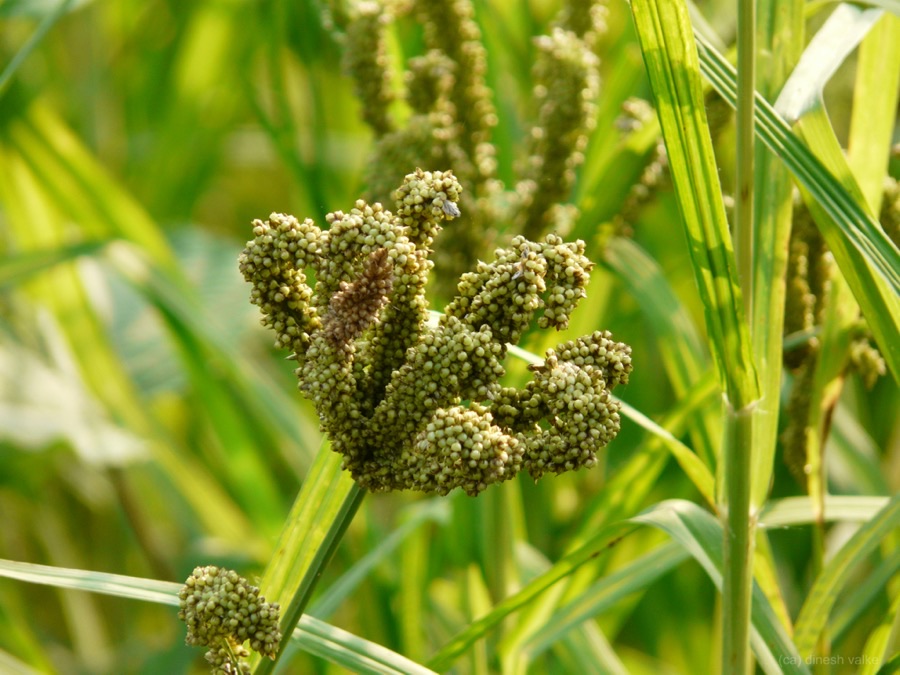
Photo: Dinesh Valke, CC BY-SA 2.0 (Wikimedia Commons)
Finger millet is a family's insurance. The grain keeps in a granary for five years and more without being eaten by insects, because each seed is tiny and hard-coated, which means a good year can be stored against a bad one in a way no other cereal on a smallholding allows. It also carries more calcium than any other common cereal, which matters enormously where children and nursing mothers eat mostly grain. It came from the highlands of Ethiopia and Uganda and reached India thousands of years ago, and today Karnataka, Tamil Nadu, Andhra Pradesh, Odisha and Uttarakhand grow it alongside Nepal, Uganda, Kenya, Tanzania, Ethiopia, Zimbabwe, Zambia and Malawi. It grows higher up the mountain than most cereals, it takes drought without dying, and the straw left afterwards is good fodder rather than rubbish.
If you see: A thin patchy crop after weeding, or a field that turns out to be mostly goosegrass at heading.
It likely means: The crop and the weed were confused. Finger millet seedlings and goosegrass seedlings look nearly identical for the first weeks, and broadcast sowing gives no way to tell them apart.
Do this: Sow in lines rather than broadcasting, so anything between the rows is a weed.
If you see: Very few seedlings coming up from a field that was sown properly.
It likely means: Usually the seed was sown too deep, or into a rough cloddy seedbed. Finger millet seed is about the size of a grain of sand and has almost no strength to push upward.
Do this: Harrow two or three times to break the clods to a fine tilth before sowing.
If you see: Heads standing white and empty on plants whose leaves are still green, with a dark shrivelled band just below the head.
It likely means: Neck blast. The disease attacks the neck of the stem below the head and cuts off the grain's food supply, so the head fills with nothing.
Do this: Use varieties recommended locally for blast resistance, since that is the main defence.
If you see: Grain scattered on the ground under the crop and lighter heads than expected.
It likely means: The heads were left standing too long, or the crop was handled roughly, or people walked through it after heading.
Do this: Go through the field two or three times taking ripe heads rather than waiting for all of them.
If you see: A crop flattened after wind or rain, with heads lying on the soil.
It likely means: Lodging, which means the crop has fallen over. Usually too much nitrogen, or very rich land, or a stand so thick that the stems grew thin and tall.
Do this: Split the nitrogen and do not overdo it, since this crop is built for modest land.
If you see: Stored grain that smells musty or has caked together, in a crop that is supposed to store for years.
It likely means: It went into store damp, or the store lets in moisture. Insects are not the problem with this grain, but damp still is.
Do this: Dry the grain in the sun until a fingernail cannot dent it.
Growing the crop is only part of the job. The last part is knowing what a normal harvest looks like where you are, and knowing what your finger millet is worth before you agree a price with anybody.
If you forget every other page of this guide, keep these lines. They are the whole crop, in order, short enough to carry in your head.
What does a finger millet crop look like when the heads are filling?
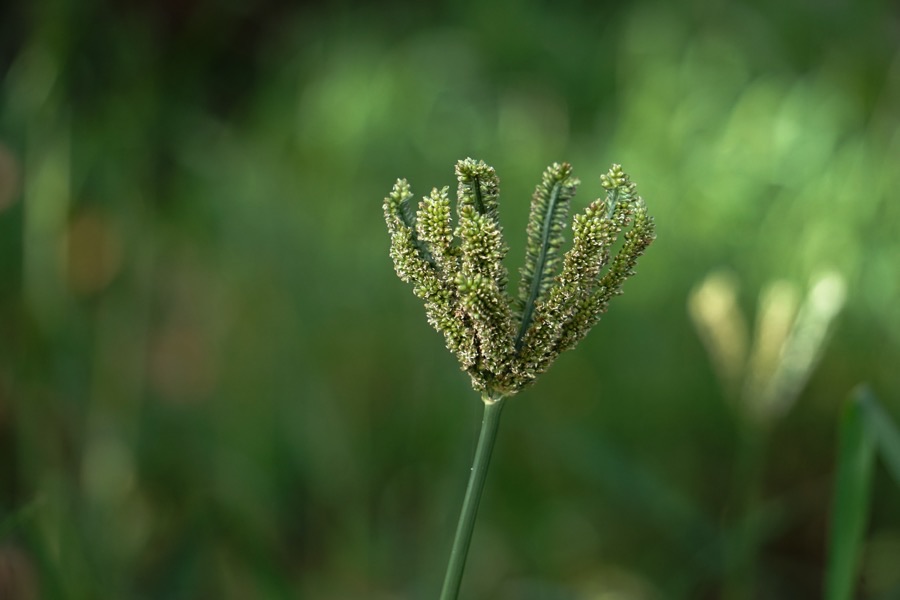
What does a single head look like close up?
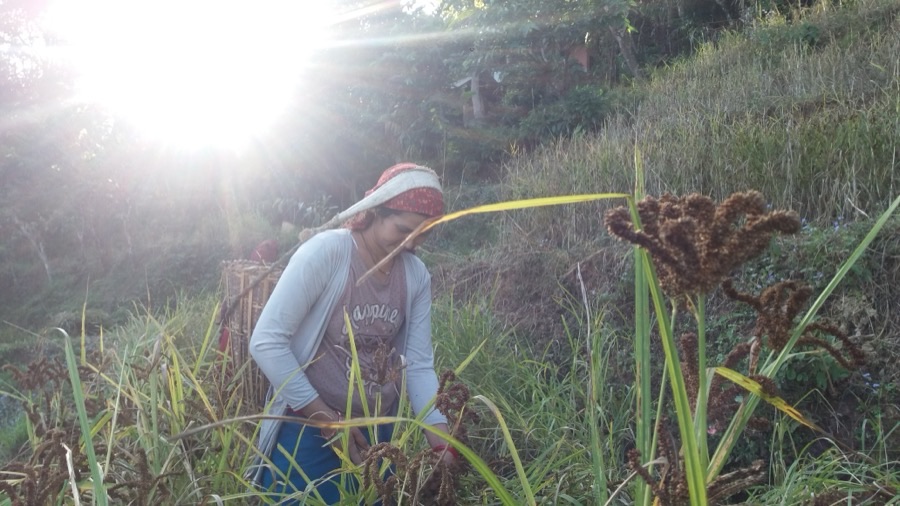
When and how is the crop harvested?