 Laisha
AI Operating System for Agriculture
Enter Laisha
Laisha
AI Operating System for Agriculture
Enter Laisha
Setaria italica · Also called: Italian millet, German millet, Kangni, Kaon, Kakum, Navane, Thinai, Korralu
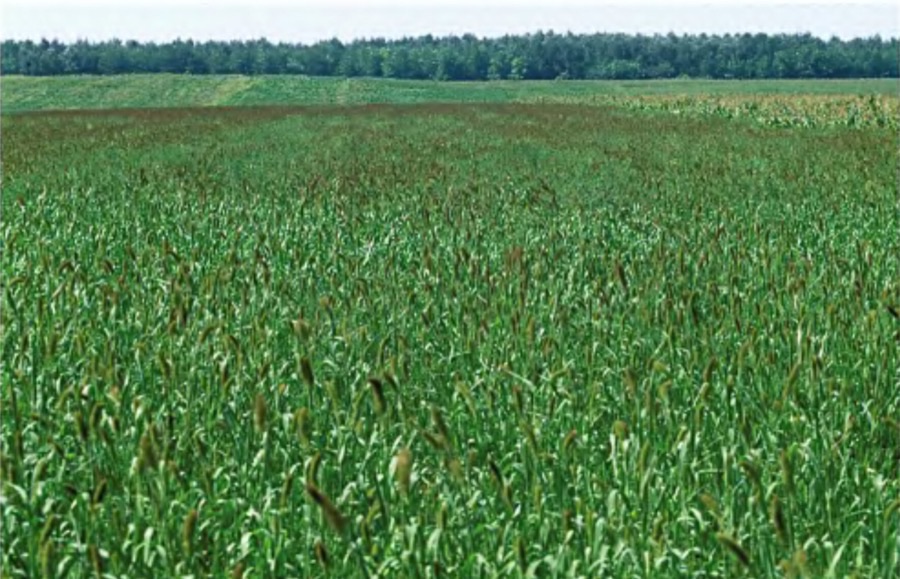
Photo: Miquel Pujol Palol, CC BY-SA 3.0 (Wikimedia Commons)
Foxtail millet is one of the oldest cereals people grow, domesticated in China thousands of years ago and the main grain there long before rice and wheat took over. China still produces the most, with India, Indonesia, Korea, Japan, Nepal and parts of Africa also growing it. Two things make it worth keeping. It is very quick, ready in sixty to ninety days, and it is remarkably efficient with water, so it produces in dry seasons and on thin soils where a longer crop would fail — which is why it has been a famine reserve across Asia for centuries. And the grain stores unusually well, for years rather than months, so it is a crop a household can hold rather than spend. It is also grown as hay, which makes it two crops in one packet of seed.
If you see: A field that thinned after weeding, with gaps where people worked and grass weeds still standing between them.
It likely means: The crop was pulled and the weeds were left. Green foxtail is this crop's own wild ancestor and the young plants look almost identical.
Do this: Sow in rows, so that a plant in the row is the crop and a plant between rows is not.
If you see: Heads stripped or noticeably lighter, worst around the field edges, with flocks lifting off as you approach.
It likely means: Birds. Ripening foxtail millet is very attractive to them and a small field beside cover can be taken almost completely.
Do this: Watch the crop daily from the day the grain begins to harden, since the damage happens fast.
If you see: Grey or brown spots with dark edges spreading on the leaves, and dark shrunken lesions where the head joins the stem, with heads dying before they fill.
It likely means: Blast, which spreads in humid weather and in a crowded crop and can take heads before the grain has formed.
Do this: Ask a licensed dealer which kinds carry blast resistance where you are, since that is the main defence.
If you see: Seed sown into a good field that came up thin and patchy, or barely at all.
It likely means: The seed was buried too deep, or the seedbed was cloddy or loose, or the soil was cold.
Do this: Sow no deeper than two to three centimetres, since the seed is small and the seedling weak.
If you see: The crop lying flat across the field after wind or rain, with heads on the soil.
It likely means: Too much nitrogen, too rich a field, or too thick a stand. The stems are fine and cannot carry a filled head on soft growth.
Do this: Apply nitrogen lightly if at all, since feeding this crop is how you flatten it.
If you see: Heads replaced entirely by a mass of dark powder, on otherwise normal-looking plants scattered through the field.
It likely means: Smut, a fungus that replaces the grain and spreads its powder onto healthy heads and onto seed.
Do this: Pull affected plants out carefully before the powder is released, and carry them out of the field in a bag.
If you see: Grain that grits between the teeth when cooked, or that a buyer refuses for sand.
It likely means: It touched bare soil while drying or threshing. The grain is small enough that winnowing cannot separate the grit.
Do this: Dry cut heads on mats and thresh on a clean hard floor, never on bare ground.
Growing the crop is only part of the job. The last part is knowing what a normal harvest looks like where you are, and knowing what your grain is worth before you agree a price with anybody.
If you forget every other page of this guide, keep these lines. They are the whole crop, in order, short enough to carry in your head.
What is this crop with thick bristly heads nodding over on fine stems?
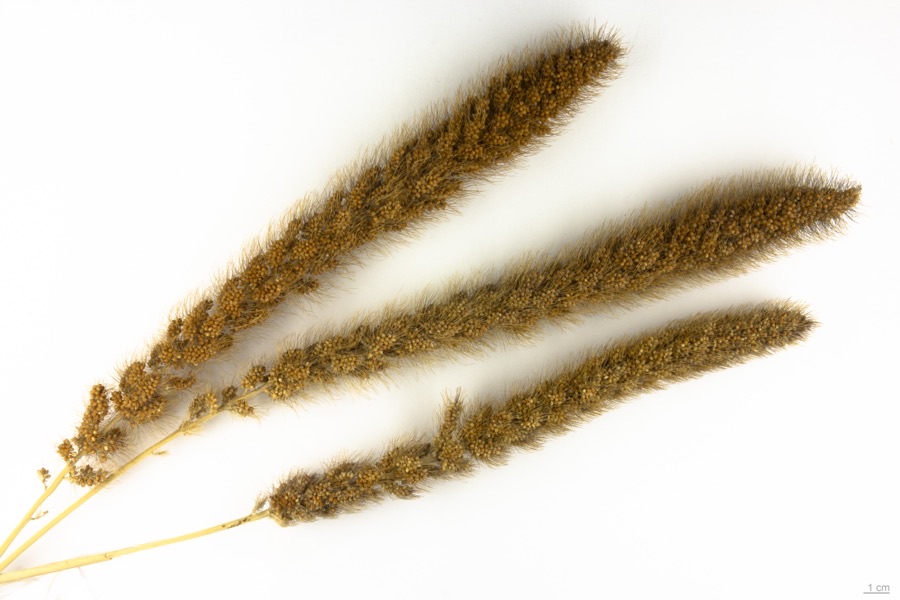
Are those bristles the same as the awns on barley?
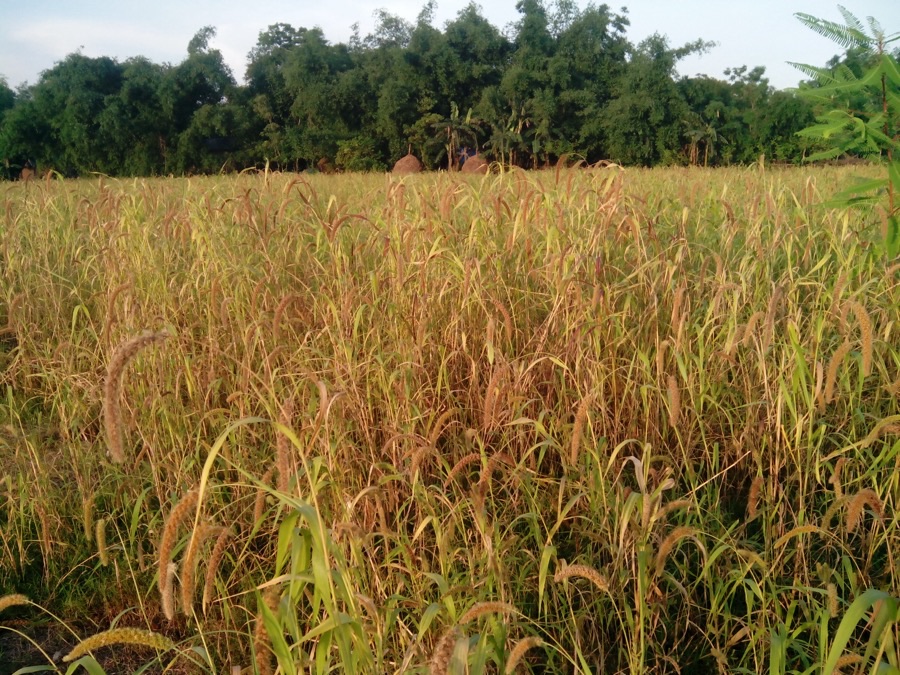
When is it ready to cut?