Cynara cardunculus · Also called: Artichoke, French artichoke, Green artichoke, Carciofo, Alcachofa, Artichaut, Artisjok, Hathichak
Photo: Krzysztof Golik, CC BY-SA 4.0 (Wikimedia Commons)
The globe artichoke is a high-value vegetable that pays for several years from one planting, which is unusual and which suits a grower who can wait. Italy, Egypt, Spain, Peru, Argentina, Algeria and Morocco grow most of it, and it travels into export and canning markets as well as fresh ones. It is not a crop for everywhere: it wants a mild winter and a cool summer, and hard frost spoils the buds it is grown for. But where the climate suits it, a single planting crops for three to five years, the big plants shade out most weeds once established, and the same crown throws new offshoots that plant the next block for nothing. The one thing a new grower must accept is that the harvest signal comes early. The bud has to be cut while it is still tightly shut, days before it looks like anything worth eating.
Growing Globe artichoke, Stage by Stage
1. Get the land ready — Deep, rich, well-drained ground with plenty of room.
2. Take offshoots as your planting material — A piece off a plant you have seen cropping beats a packet of seed.
3. Weed, water and feed — Generous with everything. This is a big plant with a long job.
4. Watch for trouble — Aphids deep in the bud, a caterpillar that bores into it, and rot in wet weather.
5. Harvest while the bud is still shut — Cut it days before it looks ready. Once it opens it is a flower, not food.
6. Keep them cool and sell them quickly — An artichoke is mostly water and it wilts fast once it is cut.
7. Cut back, keep the crowns and renew the planting — Look after the crowns and the same plants pay for years.
Common Problems & Troubleshooting
If you see: Buds whose scales have parted, with purple showing at the top, refused by the buyer.
It likely means: They were left a few days too long. An artichoke is an unopened flower bud and once it starts to open it is no longer a vegetable.
Do this: Cut while the scales are still tightly closed and overlapping.
If you see: Plenty of buds but all of them small, tough and loose-scaled.
It likely means: Usually water shortage while the buds were forming, or too many shoots left on one crown, or a hungry plant.
Do this: Water deeply and regularly through bud formation.
If you see: Colonies of aphids packed between the scales, discovered when a bud is cut open.
It likely means: Artichoke aphid. It settles deep inside the bud, where it cannot be washed out and will not be seen from outside.
Do this: Part the outer scales of a few developing buds each week and look inside.
If you see: Crowns that fail to shoot in the new season, soft and rotten when dug up.
It likely means: Water stood around them during the resting period. This plant tolerates drought far better than it tolerates wet feet in winter.
Do this: Plant on free-draining ground, and on a slight ridge where the soil is heavy.
If you see: Plants grown from seed that are spiny, thin-scaled and give poor buds.
It likely means: Seedlings vary and some revert towards the wild thistle form. This is normal for seed-raised artichokes.
Do this: Start from offshoots taken off a plant whose buds you have seen and liked.
If you see: Buds that were firm at cutting and are limp with brown papery scale tips by market.
It likely means: They dried out. An artichoke is mostly water and the scales lose it quickly in warm dry air.
Do this: Cut in the early morning and get the buds into shade at once.
Yield & Market Value
Growing the crop is only part of the job. The last part is knowing what a normal harvest looks like where you are, and knowing what your artichokes are worth before you agree a price with anybody.
Remember It This Way
If you forget every other page of this guide, keep these lines. They are the whole crop, in order, short enough to carry in your head.
You are eating a flower bud that has not opened.
Start from offshoots off a plant you have seen cropping.
Seed gives you thistles as often as artichokes.
Give each plant a metre. They get very big.
Rich deep soil, and feed it again every year.
Wet feet in winter rot the crown. Drought does not.
Cut the big top bud first. Side buds follow.
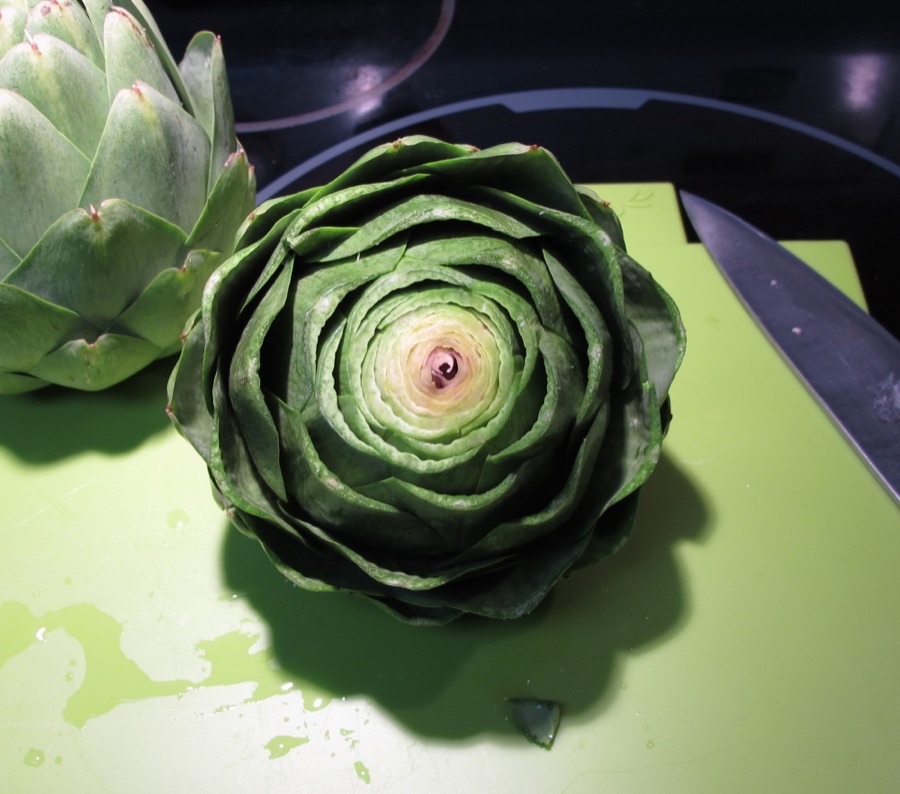
Cut while the scales are shut and squeak. Not later.
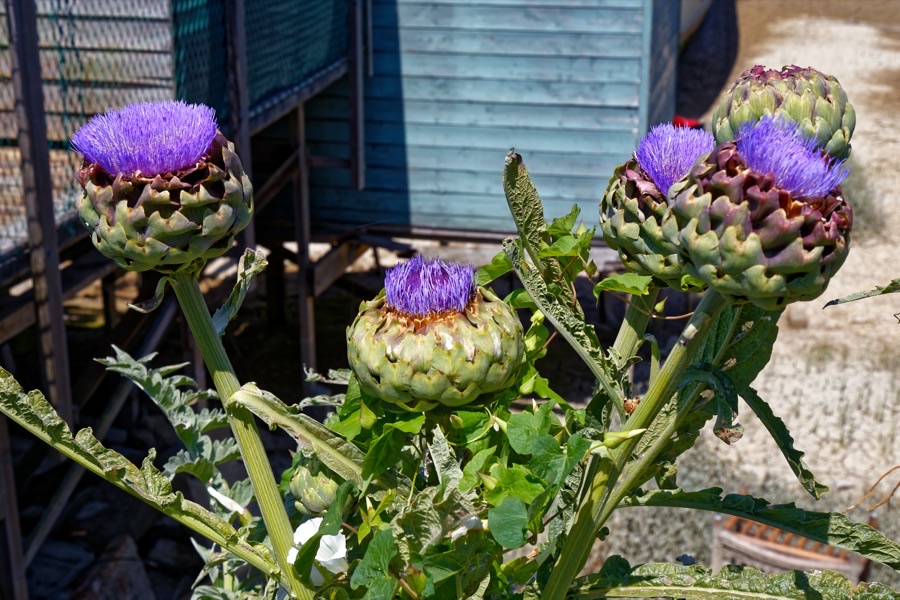
Any purple showing means it is a flower now, not food.
Thin each crown to two or three shoots each season.
Test Yourself: Identification
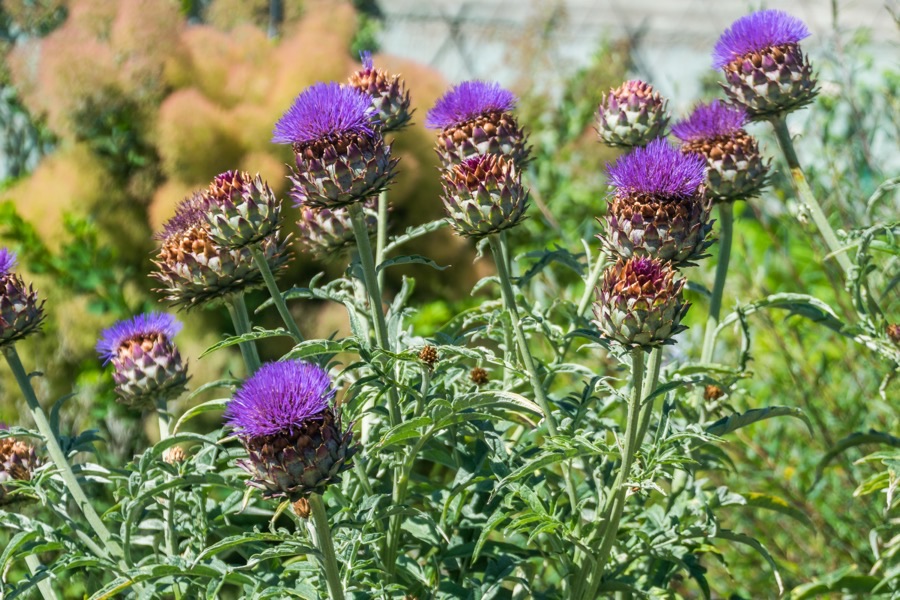
What does the crop look like growing?
When is a bud ready to cut?
What does a bud look like when it is too late?
Honest Limits of This Guide
Timings here are given by season and by the state of the plant rather than in named months, because artichoke is grown in both hemispheres and because in hot climates it rests through summer while in cool ones it rests through winter. Count from your own planting.
The photographs show plants in flower and gone to seed more than they show buds at eating stage, because usable pictures of a commercial artichoke crop at the cutting stage are not available under a licence this library can use. The one harvested bud shown is the stage to aim for; the flowering pictures are deliberately used as the warning they are.
Globe artichoke and cardoon are the same species. This guide covers the artichoke, grown for its flower buds, and not the cardoon, grown for its leaf stalks.
Variety advice is deliberately local. Varieties differ greatly in spininess, in bud shape and colour, and in how much cold they will take, and which suits a district is a question for a local supplier.
This crop genuinely needs a mild winter and a cool summer. It is included because it is a valuable crop where the climate allows, not because it can be grown everywhere, and a grower in a hot or a hard-frost climate should be cautious.
No chemical treatments are named here. The bud is eaten, its worst pests sit inside it where sprays cannot reach, and what is permitted differs by country and by buyer.
Sources
GBIF Backbone Taxonomy species-match record for Cynara cardunculus L. — Global Biodiversity Information Facility (GBIF), Copenhagen (source)
EPPO Global Database — Cynara cardunculus (EPPO code CYUCA) — European and Mediterranean Plant Protection Organization (EPPO), Paris (source)
Cynara cardunculus and its pests and diseases — CABI Compendium datasheets — CABI, Wallingford (source)
FAO guidance on smallholder and perennial vegetable production — Food and Agriculture Organization of the United Nations (FAO), Rome (source)
FAO guidance on post-harvest handling of perishable vegetables — Food and Agriculture Organization of the United Nations (FAO), Rome (source)
Laisha knows Globe artichoke better than this page can show.Photo diagnosis for pests and disease, live market prices, and an agronomist you can ask at two in the morning. Ten days free, no card. After that 10 US dollars a month, one price worldwide.Start ten free days
 Laisha
AI Operating System for Agriculture
Enter Laisha