 Laisha
AI Operating System for Agriculture
Enter Laisha
Laisha
AI Operating System for Agriculture
Enter Laisha
Lathyrus sativus · Also called: Khesari, Khesari dal, Kesari, Teora, Lakh, Chickling pea, Chickling vetch, Almorta
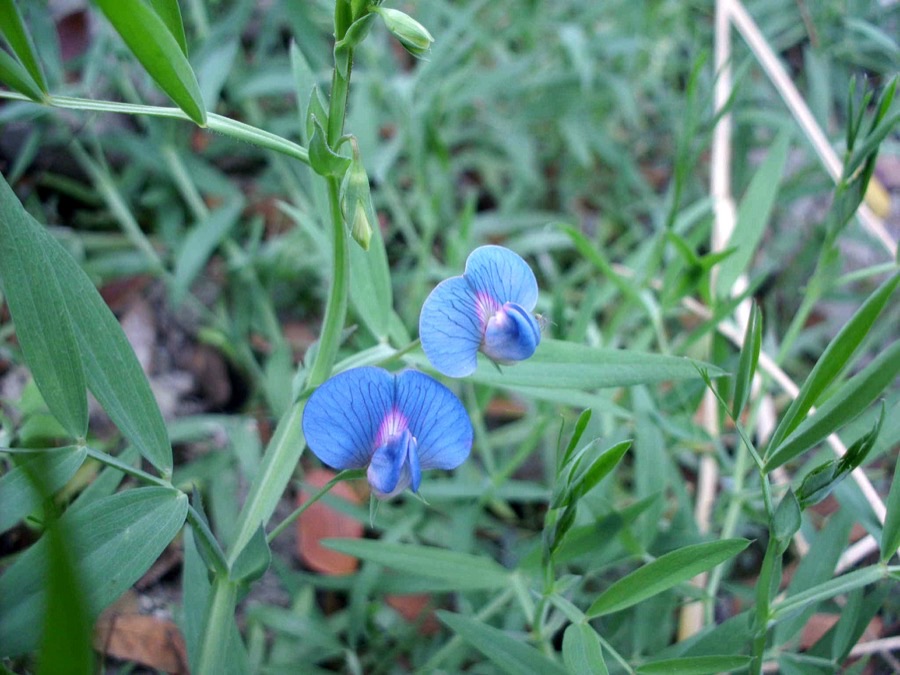
Photo: Rahat Rahim, CC BY-SA 3.0 (Wikimedia Commons)
Grass pea is the crop that yields when everything else has failed. It survives drought that kills wheat and flooding that kills chickpea, it grows on leftover soil moisture with no ploughing, no fertiliser and no watering, and it goes on producing on ground too poor and too dry for anything else. Ethiopia, India, Bangladesh, Nepal, Pakistan, Spain and Ukraine all grow it. That reliability is exactly why it carries a warning: people eat it heavily in the years when there is nothing else, and eating it as most of the diet for months is what causes harm. Grown and eaten sensibly it is one of the most valuable insurance crops a poor household can have.
If you see: Weakness, stiffness or cramping in the legs in someone who has been living largely on grass pea for weeks or months, especially a young man doing heavy work.
It likely means: The illness this crop is known for. It comes from eating grass pea as most of the diet over a long period, and the damage to the legs does not heal.
Do this: Stop relying on grass pea as the main food immediately and get other food into the diet.
If you see: Seed saved from an old local crop being planted year after year with no idea how much of the harmful substance it carries.
It likely means: It is almost certainly a traditional high-substance type. Low-substance varieties have been bred and released, and most growers have never been offered one.
Do this: Ask a licensed dealer or your extension office for a low-substance variety by name.
If you see: Grass pea cooked as a thick dish with no water thrown away, or ground into flour and used without soaking.
It likely means: The preparation keeps the harmful substance in the food. It dissolves in water, so it only leaves if the water is discarded.
Do this: Soak the seed in plenty of water for several hours and throw that water away.
If you see: Very few seedlings coming up after broadcasting into a standing rice crop.
It likely means: The sowing was mistimed. The seed needs saturated soil at sowing, and if the field has already begun to dry, it will not establish.
Do this: Broadcast one to two weeks before the rice is cut, while the soil is still saturated.
If you see: A buyer refusing grass pea, or a market where it cannot legally be sold for food.
It likely means: Some countries and states restrict the sale of this seed for human food because of the illness it can cause.
Do this: Find out the rules where you are before planning to sell, rather than after harvest.
If you see: Plants yellowing and dying in patches in the lowest part of the field after water stood for several days.
It likely means: Standing water. Grass pea tolerates wet ground far better than most pulses, but not water standing for a long time.
Do this: Make sure surface water can drain off the field.
Growing the crop is only part of the job. The last part is knowing what a normal harvest looks like where you are, and knowing what your seed and straw are worth before you agree a price with anybody.
If you forget every other page of this guide, keep these lines. They are the whole crop, in order, short enough to carry in your head.
What does the plant look like in flower?
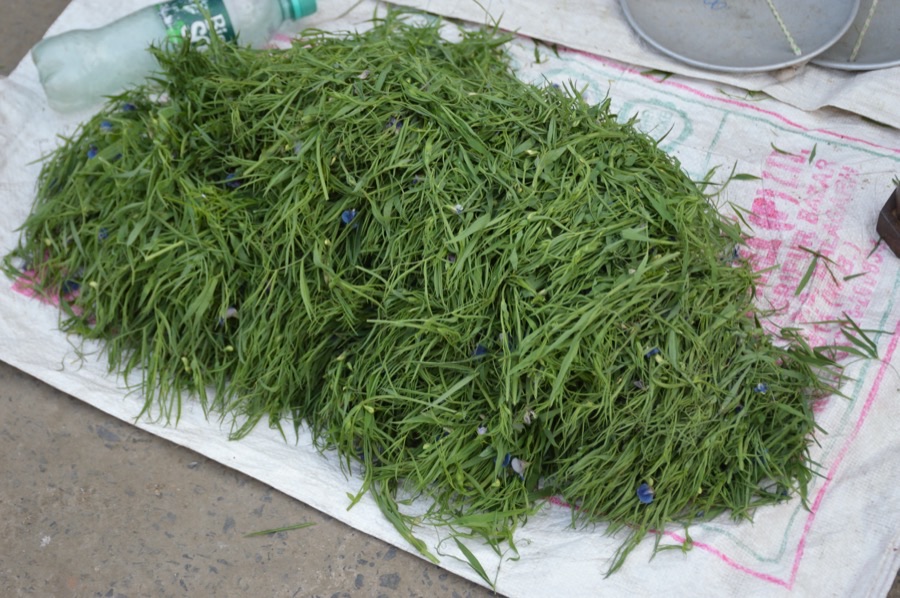
Can the leaves be eaten, and what do they look like when sold?
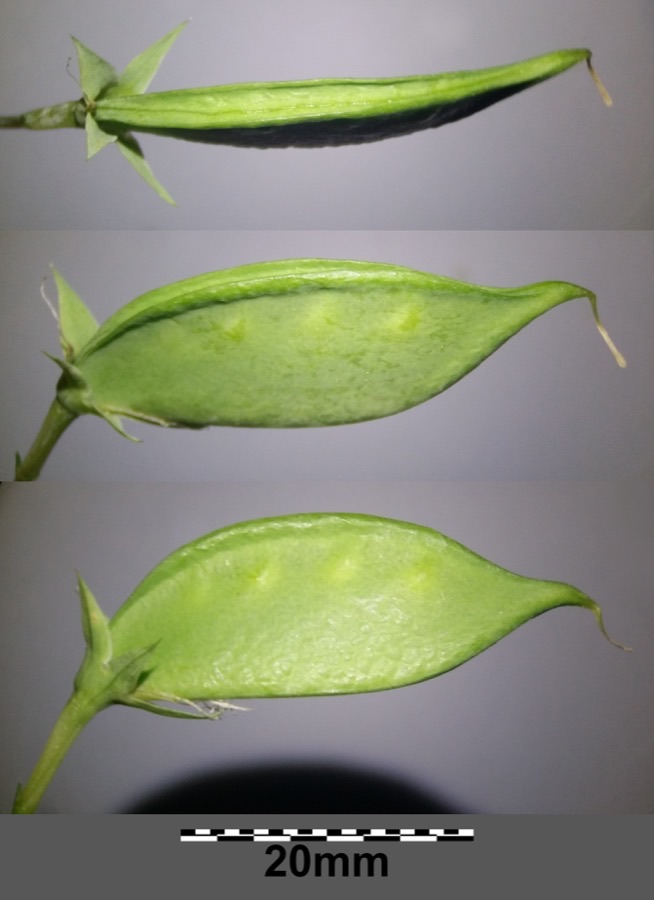
What do the pods look like, and when is the seed ready?