 Laisha
AI Operating System for Agriculture
Enter Laisha
Laisha
AI Operating System for Agriculture
Enter Laisha
Psidium guajava · Also called: Amrood, Amrud, Peru, Jamphal, Koyya, Jambu biji, Bayabas, Goiaba
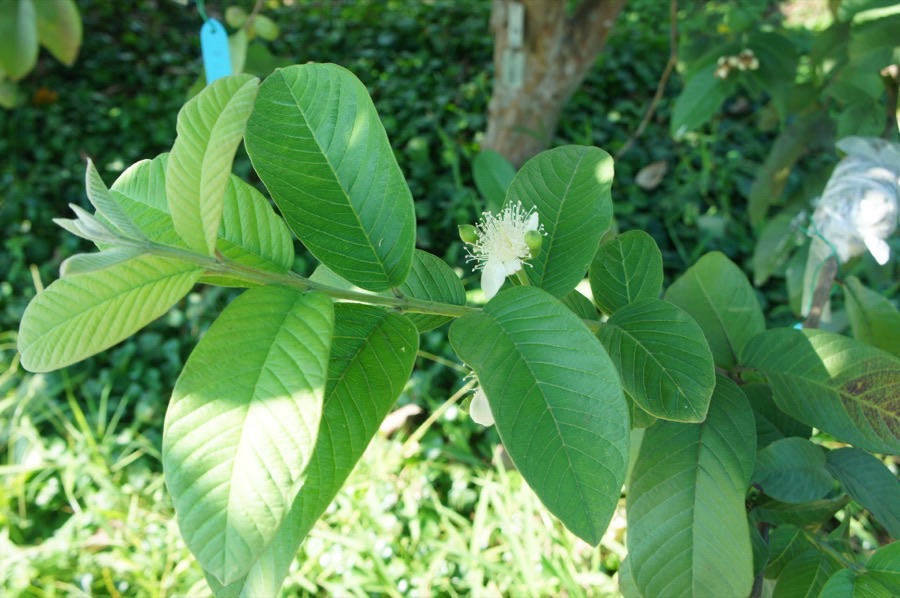
Photo: Olaf8940, CC BY-SA 4.0 (Wikimedia Commons)
Guava is the fruit tree that asks for almost nothing. It will grow on poor, shallow, stony, salty or briefly waterlogged ground, it stands drought, it bears within two to four years, and it goes on cropping twice a year for decades. India grows far more than anybody else, with China, Thailand, Indonesia, Pakistan, Mexico, Brazil, Bangladesh and Egypt following. The fruit carries two to five times as much vitamin C as an orange, which makes a few trees beside a house a genuinely useful thing rather than a luxury. Two facts shape how it is grown. The fruit lasts only a few days after picking, so the market has to be close or the fruit has to be processed. And because the tree flowers more than once a year, a grower can choose which crop to take and throw the other away, which is how the good prices are reached.
If you see: Perfect-looking fruit that collapses into a soft brown mess within a day or two, full of small white maggots when cut open, and tiny puncture marks on the skin.
It likely means: Fruit fly. The female lays under the skin and the damage is invisible until the fruit is opened or falls apart.
Do this: Pick up and destroy every fallen and damaged fruit every few days, by burying deep or boiling, since this is the single most effective control.
If you see: A whole tree, or one side of it, yellowing, wilting and dying over a few weeks, with browned tissue inside when the trunk base is cut across.
It likely means: Guava wilt, a soil-borne disease that cannot be cured and that has destroyed orchards in several countries.
Do this: Remove and destroy the affected tree with as much of its roots as you can get out.
If you see: A tree grown from a seed of a fruit you enjoyed, now bearing small, seedy, sour fruit that nobody wants.
It likely means: Nothing has gone wrong in the growing. Guava does not come true from seed, and a seedling is a new and usually worse plant.
Do this: Propagate by air layering from a tree whose fruit you have eaten, which is simple and reliable.
If you see: Trees loaded with fruit at exactly the moment every other grower has it, selling for very little, with a great deal rotting under the trees.
It likely means: Every flowering was allowed to crop. A guava will flower more than once a year and will fruit itself into a glut if left alone.
Do this: Withhold water for some weeks to rest the tree, then water and feed so that it flowers together in the season you chose.
If you see: Fruit splitting open on the tree, usually after heavy rain or a heavy watering that followed a dry spell.
It likely means: A sudden swing in water. The inside swells faster than the skin can stretch.
Do this: Water evenly once the fruit has set, rather than letting the ground dry out and then watering heavily.
If you see: Fruit that looked sound when picked arriving at the market soft, brown-patched and unsellable.
It likely means: Bruising and time. Guava keeps three to five days at best and bruises easily, and a bruise becomes a rot within a day.
Do this: Pick in the cool of the morning into padded baskets or lined crates and keep the fruit in shade.
If you see: Guava seedlings coming up through pasture, bush or forest well away from where anybody planted them, forming dense thickets.
It likely means: Birds and livestock have spread the seed. Guava is a serious invasive weed in parts of Africa, the Pacific and the Caribbean.
Do this: Find out whether guava is a declared weed where you live before planting more of it.
Growing the crop is only part of the job. The last part is knowing what a normal harvest looks like where you are, and knowing what your fruit is worth before you agree a price with anybody.
If you forget every other page of this guide, keep these lines. They are the whole crop, in order, short enough to carry in your head.
What is this white flower like a shaving brush among strongly ribbed leaves?
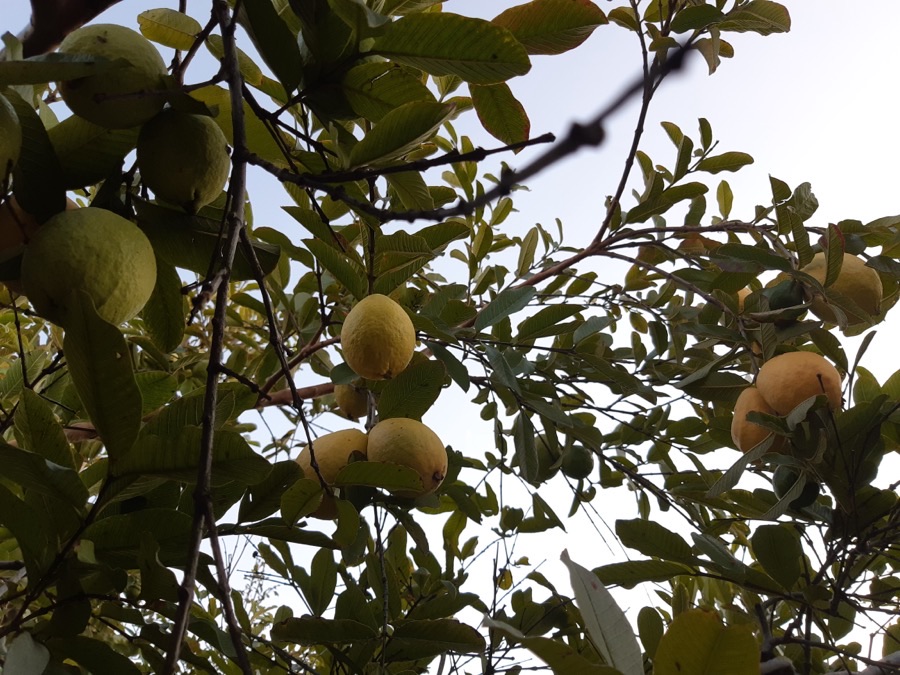
These fruits have gone from dark green to pale yellow. Should I pick them?
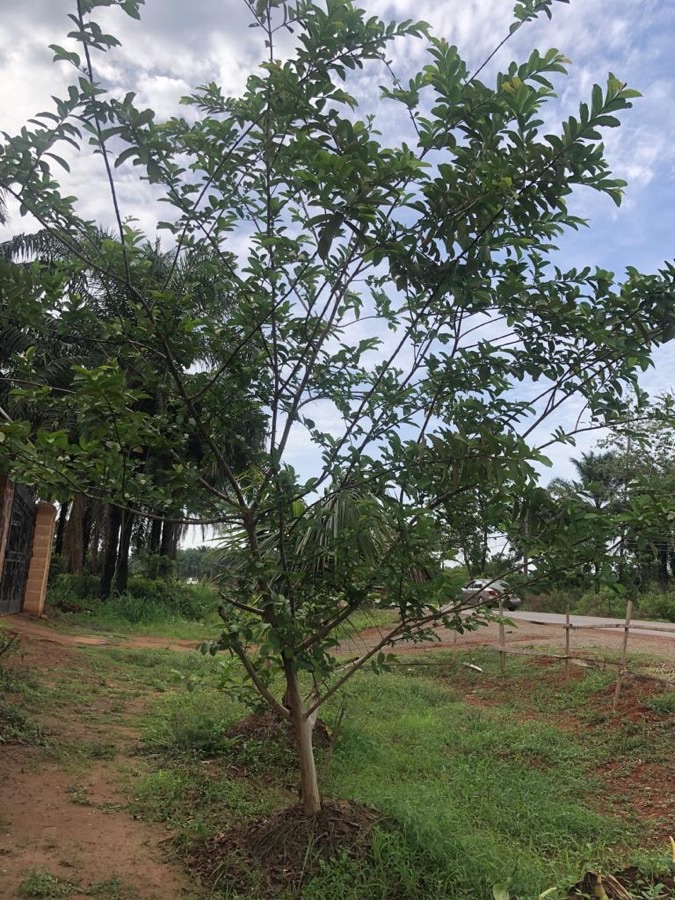
How big should I let this tree get?