 Laisha
AI Operating System for Agriculture
Enter Laisha
Laisha
AI Operating System for Agriculture
Enter Laisha
Corylus avellana · Also called: Filbert, Cobnut, Hazel, Fındık, Nocciola, Avellana, Noisette, Haselnuss
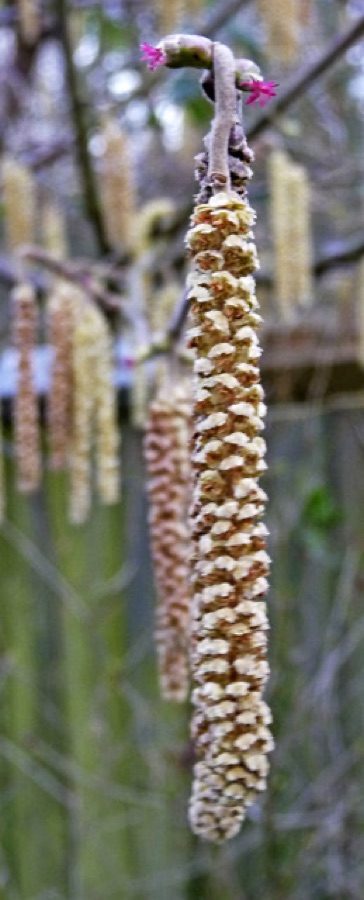
Photo: Christine Matthews, CC BY-SA 2.0 (Wikimedia Commons)
Hazelnut grows on land that will carry almost nothing else. Across the Black Sea coast of Turkey, which produces the large majority of the world's crop, it is grown on slopes far too steep to plough, by households working small plots by hand. The bush holds those slopes together, lives for decades, needs no replanting, and produces a nut that stores for a year and sells into a world market. It asks two things in return. It flowers in the middle of winter, which puts the whole crop at the mercy of a cold snap in a month when nothing else is at risk. And most kinds cannot fertilise their own flowers, so a planting of one variety, however well grown, sets almost nothing.
If you see: Large healthy bushes that produce plenty of catkins every winter and grow strongly all summer, but carry almost no nuts year after year.
It likely means: Almost always no compatible pollen. Most hazelnut kinds will not set nuts from their own pollen, so a planting of a single variety flowers beautifully and sets nothing.
Do this: Find out what variety you have and which kinds pollinate it, which is a question for a nursery or a licensed dealer rather than a guess.
If you see: Tiny red female flowers that were visible in midwinter turning brown and shrivelling after a hard frost, with catkins hanging on unaffected.
It likely means: Frost killed the female flowers. Hazel flowers when frost is most likely, and the female flower is far more easily damaged than the male catkin.
Do this: Accept the loss for that year. Nothing applied afterwards restores a frosted female flower, and the bush itself is unharmed.
If you see: Buds that are swollen, round and unusually fat compared with the slim pointed normal ones, failing to open in spring and drying up on the twig.
It likely means: Very small mites living and breeding inside the bud. Each affected bud is a shoot or a flower cluster that will never develop.
Do this: Pick off and destroy swollen buds where there are only a few, and take them out of the planting rather than dropping them.
If you see: Fallen nuts with a small round hole bored through the shell, and a white legless grub with a brown head inside when the nut is opened.
It likely means: A nut weevil. The adult lays an egg into the developing nut and the grub eats the kernel, then bores its way out and drops into the soil to overwinter.
Do this: Gather and destroy fallen and holed nuts rather than leaving them on the ground, because that is where the next generation comes from.
If you see: Nuts that look normal from outside but are very light in the hand, and contain a shrivelled kernel or nothing at all when cracked.
It likely means: The nut was never properly fertilised, or the kernel failed to fill because of drought or poor feeding while the nuts were developing.
Do this: Float-test the crop and discard the floaters, because drying and transporting empty shells costs you money for no return.
If you see: Nuts with grey, green or black growth on the shell or kernel, a musty smell, and kernels that are discoloured or crumbly when cracked.
It likely means: The nuts took up moisture, either by lying on wet ground after falling or by being heaped before they were dried. Some of these moulds produce a toxin that makes a whole lot unsellable.
Do this: Gather nuts within a few days of falling and never leave them lying in wet grass or mud.
If you see: A planting that has become a dense impenetrable mass of stems of all ages, with nuts produced mainly around the outside and the middle bare and shaded.
It likely means: Nobody has managed the shoots coming from the base. Hazel throws these up constantly and a bush left alone closes in on itself within a few years.
Do this: Start cutting out the oldest and weakest stems at ground level, keeping a chosen number of strong stems of different ages on each bush.
Growing the crop is only part of the job. The last part is knowing what a normal harvest looks like where you are, and knowing what your nuts are worth before you agree a price with anybody.
If you forget every other page of this guide, keep these lines. They are the whole crop, in order, short enough to carry in your head.
What is this long hanging pale tassel, and what is the tiny bright red tuft on the twig just above it?
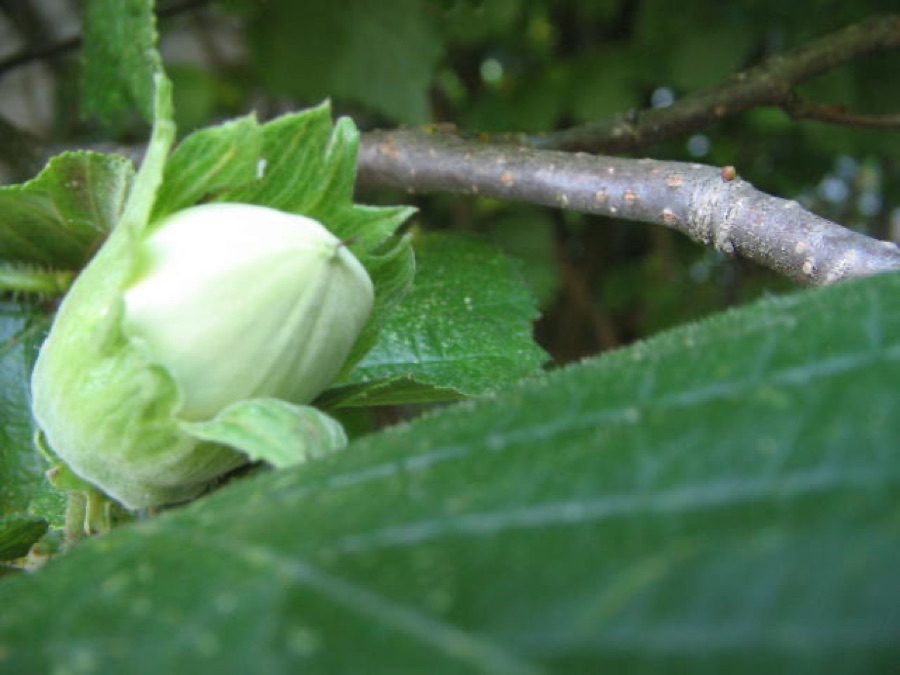
What is this pale nut sitting inside a ragged green leafy cup, next to a round toothed leaf?
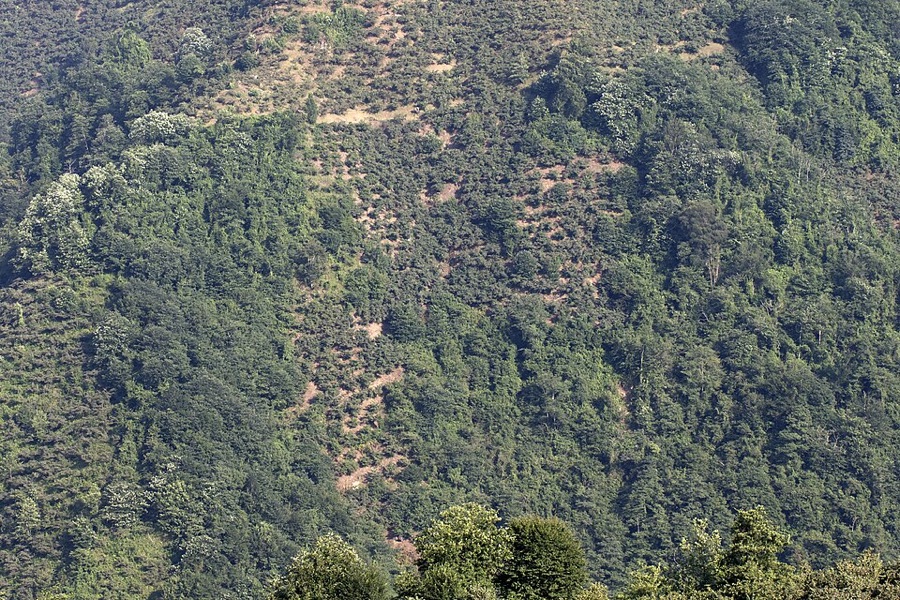
What is this hillside covered in dense low bushes, on ground far too steep to plough?