Photo: Rajarshi Rit, CC BY 4.0 (Wikimedia Commons)
Horse gram is the crop that comes after everything else has given up. It is grown on the shallowest, stoniest, driest land in peninsular India — Karnataka, Andhra Pradesh, Telangana, Tamil Nadu, Odisha, Chhattisgarh, Madhya Pradesh and Maharashtra — and across Nepal, Sri Lanka, Myanmar, Ethiopia and Malawi. It finishes in three to four months, it is very often sown on what moisture the soil has left after a main crop rather than on rain of its own, and it needs almost nothing bought in. The grain is high in protein and iron and keeps for years. The plant feeds animals and leaves nitrogen behind for whatever follows. In a dry district that is not a minor crop; it is the difference between land that produces something and land that produces nothing.
Growing Horse gram, Stage by Stage
1. Get the land ready — A rough seedbed on the poorest land you have, which is the point of it.
2. Choose and sow the seed — Clean seed, sown as the rains end, onto moisture that is already there.
3. Weed, water and look after the stand — One weeding early, and then it covers the ground itself.
4. Flowering and podding — Small pale flowers that pollinate themselves, then flat pods in clusters.
5. Watch for trouble — Few problems in the field, and one very serious one in the store.
6. Harvest — Cut or pull as the pods turn brown, in the morning, before they split.
7. Thresh, dry and store — The store is where this crop is won or lost, because of one beetle.
8. Sell, and use what is left — Grain, fodder and a better field afterwards — count all three.
Common Problems & Troubleshooting
If you see: Grain lying on the ground under the crop and a much lighter harvest than the field promised.
It likely means: It was left too long. Horse gram pods split open when they are properly dry and throw the seed out, and the window is days rather than weeks.
Do this: Harvest when most pods have turned brown but are not yet bone dry.
If you see: Small round holes in stored grain, fine dust at the bottom of the container, and small beetles moving in it.
It likely means: Seed beetles. They lay on the pods in the field, so the eggs are already in the grain when it goes into store, and they multiply there.
Do this: Dry the grain hard and sun it for a few hours before storing, which kills eggs on the surface.
If you see: A lush green spreading crop with plenty of leaf and very few pods.
It likely means: The land was too good, or it was fed nitrogen, or it got too much water. This crop responds to comfort by growing rather than by seeding.
Do this: Grow it on the poor dry land it is meant for, and put a better-paying crop on the good land.
If you see: Plants with bright yellow mottled leaves, stunted growth and few pods, scattered through the field.
It likely means: Yellow mosaic virus, carried from plant to plant by whitefly. There is no cure once a plant has it.
Do this: Remove badly affected plants rather than leaving them as a source for the rest.
If you see: A buyer complaining that the grain will not soften however long it is cooked.
It likely means: Usually nothing is wrong. Horse gram is naturally hard and needs long soaking before cooking. Very old or badly dried grain can make it worse.
Do this: Tell buyers unfamiliar with it that it needs soaking, since otherwise they judge it as bad grain.
If you see: Patches of the crop yellowing and dying after heavy rain, usually in the lowest ground.
It likely means: Waterlogging. This crop takes drought as well as almost any pulse there is, and standing water very badly.
Do this: Sow on free-draining ground and avoid low spots that hold water.
Yield & Market Value
Growing the crop is only part of the job. The last part is knowing what a normal harvest looks like where you are, and knowing what your horse gram is worth before you agree a price with anybody.
Remember It This Way
If you forget every other page of this guide, keep these lines. They are the whole crop, in order, short enough to carry in your head.
This is the crop for the worst land you have.
Good land gives you leaf, not seed.
Sow as the rains end, into the moisture left behind.
Weed once early. Then it covers the ground itself.
Do not feed it nitrogen. It makes its own.
Watch the pods daily once they start turning brown.
Cut in the early morning, while the dew holds the seed in.
Dry hard, sun it, then seal it airtight and full.
Seed beetles are the real enemy, and they live in the store.
Keep the straw. Keep your own seed. Both are worth money.
Test Yourself: Identification
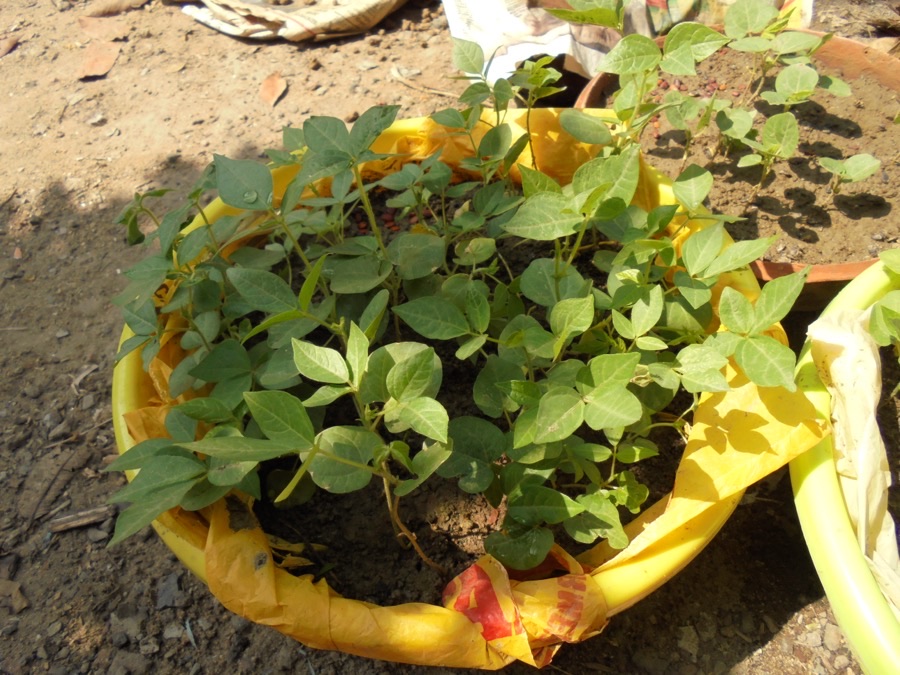
What does a horse gram plant look like?
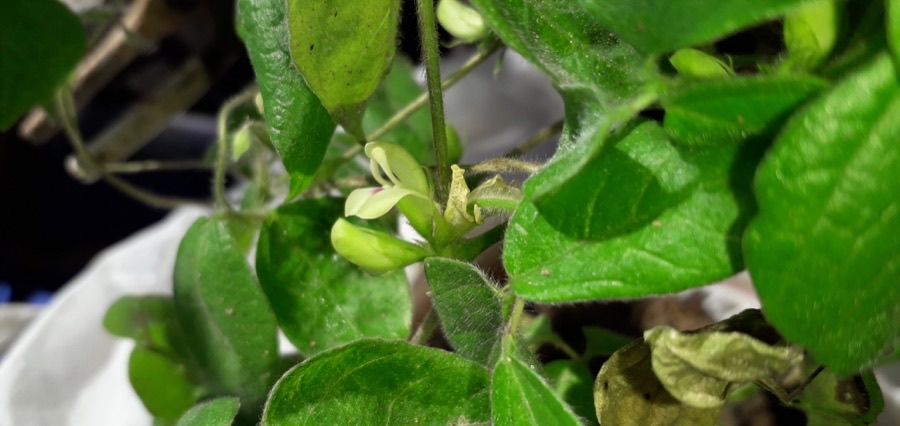
What do the flowers look like?
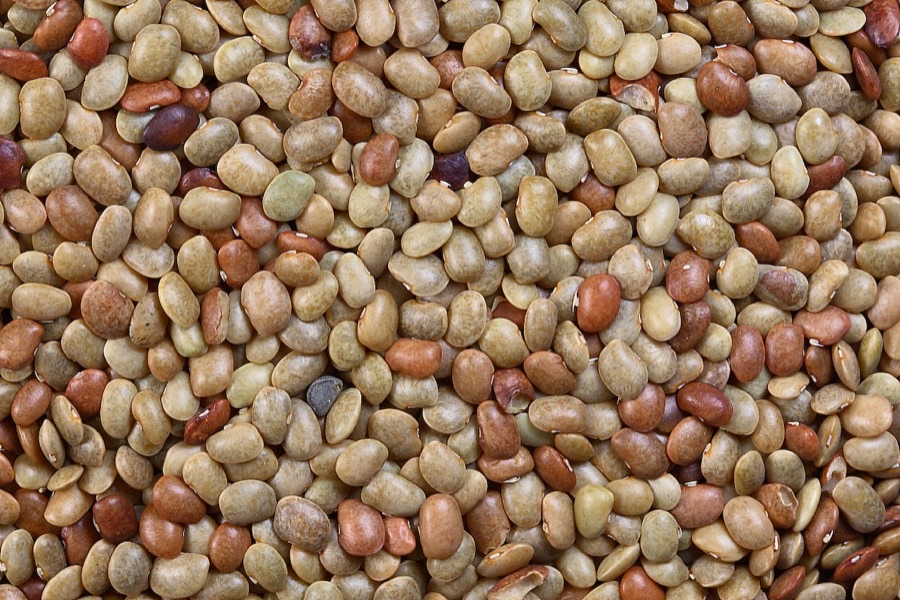
What does the grain look like?
Honest Limits of This Guide
Timings here are given by season and by the state of the crop rather than in named months, because horse gram is grown across peninsular India, Nepal, Myanmar and eastern Africa. Count from the end of your own main rains.
Yield figures look low against other pulses and this guide says plainly why: the crop is deliberately grown on the worst land available. Comparing it with a pulse on good irrigated ground answers the wrong question.
Variety advice is deliberately local. Improved short-duration and virus-resistant varieties exist, many growers have never been offered one, and which suits a district is a question for a local extension office.
Airtight storage is given as the main defence against seed beetles because it is the one that works without anything bought in. Chemical fumigation exists, is effective, and is genuinely dangerous when done without training, so this guide does not describe it.
This crop is widely used in traditional medicine and carries many health claims. This guide makes none of them and is about growing, storing and selling the grain.
This guide names no chemical treatments. The grain is eaten, the field problems are few, and the one serious loss happens in storage where hygiene and sealing do the work.
Sources
GBIF Backbone Taxonomy species-match record for Macrotyloma uniflorum (Lam.) Verdc. — Global Biodiversity Information Facility (GBIF), Copenhagen (source)
EPPO Global Database — Macrotyloma uniflorum (EPPO code MTMUN) — European and Mediterranean Plant Protection Organization (EPPO), Paris (source)
FAO work on pulses, underutilised legumes and on-farm grain storage, with FAOSTAT production data — Food and Agriculture Organization of the United Nations (FAO), Rome (source)
Laisha knows Horse gram better than this page can show.Photo diagnosis for pests and disease, live market prices, and an agronomist you can ask at two in the morning. Ten days free, no card. After that 10 US dollars a month, one price worldwide.Start ten free days
 Laisha
AI Operating System for Agriculture
Enter Laisha