 Laisha
AI Operating System for Agriculture
Enter Laisha
Laisha
AI Operating System for Agriculture
Enter Laisha
Artocarpus heterophyllus · Also called: Jack, Kathal, Chakka, Panasa, Halasu, Palaa, Nangka, Khanun
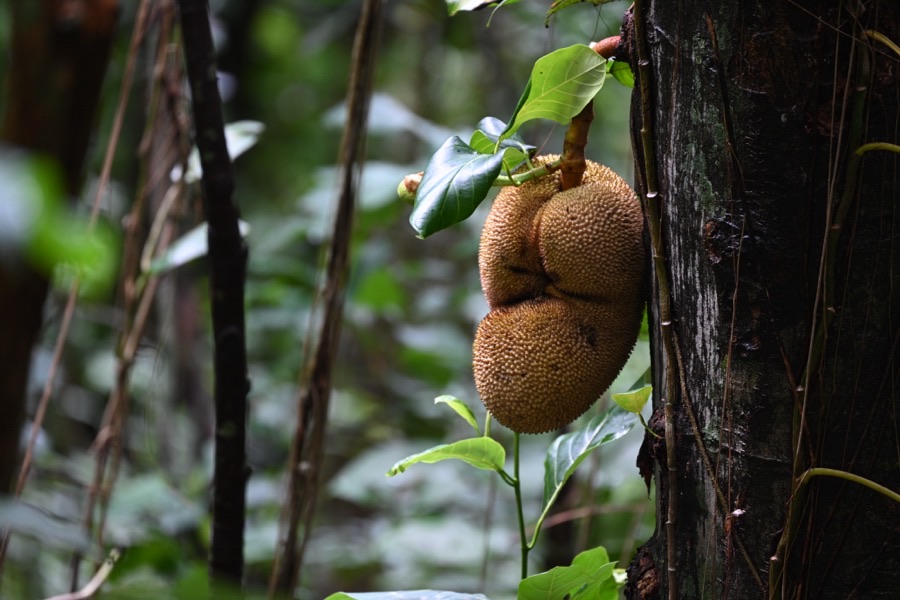
Photo: Wilfredor, CC0 (Wikimedia Commons)
Jackfruit carries the largest fruit of any tree in the world, up to the weight of a small child, and a single mature tree can feed and earn for a household for decades. India and Bangladesh grow the most, with Thailand, Indonesia, Sri Lanka, Viet Nam, the Philippines, Brazil, Uganda and Kenya all producing. It is really two crops on one tree: picked green it is a vegetable, and the market for it as a meat substitute has grown enormously; left to ripen it is a sweet fruit. The seeds are food too. For a smallholder its attraction is that it produces heavily on a single tree that needs very little once grown, in the hot wet places where storing grain is hardest.
If you see: Young fruits turning brown and soft, sometimes with a grey or black fuzzy growth, then dropping off in numbers during a wet spell.
It likely means: Fruit rot. It is the main cause of losing young jackfruit and it follows prolonged wet weather.
Do this: Pick off and carry away every affected fruit rather than letting it fall and lie under the tree.
If you see: Sticky white sap over hands, knife, clothes and fruit after cutting, which will not wash off with water.
It likely means: Latex. Every part of this plant runs with it, and it is the single most practical difficulty of the crop.
Do this: Rub cooking oil on hands, knife and board before starting, which is what everyone who handles this fruit does.
If you see: Fruits with hard flat undeveloped patches on one side, or badly misshapen fruit that does not fill out evenly.
It likely means: Either poor pollination on that part of the flower head, or the fruit grew pressed against a neighbour or a branch.
Do this: Thin crowded clusters early so each fruit has room to swell.
If you see: A seedling tree that finally fruits after six or seven years and gives fruit nothing like the one the seed came from.
It likely means: Jackfruit does not come true from seed. A seedling is a lottery, and it takes years to find out the result.
Do this: Plant grafted trees of named kinds, which fruit in two to four years and give what you chose.
If you see: A harvested fruit split open on the ground, leaking, with the bulbs bruised and dirty.
It likely means: It was dropped. A mature jackfruit is heavy enough to burst under its own weight from any height.
Do this: Lower every fruit on a rope rather than dropping it, however short the drop looks.
If you see: Small puncture marks on ripening fruit with soft weeping patches around them, and maggots inside when cut open.
It likely means: Fruit fly, which lays into ripening fruit and is worst where fallen fruit is left lying about.
Do this: Collect and destroy every fallen and rotting fruit, which is the cheapest control there is.
If you see: A tree yellowing, dropping leaves and dying back from the top after a wet season, with dark soft roots when dug.
It likely means: Root rot from waterlogged ground. Jackfruit wants high rainfall and free drainage together, and without the drainage the rain kills it.
Do this: Plant on deep well-drained ground, and on mounds where the soil is heavy or the water table high.
Growing the crop is only part of the job. The last part is knowing what a normal harvest looks like where you are, and knowing what your fruit is worth before you agree a price with anybody.
If you forget every other page of this guide, keep these lines. They are the whole crop, in order, short enough to carry in your head.
Why is the fruit growing straight out of the trunk of the tree instead of on a branch?
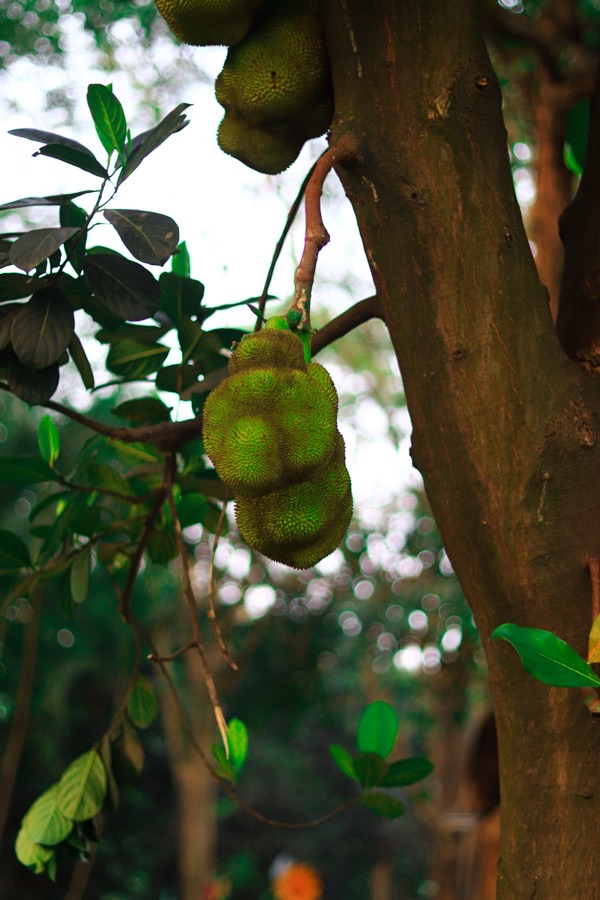
What does the fruit on the tree look like when the crop should be picked green for the vegetable market?
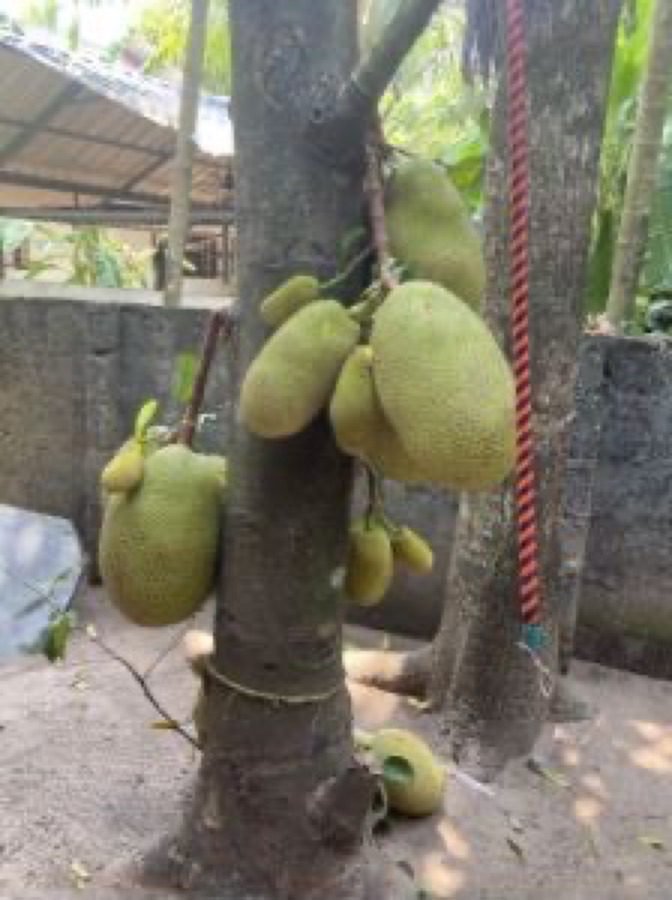
How do I tell that a fruit still on its stem is ripe?